Oil-Free Air Compressors: Benefits, Applications and Technology
Oil-free air compressors play an important role in industries where compressed-air quality is essential. Pharmaceutical manufacturing, food processing, electronics, healthcare, and precision manufacturing may require air systems that control oil contamination to protect products and equipment.
Choosing the right compressor involves more than selecting motor horsepower. Businesses must consider airflow, working pressure, operating hours, air-quality requirements, energy consumption, and maintenance needs.
This guide explains how oil-free air compressors work, their key benefits, industrial applications, modern technologies, and the factors to consider before purchasing one.
Quick Answer: What Are the Benefits of Oil-Free Air Compressors?
Oil-free air compressors are designed to compress air without conventional lubricating oil in the compression chamber. Their main benefits include reducing the risk of oil contamination from the compression process, supporting sensitive applications, and reducing certain oil-related maintenance tasks.
They are commonly considered for pharmaceutical, food and beverage, electronics, medical, laboratory, printing, and painting applications.
However, oil-free does not automatically mean sterile, moisture-free, or completely contaminant-free air. Suitable filtration, air drying, testing, and system maintenance may still be required.
What Is an Oil-Free Air Compressor?
An oil-free air compressor is designed to compress air without introducing conventional lubricating oil into the compression chamber. Unlike an oil-lubricated compressor, its compression process does not depend on oil lubrication within that chamber.
This technology can help reduce the risk of oil contamination in applications where compressed-air purity is important.
Oil-free compressors are commonly considered for:
-
Pharmaceutical manufacturing
-
Food and beverage processing
-
Electronics and semiconductor production
-
Medical and dental applications
-
Laboratories and research facilities
-
Automotive painting and finishing
-
Printing and packaging
-
Precision manufacturing
The correct compressor depends on the application's required air quality, airflow, pressure, and operating conditions.
Why Are Oil-Free Air Compressors Important?
Compressed air powers pneumatic tools, production equipment, packaging machinery, instruments, and automated systems. In some applications, compressed air may also come into contact with products or packaging.
If unwanted oil enters the compressed-air stream, it can create contamination concerns, affect product quality, or cause problems in sensitive processes.
An oil-free compressor can help reduce this risk. However, overall compressed-air quality also depends on the intake environment, air treatment, piping, moisture control, and maintenance.
Before choosing a compressor, identify the air-quality specification required by your application and select the complete system accordingly.
How Does an Oil-Free Air Compressor Work?
An oil-free air compressor draws atmospheric air into a compression system designed to operate without conventional lubricating oil in the compression chamber.
The basic working process involves five stages.
1. Air Intake
Atmospheric air enters the compressor through an intake system. An intake filter helps remove dust and particles before the air reaches the compression components.
2. Air Compression
The compressor increases the pressure of the incoming air. The compression mechanism varies according to the design, such as an oil-free reciprocating, scroll, or screw compressor.
3. Heat Management
Compressing air generates heat. Depending on the compressor design, cooling components such as intercoolers or aftercoolers help manage the temperature.
4. Air Treatment
The compressed air may require additional filtration, moisture separation, and drying. The exact treatment depends on the intended application and required air quality.
5. Air Storage and Delivery
The compressed air is supplied to connected equipment or stored in an appropriately rated air receiver tank.
The receiver, piping, filtration, and drainage system must be suitable for the operating pressure and application.
Related reading: Why Are Oil-Free Air Compressors Essential for Sustainable Manufacturing?
Key Components of an Oil-Free Air Compressor
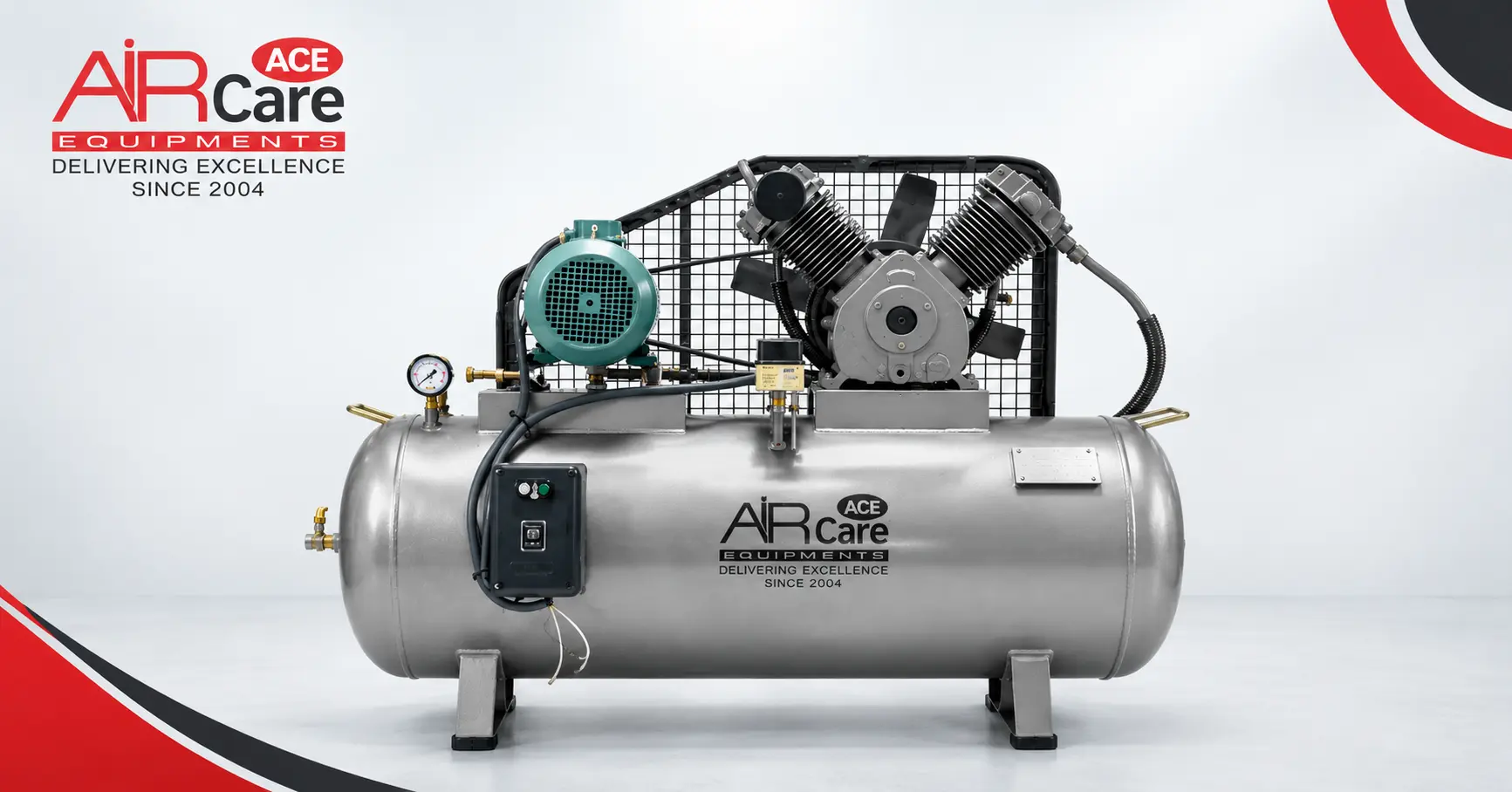
The exact components depend on the compressor model and technology. Common components include the following.
Intake Filter
The intake filter helps prevent dust and other particles from entering the compressor with incoming air.
Compression Components
The compression mechanism increases air pressure without introducing conventional lubricating oil into the compression chamber.
Cooling System
Intercoolers, aftercoolers, fans, or other cooling components may be used to manage heat generated during compression.
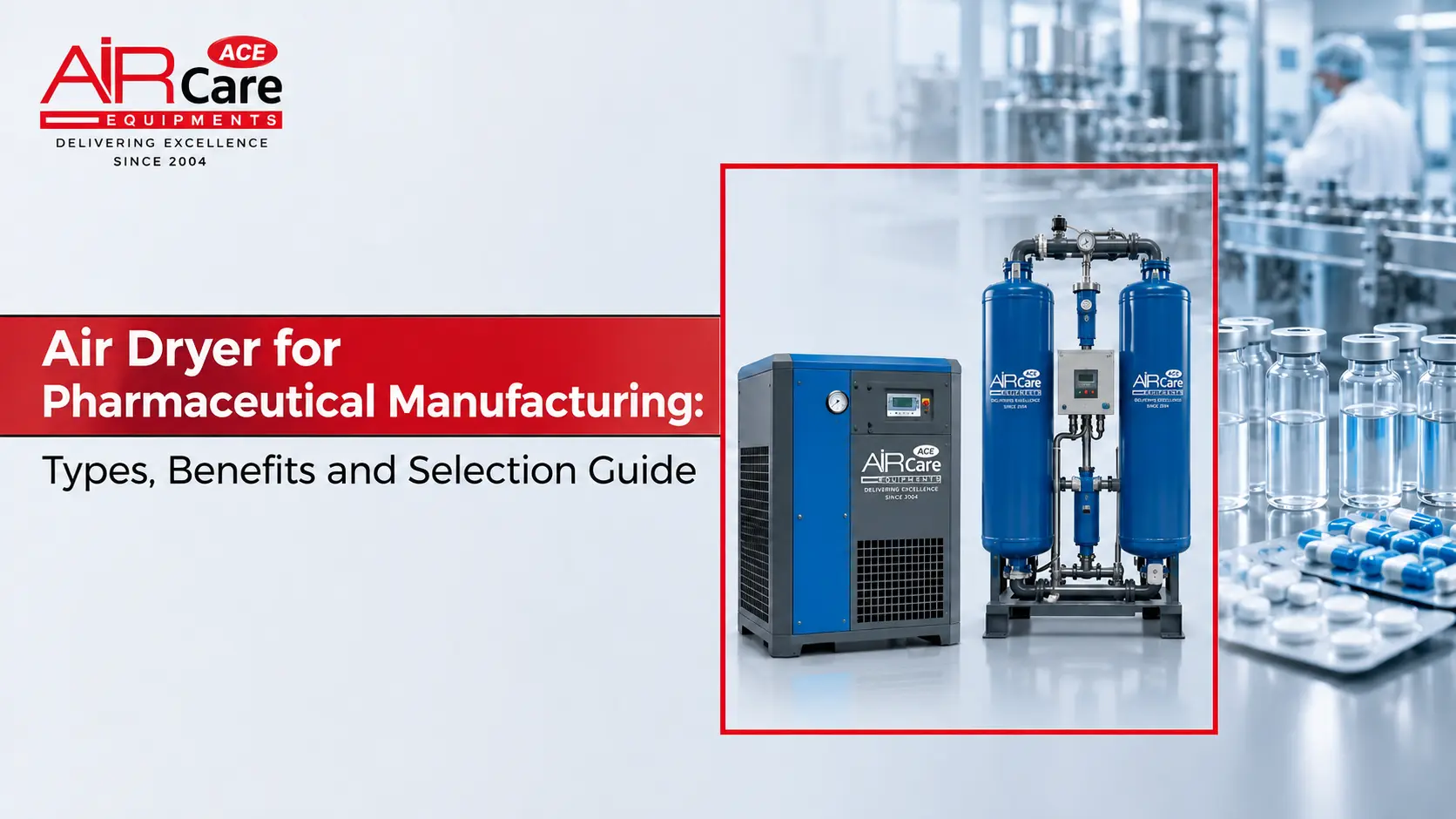
Air Filters and Dryers
Additional filters and compressed-air dryers may be needed to control particles and moisture. The correct combination depends on the application's air-quality requirements.
Control and Monitoring System
Depending on the model, controls may help operators monitor operating pressure, temperature, running hours, and maintenance requirements.
Related reading: Air Compressor Parts Explained: Names, Functions and Maintenance
Benefits of Oil-Free Air Compressors
1. Reduced Risk of Oil Contamination
One of the main benefits of oil-free compressor technology is reducing the risk of oil entering the compressed-air stream from the compression process.
This is important when compressed air is used around sensitive products, packaging, instruments, or components. It can also help businesses manage contamination risks in production environments.
The required air-purity level should always be established before selecting a compressor.
2. Suitable for Sensitive Industries
Industries with strict product-quality or contamination-control requirements may consider oil-free compressors for their compressed-air systems.
Examples include pharmaceutical manufacturing, food and beverage processing, electronics, healthcare, and laboratories.
However, the suitability of a compressor depends on the actual process. Some applications require additional filtration, drying, point-of-use treatment, and air-quality testing.
Related reading: Why Pharmaceutical Companies Need Oil-Free Air Compressors
3. Reduced Oil-Related Maintenance
Oil-free compressors can reduce certain maintenance tasks associated with compressor oil and oil-related components.
However, an oil-free compressor is not maintenance-free. Filters, cooling systems, valves, bearings, electrical components, and other parts may still require regular inspection and servicing.
Following the manufacturer's maintenance schedule helps support reliable operation and may reduce unexpected downtime.
Related reading: Air Compressor Maintenance Guide
4. Better Support for Downstream Equipment
Oil contamination, moisture, and particles can affect pneumatic tools, control valves, instruments, cylinders, and production equipment.
Using an appropriate oil-free compressor together with suitable air treatment can help reduce oil-related contamination risks. Moisture and particle control must still be addressed separately where required.
A complete system should consider compressor selection, filtration, drying, drainage, piping, and point-of-use air quality.
5. Potential for Improved Energy Efficiency
Energy consumption is an important factor in the lifetime cost of an industrial air compressor.
Some modern compressors use technologies such as variable-speed drives, optimised controls, and improved compression designs to help manage energy consumption.
Variable-speed drive technology can be beneficial when air demand changes throughout the day. However, actual energy performance depends on compressor size, working pressure, load profile, operating hours, controls, and system design.
Businesses should compare the expected energy performance of specific models rather than assuming that every oil-free compressor is more efficient.
6. Reduced Oil Handling and Waste Management
Because oil-free compression does not use conventional lubricating oil in the compression chamber, some oil-related handling and maintenance activities may be reduced.
The extent of the benefit depends on the compressor design and the complete installation. Electricity consumption, maintenance materials, equipment lifespan, and disposal requirements should also be considered when assessing environmental performance.
7. Flexible Use Across Industrial Applications
Oil-free compressors are available in different designs and capacities. This allows businesses to consider them for applications with different airflow, pressure, and operating requirements.
The correct selection should account for the application, required air quality, available installation space, operating schedule, and long-term service requirements.
Related reading: Class Zero Oil-Free Air Compressors: The Ultimate Guide to Purity
Applications of Oil-Free Air Compressors
Oil-free air compressors are used in a range of industries where oil contamination must be controlled.
Pharmaceutical Industry
Compressed air may support manufacturing, packaging, material handling, and other pharmaceutical processes. Where air can affect product quality, the facility should establish suitable purity specifications, treatment requirements, and testing procedures.
Oil-free technology can help reduce oil contamination risk, but it does not automatically provide sterile air.
Food and Beverage Industry
Compressed air can support food processing, filling, packaging, conveying, and other production tasks.
Where air comes into direct or indirect contact with products, the required air quality should be established according to the process and applicable requirements.
Electronics and Semiconductor Manufacturing
Electronics production may require controlled compressed-air quality to protect sensitive components and manufacturing processes.
Oil-free compression can be considered as part of a complete contamination-control strategy that may also include filtration, drying, and appropriate distribution systems.
Medical and Dental Applications
Medical and dental equipment may require specific compressed-air quality and performance characteristics. The compressor must meet the requirements of the intended equipment and application.
Medical or breathing-air applications require particular care: an ordinary industrial oil-free compressor should not be assumed suitable without confirming the relevant standards and system requirements.
Automotive Painting and Finishing
Compressed air is widely used in spray painting and finishing. Oil and moisture contamination can affect paint quality and surface appearance.
Selecting an appropriate compressor and air-treatment system helps control these risks.
Printing, Packaging, and General Manufacturing
Oil-free compressors may also be used in printing, packaging, laboratories, and other manufacturing applications where compressed-air cleanliness is important.
The final selection should be based on the process requirements rather than industry name alone.
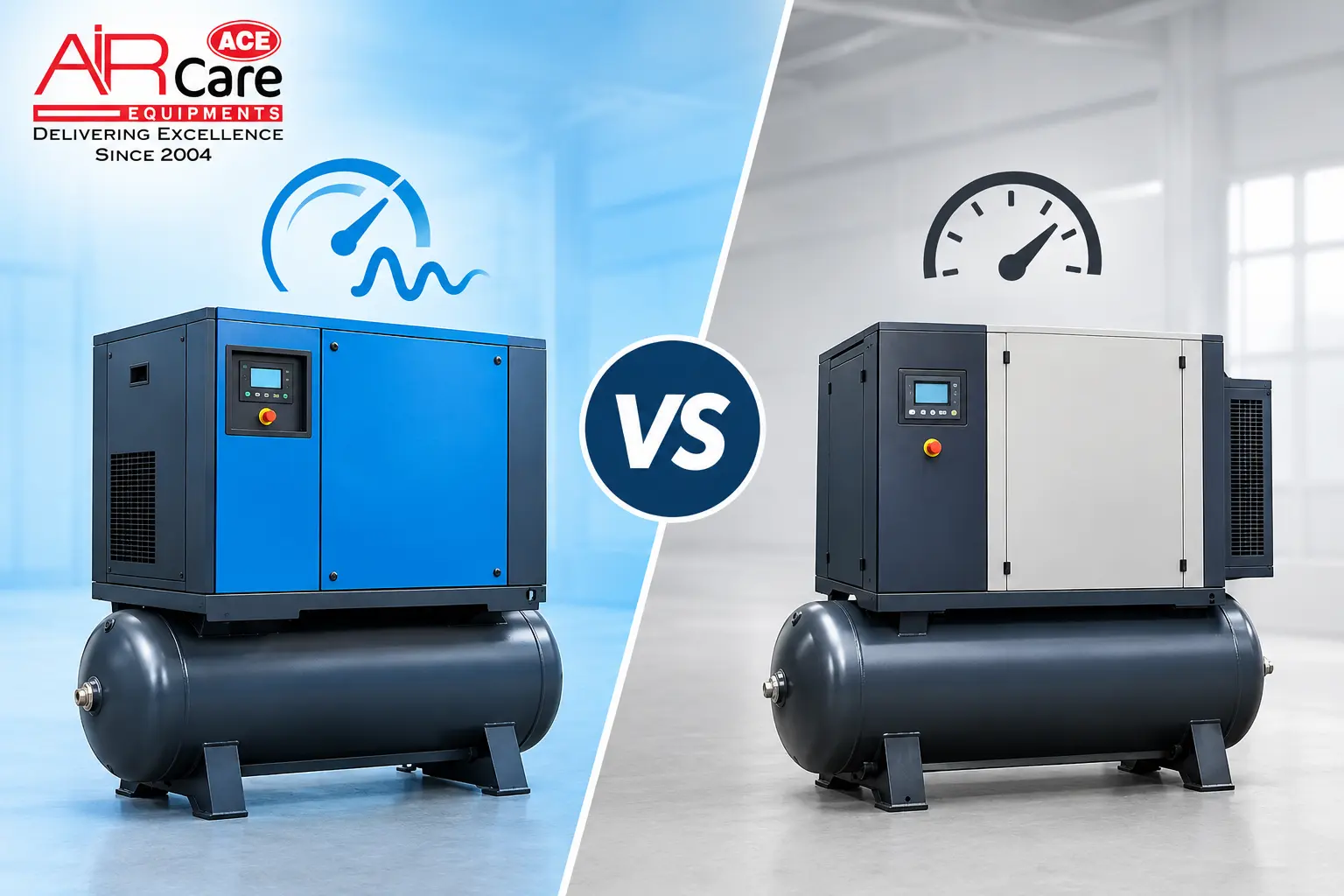
Oil-Free vs Oil-Lubricated Air Compressors
Both compressor types can be suitable for industrial use. The choice depends on air-quality requirements, operating conditions, maintenance, and overall cost.
|
Feature |
Oil-free compressor |
Oil-lubricated compressor |
|
Compression chamber |
Designed without conventional lubricating oil in the compression chamber |
Uses oil for lubrication in the compression process |
|
Oil contamination risk |
Helps reduce oil contamination risk from compression |
Requires suitable oil separation and control |
|
Common applications |
Sensitive applications where oil contamination must be controlled |
Many general industrial and workshop applications |
|
Oil-related maintenance |
Can reduce certain oil-related service tasks |
Requires oil-related maintenance |
|
Air treatment |
Filters and dryers may still be required |
Oil separation, filtration, and drying may be required |
|
Selection factors |
Air quality, airflow, pressure, duty cycle, and cost |
Air quality, airflow, pressure, duty cycle, and cost |
Neither technology is automatically the best choice for every facility. Evaluate the actual process and required compressed-air specification before making a decision.
Latest Oil-Free Compressor Technology
Oil-free compressor technology continues to develop through improvements in materials, cooling, drive systems, controls, and monitoring.
Advanced Materials and Coatings
Some compressor designs use specialised materials, coatings, and component designs to manage wear and support performance without conventional oil lubrication in the compression chamber.
The materials and engineering approach vary by compressor technology.
Energy-Efficient Drive Systems
Some models offer variable-speed drives, direct-drive arrangements, or control systems designed to improve operating efficiency.
Potential savings depend on the compressor model, load profile, working pressure, and how the complete system is operated.
Smart Monitoring and Controls
Modern compressor systems may include digital controls and monitoring features that help operators track operating conditions and identify maintenance needs.
Some systems also support remote monitoring or industrial connectivity. The available features depend on the equipment model and configuration.
Predictive Maintenance
Monitoring operating data can help businesses identify unusual operating conditions and plan service activities. However, monitoring technology does not replace inspections or the manufacturer's maintenance recommendations.
How to Choose the Right Oil-Free Air Compressor
Selecting the right compressor requires a clear understanding of the facility's air demand and operating conditions.
1. Calculate Required Airflow
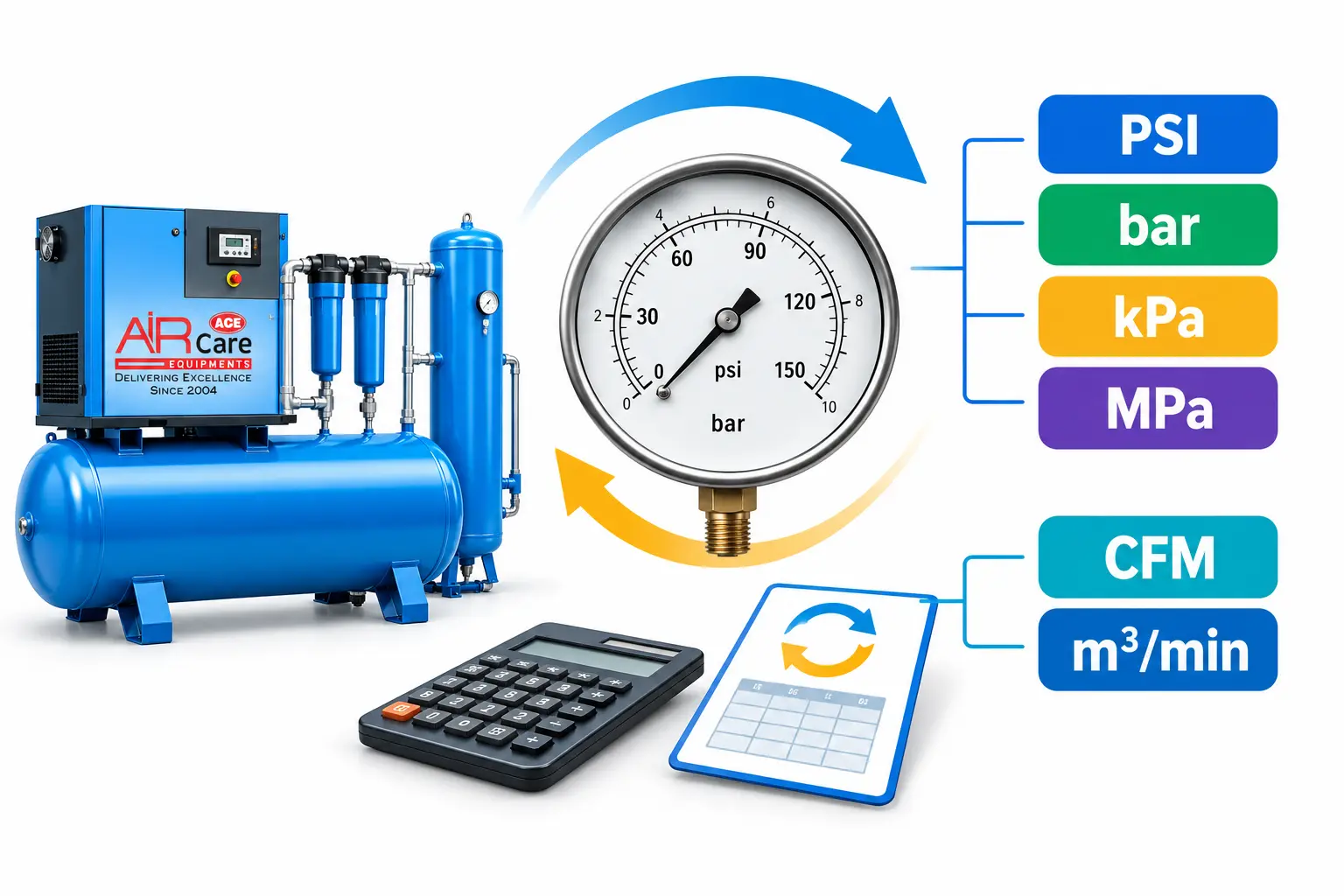
Identify the airflow required by connected equipment. Consider both average demand and peak demand, and use the appropriate flow unit, such as CFM or m⊃3;/min.
2. Determine Working Pressure
Check the pressure required at the point of use. Allow for pressure losses through filters, dryers, piping, and other system components.
3. Define Air-Quality Requirements
Determine the required levels of particle, water, and oil control. Refer to the relevant compressed-air purity specification, including ISO 8573-1 where applicable.
4. Check Operating Hours and Duty Cycle
Establish whether the compressor will run intermittently, for several hours each day, or continuously. Operating patterns influence the appropriate technology and system configuration.
5. Consider Installation Conditions
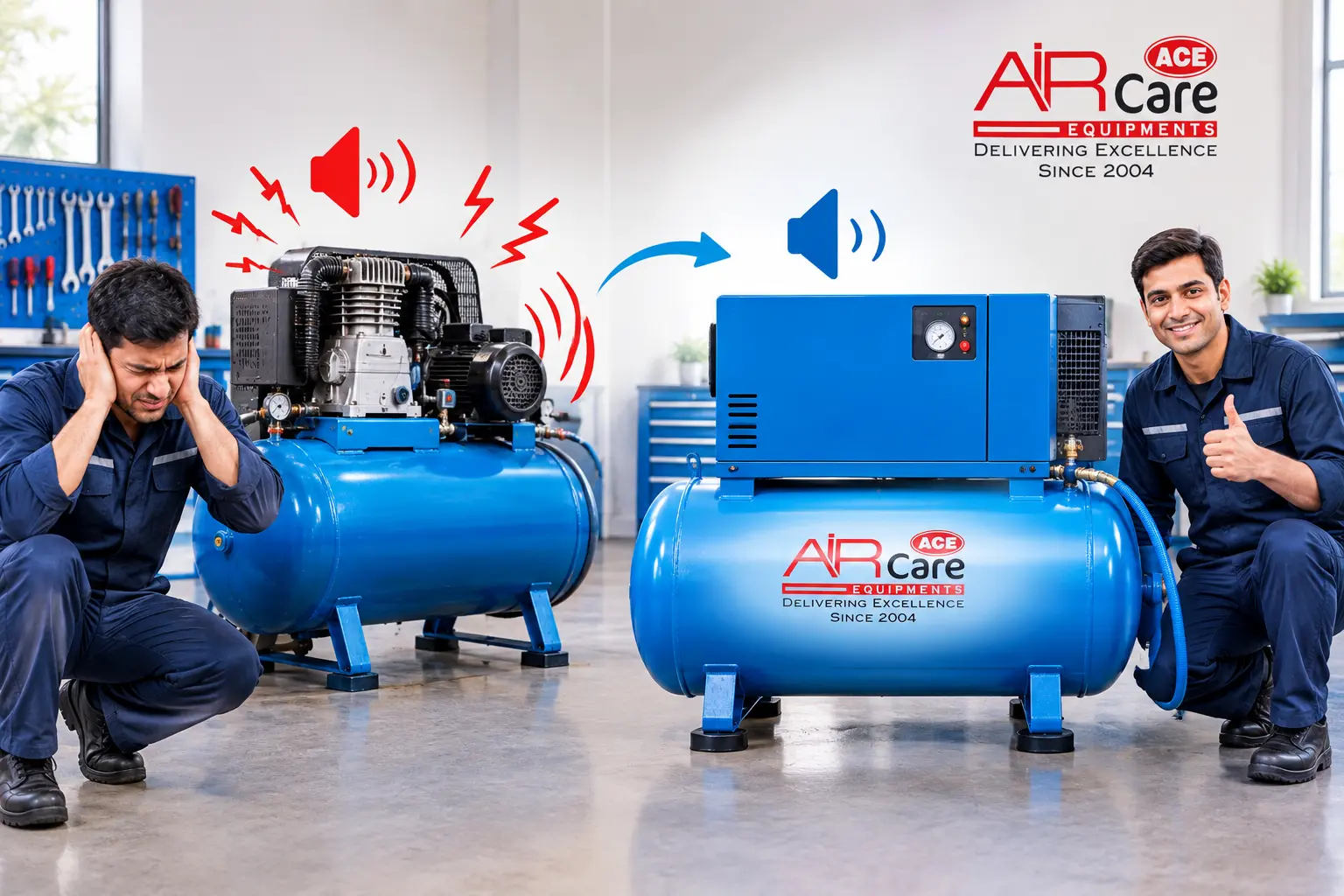
Review available space, ventilation, ambient temperature, electrical supply, noise requirements, and access for maintenance.
6. Evaluate Maintenance and Service
Check the recommended maintenance schedule, availability of spare parts, warranty conditions, and access to technical support.
7. Compare Total Cost of Ownership
Consider the purchase price alongside electricity consumption, maintenance, installation, spare parts, and expected equipment life.
Related reading: Air Compressor Sizing Guide: Calculating CFM and PSI
This guide can help you understand airflow and pressure requirements before selecting a compressor.
When Do You Need a High-Pressure Air Compressor?
Some industrial applications require pressure beyond the range of a conventional workshop compressor. Examples may include PET bottle blowing, leak testing, specialised pneumatic systems, and certain testing processes.
In these situations, a high-pressure compressor may be appropriate. However, high pressure and oil-free operation are separate requirements. A high-pressure model should not be assumed to be oil-free unless its specifications confirm that design.
Review the 3 HP High-Pressure Air Compressor for information about a model designed for applications such as PET blowing, leak testing, and high-pressure pneumatics.
Select a model only after confirming the required pressure, airflow, air quality, and duty cycle.
Why Choose Air Care Equipment?
Air Care Equipment provides compressed-air solutions for industrial and commercial applications. Choosing suitable equipment starts with understanding the application, technical requirements, and expected operating conditions.
Before purchasing an oil-free air compressor, compare available models and review their specifications for airflow, working pressure, air quality, energy consumption, and maintenance.
Visit Air Care Equipment to explore its compressed-air solutions or contact the team to discuss your requirements.
Need help selecting a compressor? Share your required airflow, operating pressure, application, and daily running hours to help identify a suitable system configuration.
Frequently Asked Questions
1. What is an oil-free air compressor?
An oil-free air compressor is designed to compress air without conventional lubricating oil in the compression chamber. It is commonly considered for applications where oil contamination must be controlled.
2. How does an oil-free air compressor work?
It draws in atmospheric air and compresses it through a mechanism designed to operate without conventional lubricating oil in the compression chamber. Cooling and additional air treatment may be required depending on the model and application.
3. What are the main benefits of oil-free air compressors?
Benefits can include reduced risk of oil contamination, suitability for sensitive applications, and fewer oil-related maintenance tasks. Actual performance depends on the compressor design and complete system.
4. Which industries use oil-free air compressors?
Applications include pharmaceutical manufacturing, food and beverage processing, electronics, medical and dental facilities, laboratories, automotive painting, printing, and other processes where compressed-air purity is important.
5. Are oil-free air compressors maintenance-free?
No. They still require regular maintenance of filters, cooling systems, valves, bearings, electrical components, and other parts according to the manufacturer's instructions.
6. Is oil-free compressed air sterile?
No. Oil-free compression does not automatically remove all particles, moisture, or microorganisms. Additional treatment and testing may be necessary for applications with strict air-quality requirements.
7. Does an oil-free compressor automatically meet ISO Class 0?
No. Oil-free describes compressor technology, while ISO 8573-1 defines compressed-air purity classifications. Confirm the required classification through appropriate product specifications and testing.
8. Are oil-free compressors more energy-efficient?
Not always. Energy performance depends on compressor design, sizing, operating pressure, demand patterns, controls, and maintenance. Compare the expected performance of specific models.
9. Do oil-free air compressors remove moisture?
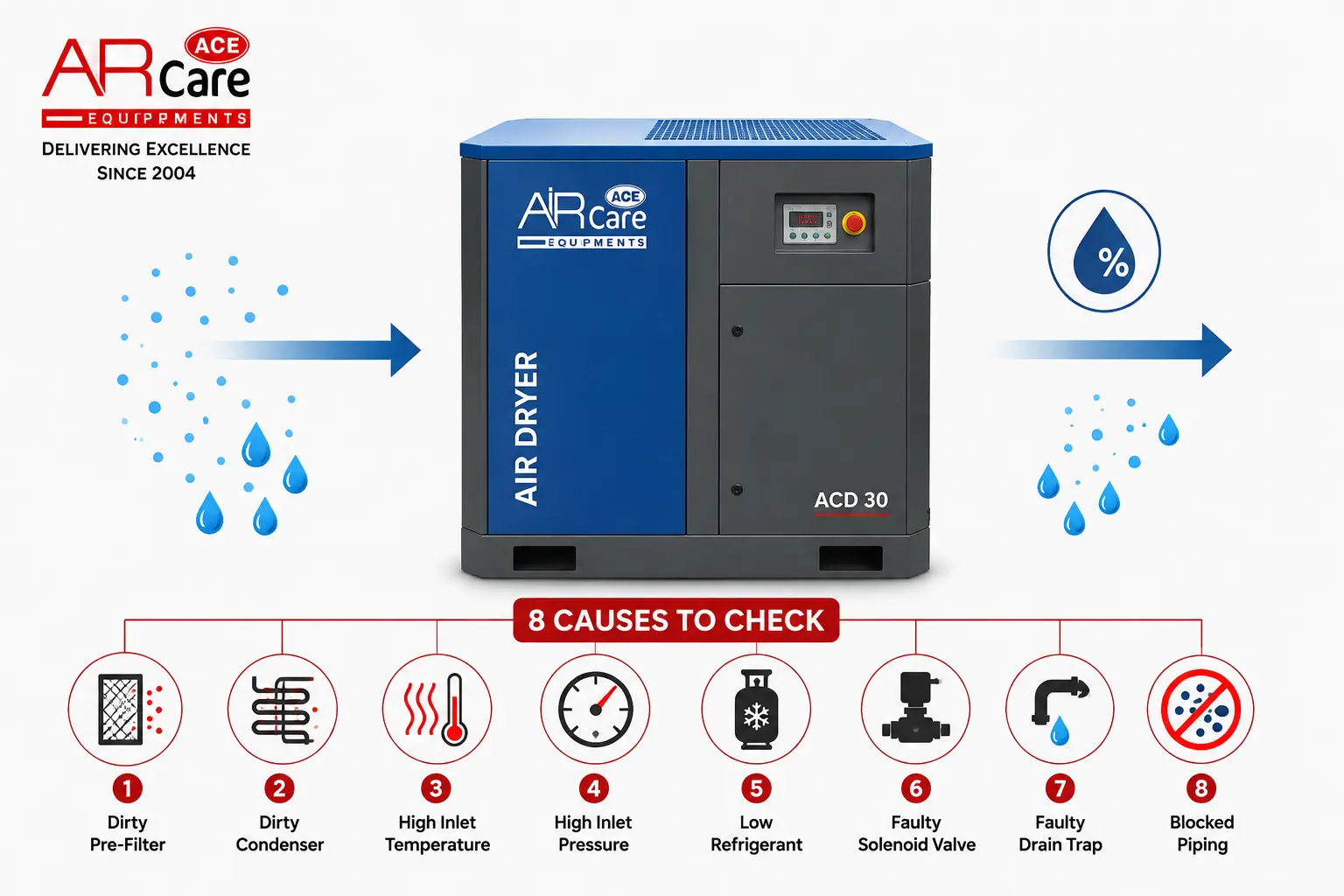
No. Oil-free compression does not automatically remove moisture. Depending on the application, an air dryer, moisture separation, and condensate management may be required.
10. How long does an oil-free air compressor last?
Service life depends on the compressor design, workload, installation environment, and maintenance practices. Follow the manufacturer's recommendations to support reliable long-term operation.
Conclusion
Oil-free air compressors are an important option for industries that need to reduce the risk of oil contamination in compressed air. They are commonly considered for pharmaceutical, food and beverage, electronics, medical, automotive painting, and other sensitive applications.
Their benefits may include reduced oil-related maintenance and support for cleaner production processes. However, oil-free compression alone does not guarantee sterile or completely contaminant-free air.
Before purchasing, evaluate airflow, working pressure, air-quality requirements, operating hours, energy performance, maintenance, and total cost of ownership. Selecting the right compressor and air-treatment configuration can help support reliable performance and consistent compressed-air quality.
Recent Posts