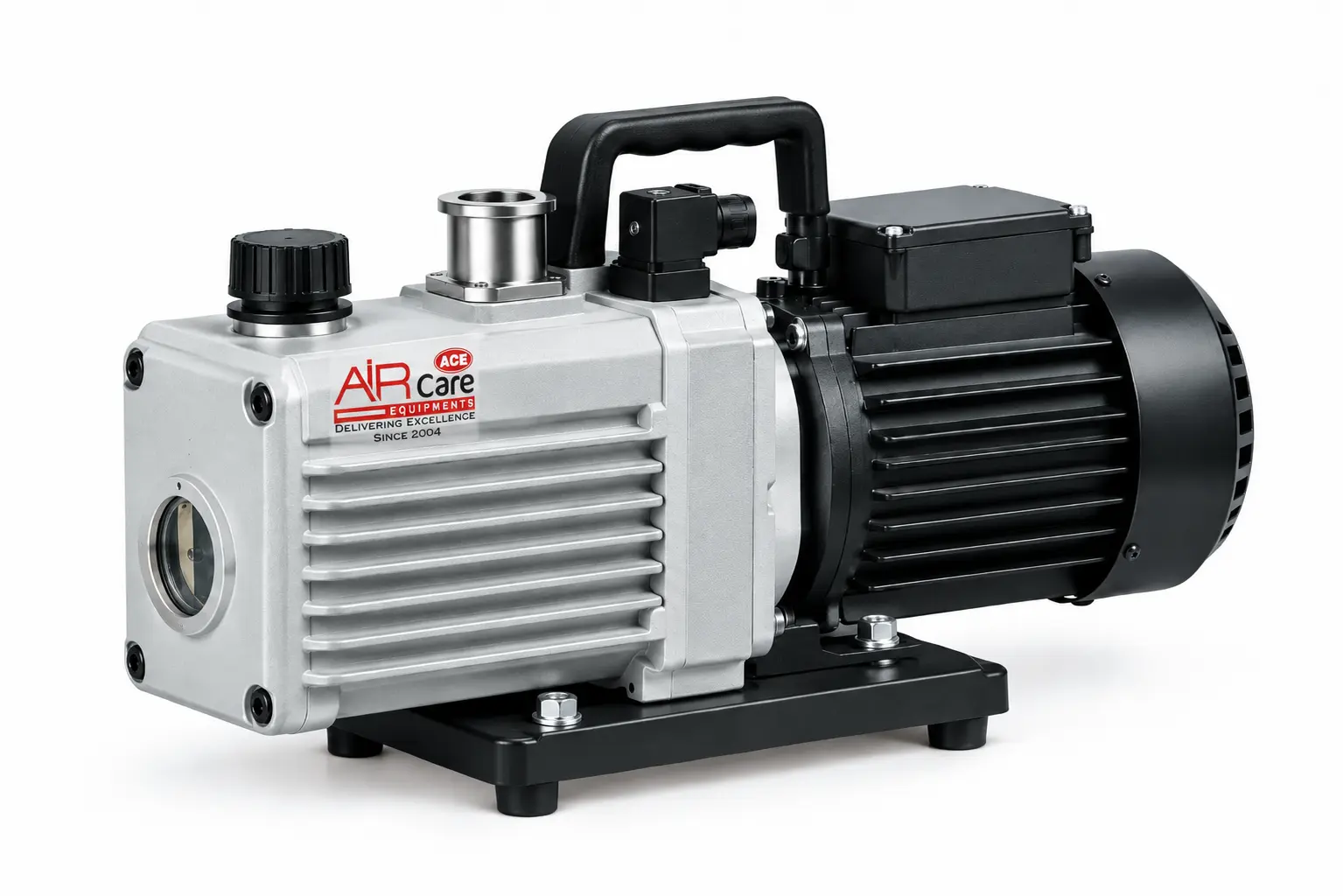
How Does a Rotary Vane Vacuum Pump Work? Working Principle Explained
A rotary vane vacuum pump is used to remove air and other gases from a closed system and create a vacuum. It is commonly used in industrial production, packaging, printing, laboratories, woodworking, and other processes that need controlled vacuum conditions.
Understanding the rotary vane vacuum pump working principle helps users choose the right pump, operate it correctly, and maintain it for reliable performance.
Quick Answer
A rotary vane vacuum pump removes air and other gases from a closed space to create a vacuum. It uses a rotating rotor and small sliding blades called vanes. As the rotor turns, the vanes trap air inside the pump. The pump then compresses and releases this air through an exhaust outlet.
I find this simple design useful in industrial processes. In packaging, printing, laboratories, and other applications that require controlled vacuum levels, the pump is commonly used.
Key Takeaways
-
A rotary vane vacuum pump removes gas from a system to create a vacuum.
-
Its main parts are the rotor, vanes, housing, inlet, and exhaust outlet.
-
The vanes create small spaces that trap and move air.
-
Oil-sealed models use oil to reduce friction and improve sealing.
-
Dry-running models work without sealing oil in the pumping chamber.
-
A screw vacuum pump uses rotating screws instead of sliding vanes.
-
Regular maintenance helps keep a vacuum pump working well.
What Is a Rotary Vane Vacuum Pump?
A rotary vane vacuum pump removes air or gas from a closed space. It lowers the pressure inside that space. This process creates a vacuum.
The pump has an off-centre rotor inside a round housing. This rotor has slots that hold sliding vanes. When the rotor turns, the vanes push outward. Press against the inner wall of the housing.
These vanes split the pump's interior into chambers. As the rotor keeps spinning, these chambers capture gas and move it toward the exhaust outlet. Move it toward the exhaust outlet.
In industrial pumps, oil is used to help seal the moving parts. This improves performance. Helps create a better vacuum. Some pumps are designed to run without oil. These are called running models. They don’t need oil in the pumping chamber.
Choosing between oil-filled and dry-running models depends on the type of process being used. It also depends on how a vacuum is needed. Each type has its advantages depending on the application.
What Is the Working Principle of a Rotary Vane Vacuum Pump?
The working principle of a vacuum pump is based on changes in the volume of trapped gas. When the chamber becomes larger, it draws in gas. When the chamber becomes smaller, it compresses the gas and pushes it out.
Here is the process in simple steps.
Step 1: The motor starts the rotor
An electric motor turns the rotor inside the pump housing. The rotor sits off-centre, so the gap between it and the housing changes as it turns.
Step 2: The vanes move outward
The vanes slide in and out of slots in the rotor. Springs or centrifugal force help keep them in contact with the housing wall. This contact helps form separate chambers.
Step 3: The pump draws in air
As a chamber grows, its pressure falls. Gas from the connected system enters through the inlet. This is the suction stage.
Step 4: The vanes trap the gas
The rotating vanes carry the trapped gas around the housing. The gas stays inside the space between the vanes and the housing wall.
Step 5: The gas is compressed
As the chamber becomes smaller, the gas pressure rises. The pump moves the gas towards the exhaust side.
Step 6: The gas leaves the pump
Once the pressure reaches the necessary threshold, the exhaust valve opens. The gas exits through the outlet. The cycle then continues as the rotor keeps rotating.
This repeated action removes more gas from the connected system. As a result, the system pressure falls.
Read More: Air Compressor Sizing Guide: Calculating CFM & PSI for Air Tools
What Are the Main Parts of a Rotary Vane Vacuum Pump?
Each part has a clear role. Together, they help the pump create and maintain a vacuum.
|
Part |
Function |
|
Rotor |
Rotates to move gas through the pump |
|
Vanes |
Divide the chamber and trap gas |
|
Housing or stator |
Forms the outer chamber around the rotor |
|
Intel port |
Allows gas to enter the pump |
|
Exhaust valve |
Controls the release of compressed gas |
|
Exhaust outlet |
Carries gas out of the pump |
|
Oil system |
Lubricates and seals parts in oil-sealed models |
|
Electronic motor |
Provides the power to turn the rotor |
The exact design can vary by model. Always check the manufacturer's manual for the parts used in your pump.
Rotary Pump Diagram: How the Parts Work Together
A rotary vane vacuum pump diagram can make the working process easier to understand.
A basic gas-flow sequence is:
Gas from System → Inlet Port → Pumping Chamber → Sliding Vanes → Rotor → Exhaust Valve → Gas Outlet
Inside the housing, the rotor turns while the vanes form separate spaces. These spaces take in gas, carry it around the chamber, compress it, and move it toward the exhaust side.
The exact internal layout can vary depending on the pump design, so the manufacturer's drawing should be used when checking a specific model.
What Are the Types of Rotary Vane Vacuum Pumps?
Rotary vane vacuum pumps are available in different designs. Two common options are oil-sealed and dry-running pumps.
|
Type |
How It Works |
Common Uses |
|
Oil-sealed pump |
Uses oil to improve sealing and reduce wear |
Industrial vacuum systems, packaging, and laboratory work |
|
Dry-running pump |
Uses vanes and other parts designed to operate without sealing oil in the pumping chamber. |
Processes where oil contamination must be limited |
|
Single-stage pump |
Uses one pumping stage to remove gas |
Applications that suit its rated vacuum level |
|
Two-stage pump |
Uses two stages to achieve a deeper vacuum than a similar single-stage design may provide. |
Applications that need a lower final pressure |
Not every pump supports every operating condition. Check the rated vacuum level, gas type, temperature limits, and duty cycle before selecting a model.
Oil-Sealed vs Dry-Running Rotary Vane Vacuum Pumps
Oil-sealed and dry-running designs can both be useful, but they have different operating characteristics.
|
Feature |
Oil-Sealed Pump |
Dry-Running Pump |
|
Sealing |
Uses oil for sealing |
Does not use sealing oil in the pumping chamber |
|
Lubrication |
Oil provides lubrication |
Designed to operate without chamber oil |
|
Maintenance |
Oil level and oil condition need attention |
Oil changes are not required in the pumping chamber |
|
Contamination |
Oil mist may need to be controlled |
Useful where oil contamination must be limited |
|
Selection |
Suitable where oil-sealed operation is acceptable |
Suitable for processes where oil-free operation is important |
The correct choice depends on the process and the pump manufacturer's specifications.
Rotary Vane Vacuum Pump vs Screw Vacuum Pump
A screw vacuum pump uses two rotating screw-shaped parts to move gas through the pump. A rotary vane model uses a rotor with sliding vanes. Both designs remove gas, but their internal parts and maintenance needs differ.
|
Feature |
Rotary vane Vacuum Pump |
Screw Vacuum Pump |
|
Main Parts |
Rotor and sliding vanes |
Two rotating screw-shaped parts |
|
Gas movement |
Vanes trap and move gas through changing chambers |
Rotating screws move gas along the pump chamber |
|
Oil Use |
Many models use oil for sealing and lubrication. Dry-running models are also available |
Dry screw designs operate without oil in the compression chamber |
|
Maintenance |
Oil-sealed models need oil and filter checks. Vane wear also needs attention |
Maintenance depends on the design and operating conditions |
|
Best choice |
Suitable for applications within the pump’s rated vacuum and flow range |
Suitable for applications that match its flow, vacuum, and process requirements |
Neither design is best for every job. Compare the required vacuum level, pumping speed, gas type, running hours, and maintenance plan before deciding.
Where Are Rotary Vane Vacuum Pumps Used?
Many industries need to extract air from products, containers, or processes. A rotary vane vacuum pump can meet these needs when its capacity matches the application.
Common uses include:
-
Packaging: Removes air from suitable packaging systems.
-
Printing: Supports vacuum handling of paper and other materials.
-
Woodworking: Helps hold sheets or panels on vacuum tables.
-
Laboratories: Supports vacuum work in suitable test and research equipment.
-
Refrigeration servicing: Helps remove air and moisture during approved system evacuation work.
-
Industrial production: Supports processes that need controlled vacuum conditions.
These are examples, not a guarantee that every pump suits every task. Check the manufacturer's specifications before use.
Read More: How to Size an Air Compressor for Your Tools & Applications
What Are the Advantages and Limitations?
A rotary vane design has several benefits. However, it also has limits that buyers should understand.
Advantages
-
Compact design: Many models fit into small industrial spaces.
-
Steady operation: The rotating design supports continuous gas removal.
-
Simple working principle: The main parts are easy to understand.
-
Good vacuum performance: Suitable models can achieve the vacuum levels needed for many industrial tasks.
-
Wide range of uses: With the right selection, these pumps support different processes.
Limitations
-
Vane wear: Vanes wear over time and may need replacement.
-
Oil care: Oil-sealed models need regular oil checks and changes.
-
Heat: Long operating periods can raise the pump temperature.
-
Gas limits: Some gases or vapours may need special handling.
-
Contamination risk: Oil-sealed models may release oil mist if the exhaust system isn't maintained properly.
The best way to avoid problems is to match the pump to the job and follow the service instructions.
How Do You Maintain a Rotary Vane Vacuum Pump?
Regular care helps the pump work reliably. It can also reduce unexpected downtime.
Follow these basic checks:
-
Check the oil level. Do this for oil-sealed models and use the oil type listed in the manual.
-
Look for leaks. Check hoses, seals, and pipe connections.
-
Clean the inlet filter. A blocked filter can affect pump performance.
-
Watch for unusual noise. New sounds or strong vibration may point to a problem.
-
Check the exhaust. Make sure the exhaust path and any oil-mist filter are in good condition.
-
Replace worn parts. Follow the manufacturer's service schedule for vanes, seals, and filters.
-
Keep service records. Record oil changes, repairs, and performance checks.
Always isolate the power before inspection or service. Let hot parts cool down and follow the safety instructions for your model.
Also Read: 7 Most Common Uses of Industrial Air Compressors in Manufacturing & Industry
How Can You Choose the Right Vacuum Pump?
Before buying a pump, answer a few simple questions:
-
What vacuum level does your process need?
-
How much gas must the pump remove each hour?
-
Will it run for short periods or throughout the day?
-
Does the process produce water vapour or other vapours?
-
Is oil in the exhaust acceptable?
-
What maintenance can your team carry out?
-
Is there enough space for installation and service?
Compare these needs with the pump's rated performance. Do not select a model based on motor power alone. Pumping speed and final vacuum level are also important.
Air Care Equipment provides industrial air and vacuum equipment solutions. Businesses can discuss their process needs and check the available options before selecting a suitable system.
Choosing an Industrial Vacuum Pump
For industrial applications, the right vacuum pump should match the actual process rather than simply the required motor power.
Consider the required vacuum level, pumping speed, operating hours, process gas, oil requirements, maintenance needs, and installation conditions.
Air Care Equipment provides industrial air and vacuum equipment solutions. Businesses can discuss their process requirements and evaluate suitable vacuum equipment before selecting a system.
Final Thoughts
A rotary vane vacuum pump traps gas between sliding vanes and a rotating rotor. The chambers expand to draw in gas. They then shrink to compress and release it. This cycle lowers the pressure in the connected system.
The right pump depends on the required vacuum level, gas type, working hours, and maintenance needs. Compare rotary vane and screw designs before making a final choice. Air Care Equipment can be considered when exploring industrial vacuum equipment for your application.
Frequently Asked Questions
1. What is a rotary vane vacuum pump?
A rotary vane vacuum pump removes gas from a closed space to create a vacuum. It uses a rotating rotor and sliding vanes to trap and move gas through the pump.
2. How does a rotary vane vacuum pump work?
The rotor turns inside an off-centre housing. Sliding vanes create chambers that draw in gas, trap it, compress it, and release it through the exhaust.
3. What is the rotary vane pump working principle?
The rotary vane pump working principle is based on changing chamber volume. Expanding chambers draw in gas, while shrinking chambers compress and move the gas toward the exhaust.
4. What is the vane pump working principle?
The vane pump working principle uses sliding vanes that move in and out as the rotor rotates. The vanes divide the chamber into spaces that trap and move gas through the pump.
5. Does a rotary vane vacuum pump need oil?
Some rotary vane vacuum pumps use oil for sealing, lubrication, and cooling. Dry-running models do not use sealing oil in the pumping chamber. Always check the requirements of the specific model.
6. What are the main parts of a rotary vane vacuum pump?
The main parts include the rotor, sliding vanes, housing, inlet port, exhaust valve, exhaust outlet, electric motor, and, in oil-sealed models, an oil system.
7. What is the difference between an oil-sealed and dry-running rotary vane vacuum pump?
An oil-sealed pump uses oil in the pumping chamber for sealing and lubrication. A dry-running pump is designed to operate without sealing oil in the pumping chamber.
8. What is the difference between a rotary vane and screw vacuum pump?
A rotary vane vacuum pump uses a rotor with sliding vanes, while a screw vacuum pump uses rotating screw-shaped elements. The suitable option depends on the required vacuum, pumping speed, process gas, operating conditions, and maintenance plan.
9. Where are rotary vane vacuum pumps used?
They can be used in suitable packaging, printing, woodworking, laboratory, refrigeration servicing, and industrial applications.
10. How can I make my vacuum pump last longer?
Follow the manufacturer's service schedule, use the correct oil where required, clean filters, check for leaks, monitor unusual noise or vibration, and replace worn parts on time.
11. How do I choose the right rotary vane vacuum pump?
Consider the required vacuum level, pumping speed, gas type, operating hours, oil requirements, maintenance needs, and installation conditions. Select a model based on its rated specifications rather than motor power alone.
Recent Posts