Why Are Oil-Free Air Compressors Essential for Sustainable Manufacturing?
Quick Answer: Oil-free air compressors are becoming the standard in eco-friendly manufacturing because they eliminate oil-contaminated condensate and VOC emissions, reduce the energy lost to oil-filtration and separation systems, and cut down on hazardous waste disposal, directly supporting ISO 14001 environmental management and ESG compliance goals. Industries such as pharmaceuticals, food processing, electronics, and EV battery manufacturing are shifting to oil-free systems both for air purity and for measurable sustainability gains.
What Makes Manufacturing "Eco-Friendly" in 2026?
Sustainability in Indian manufacturing is no longer a marketing checkbox, it's a compliance requirement. Tightening ESG disclosure norms, rising industrial power tariffs, and expanding Extended Producer Responsibility (EPR) regulations are pushing factory managers to scrutinize every energy-consuming system on their floor, not just the obvious ones like furnaces or HVAC.
Compressed air is one of the most overlooked contributors to a factory's environmental footprint. It's often called the "fourth utility," and industry estimates suggest compressed air systems can account for 10–15% of a manufacturing plant's total electricity consumption. When a system also generates oil-contaminated waste, uses energy-hungry filtration, and leaks air (a compounding energy loss), it becomes a bigger sustainability liability than most plant managers realize.
This is where the shift toward oil-free air compressors fits into the larger eco-friendly manufacturing conversation, not as a niche upgrade, but as one of the most direct ways to cut both emissions and energy costs at the source.
How Oil-Free Compressors Work
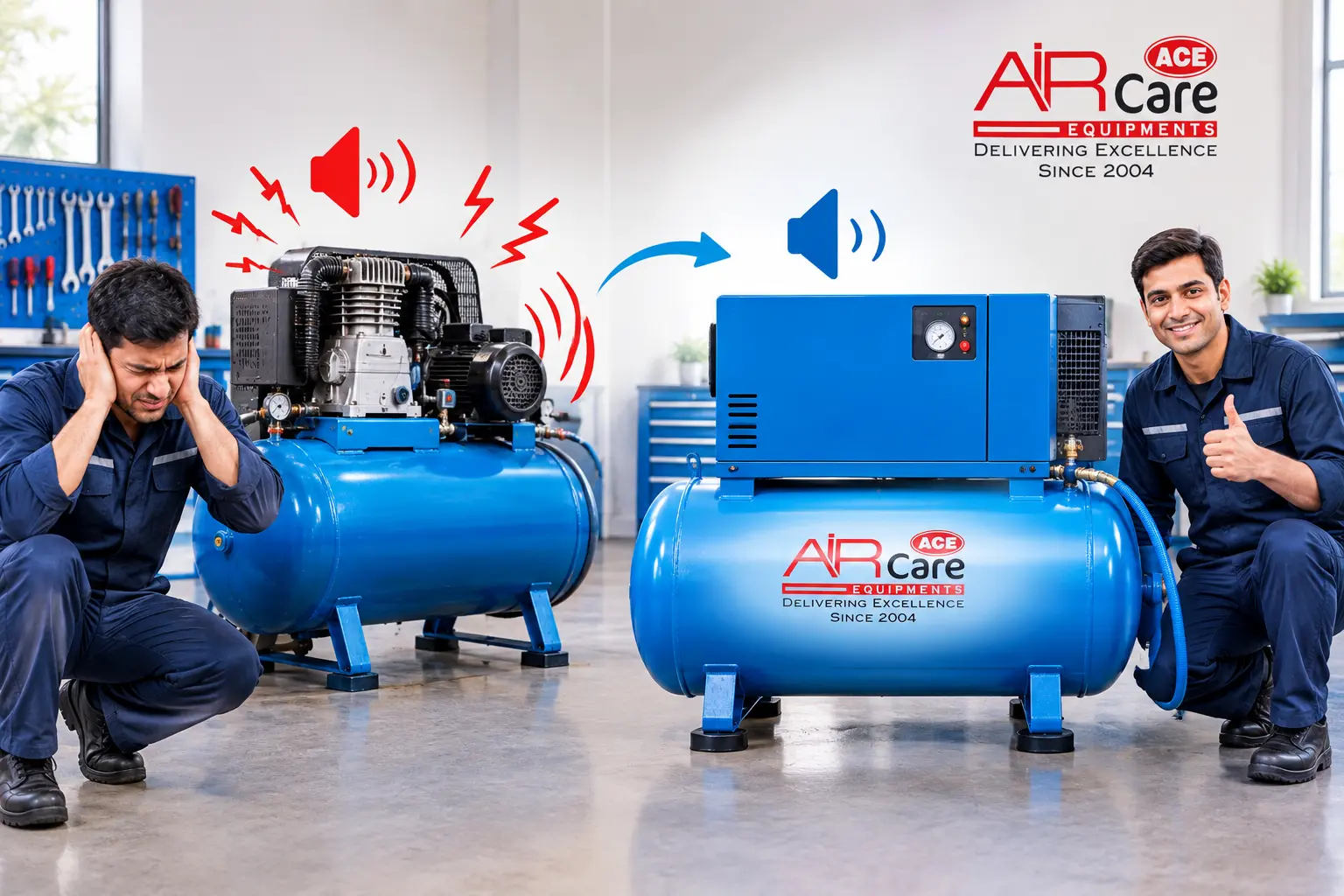
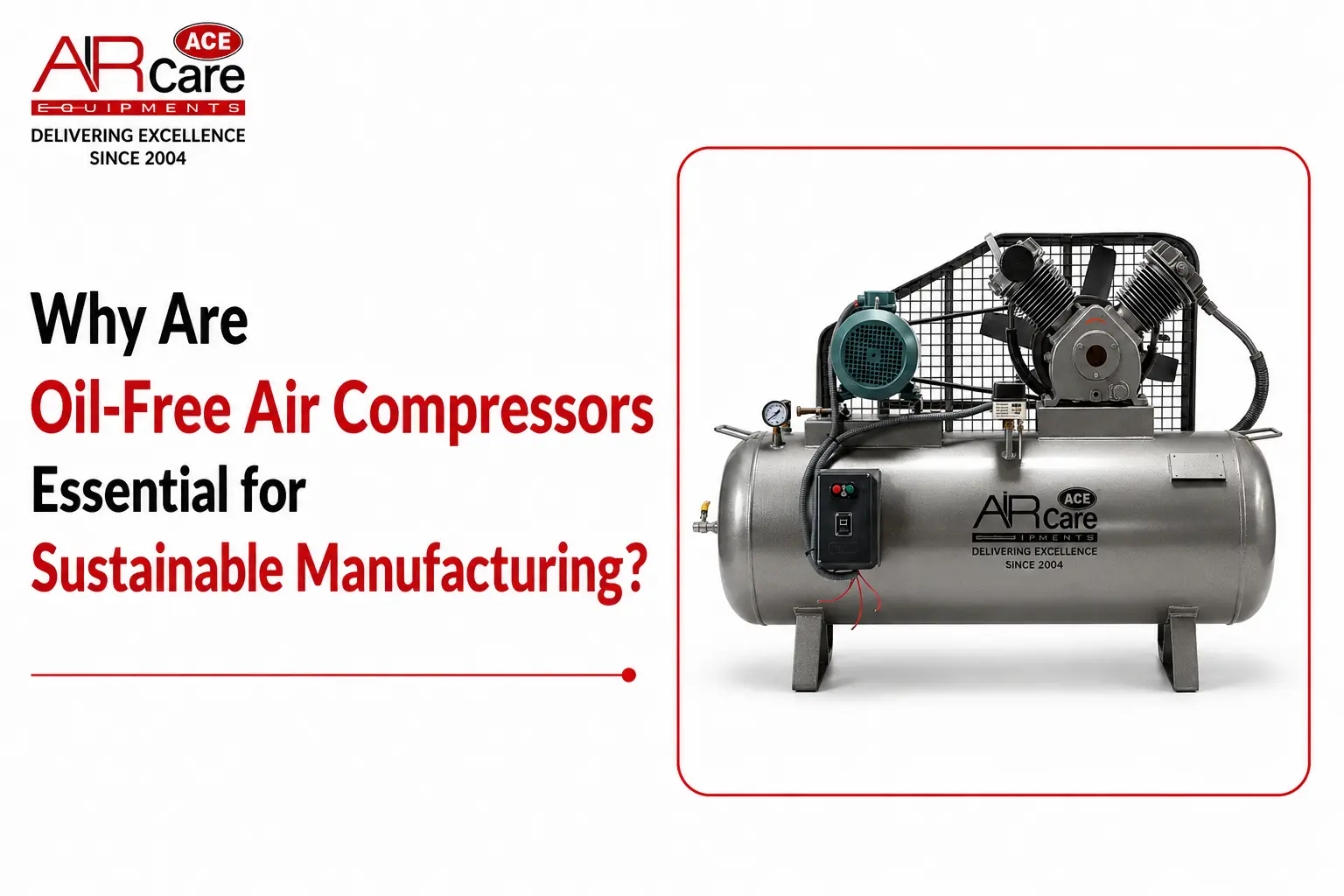
Unlike conventional oil-injected (lubricated) compressors, oil-free compressors are engineered so that no lubricating oil comes into contact with the compression chamber or the compressed air stream. This is achieved through specially coated cylinders, precision-engineered rotors, or water-injected designs — depending on the compressor type, that eliminate the need for oil in the air path entirely.
The result is compressed air that meets ISO 8573-1 Class 0 certification, the strictest international standard for air purity, meaning zero oil content, not just "low oil" or "filtered oil."
For a deeper technical breakdown of how oil-free technology works across piston and screw compressor types, see our Ultimate Guide to Choosing the Right Oil-Free Compressor.
5 Ways Oil-Free Compressors Support Sustainable Manufacturing
1. Zero Oil Contamination Means Zero Hazardous Condensate Waste
Oil-injected compressors produce condensate that mixes water with residual compressor oil. This condensate is classified as hazardous waste in most jurisdictions and must be collected, separated, and disposed of through licensed handlers — an ongoing cost and compliance burden. Oil-free systems produce condensate that requires no such hazardous handling, cutting both waste-disposal costs and environmental liability.
2. Lower Energy Consumption from Reduced Filtration Load
Oil-injected systems require multi-stage coalescing filters to strip oil from the compressed air before use, and these filters create pressure drop — which means the compressor has to work harder, drawing more electricity, to deliver the same usable air pressure downstream. Oil-free systems bypass this filtration load entirely, translating into measurably lower energy draw per unit of usable compressed air over the system's lifetime.
Read More: Top 10 Air Compressor Manufacturers in India (2026 Buyer's Guide)
3. Longer Equipment Life Reduces Manufacturing Waste
Because oil-free compressors don't suffer from oil degradation, sludge buildup, or oil-related wear on internal components, well-maintained units typically have longer operational lifespans between major overhauls. Fewer replacement parts and fewer full unit replacements over a factory's operating life means a smaller embedded manufacturing footprint per unit of compressed air delivered.
4. No VOC or Oil-Vapor Emissions into Factory or Atmospheric Air
Oil-injected compressors can introduce trace oil vapor into the compressed air stream and, over time, into the surrounding facility air through leaks, venting, and maintenance activity. This contributes to volatile organic compound (VOC) exposure inside factories and to emissions that regulators increasingly track under industrial air-quality norms. Oil-free systems remove this exposure pathway altogether.
Read More: Industrial Air Compressor Manufacturer in India | Complete 2026 Guide
5. Easier Compliance with ISO 14001 and ESG Reporting
Facilities pursuing ISO 14001 environmental management certification, or reporting under corporate ESG frameworks, need auditable reductions in hazardous waste, energy intensity, and emissions. Switching compressed air infrastructure to oil-free systems gives sustainability teams a concrete, quantifiable line item to report, condensate disposal volumes, energy consumption per CFM, and eliminated VOC sources are all measurable before-and-after metrics.
Oil-Free vs. Oil-Injected: Environmental Impact Comparison
|
Factor |
Oil-Free Compressor |
Oil-Injected Compressor |
|
Condensate disposal |
Non-hazardous, minimal handling |
Classified hazardous; requires licensed oil-water separation |
|
Air purity standard |
ISO 8573-1 Class 0 (zero oil) |
Requires downstream filtration to reduce oil content |
|
Energy loss from filtration |
None |
Additional pressure drop and energy draw |
|
VOC/oil-vapor exposure |
None |
Possible through leaks and venting |
|
Typical maintenance profile |
Lower long-term wear from oil degradation |
Requires regular oil changes and filter replacement |
|
Best suited for |
Pharma, food & beverage, electronics, EV battery, medical |
General workshops, construction, non-sensitive industrial use |
Which Industries Benefit Most from Eco-Friendly Oil-Free Systems?
- Pharmaceuticals & healthcare — regulatory mandates for contamination-free air in drug manufacturing and medical device production
- Food & beverage processing—direct or indirect food-contact air must be oil-free under food safety standards
- Electronics & semiconductor manufacturing — even trace oil contamination can damage sensitive components
- EV battery manufacturing — an emerging, fast-growing sector in India where cleanroom-grade air purity is increasingly standard
- Automotive painting and finishing — oil contamination in paint-line air causes visible surface defects
Air Care Equipment's Class Zero Oil-Free Air Compressor range is designed specifically to meet ISO 8573-1 Class 0 requirements for these sectors.
The Business Case: Sustainability and Cost Savings Go Together
Eco-friendly doesn't mean expensive-for-the-sake-of-it. The same features that reduce environmental impact, lower filtration losses, reduced maintenance frequency, and fewer waste-disposal cycles also lower total cost of ownership over the compressor's lifetime. For most facilities, the sustainability upgrade and the cost-efficiency upgrade are the same investment, not a trade-off between "green" and "affordable."
Also Read: Air Compressor Maintenance Guide | Checklist & Service Tips 2026
Conclusion
As Indian manufacturers face mounting pressure to cut emissions, reduce hazardous waste, and lower energy intensity, oil-free air compressors have moved from a specialized purity requirement to a mainstream sustainability upgrade. They eliminate hazardous condensate, cut filtration-related energy losses, and give facilities a measurable way to support ISO 14001 and ESG goals — while often lowering total operating costs in the process.
If your facility is evaluating a switch to oil-free compressed air, talk to our engineering team about sizing the right Class Zero system for your production line.
Frequently Asked Questions
Q1: Are oil-free air compressors more expensive than oil-injected ones?
Oil-free compressors typically have a higher upfront purchase price than comparable oil-injected units. However, lower filtration energy losses, reduced maintenance costs, and eliminated hazardous waste disposal fees often offset this difference over the equipment's operating lifetime.
Q2: Do oil-free compressors use more or less energy than oil-injected compressors?
Oil-free compressors generally consume less energy per unit of usable compressed air because they don't require the multi-stage filtration that creates pressure drop and additional load in oil-injected systems.
Q3: What certification indicates a compressor is truly oil-free?
ISO 8573-1 Class 0 is the internationally recognized standard confirming zero oil content in compressed air, it is the strictest classification available and the benchmark used by pharmaceutical, food, and electronics industries.
Q4: Can oil-free compressors handle heavy industrial loads?
Yes. Modern oil-free screw and piston compressors are engineered for continuous industrial duty cycles and are used across manufacturing, automotive, and processing industries, not just in light-duty or lab settings.
Q5: How do oil-free compressors help with ESG or sustainability reporting?
They provide auditable, quantifiable reductions in hazardous condensate waste, energy consumption per unit of compressed air, and VOC/oil-vapor emissions — all of which can be tracked as measurable improvements in ISO 14001 or corporate ESG disclosures.
Q6 Is oil-free compressed air actually better for the environment, or is it mainly about product purity?
Both. Oil-free systems were originally adopted for product purity in sensitive industries, but the same design also removes hazardous waste streams and reduces energy loss — making the environmental benefit a direct consequence of the purity-driven engineering, not a separate feature.
Recent Posts