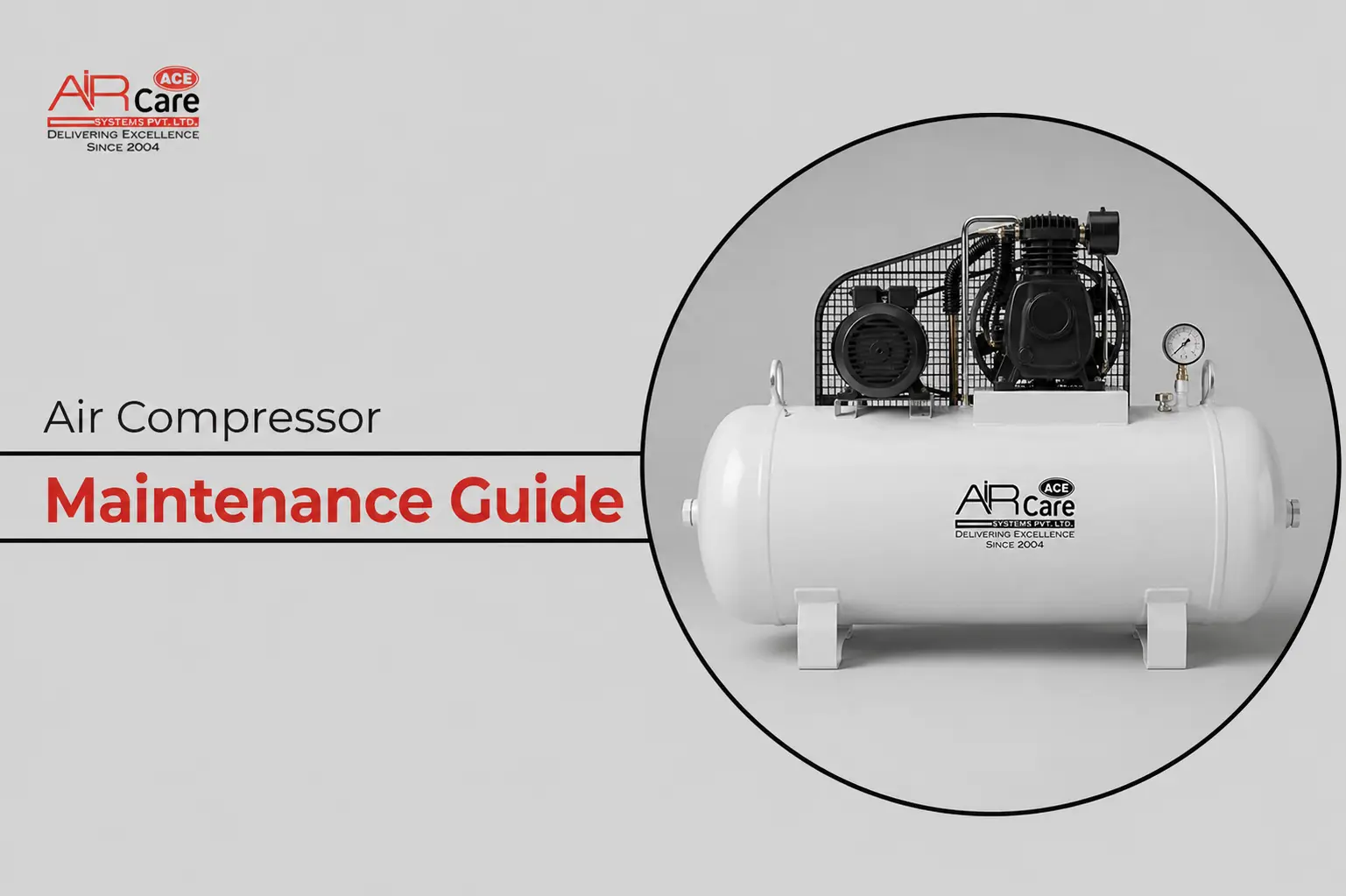
Air Compressor Maintenance Guide: Complete Checklist to Maximize Performance & Lifespan
Quick Answer
Air compressor maintenance involves regular daily, weekly, monthly, quarterly and annual checks. Common tasks include checking oil levels, draining condensate, inspecting filters, checking for leaks, monitoring pressure and temperature, and servicing critical components according to the manufacturer's recommendations. Regular preventive maintenance can improve efficiency, reduce unexpected downtime and extend equipment service life.
Compressed air is often called the "fourth utility" in Indian manufacturing, right alongside electricity, water, and gas. Whether you're running a screw air compressor on a production line, a reciprocating air compressor for light industrial use, or a vacuum pump for packaging operations, your compressed air system works around the clock to keep operations moving.
Yet air compressor maintenance is one of the most overlooked areas of industrial upkeep. A neglected compressor doesn't just fail suddenly — it fails gradually, in the form of rising electricity bills, inconsistent air pressure, and increasingly frequent breakdowns. Studies on industrial compressed air systems suggest that poor maintenance can inflate energy consumption by 15–20%, since a dirty filter, worn belt, or leaking valve forces the motor to work harder than necessary.
Let's Talk
Looking for the Right Industrial Equipment Solution?
This guide breaks down exactly what a proper air compressor maintenance schedule looks like, daily, weekly, monthly, and annually- so you can keep your piston, screw, or VSD air compressor running at peak efficiency for years.
Why Regular Air Compressor Maintenance Matters
Before diving into the checklist, it's worth understanding why maintenance should be a non-negotiable part of your operations:
-
Energy efficiency: A well-maintained compressor uses significantly less power to deliver the same output. Clean filters, correct oil levels, and tight seals directly reduce electricity consumption.
-
Extended equipment lifespan: Regular servicing prevents the wear-and-tear that leads to premature component failure, protecting your capital investment.
-
Reduced downtime: Unplanned compressor failure can halt an entire production line. Preventive maintenance catches small issues before they become costly shutdowns.
-
Safety and compliance: Pressure vessels and air receiver tanks are subject to safety regulations. Regular inspection ensures your equipment stays compliant with ISO 9001 and ISO 14001 standards.
With that foundation, here's a complete breakdown of your air compressor maintenance checklist.
Daily Maintenance Checklist
A few minutes each day can prevent major issues down the line:
-
Check the oil level: Essential for piston/reciprocating air compressors, which rely on lubrication to reduce friction between moving parts.
-
Drain condensate: Moisture collects in tanks and air dryers daily; failing to drain it can lead to corrosion and water contamination in your air lines.
-
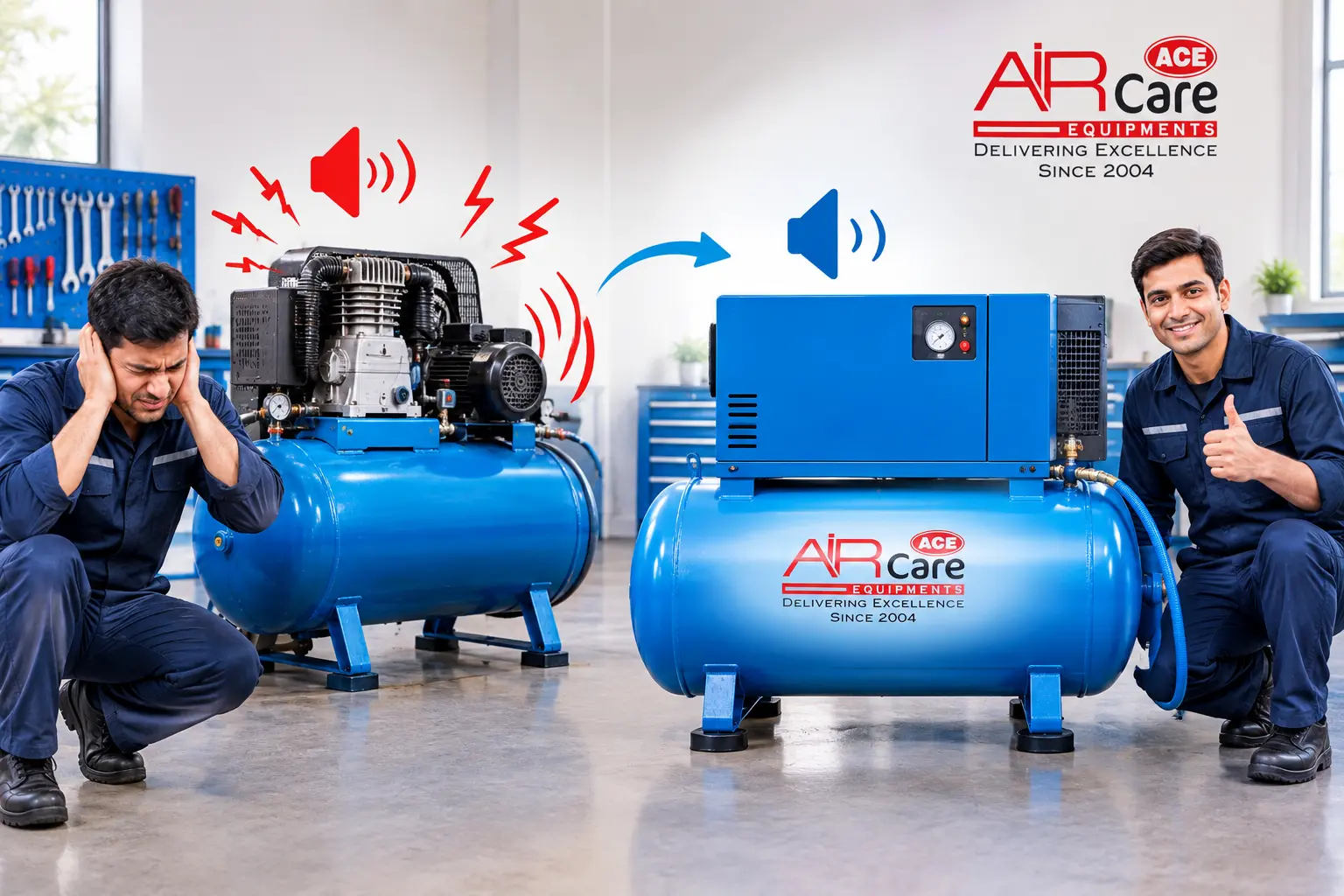
Inspect for unusual noise or vibration: Early indicators of bearing wear, loose components, or misalignment.
-
Check pressure and temperature gauges: Ensure readings fall within the manufacturer's recommended range.
-
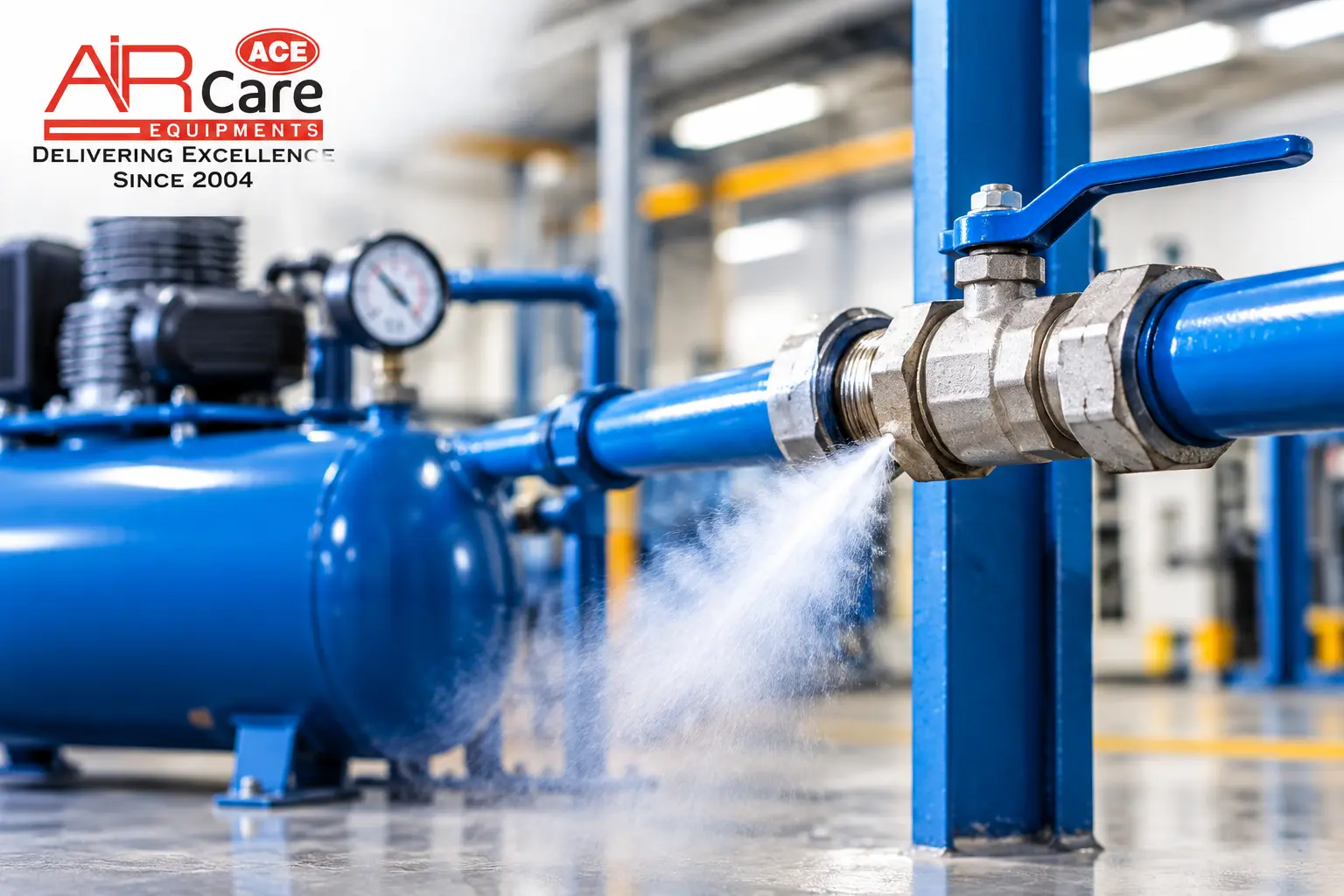
Visual inspection for air leaks: Even small leaks compound into significant energy losses over time.
Weekly Maintenance Tasks
-
Check belt tension on piston compressors — a loose or worn belt reduces compression efficiency.
-
Inspect air filters for dust and debris buildup, particularly important in Indian industrial environments with higher ambient dust levels.
-
Test safety valves to confirm they release pressure correctly in case of overload.
-
Clean cooling fins and radiators to prevent overheating, especially during summer months.
Monthly Maintenance Tasks
-
Change or top up compressor oil according to the manufacturer's specifications.
-
Inspect and clean intake filters thoroughly — a clogged intake restricts airflow and forces the motor to overwork.
-
Check electrical connections and motor health — Loose wiring or a struggling motor are common causes of compressor downtime.
-
Inspect air dryer performance by checking the dew point — a rising dew point signals reduced drying efficiency and potential moisture contamination downstream.
Quarterly and Annual Maintenance
This is where industrial air compressor maintenance becomes more technical and often requires professional expertise:
-
Full oil and filter change — Particularly critical for screw air compressors, where oil also serves a cooling and sealing function.
-
Inspect or replace the air-oil separator element — A worn separator causes oil carryover into your compressed air lines.
-
Check drive coupling alignment on screw-type units to prevent premature bearing failure.
-
Service vacuum pumps — oil changes, filter replacement, and seal inspection.
-
Pressure vessel inspection and certification renewal — Required for regulatory compliance and safe operation.
Maintenance Differences: Piston vs. Screw vs. VSD Compressors
Not all compressors are maintained the same way. Here's how the requirements differ:
Piston (Reciprocating) Compressors
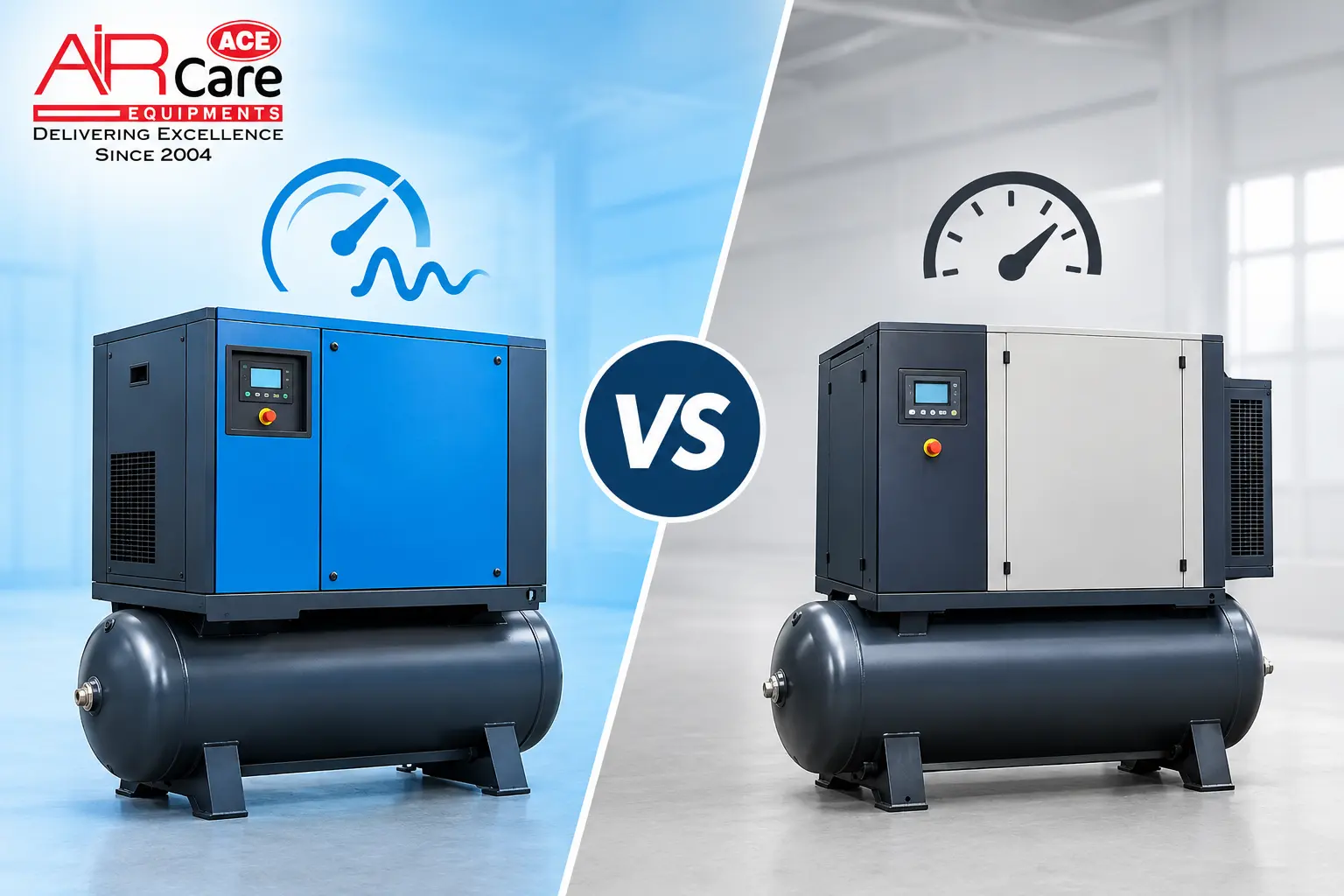
Best suited for intermittent, lower-duty applications. Maintenance focuses on regular oil checks, valve wear inspection, and belt tension, simpler mechanically, but requiring more frequent attention due to higher wear on moving parts.
Screw Air Compressors Designed for continuous, higher-demand industrial use. Maintenance centres around separator element replacement, coolant/oil quality, and bearing life. Because screw compressors run longer duty cycles, servicing intervals must be followed strictly to avoid overheating.
VSD (Variable Speed Drive) Compressors
These energy-efficient units add inverters and drive electronics to the maintenance equation. In addition to standard screw-compressor upkeep, technicians must check the VFD (Variable Frequency Drive) system and cooling components to ensure the electronics operate within safe temperature ranges.
(Explore our range of Piston, Screw, and VSD Screw Air Compressors to find the right fit for your application.)
Common Air Compressor Problems & Preventive Fixes
|
Problem |
Likely Cause |
Preventive Fix |
|
Overheating |
Blocked cooling fins, low oil, poor ventilation |
Regular cleaning, proper oil levels, adequate airflow around unit |
|
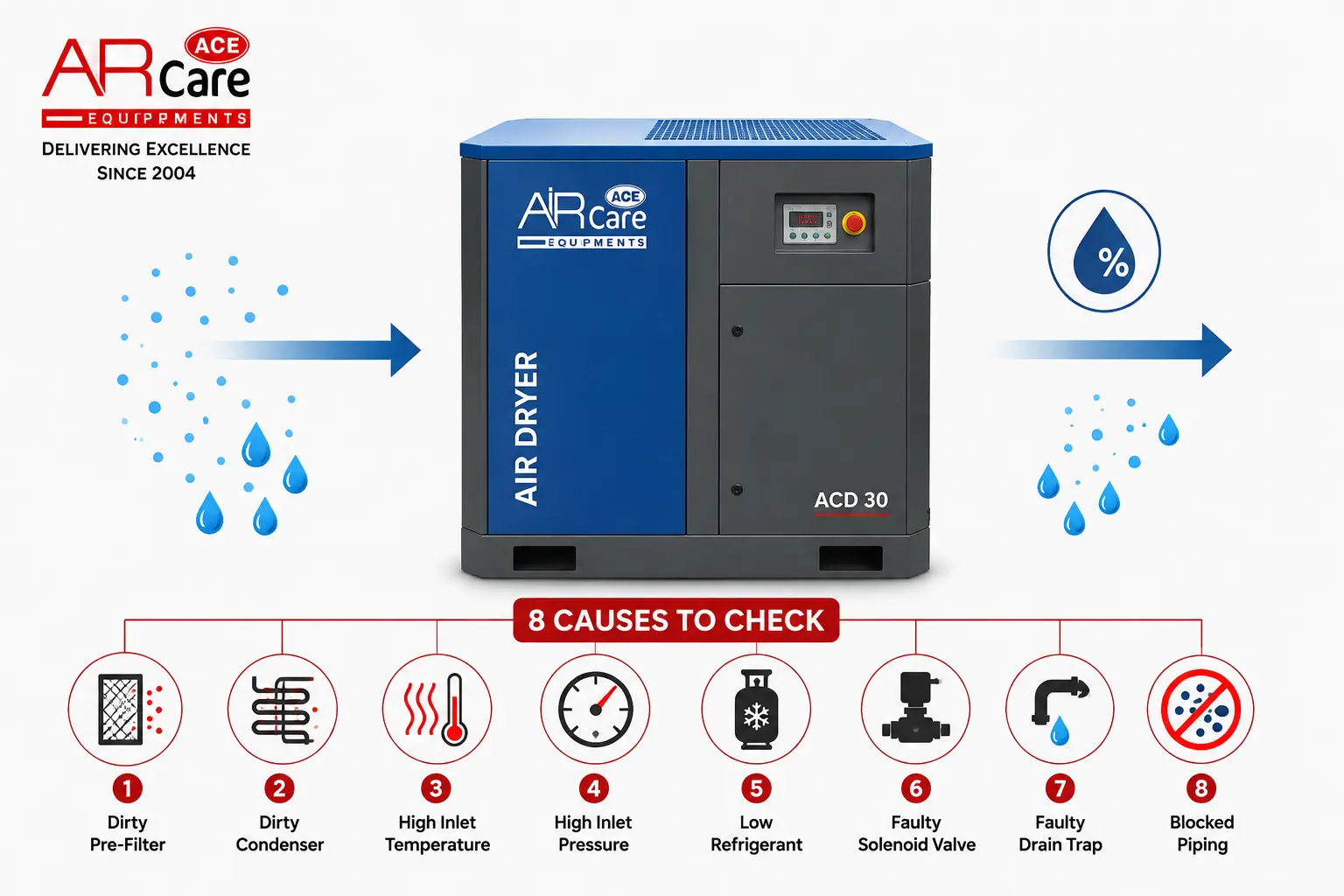
Moisture in compressed air |
Failing or undersized air dryer |
Install/maintain a refrigerated or heatless air dryer |
|
Pressure drops |
Clogged filters, leaks, worn valves |
Routine filter changes, leak detection surveys |
|
Excessive noise/vibration |
Loose mounting, worn bearings, misalignment |
Scheduled inspection and alignment checks |
|
Oil carryover |
Worn air-oil separator |
Timely separator element replacement |
Maintenance Checklist for Air Dryers & Vacuum Pumps
Air Dryers
-
Heatless dryers: monitor desiccant condition and purge valve function
-
Refrigerated dryers: check refrigerant levels and condenser cleanliness
-
Both types: verify dew point regularly to confirm drying performance
Vacuum Pumps
-
Check and replace oil at recommended intervals
-
Inspect filters for contamination
-
Monitor seals for wear to prevent vacuum loss
DIY vs. Professional Maintenance: When to Call the Experts
Basic tasks — daily checks, condensate draining, filter cleaning, can typically be handled by in-house operators with minimal training. However, tasks involving oil-air separator replacement, coupling alignment, pressure vessel certification, or VFD diagnostics should be left to certified technicians.
This is where an Annual Maintenance Contract (AMC) adds real value. Instead of reacting to breakdowns, an AMC ensures:
-
Scheduled preventive visits from trained technicians
-
Use of genuine spare parts and lubricants
-
Reduced risk of unplanned downtime
-
Documented maintenance history for compliance and warranty purposes
At Air Care Equipment, our Annual Maintenance Contracts cover regular inspections, servicing, and priority support for screw compressors, reciprocating compressors, air dryers, and vacuum pumps — helping you avoid costly surprises.
Air Compressor Maintenance Services in Gurgaon & Delhi NCR
Industrial facilities in Gurgaon, Manesar, Faridabad, Bhiwadi and other Delhi NCR manufacturing areas often depend on compressed air for production equipment, automation and process applications. Regular preventive maintenance helps identify issues before they cause unexpected equipment downtime.
Quick-Reference Maintenance Checklist
|
Frequency |
Key Tasks |
|
Daily |
Oil check, condensate drain, gauge inspection, leak check |
|
Weekly |
Belt tension, filter inspection, safety valve test, fin cleaning |
|
Monthly |
Oil change, intake filter cleaning, electrical check, dryer dew point |
|
Quarterly/Annual |
Separator replacement, coupling alignment, vacuum pump service, pressure vessel certification |
Conclusion
Consistent air compressor maintenance isn't just about avoiding breakdowns; it's a direct investment in energy savings, equipment longevity, and operational reliability. Whether you operate a piston air compressor, a screw compressor, or a high-efficiency VSD unit, following a structured daily-to-annual maintenance schedule will keep your compressed air system running efficiently for years.
If you'd rather leave the technical servicing to certified professionals, Air Care Equipment's Annual Maintenance Contracts offer scheduled, reliable support tailored to your equipment — so your operations never miss a beat.
Need help maintaining your air compressor? Get in touch with Air Care Equipment to explore our AMC plans, or enquire now for expert guidance on the right maintenance schedule for your system.
Frequently Asked Questions
Q1: How often should I service my air compressor?
Daily checks are recommended for oil and condensate, weekly for filters and belts, monthly for oil changes, and annually for full servicing including separator elements and pressure vessel inspection.
Q2: What happens if I skip air compressor maintenance?
Skipping maintenance leads to higher energy consumption, reduced air quality, increased risk of sudden breakdowns, and a shortened equipment lifespan.
Q3: Is an AMC worth it for a small industrial unit?
Yes, an Annual Maintenance Contract reduces the risk of costly unplanned downtime and ensures certified technicians handle complex servicing tasks, which is especially valuable for units without in-house maintenance staff.
Recent Posts