Air Compressor Parts Explained: Names, Functions & Maintenance
Quick Answer
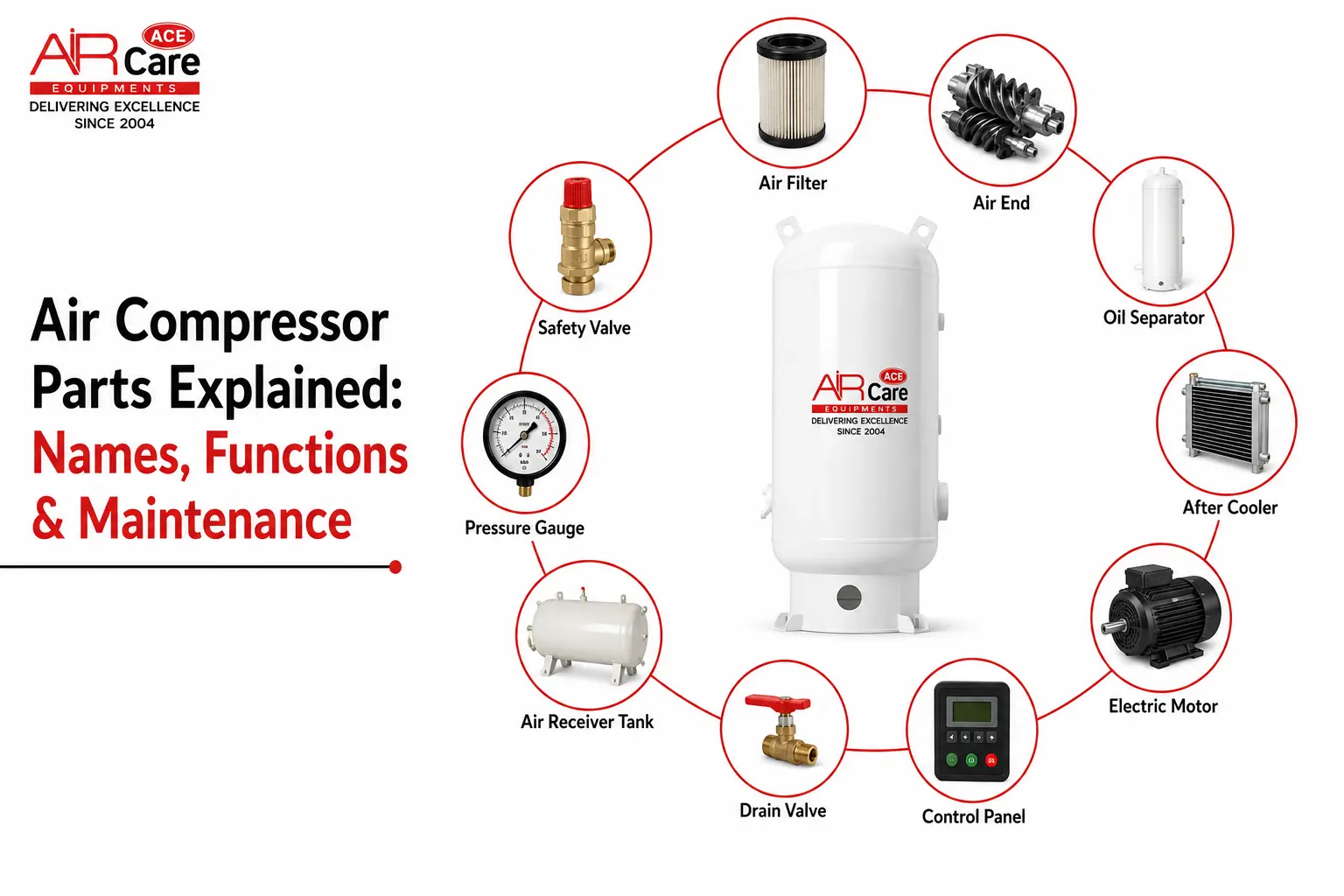
An air compressor has around a dozen core parts working together: an air filter and compression element to draw in and compress air, an oil separator and cooler to clean and cool it, a pressure switch and control panel to regulate output, and a non-return valve feeding a receiver tank for storage. Piston and screw compressors share most of these parts but differ in the compression element, cooling design, and duty cycle. Knowing each part by name helps you catch wear early, order the correct replacement part, and choose the right compressor type for your load.
Every compressed air system, whether it's powering a single workshop tool or an entire production line, depends on the same core set of parts doing their job correctly. When one part underperforms, the whole system feels it, through pressure drops, higher energy bills, or unplanned downtime. At Air Care Equipment, we're an air compressor manufacturer in Delhi NCR, building screw and reciprocating compressors, vacuum pumps, dryers, and pressure vessels from our Gurgaon facility since 2004, so this isn't a theoretical breakdown. It's how we build every unit that leaves our production floor and every spare part we supply to plants across the region.
Here's a complete air compressor parts list with names and functions explained, what to watch for on each one, and where the piston and screw designs diverge.
Air Compressor Parts List: Names and Functions
1. Air Filter
The air filter is the first line of defence, screening out dust, debris, and particulates before air enters the compression chamber. A clogged filter forces the compressor to work harder to draw in air, increasing energy consumption and accelerating wear on the compressor element. In dusty industrial environments, filter checks should happen more frequently than the manufacturer's default schedule; ask your service provider what interval suits your specific ambient conditions.
2. Compression Element
This is the heart of the compressor, the part that actually raises air pressure. Its design is the single biggest difference between compressor types:
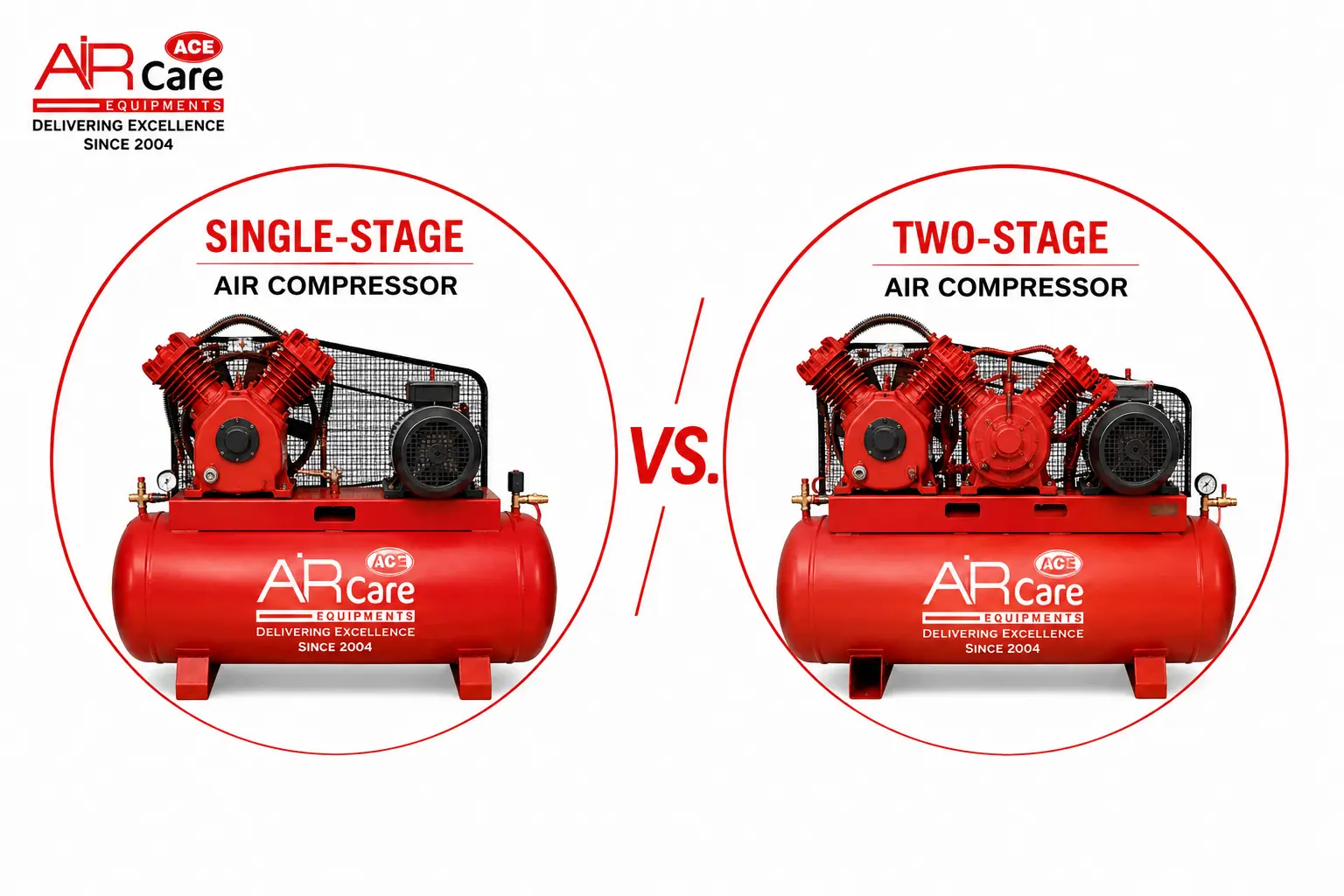
In a Piston Type Air Compressor, a piston moves up and down inside a cylinder, compressing air in intermittent strokes.
In a Screw Type Air Compressor, twin helical rotors mesh together to compress air continuously, with no valves involved. This design means fewer moving parts, less wear, and an operational life of 10 to 15 years or more with proper care.
3. Motor
The motor drives the compression element. Motor sizing (measured in HP) determines how much air volume and pressure the system can deliver, and it needs to be matched to your actual demand, not just your peak-use guess. Air Care Equipment's screw compressor range spans from 10 HP units suited to medium-duty use up to 75+ HP rotary screw compressors for continuous, high-demand industrial operations.
4. Variable Speed Drive (VSD)
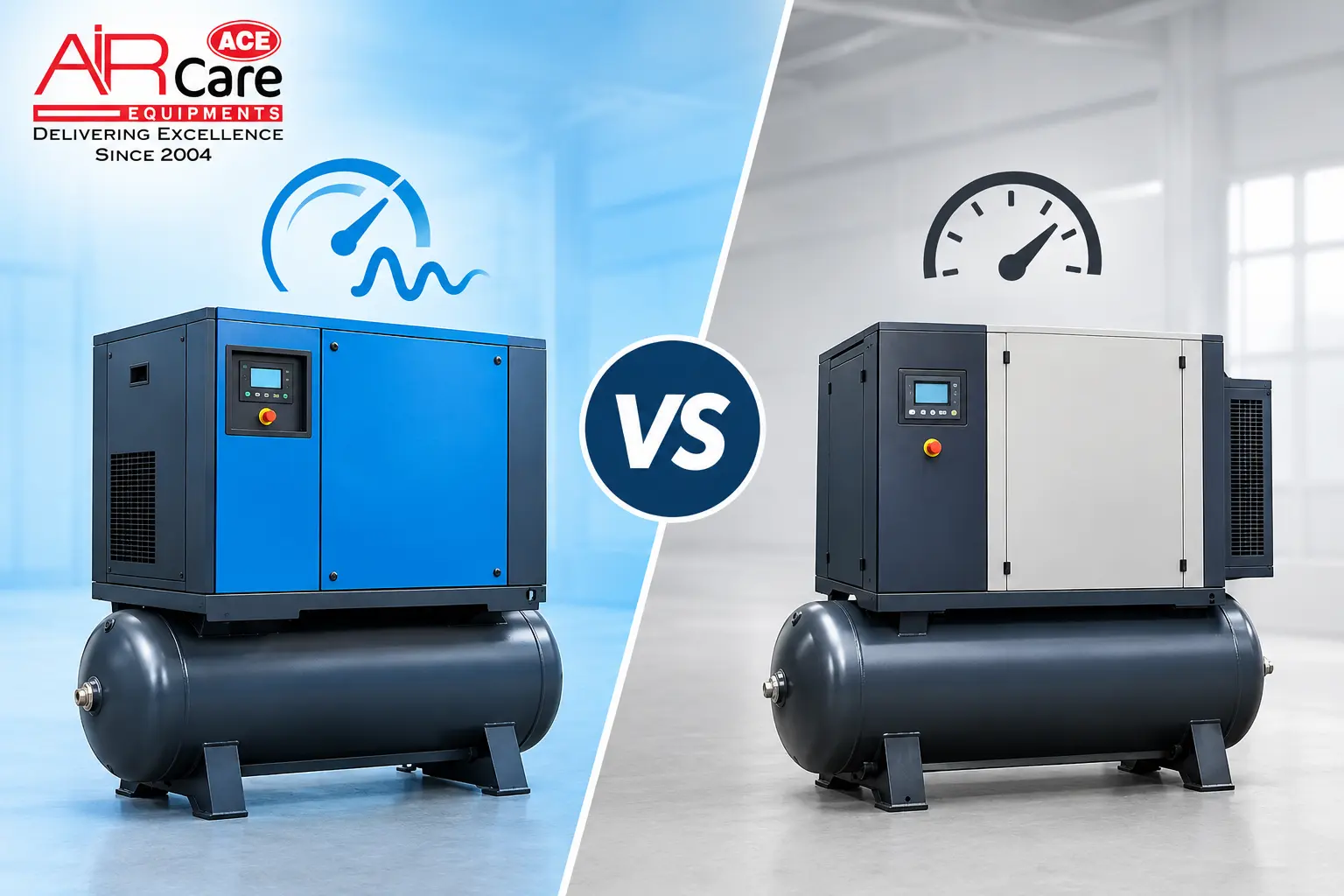
Traditional fixed-speed compressors run at full power regardless of actual air demand. A VSD adjusts motor speed in real time to match demand, and this is one of the most consequential parts missing from most generic parts breakdowns. On our own Variable Fixed Drive Series, including the 10 HP VSD Screw Air Compressor, this can cut energy consumption by up to 35% compared to fixed-speed operation, making it one of the highest-ROI parts in the entire system for facilities with fluctuating air loads.
5. Air/Oil Separator
In oil-injected screw compressors, the separator removes oil droplets from the compressed air stream after compression, so the air leaving the system is clean and the oil can be recirculated for lubrication and cooling. Separator elements degrade over time and gradually restrict airflow; a pressure drop across the separator is usually the first sign it needs replacing. We recommend confirming exact replacement intervals with your compressor's service documentation, since this varies by operating hours and ambient dust load.
6. Cooling System (Oil Cooler / Air Cooler)
Compression generates significant heat. The cooling system, typically an air-cooled or water-cooled heat exchanger, brings the compressed air and lubricating oil (in oil-injected units) back down to a safe operating temperature before the air moves downstream. Overheating is one of the most common causes of premature compressor failure, so cooler fins and radiators need to stay free of dust buildup.
7. Pressure Switch and Control Panel
The pressure switch monitors system pressure and signals the compressor to load or unload (or, on VSD units, to speed up or slow down) to maintain a set pressure band. The control panel is the interface for monitoring performance, setting parameters, and catching fault codes before they become failures. On modern units, digital displays and auto-cycling controls reduce the need for manual intervention.
8. Non-Return Valve (Check Valve)
This valve allows compressed air to flow in one direction only, from the compressor toward the receiver tank, preventing air from flowing backwards into the compression element when the unit is unloaded or shut off. A failed non-return valve can cause the compressor to spin backwards on shutdown, which is both a safety issue and a mechanical stress on the compression element.
9. Safety / Pressure Relief Valve
A part frequently left out of generic breakdowns despite being non-negotiable for safe operation. The relief valve automatically vents air if system pressure exceeds a safe threshold, protecting both the compressor and the receiver tank from over-pressurisation. Every pressure vessel we manufacture is fitted with a relief valve, a pressure gauge, and a drain valve as standard, in line with ASME and PED-aligned safety practice.
10. Air Receiver Tank (Pressure Vessel)
The receiver tank stores compressed air downstream of the compressor, acting as a buffer that stabilises pressure fluctuations, reduces compressor short-cycling, and gives the system reserve capacity during demand spikes. It also does double duty as a cooling and moisture-settling point; air cools as it sits in the tank, allowing condensate to drop out before it reaches your dryer or tools. Even VSD screw compressors benefit from a properly sized receiver tank. Our Pressure Vessel range includes both vertical and horizontal configurations, fabricated in carbon steel or stainless steel depending on the application.
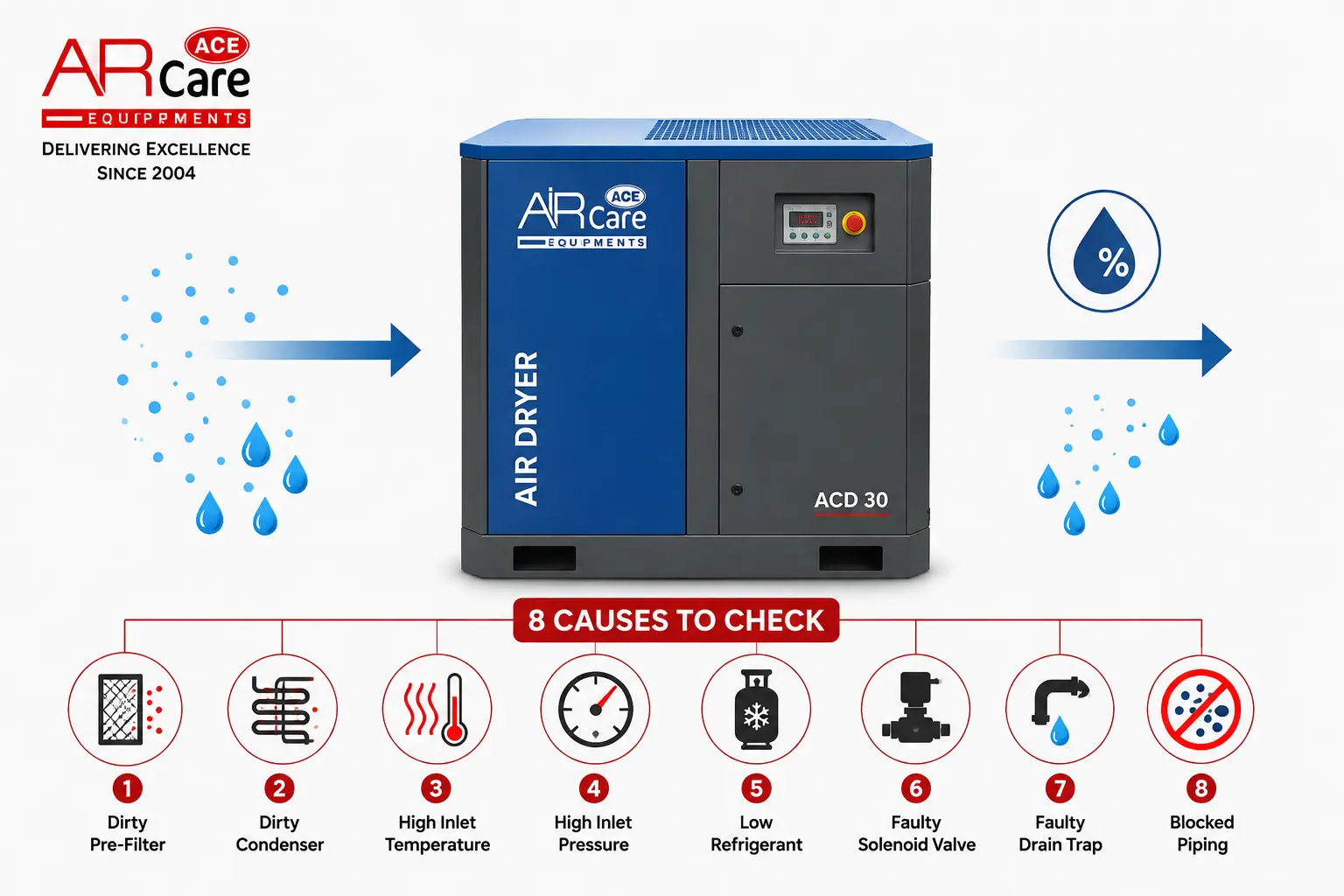
11. Air Dryer
Compressed air carries moisture drawn in from ambient humidity, and without a dryer, that moisture condenses inside pipes and equipment, causing corrosion, valve sticking, and product contamination. This is a part often grouped loosely under “filtration” in generic breakdowns, but it deserves its own line item, and its own decision tree:
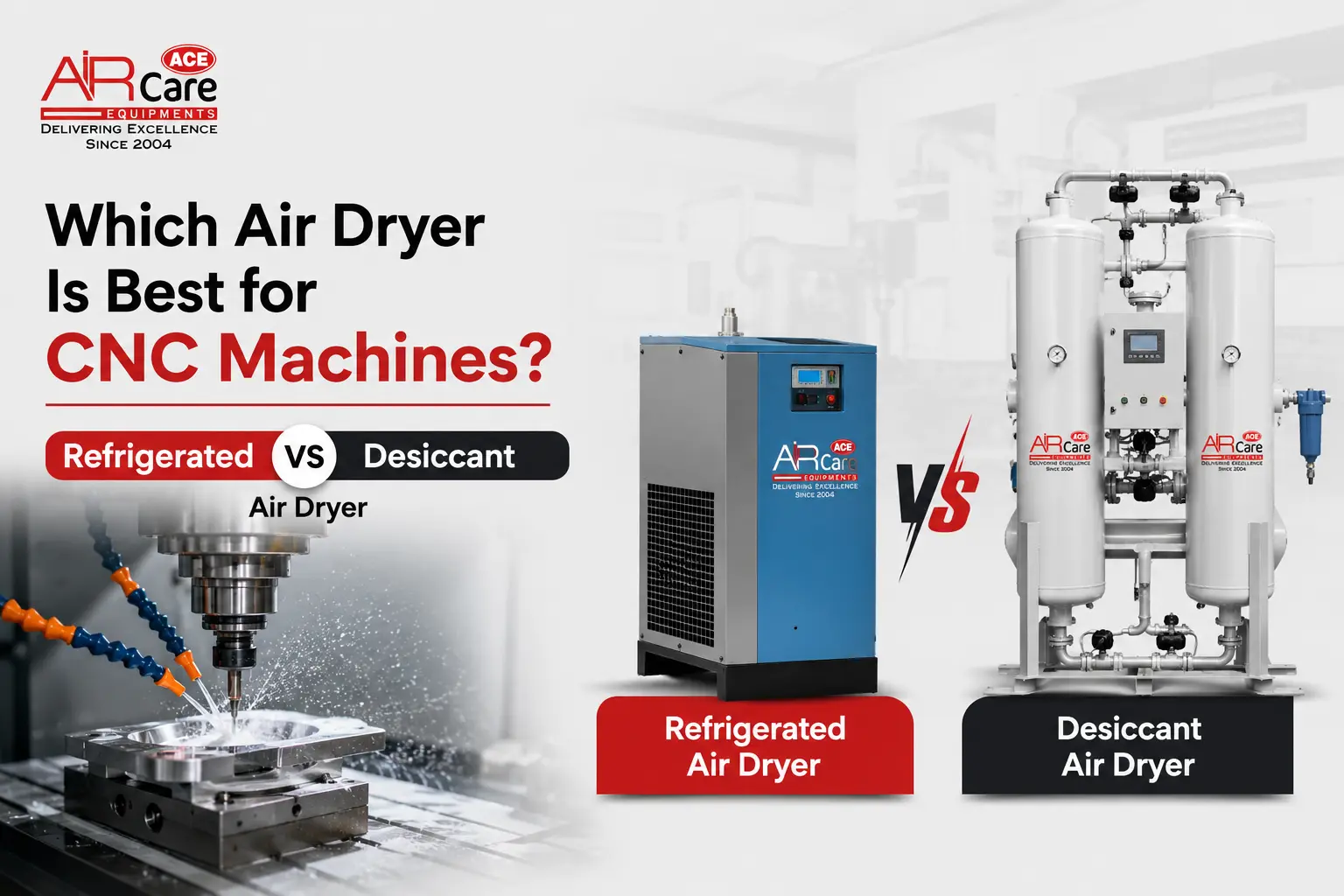
Refrigerated Air dryers cool compressed air to around 3°C to condense and drain moisture out. They're the standard choice for general manufacturing, cost-effective and low-maintenance. Our RAD Series Refrigerated Air Dryers cover a 20 to 1,500 CFM range, are built with Tube-in-Tube or Shell & Tube heat exchangers, and are rated to a maximum working pressure of 16 kg/cm⊃2;.
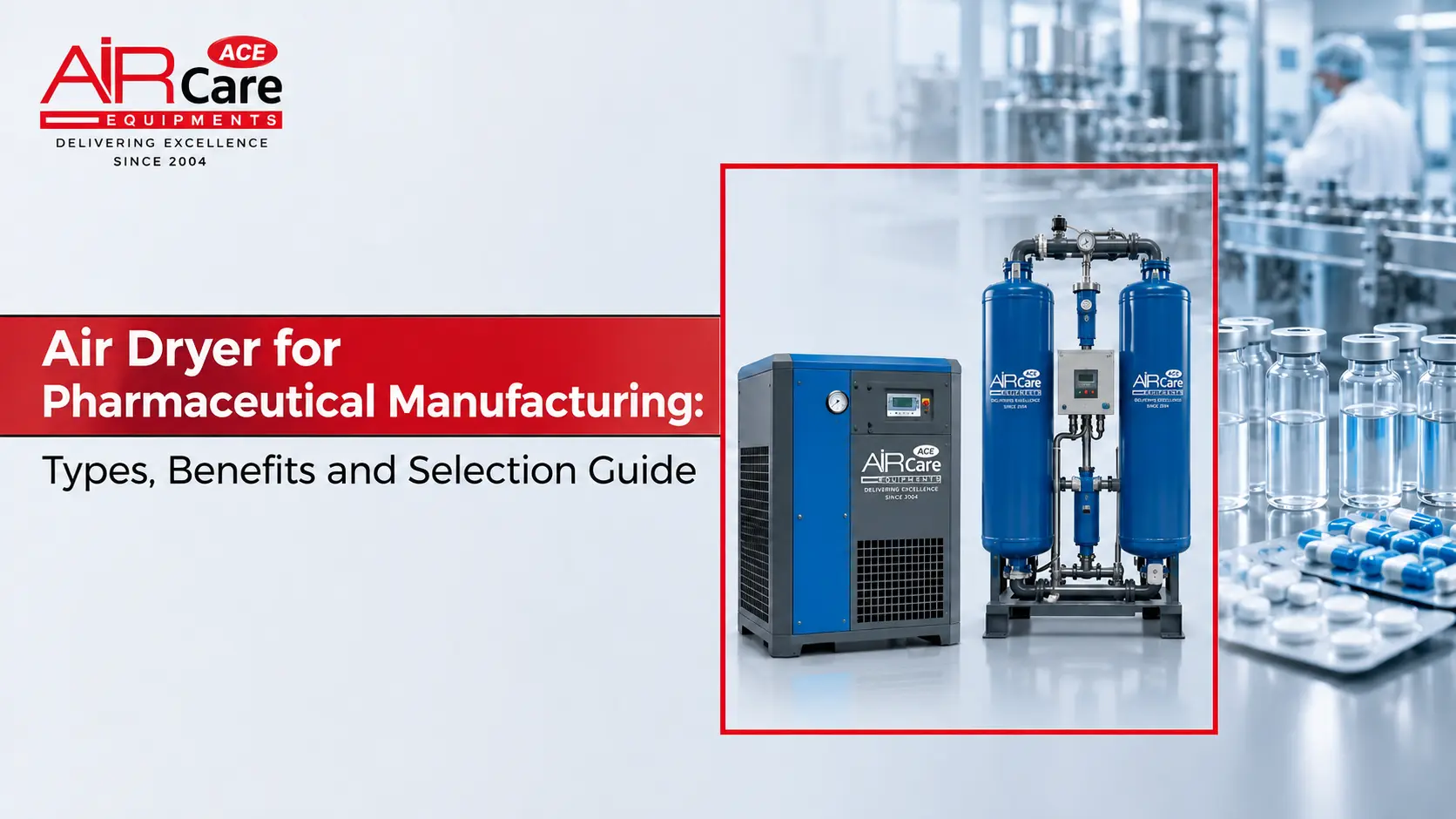
Heatless (desiccant) dryers use two towers of desiccant material to achieve dew points of -40°C or lower, essential for pharmaceutical, electronics, and outdoor pipeline applications where freezing or micro-moisture is a risk.
12. Vacuum Pump (Adjacent System)
Not strictly a compressor part, but part of the same broader compressed-air-and-vacuum ecosystem many industrial facilities run side by side. Vacuum pumps extract air rather than compress it, used in applications like packaging, material handling, and process industries. Our Vacuum Pump range includes units from 2 HP up to 7.5 HP, depending on extraction volume needs.
Piston vs. Screw Compressor Parts: How They Differ
|
Component |
Piston Compressor |
Screw Compressor |
|
Compression element |
Piston and cylinder, intermittent stroke |
Twin helical rotors, continuous rotation |
|
Duty cycle |
Best for intermittent, lower-volume use |
Built for continuous, round-the-clock operation |
|
Noise & vibration |
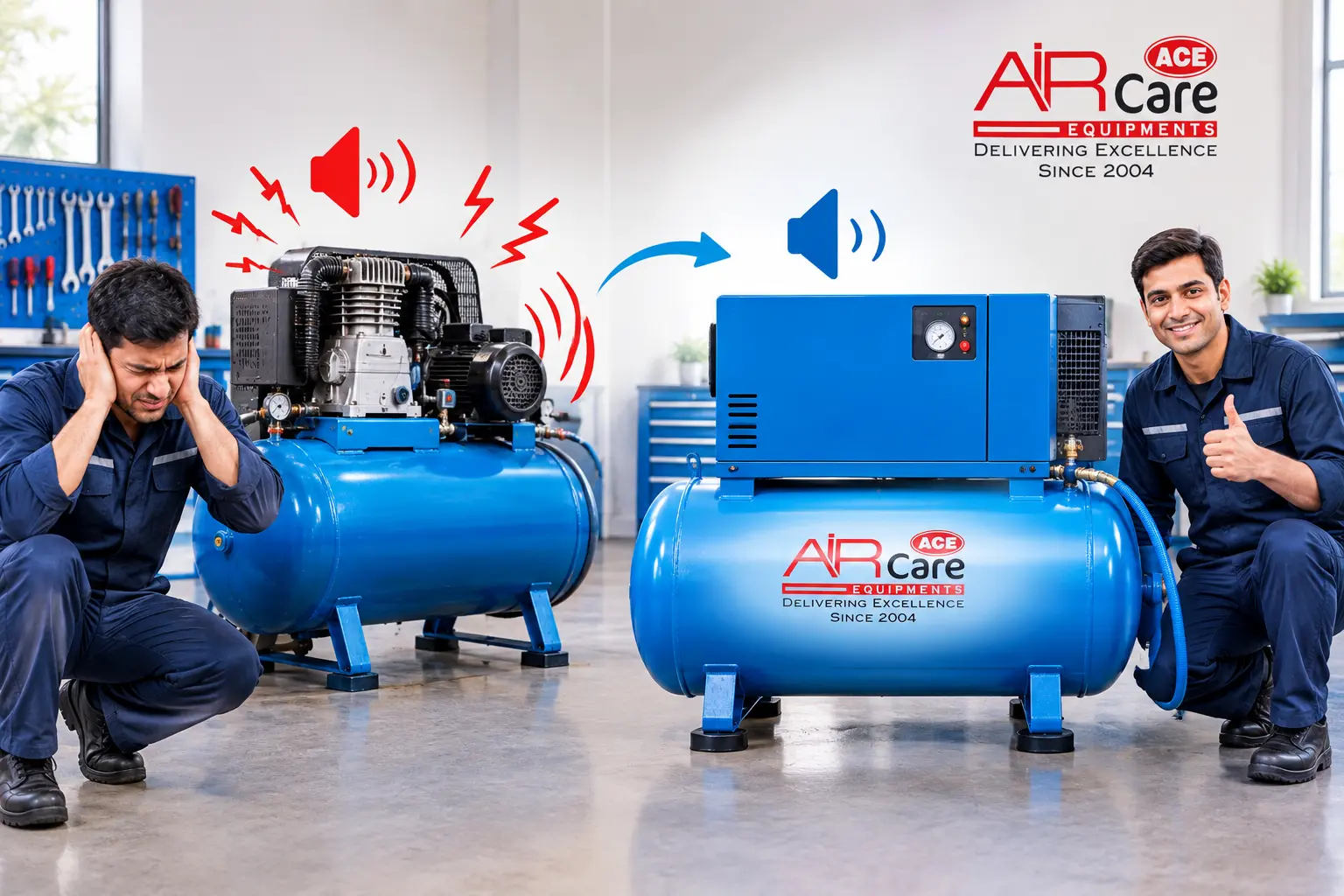
Higher vibration, more moving parts |
Quieter, minimal vibration |
|
Maintenance |
Valve and piston ring wear over time |
Fewer wear points; oil, filter, and separator checks |
|
Typical service life |
Shorter than screw units under continuous load |
10–15+ years with proper maintenance |
|
Best suited for |
Workshops, intermittent tool use, high-pressure applications |
Factories, continuous production lines, variable-demand facilities |
Not sure which one fits your load profile? Our team sizes systems based on actual CFM and duty-cycle data rather than guesswork, across both the Piston Type Air Compressor and Screw Type Air Compressor ranges.
Keeping These Parts Running
Most compressor problems stem from a few neglected parts, such as dirty filters, worn-out separators, overheated coolers, or undrained receiver tanks. Following a regular maintenance schedule helps you spot these issues before they shut down your system. Setting up an Annual Maintenance Service ensures these common wear points are checked during routine inspections, so you can replace parts early and avoid unexpected emergency breakdowns.
Buying Air Compressor Parts From a Delhi NCR Manufacturer
Sourcing parts matters as much as knowing their names. A generic distributor can sell you a filter or separator, but a manufacturer that builds the compressor itself can match the exact part to your model and reach your site fast if something fails. Air Care Equipment is headquartered in Gurgaon, with branches in Bhiwadi (Rajasthan) and Jhajjar (Haryana), and services plants across Delhi NCR, Haryana, and Rajasthan directly rather than through a chain of resellers. For a full look at our compressor range and service reach in the region, see our Air Compressor Manufacturer in Delhi NCR page.
This matters most for parts with short failure windows, separators, non-return valves, and pressure switches, where a delayed replacement means a delayed production line. Being a Delhi NCR-based manufacturer, rather than an importer waiting on parts from abroad, means shorter lead times on both stock parts and custom fabrication for pressure vessels and receiver tanks.
Conclusion
An air compressor is a complex ecosystem where every component, from the intake filter to the receiver tank, must work in perfect harmony. Whether you operate a heavy-duty screw compressor on a 24/7 production line or a dependable piston compressor in a workshop, knowing how these parts function is your best defence against unplanned downtime. Recognising a clogged filter early, understanding the value of a variable speed drive (VSD), or ensuring your air dryer is perfectly matched to your application can drastically reduce your facility's energy bills and prevent cascading mechanical failures.
Ultimately, maintaining this system is much easier when you have a direct line to the people who built it. By sourcing your replacement parts and scheduling your routine maintenance with a local manufacturer like Air Care Equipments, you eliminate the guesswork and delays of third-party distributors. Stick to a structured maintenance schedule, replace wear parts before they fail, and your compressed air system will reliably power your operations for years to come.
Frequently Asked Questions
Q1: What are the main parts of an air compressor called?
The main parts are the air filter, compression element (piston or screw rotors), motor, oil/air separator, cooler, pressure switch, control panel, non-return valve, safety relief valve, receiver tank (pressure vessel), and, on most systems, an air dryer.
Q2: What is the most important part of a screw air compressor?
The compression element (the twin rotor assembly) is the core of the system, but a compressor is only as reliable as its weakest supporting part. Cooling system and separator conditions are the two most common causes of underperformance in otherwise healthy units.
Q3: How often should the air/oil separator be replaced?
This depends on operating hours and ambient conditions rather than a fixed calendar interval. A rising pressure drop across the separator is the clearest sign it needs attention. (Brand-specific figure pending confirmation.)
Q4: What's the difference between a heatless and a refrigerated air dryer?
A refrigerated dryer cools air to around 3°C to condense moisture and suits general industrial use up to 1,500 CFM. A heatless (desiccant) dryer uses adsorbent material to reach dew points of -40°C or lower, needed for pharmaceutical, electronics, or freezing-risk outdoor applications.
Q5 Do I need a receiver tank if I already have a VSD compressor?
Yes. Even variable-speed screw compressors benefit from a receiver tank; it reduces load cycling, stabilises pressure, and provides emergency reserve capacity during demand spikes.
Q6: What's the difference between a non-return valve and a safety relief valve?
A non-return valve prevents air from flowing backwards into the compressor. A safety relief valve vents air automatically if system pressure exceeds a safe threshold. They serve different functions, and both are standard on properly built systems.
Recent Posts