How to Size an Air Compressor for Your Tools & Application
What Size Air Compressor Do I Need?
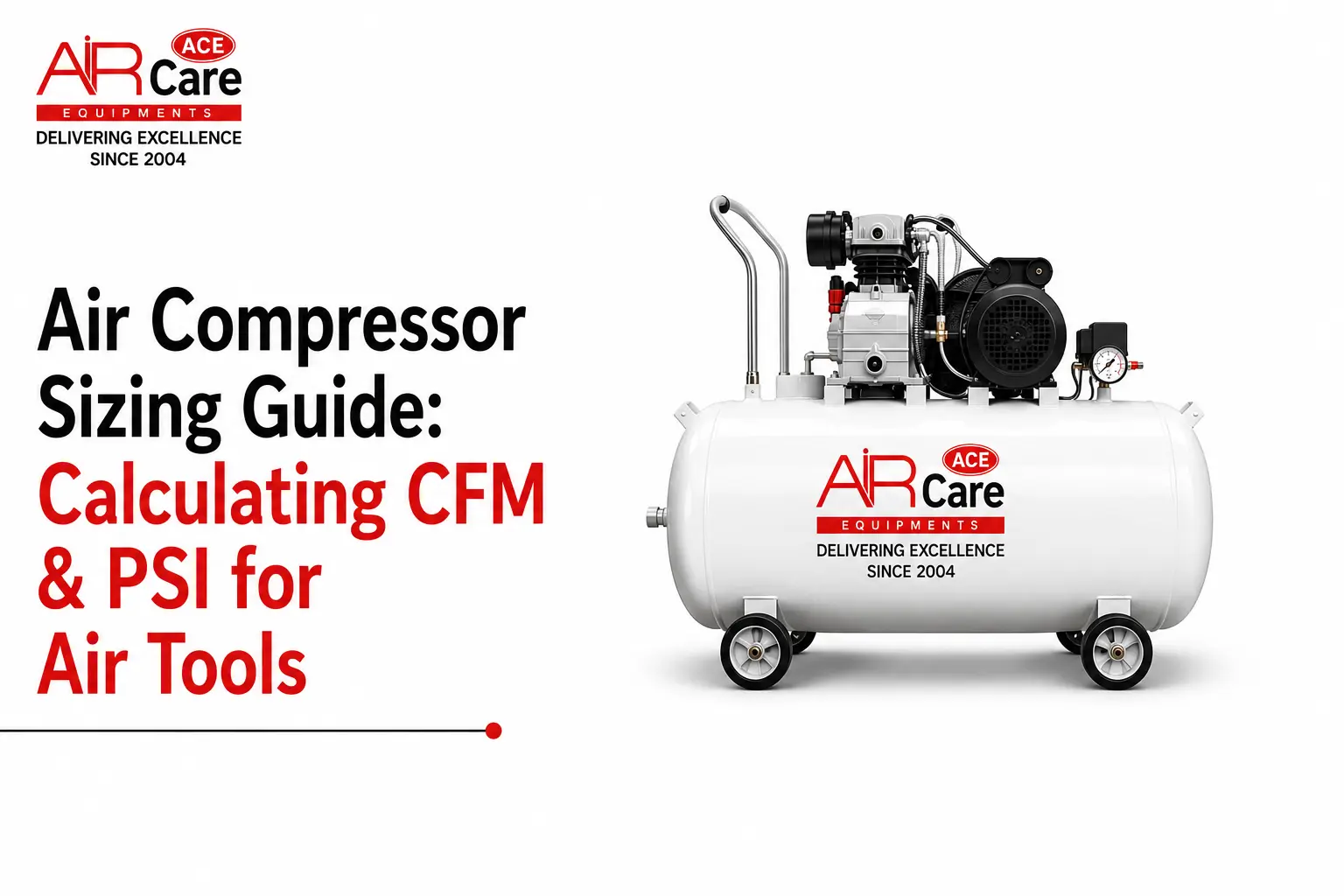
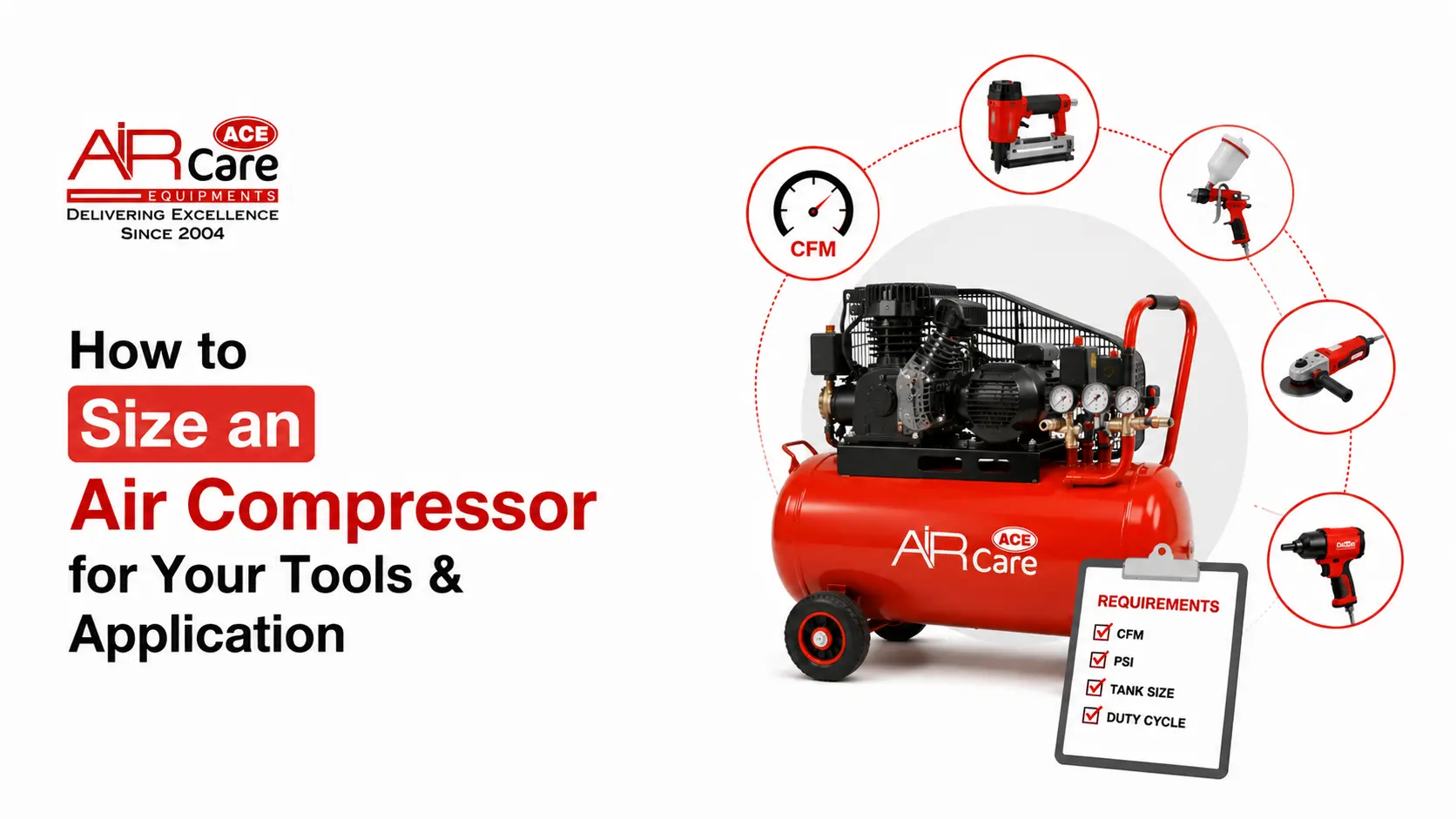
For most pneumatic tools, choose an air compressor that delivers at least 25–50% more CFM than your total tool demand while meeting the highest PSI requirement. Small workshops typically require 5–20 CFM, while industrial applications may need 25–100+ CFM.
Selecting the right air compressor is one of the most important decisions for anyone using pneumatic tools. Whether you're operating an automotive workshop, manufacturing facility, fabrication unit, or construction site, the performance of your air tools depends heavily on the compressor supplying them.
Many buyers focus on horsepower or tank size when comparing compressors. However, the real answer lies in understanding airflow requirements, operating pressure, duty cycle, and future demand. Choosing a compressor that is too small can lead to pressure drops, reduced tool performance, and costly downtime. On the other hand, an oversized compressor can increase energy consumption and operating expenses unnecessarily.
This guide explains how to determine the right air compressor size for your air tools and what factors should influence your decision.
Quick Answer: What Size Air Compressor Do You Need?
The correct compressor size depends on two primary factors:
-
CFM (Cubic Feet per Minute)
-
PSI (Pounds per Square Inch)
As a general rule, your compressor should deliver at least 25% more CFM than the combined airflow requirement of all tools operating simultaneously.
|
Air Tool |
Typical CFM Requirement |
Typical PSI |
|
Tire Inflator |
1–3 CFM |
90 PSI |
|
Nail Gun |
2–4 CFM |
70–100 PSI |
|
Impact Wrench |
4–8 CFM |
90 PSI |
|
Air Ratchet |
4–6 CFM |
90 PSI |
|
Die Grinder |
10–15 CFM |
90 PSI |
|
Paint Sprayer |
12–18 CFM |
40–90 PSI |
|
Sandblaster |
15–25+ CFM |
90 PSI |
|
Industrial Pneumatic Equipment |
25–100+ CFM |
100–175 PSI |
Understanding Air Compressor Sizing
Before selecting a compressor, it is important to understand the four factors that determine its performance.
If you're new to compressed air systems, Air Care Equipment's Air Compressor Buying Guide: Size, Types, and How They Work provides a detailed overview of compressor technologies and selection criteria.
CFM (Cubic Feet Per Minute)
CFM measures the volume of compressed air delivered by the compressor.
This is often the most important specification because air tools consume air continuously during operation. If the compressor cannot supply enough airflow, tools may lose power or stop functioning efficiently.
For example:
-
Impact wrench = 5 CFM
-
Air ratchet = 4 CFM
-
Die grinder = 12 CFM
Total airflow requirement = 21 CFM
In this case, the compressor should ideally deliver approximately 27 CFM after adding a safety margin.
PSI (Pounds Per Square Inch)
PSI measures air pressure.
Most pneumatic tools are designed to operate around 90 PSI, although industrial equipment may require higher pressures.
Your compressor should always meet or exceed the highest PSI requirement among your tools.
Tank Capacity
The receiver tank stores compressed air and helps maintain stable system pressure.
A common misconception is that larger tanks automatically mean better performance. While larger tanks provide more stored air, airflow output still depends on compressor capacity.
Pairing the compressor with the correct air receiver tank sizing is equally important for maintaining pressure stability and reducing compressor cycling. Air Care Equipment's guide on Choosing the Right Air Receiver Tank for Your Business Needs explains how tank capacity affects system performance.
Duty Cycle
Duty cycle refers to how long a compressor can run within a specific period.
For example:
-
50% duty cycle = 5 minutes running, 5 minutes resting
-
75% duty cycle = 45 minutes running, 15 minutes resting
-
100% duty cycle = continuous operation
Industrial applications generally require compressors capable of operating for extended periods without interruption.
How to Calculate the Right Air Compressor Size
Step 1: List All Air Tools
Create a list of every pneumatic tool connected to the system.
|
Tool |
Required CFM |
|
Impact Wrench |
5 CFM |
|
Air Ratchet |
4 CFM |
|
Die Grinder |
12 CFM |
Total Air Demand = 21 CFM
Step 2: Determine Simultaneous Usage
If multiple tools operate at the same time, their airflow requirements must be combined.
Step 3: Add a Safety Margin
Industry professionals typically recommend adding 25–50?ditional capacity.
Example:
21 CFM × 1.25 = 26.25 CFM
Recommended Compressor Output = 27–30 CFM
Step 4: Match Pressure Requirements
Ensure the compressor can maintain the required PSI while delivering the calculated airflow.
Air Compressor Size Recommendations by Application
Home Workshops and DIY Projects
Recommended:
-
2–6 CFM
-
90 PSI
-
6–20 Gallon Tank
Suitable for:
-
Tire inflation
-
Nail guns
-
Cleaning applications
-
Light woodworking
Automotive Workshops
Recommended:
-
10–20 CFM
-
90–125 PSI
-
30–60 Gallon Tank
Suitable for:
-
Impact wrenches
-
Spray painting
-
Tire service operations
-
Air ratchets
Manufacturing and Industrial Facilities
Recommended:
-
25–100+ CFM
-
100–175 PSI
-
Large receiver tanks
Suitable for:
-
Production lines
-
Pneumatic machinery
-
Packaging systems
-
Sandblasting operations
Businesses evaluating compressor options should also understand the different types of air compressors available. Air Care Equipment's article on 4 Types of Air Compressors: Which Is Right for Your Project? explains how reciprocating, rotary screw, centrifugal, and oil-free compressors support different applications.
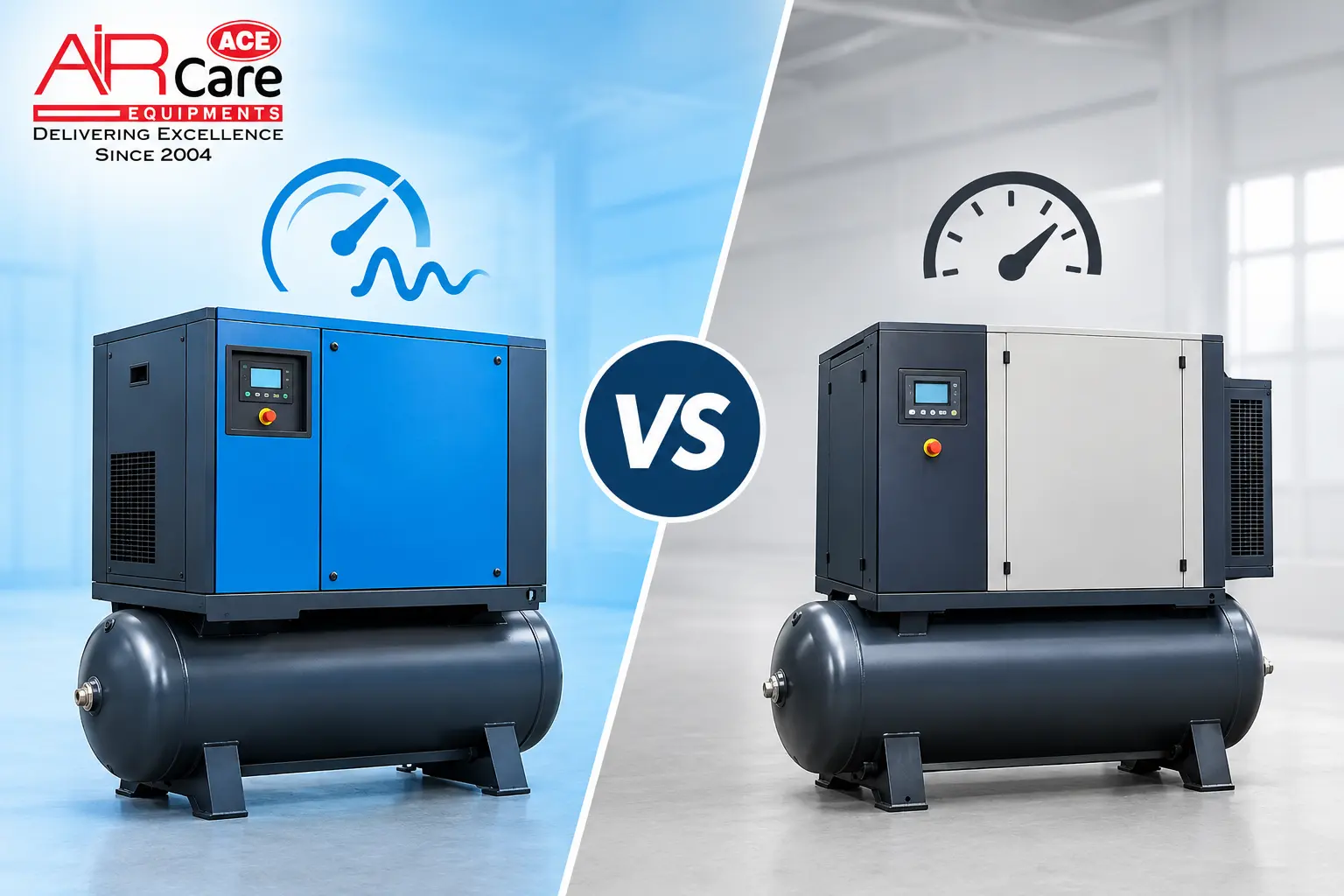
Rotary Screw vs. Reciprocating Air Compressors
The type of compressor you choose has a significant impact on efficiency, reliability, and operating costs.
Rotary Screw Compressors
Rotary screw compressors use interlocking rotors to compress air continuously.
Advantages include:
-
Continuous operation
-
Higher energy efficiency
-
Lower noise levels
-
Stable airflow delivery
-
Reduced maintenance requirements
Industries with continuous air demand often rely on rotary screw compressors because they can operate throughout the day without performance fluctuations.
For a deeper understanding, explore Air Care Equipment's guide on the Working Principle of Screw Air Compressors.
Reciprocating Compressors
Reciprocating compressors use pistons to compress air.
Advantages include:
-
Lower upfront investment
-
Compact design
-
Suitable for intermittent operation
These compressors are commonly used in smaller workshops and light-duty applications.
If you're comparing both technologies, Air Care Equipment's guide on Reciprocating vs. Rotary Screw Compressors provides a detailed breakdown of their differences.
Common Air Compressor Sizing Mistakes
Choosing Based Only on Tank Size
Tank capacity alone does not determine compressor performance.
Airflow output remains the most important consideration.
Ignoring Future Growth
Many businesses underestimate future air demand.
Additional machinery, tools, or production lines can quickly exceed current compressor capacity.
Overlooking Duty Cycle
Using an intermittent-duty compressor in a continuous operation environment can result in:
-
Overheating
-
Excessive wear
-
Reduced lifespan
-
Unexpected downtime
Neglecting System Design
Even a correctly sized compressor may struggle if the compressed air distribution network is poorly designed.
Pressure losses caused by undersized piping, dirty filters, or air leaks can affect tool performance significantly.
Why Energy Efficiency Matters
Compressed air is one of the most expensive utilities in industrial facilities.
Choosing the right compressor size can help reduce:
-
Electricity costs
-
Maintenance expenses
-
Downtime risks
Many facilities switch to rotary screw compressors because of the proven benefits of screw compressors in industrial applications, particularly when air demand is continuous.
Regular servicing is equally important. Following proper air compressor maintenance tips can improve efficiency, reduce breakdowns, and extend equipment lifespan.
How Air Care Equipment Helps Businesses Choose the Right Compressor
Choosing the right air compressor involves more than comparing specifications.
At Air Care Equipment, we help businesses evaluate:
-
Air demand requirements
-
Pressure requirements
-
Duty cycle expectations
-
Energy efficiency goals
-
Future expansion plans
Beyond compressor selection, we also assist businesses in selecting air dryers, receiver tanks, and maintenance solutions that improve overall compressed air system performance.
If moisture control is a concern, our guides on How to Choose the Right Air Dryer for Your Industry and Refrigerated vs. Desiccant Air Dryers can help determine the best air treatment solution for your facility.
Conclusion
The right air compressor size depends on airflow demand, operating pressure, tank capacity, and duty cycle. Understanding these factors helps ensure reliable tool performance, lower operating costs, and fewer maintenance issues.
Whether you're running a small workshop or a large industrial facility, selecting the correct compressor is an investment in efficiency and productivity. With the right sizing approach and expert guidance from Air Care Equipment, businesses can build a compressed air system that supports both current operations and future growth.
Frequently Asked Questions
Q1: What size air compressor do I need for air tools?
The right air compressor size depends on the CFM and PSI requirements of your air tools. Calculate the total airflow needed for all tools used simultaneously and choose a compressor that provides at least 25?ditional capacity to ensure smooth and reliable performance.
Q2: How do I calculate the CFM required for an air compressor?
Add the CFM requirements of all air tools that will operate at the same time. Once you have the total, add a 25–50% safety margin to account for future expansion, peak demand, and system pressure losses.
Q3: What PSI do most air tools require?
Most air tools operate efficiently at around 90 PSI. However, some industrial equipment may require higher pressure levels. Always check the manufacturer's specifications to ensure the compressor can deliver the required pressure consistently.
Q4: Can a small air compressor run an impact wrench?
Yes, if it meets the impact wrench's airflow and pressure requirements. Most ½-inch impact wrenches require between 4 and 8 CFM at 90 PSI. An undersized compressor may cause pressure drops and reduced tool performance.
Q5: Is CFM more important than PSI when choosing an air compressor?
Both are important, but CFM is often the deciding factor. PSI determines pressure, while CFM measures airflow volume. If the compressor cannot deliver enough CFM, tools may not perform properly even if the required PSI is available.
Q6: What happens if my air compressor is too small?
An undersized compressor may struggle to maintain airflow and pressure, leading to reduced tool efficiency, overheating, increased wear, and frequent downtime. Proper sizing helps improve productivity and extends the lifespan of both tools and compressor systems.
Q7: Is a larger air compressor always better?
No. An oversized compressor can increase energy consumption and operating costs. The best option is a compressor that matches your airflow and pressure requirements while allowing some additional capacity for future growth and peak demand periods.
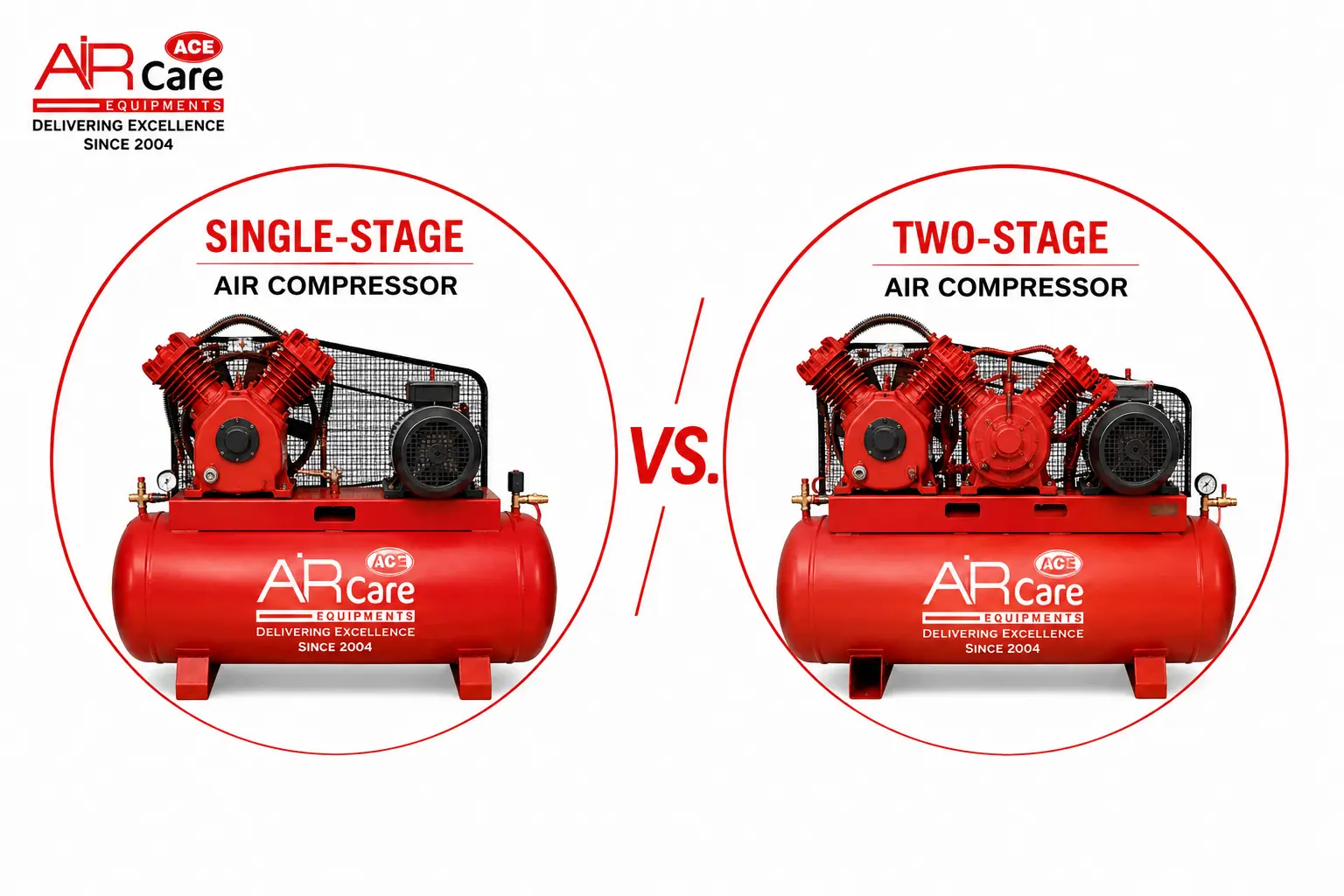
Q8: What is the difference between a rotary screw compressor and a reciprocating compressor?
A rotary screw compressor provides continuous airflow and is ideal for industrial applications. A reciprocating compressor uses pistons and is better suited for intermittent use. The right choice depends on your operating hours, air demand, and application requirements.
Recent Posts