4 Types of Air Compressors: Which is Right for Your Project?
An air compressor machine is a basic part of devices in many industries, which strengthens everything from construction equipment to manufacturing machinery. In automotive Shops, factories, or workshops, choosing the right types of compressors can greatly impact the efficiency, cost-efficiency, and success of your project. Various compressor technologies are available, they need to understand their features, benefits, and applications. One of the best industrial air compressors, manufactured by Air Care Equipments, offers reliability and performance, catering to a wide range of operational needs and designed to meet various requirements.
Quick Answer: What Are the 4 Types of Air Compressors?
The four main types of air compressors are reciprocating compressors, rotary screw compressors, oil-free compressors, and high-pressure air compressors. Each type is designed for different industrial applications based on airflow (CFM), pressure (PSI), duty cycle, and air quality requirements. Choosing the right compressor helps improve productivity, reduce energy consumption, and lower maintenance costs.
Key Takeaways
- Reciprocating compressors are ideal for small workshops and intermittent use.
- Rotary screw compressors provide continuous airflow for industrial operations.
- Oil-free compressors deliver clean, contamination-free compressed air for sensitive industries.
- High-pressure compressors are suitable for PET bottle blowing, testing, and other high-pressure applications.
- Selecting the correct compressor depends on airflow (CFM), pressure (PSI), operating hours, and application requirements.
What is an Air Compressor Machine?
An air compressor machine is a device that converts electrical or mechanical energy into compressed air. It works by compressing the gas to store it for use in pneumatic devices or industrial processes, where it is later released under increased pressure. These machines play a crucial role in factories and workshops, enabling the operation of devices that require pressurized air. Major components, such as air receiver tanks, securely store compressed air, balance the supply to demand, and maintain system efficiency. Air Care Equipments specializes in producing high-quality compressors and air receiver tanks with advanced engineering to support continuous industrial operations.
Overview of Types of Compressors
When discussing the types of compressor, it is easy to understand by dividing them into two main categories: positive displacement and dynamic compressors.
Positive displacement compressors work by impelling the air and mechanically reducing its volume, thus increasing the pressure. On the other hand, dynamic compressors mainly use velocity and dynamic action to increase air pressure. This basic understanding helps to select the most favourable compressor for specialized industrial applications and project requirements.
The 4 Main Types of Air Compressors
1. Reciprocating Compressors
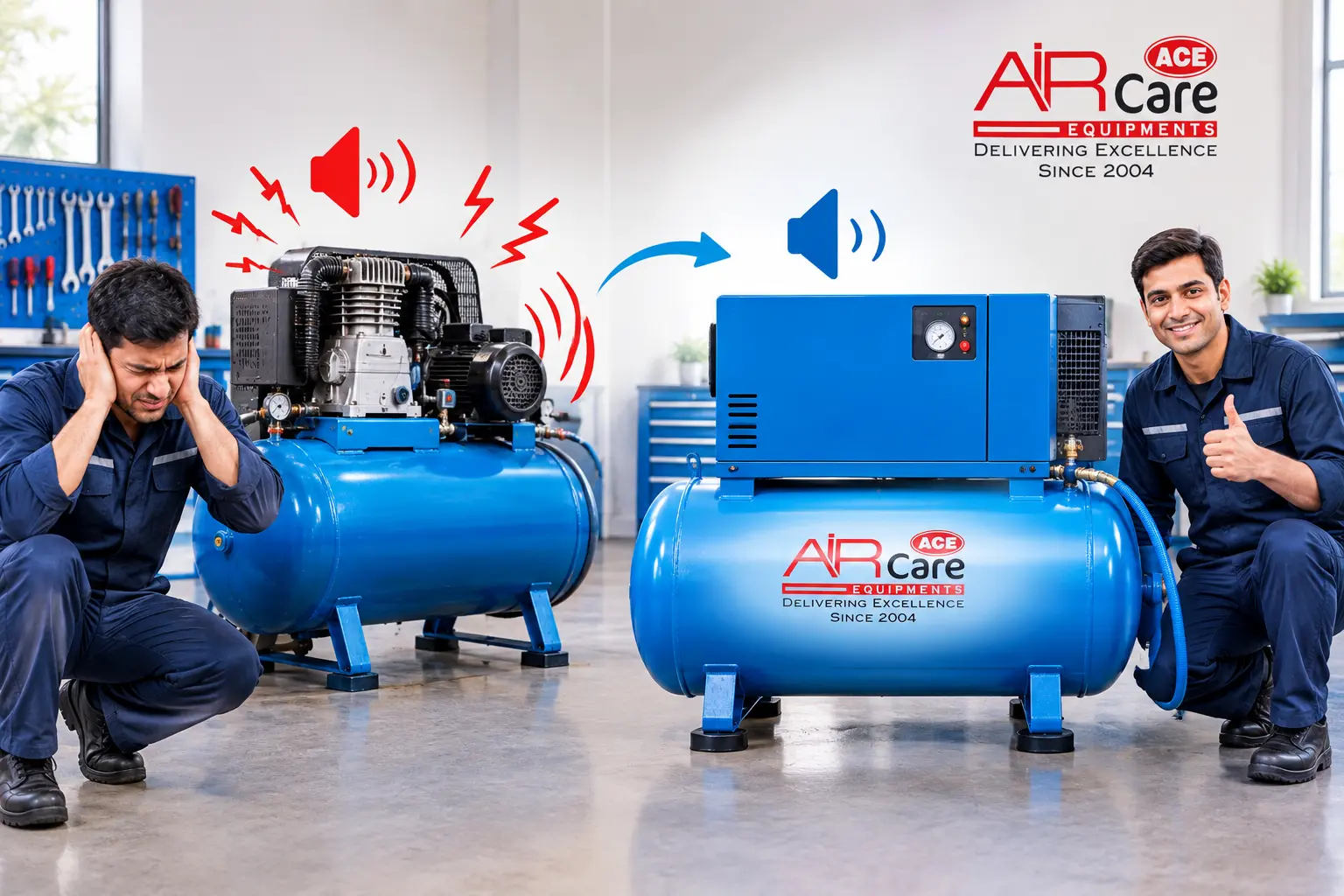
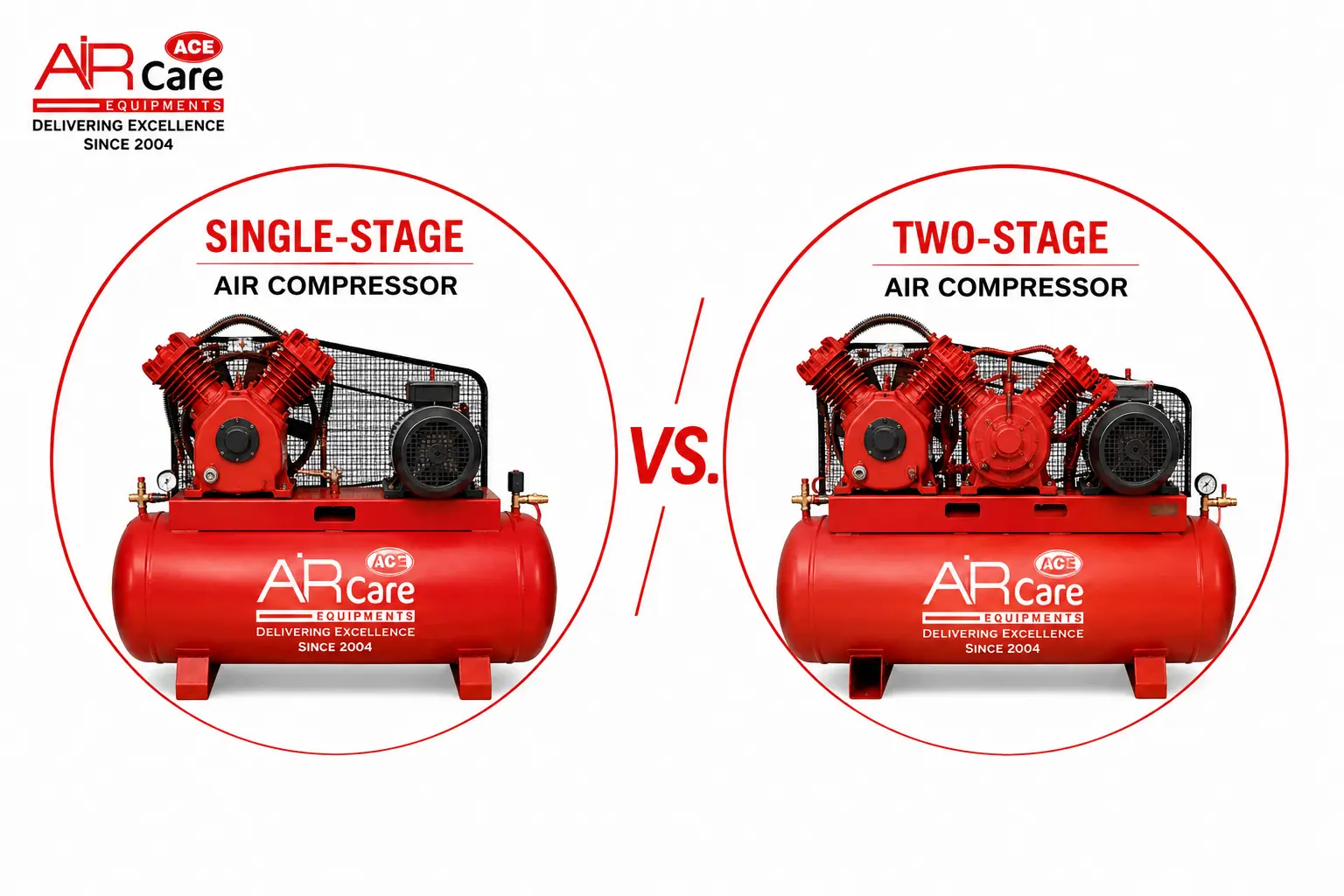
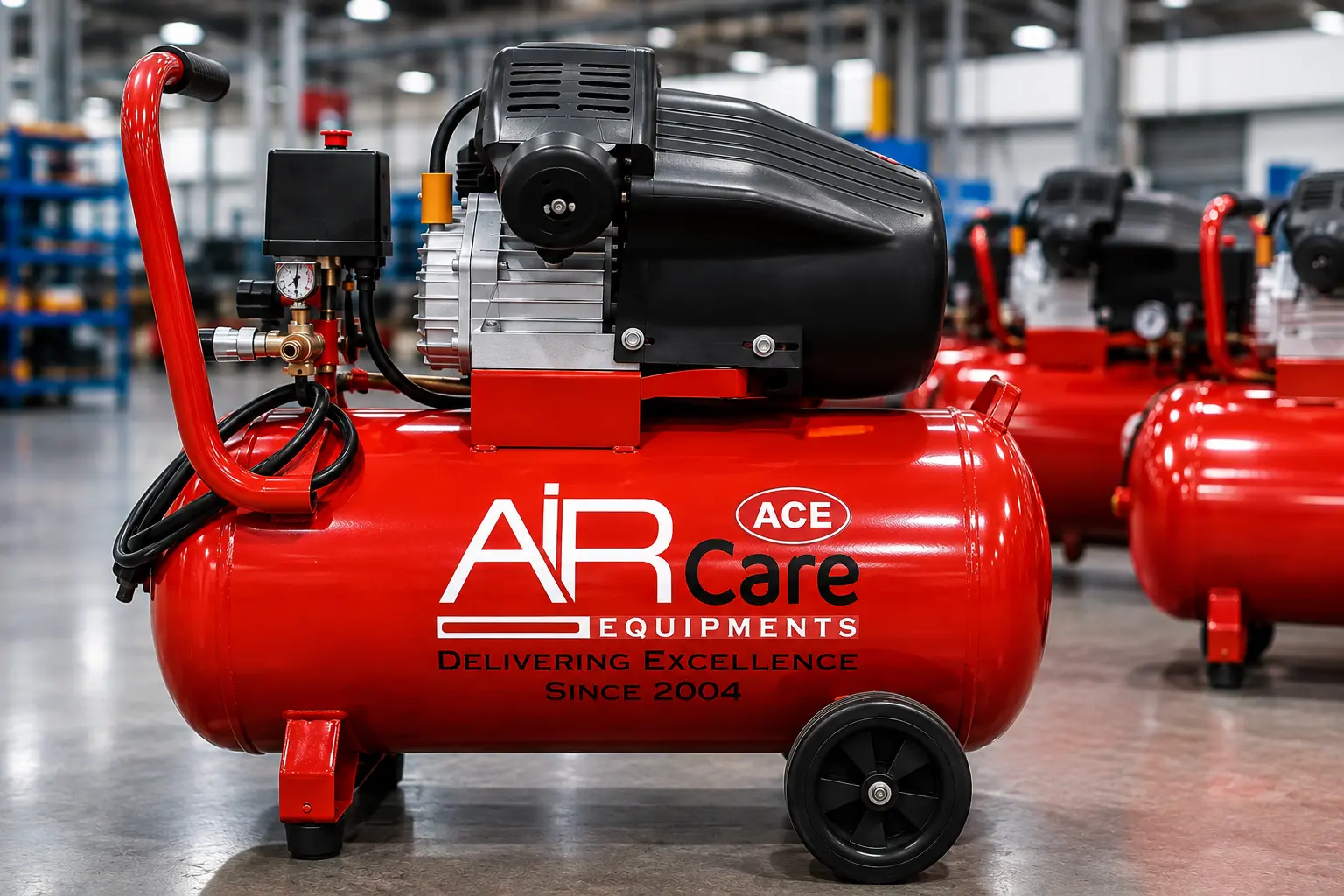
Reciprocal compressors, also known as piston compressors, use one or more pistons operated by the crankshaft to give compressed air. These compressors operate on the principle of positive displacement and are popular for use in small to medium-sized systems due to their high-pressure production at a relatively low cost. They are a great fit for workshops, motor vehicle garages, and small factories where intermittent air supply meets demand adequately. However effective, they require regular maintenance due to moving parts and are noisier compared to other compressors. Air Care Equipments offers reliable and strong mutual compressors designed to reduce downtime and maximize performance.
2. Rotary Screw Compressors
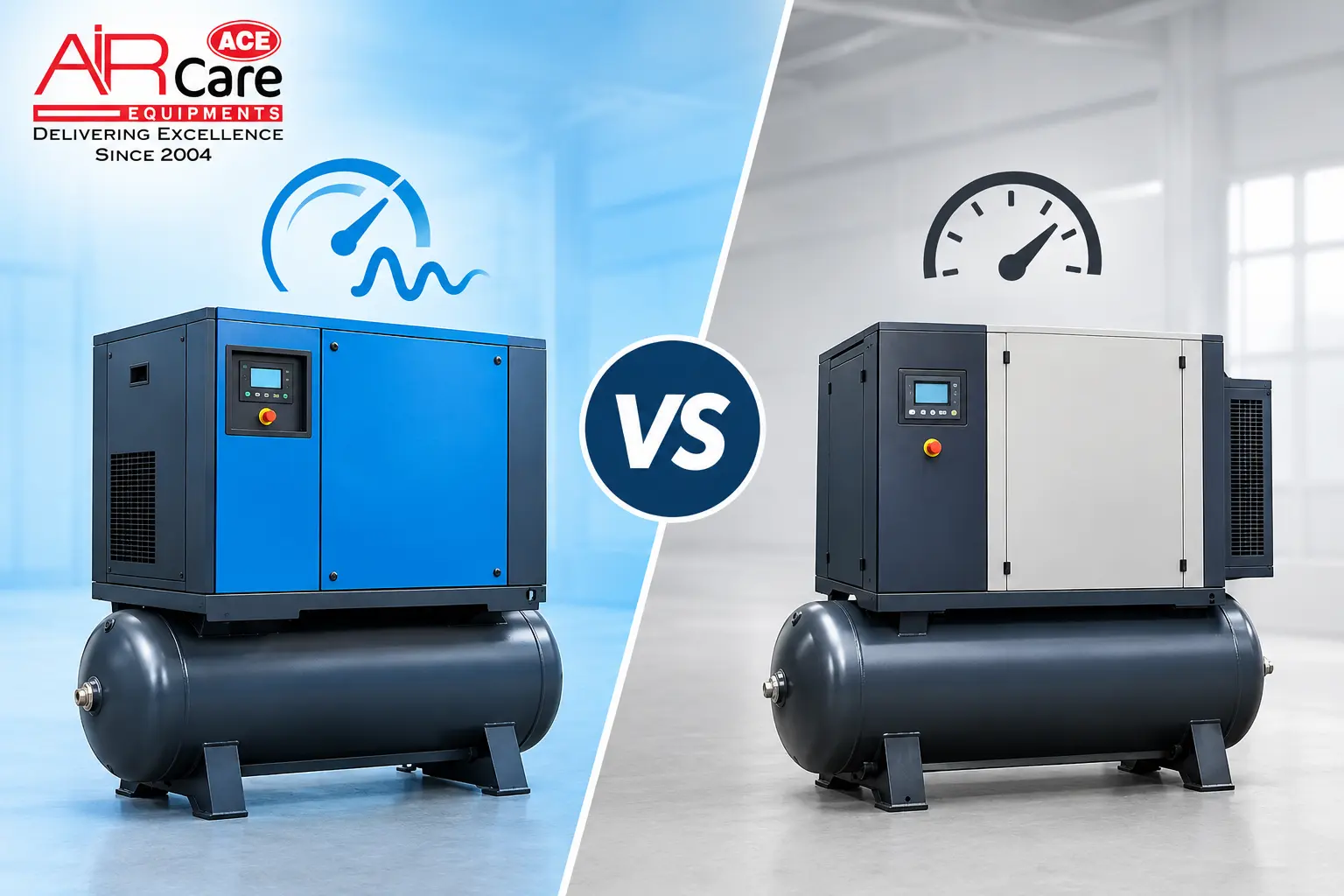
Rotary screw compressors employ two meshing packed screws (rotors) that continuously rotate to compress the air. This design enables coherent airflow, making them ideal for moderate to large industrial applications where a stable air supply is crucial. These compressors are energy-efficient, quiet, and interchangeable, spanning the operational life compared to those operating. They also support the variable speed drive (VSD) model, which adjusts the motor speed to meet the air demand, further reducing energy costs. At Air Care Equipments, rotary screw compressors are designed to ensure durability and optimal efficiency, which are equipped to handle the demands of factories and production lines.
3. Oil-Free Compressors
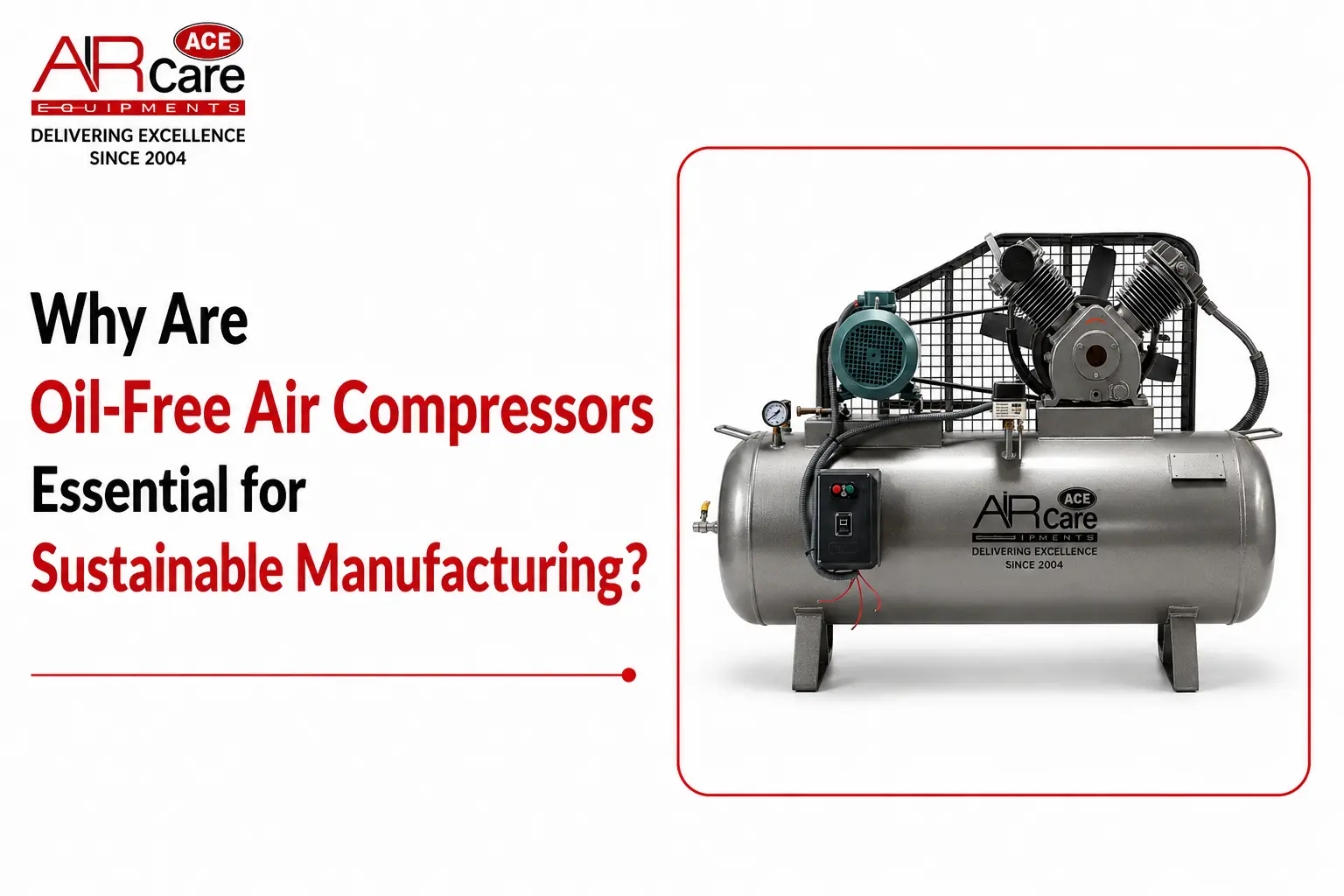
Oil-free compressors are designed to deliver air that is completely free of oil aerosols and vapors, which is crucial in industries where air purity matters most. Instead of using oil for lubrication, these compressors rely on methods like water, special coatings, or Teflon-coated parts to reduce friction and seal the compression chambers. This keeps oil out of the compressed air. They are widely used in sensitive fields such as food and beverage production, pharmaceuticals, electronics manufacturing, and medical settings. Although they may cost more upfront and need specialized maintenance, they help avoid contamination risks and reduce the need for extra filtration, making them a smart investment for protecting product quality and meeting strict safety standards. Air Care Equipments offers a variety of dependable oil-free compressors to help you meet even the toughest purity requirements and stay compliant in critical operations.
4. High-Pressure Air Compressors
High-pressure air compressors are built to deliver air at much higher pressures than standard models, usually above 300 PSI and sometimes reaching several thousand PSI. They are essential for jobs that need strong, focused air power, like bottle blowing in plastics, running certain drilling and mining tools, high-pressure testing, or filling breathing air cylinders for scuba diving and firefighting. These compressors often use several stages to compress the air, with cooling steps in between to boost efficiency. Because of the high pressures and heat involved, they are made with tough, heavy-duty parts and require careful engineering and strict safety measures to work safely and reliably over time. Air Care Equipments provides high-pressure air compressor systems designed for tough industrial work where maximum power and reliability are a must.
How to Choose the Right Air Compressor Machine for Your Project
Choosing the right air compressor machine is a decision directed by many major factors:
- Project Scale: Small projects and topical air requirements usually benefit from mutual compressors, while large, continuous operations favour rotary screws or, for specialized power needs, high-pressure units.
- The amount of air and pressure is needed: Calculation of airflow (CFM - cubic feet per minute) and pressure (PSI - pounds per square inch). Your project demands must match the capabilities of your project compressor.
- Operations period: Intermittent use makes calls for durable but simple compressors such as mutual types, while 24/7 operations require strong rotary screws.
- Environmental sensitivity: For applications requiring oil-free or clean air, oil-free compressors are recommended to eliminate contamination risks.
- Energy efficiency and maintenance: Consider energy-saving features such as variable speed drives and compressors that provide easy maintenance access.
Air Care Equipment provides specialist counseling services to assess the requirements of your project and recommend the correct types of compressor to suit your operational needs, which helps you invest smartly and increase productivity.
Best Maintenance Practices for Air Compressor Machines
Proper maintenance is necessary to avail the maximum advantage of your air compressor machine. A well-maintained compressor not only moves efficiently, but also has a long life span, which leads to expensive downtime. Here are some of the best practices recommended by experts and implemented by Air Care Equipment:
- Check the oil level regularly: For oil-lubricated compressors, it is important to maintain the right oil level. Change oil from time to time as recommended.
- Inspect and replace the air filter: Closed or dirty filters reduce airflow and compressor efficiency. Clean or replace the filter regularly.
- Drain Condensate from Air Receiver Tanks: Moisture accumulation in tanks can lead to corrosion and air quality issues. Regular draining prevents these problems.
- Tighten Loose Fasteners: The Compressor can loosen the vibration nuts and bolts during operation; check and tighten them to avoid malfunction.
- Observe the hoses and connections: To avoid any air escapes, look for signs of wear, cracks, or leaks.
- Schedule professional inspection: Ensure annual or two-year checks by qualified technicians to ensure that your compressor components are in an extreme position.
- Keep the intake and cooling system clean: It can affect the performance of dust and debris compressors. Clean cooling fans, radiators, and intake valves to maintain airflow and prevent overheating.
Air Care Equipment provides a comprehensive maintenance contract to your industrial air compressors to run smoothly with active service and support.
Why Choose Air Care Equipment?
Since 2005, Air Care Equipment has formed a reputation as a premier manufacturer of industrial air compressor machines. With modern production facilities in Gurgaon, India, we use cutting-edge design and advanced technologies to deliver strict national and international quality standards to compressors. Our production list includes high-performance screw compressors, versatile reciprocating compressors, refrigerated air dryers, and vacuum pumps, which aim to effectively continue the industry.
Customer satisfaction is a major mission, including our timely delivery, secure packaging, and an annual maintenance contract for relentless compressor operation. Certificates show our commitment to quality, durability, and environmental compliance. Upgrading existing systems or installing new setups, Air Care Equipment Expert pipeline installation and response provides solutions to customer support.
Conclusion
Choosing the right air compressor machine is essential for improving productivity, reducing operating costs, and ensuring reliable compressed air performance. Whether you need a reciprocating compressor for intermittent use, a rotary screw compressor for continuous operation, an oil-free compressor for clean air applications, or a high-pressure compressor for specialized industrial processes, understanding each type helps you make a smarter investment. By evaluating airflow (CFM), pressure (PSI), maintenance requirements, and future production needs, businesses can select a compressor that delivers long-term efficiency, reliability, and value.
FAQs
Q1: What is the most common type of air compressor?
Compressors are widely used for their versatility and strength in small-scale applications.
Q2: Which compressor type is best for continuous industrial use?
Rotary screw compressors are ideal for continuous, heavy-duty industrial applications due to their energy efficiency and coherent airflow.
Q3: Can Air Compressors provide clean air for a sensitive environment?
Yes, scroll compressors produce oil-free, clean air suitable for hospitals and laboratories where contamination should be avoided.
Q4: How can the air care appliances help choose the right compressor?
We offer expert consultation, analog solutions, and a wide range of products that ensure the perfect fit for your project needs.
Q5: Which air compressor is most energy efficient?
Rotary screw compressors with Variable Speed Drive (VSD) technology are among the most energy-efficient options for continuous industrial operations because they automatically adjust motor speed based on air demand.
Q6: What is the difference between CFM and PSI?
CFM (Cubic Feet per Minute) measures the amount of compressed air delivered, while PSI (Pounds per Square Inch) measures the pressure of the compressed air. Both values are important when selecting an air compressor.
Q7: How long does an industrial air compressor last?
With proper maintenance and regular servicing, an industrial air compressor can typically operate efficiently for 10 to 15 years or more, depending on the type, operating conditions, and maintenance schedule.
Q8: Can one air compressor run multiple machines?
Yes. A properly sized air compressor with adequate airflow (CFM), pressure (PSI), and a suitable air receiver tank can supply compressed air to multiple pneumatic tools or machines simultaneously.
Q9: Do I need an air dryer with my air compressor?
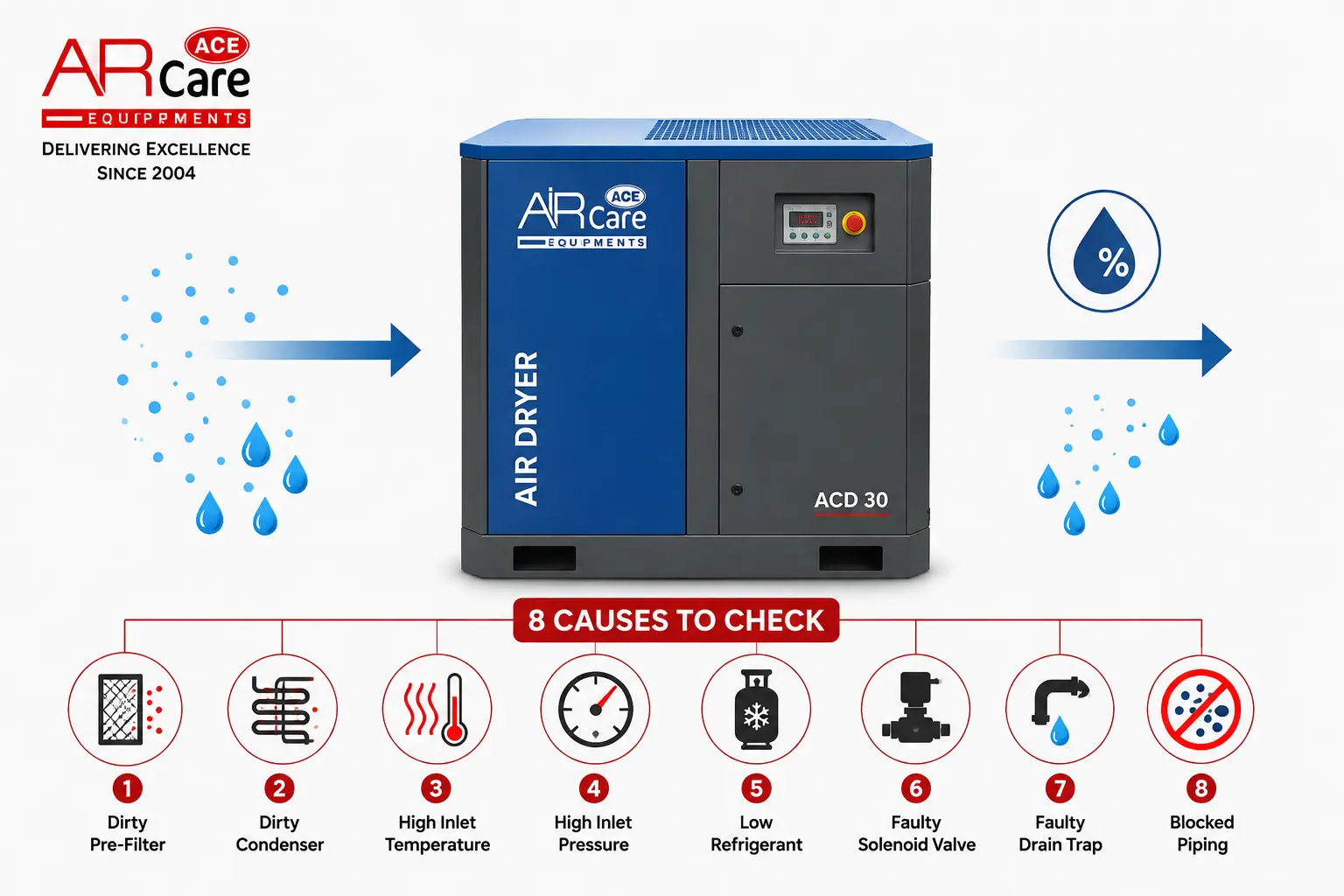
If your application requires clean, dry compressed air or operates in humid conditions, installing an air dryer helps remove moisture, prevents corrosion, protects pneumatic equipment, and improves product quality.
Recent Posts