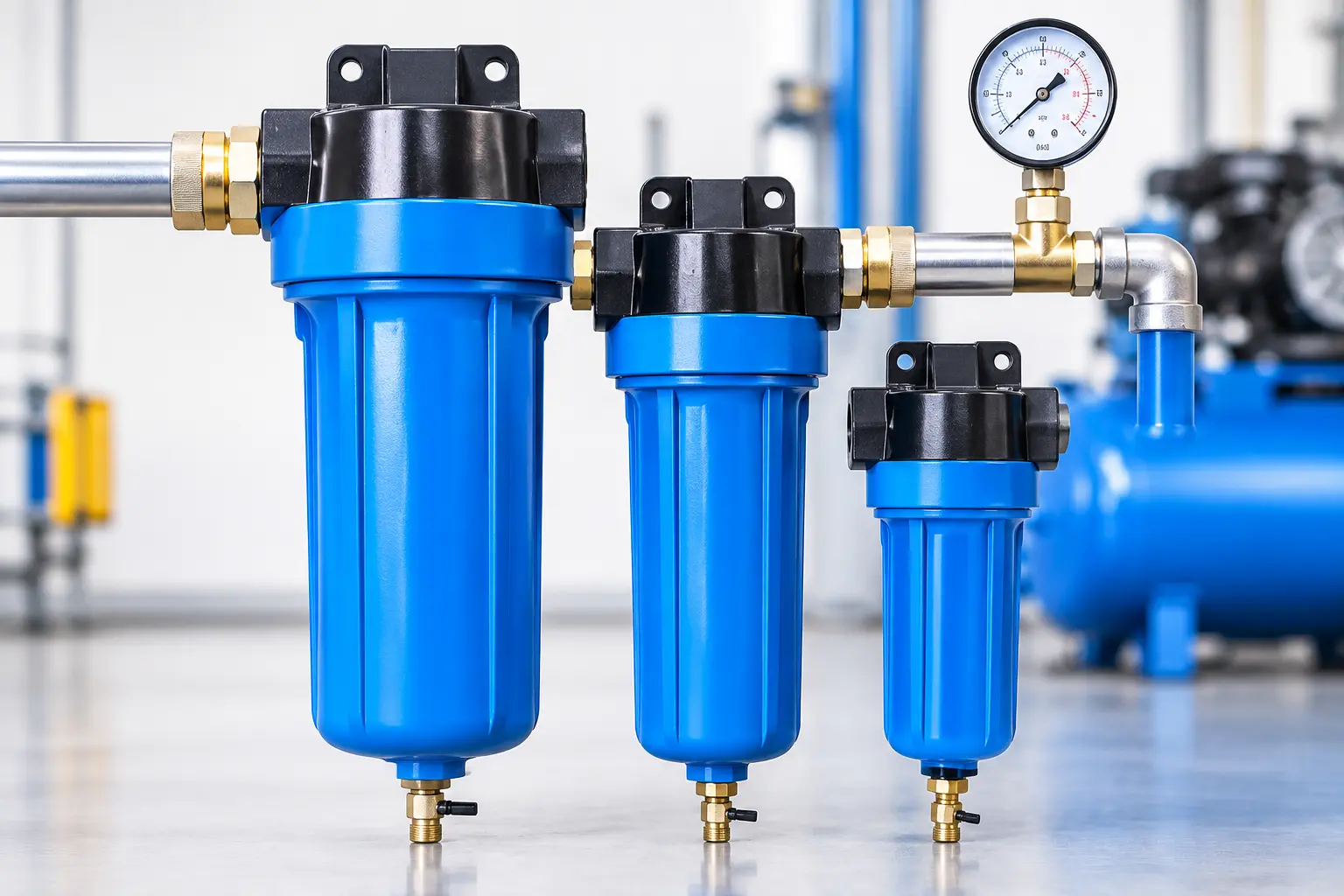
What Is a Compressed Air Filter? Types, Working and Benefits
Many factories use compressed air every day. It runs tools, machines, packing lines, and other equipment.
But compressor air is not always clean. Air around us contains dust and moisture. A compressor can pull these into the system. Some compressors may also add oil to the air.
These materials can damage machines and affect product quality. A filter helps remove them before the air reaches the equipment.
Quick Answer
A Compressed Air Filter removes dust, dirt, rust, oil drops, and other unwanted matter from compressed air. It helps protect machines, tools, and products. Common types include particulate filters, coalescing filters, activated carbon filters, and water separators. The right air compressor filter depends on the air quality your work needs.
Key Takeaways
-
A Compressed Air Filter removes unwanted matter from compressed air.
-
Each filter type removes a different kind of contaminant.
-
An inline air filter cleans air inside a pipeline.
-
An industrial air filter helps protect machines and products.
-
Regular checks help keep filters working well.
-
An air filter and an air dryer do different jobs.
What Is a Compressed Air Filter?
A Compressed Air Filter is a device that cleans compressed air. It removes unwanted particles and certain liquid contaminants.
A compressor takes in air from the room or outside. This air may contain dust, dirt, water, and oil. These materials can enter pipes and reach connected machines.
A filter traps or separates many of these contaminants. This helps reduce blockages and damage.
For example, a factory may use compressed air for spray painting. Dust and oil drops can affect the paint finish. A suitable filter helps reduce this risk.
Why Is Compressed Air Filtration Important?
Clean air helps machines work well. It can also help a business avoid delays and extra costs. Here are five key benefits of compressed air filtration.
1. Protects Machines
Dust, rust, and oil can damage valves, cylinders, and air tools. A filter catches many of these materials before they reach machine parts.
2. Helps Keep Products Clean
Dirty air can affect some products and production processes. This is a concern in painting, food packing, and other sensitive work. The right filter helps control unwanted matter.
3. Reduces Repair Needs
Dirt can block small pipes and damage machine parts. This may lead to repairs and lost work time. Good filtration helps reduce these risks.
4. Supports Steady Airflow
Dirt can build up inside pipes and equipment. This may affect airflow and machine performance. Clean air helps equipment work as planned.
5. Helps Prevent Work Delays
A machine fault can stop production. Clean air helps protect key parts and supports smooth daily work.
Read More: What Is a Compressed Air Dryer? How It Works, Types and Uses
How Does a Compressed Air Filter Work?
A Compressed Air Filter cleans air as it passes through a filter element. The element traps solid dirt or separates liquid drops.
The basic process is simple:
-
Air enters: Compressed air flows into the filter.
-
Air passes through the element: The element acts as a barrier or separator.
-
Contaminants are removed: The filter traps particles or separates liquid drops.
-
Clean air leaves: The treated air flows out to the system.
-
Collected liquid is drained: Some filters collect water or oil that must be drained.
-
The filter is checked: The element is inspected and changed when needed.
Each filter has a specific purpose. So, choose one that matches the type of contamination in your air.
What Are the Different Types of Compressed Air Filters?
Different filters remove different contaminants. A factory may need one type or a mix.
1. Particulate Filter
A particulate filter removes solid matter from compressed air. This may include dust, dirt, rust, and pipe scale.
It is often used in factories, workshops, and air lines. It is useful when solid particles are the main concern.
2. Coalescing Filter
A coalescing filter removes tiny liquid drops from compressed air. These drops may contain water, oil, or both.
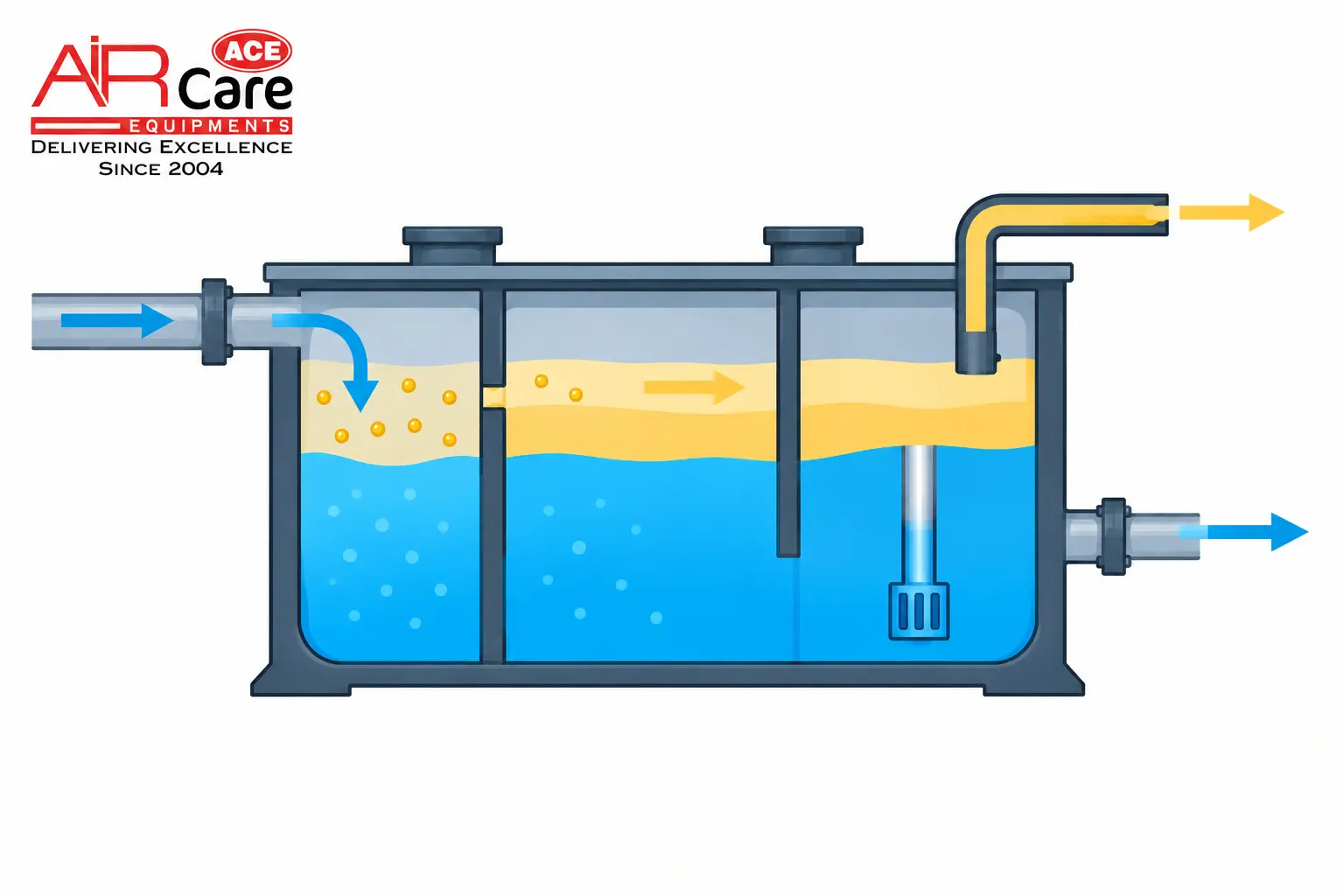
Inside the filter, small drops join to form larger drops. The larger drops collect in the filter housing and leave through a drain.
These filters are used in compressor systems, production lines, and air tools. They help control liquid oil and water in the air.
3. Activated Carbon Filter
An activated carbon filter helps remove oil vapour, some hydrocarbons, and unwanted smells.
It uses carbon to attract and hold vapour molecules on its surface. This process is called adsorption.
This filter is useful when oil vapour or odours need to be controlled. It is not made to remove large amounts of liquid oil or water.
4. Water Separator
A water separator removes bulk liquid water from compressed air. Many models use a spinning motion to separate water drops from the airflow.
The water collects in a chamber and drains out.
A water separator removes liquid water, but it does not remove all water vapour. An air dryer is needed when a process requires drier air.
Comparison of Compressed Air Filter Types
|
Filter Type |
What It Removes |
Common Use |
|
Particulate filter |
Dust, dirt, and rust |
Factory air lines |
|
Coalescing filter |
Fine oil and water drops |
Compressor systems |
|
Activated carbon filter |
Oil vapour and odours |
Sensitive processes |
|
Water separator |
Bulk liquid water |
Compressor outlets |
The right choice depends on the air quality your process needs. Some systems use more than one filter.
What Is an Inline Air Filter?
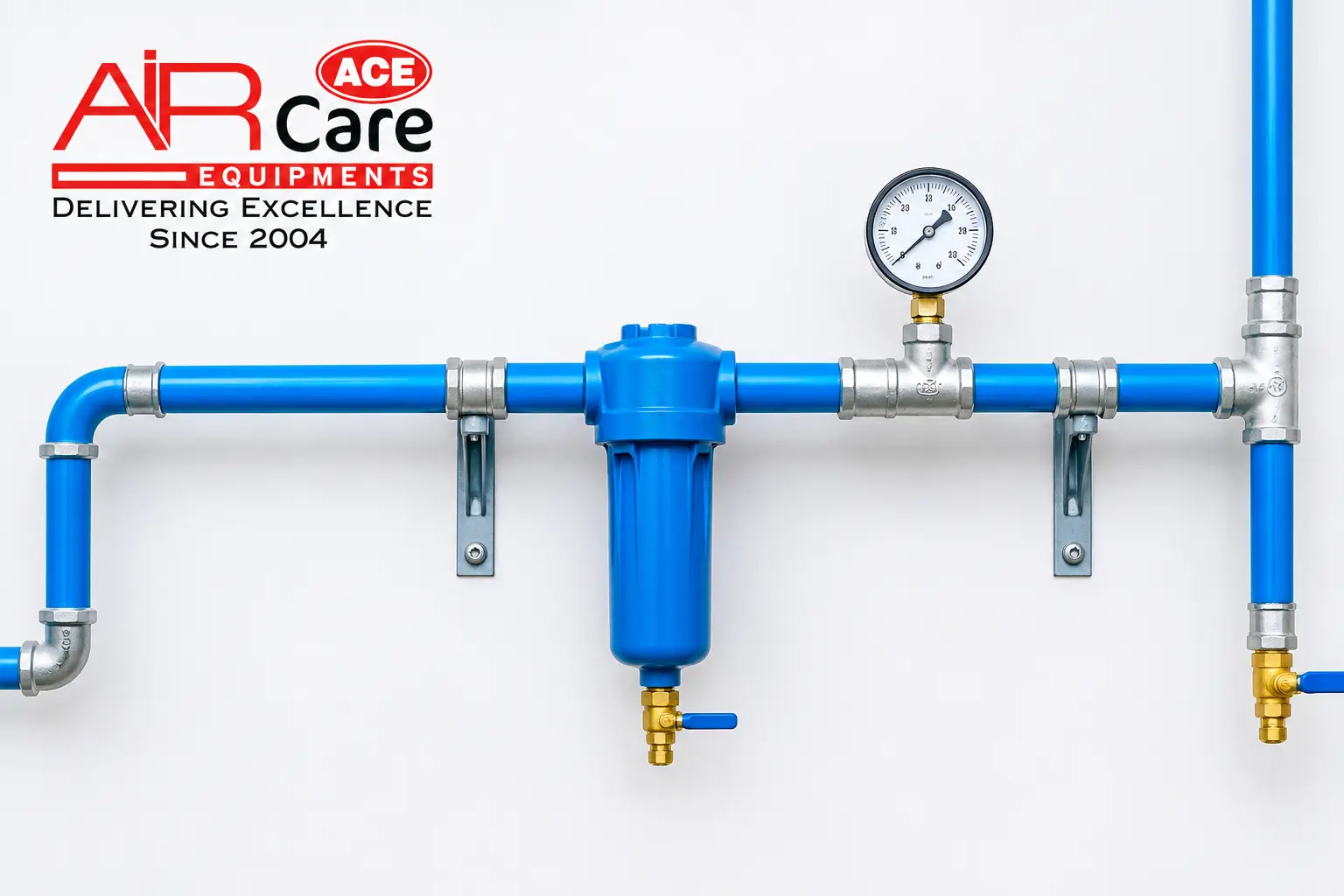
An inline air filter is fitted directly into a compressed air pipe. Air passes through it as it moves from the compressor to a machine or tool.
Its job depends on its design. One model may remove dust, while another may separate oil or water drops.
Where Is an Inline Air Filter Used?
An inline air filter is commonly used in:
-
Pneumatic tools and machines.
-
Automated production lines.
-
Packing equipment.
-
Compressed air pipelines.
-
Spray painting systems.
Before choosing one, check its airflow rate, pressure rating, pipe size, and filter rating. These details help you select a filter that suits your system.
Also Read: Compressed Air Piping: Types, Installation, Benefits & Uses
What Are the Benefits of an Industrial Air Filter?
An industrial air filter helps control dirt and other unwanted matter in factory air systems.
|
Benefit |
How It Helps |
|
Machine Protection |
Helps reduce damage from dirt and liquid drops |
|
Cleaner products |
Helps control unwanted matter in process air |
|
Less maintenance |
Helps reduce some dirt-related faults |
|
Steady operation |
Supports reliable machine performance |
|
Cleaner pipes |
Helps limit the build-up of dirt and liquid |
These benefits depend on the filter type, correct size, proper fitting, and regular care.
How to Choose the Right Air Compressor Filter
The best air compressor filter suits your system and your work. Check these points before you buy.
-
Know what is in the air: Dust and rust need a particulate filter. Fine oil and water drops need a coalescing filter.
-
Check the airflow: The filter must handle the amount of air your system uses. A small filter may restrict airflow.
-
Check the pressure: Make sure the filter housing can handle your system’s working pressure.
-
Know your air quality needs: A workshop may need a different level of filtration from a sensitive production unit.
-
Service plan: Check how to drain the filter and when to change its element. Also check spare part availability.
If you are unsure, ask an air treatment expert to review your system.
Where Are Compressed Air Filters Used?
Compressed air filters are used in many industries. They clean the air that runs tools and supports production.
|
Industry |
Common Use |
Why Filtration Matters |
|
Automotive |
Painting and air tools |
Helps control dirt and oil drops |
|
Food processing |
Packing equipment |
Helps meet process air needs |
|
Pharmaceuticals |
Production equipment |
Helps control unwanted matter |
|
Tectiles |
Air-powered machinery |
Helps protect machine parts |
|
Electronics |
Automated equipment |
Helps control small particles |
|
Engineering |
CNC machines and tools |
Helps reduce dirt-related wear |
Compressed air is widely used across manufacturing industries. Explore the Common Uses of Industrial Air Compressors to understand their applications.
How to Maintain a Compressed Air Filter
Regular servicing is important for maintaining system performance. Read our guide on Air Compressor Maintenance to understand essential maintenance practices.
-
Inspect the housing: Look for cracks, damage, or leaks.
-
Check pressure drop: A high pressure drop may mean the filter element is dirty.
-
Check the drain: Make sure collected liquid can leave the filter.
-
Change the element: Follow the manufacturer’s replacement recommendations.
-
Check seals and joints: Fix air leaks as soon as possible.
-
Keep a service record: Note each check and part change.
Do not wait for a machine fault before checking the filter. Regular care helps you catch problems early.
What Is the Difference Between an Air Filter and an Air Dryer?
An air filter and an air dryer do different jobs. A filter removes particles and some liquid drops. A dryer reduces water vapour in the air.
|
Point |
Air filter |
Air Dryer |
|
Main job |
Removes particles and some liquid matter |
Reduces water vapour |
|
How it works |
Uses a filter element or carbon |
Uses cooling or drying material |
|
Main aim |
Controls dirt and oil drops |
Controls moisture |
|
Helps prevent |
Dirt-related wear and faults |
Water-related problems |
A compressed air dryer helps remove moisture from compressed air and protects industrial equipment. Learn more about the different types, working principles and benefits of a Compressed Air Dryer.
How Can Air Care Equipment Help with Compressed Air Systems?
Choosing the right air treatment setup starts with knowing your system. Check the compressor size, air demand, working pressure, and type of contamination.
Air Care Equipment provides industrial compressed air equipment solutions. Before choosing an industrial air filter, list the issues you need to control. These may include dust, rust, liquid water, oil drops, or oil vapour.
Your system may need one filter or several stages. Regular checks and timely service also help keep it in good working order.
Final Thoughts
A Compressed Air Filter removes unwanted matter from compressed air. This helps protect machines, tools, pipes, and products. It can also help reduce faults and keep work moving.
Particulate, coalescing, activated carbon, and water separator filters each have a different role. Choose a filter based on the contaminants in your air and your process needs.
Good compressed air filtration, correct fitting, and regular service help support a reliable air system. For industrial compressed air equipment solutions, explore Air Care Equipment.
Frequently Asked Questions
Q1. What is a Compressed Air Filter used for?
A Compressed Air Filter removes dust, dirt, rust, oil drops, and other unwanted matter from compressed air. It helps protect tools and machines.
Q2. What are the main types of compressed air filters?
The main types are particulate filters, coalescing filters, activated carbon filters, and water separators. Each type removes different contaminants.
Q3. How does an air compressor filter work?
An air compressor filter sends air through a filter element. The element traps solid dirt or separates liquid drops before the air reaches the equipment.
Q4. What is an inline air filter?
An inline air filter is fitted into an air pipe. It cleans the air as it flows towards a machine or tool.
Q5. Can a compressed air filter remove moisture?
Some filters remove liquid water drops. They do not remove all water vapour. An air dryer is needed when a process requires drier air.
Q6. How often should a compressed air filter be changed?
This depends on use, dirt levels, pressure drop, and the maker’s advice. Check the filter often and change the element when needed.
Q7. Why is an industrial air filter important?
An industrial air filter protects machines, controls dirt, supports product quality, and keeps compressed air systems running well.
Recent Posts