Understanding PSI, PSIA, and PSIG in Air Pressure Measurement
Quick Answer
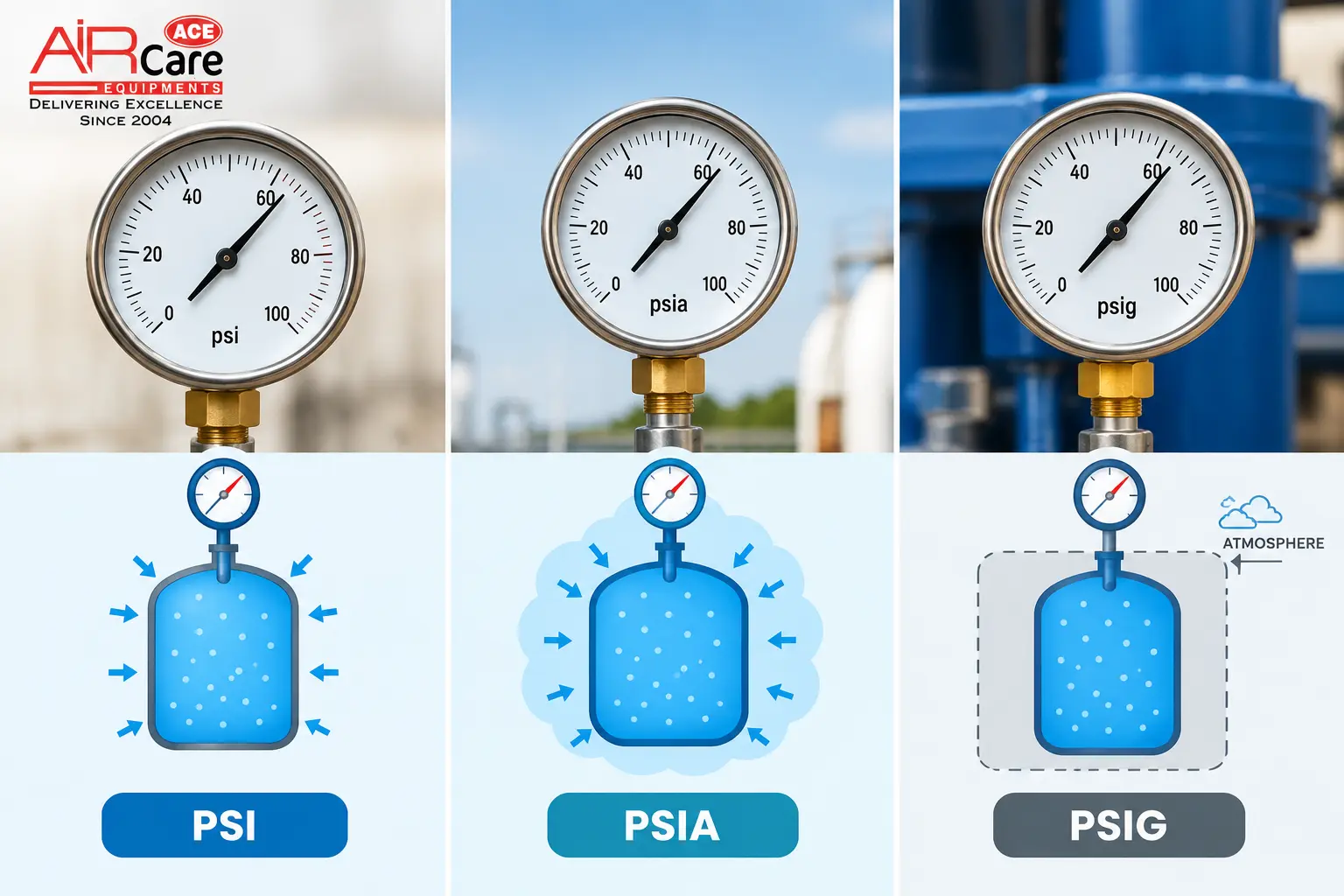
PSI vs PSIA vs PSIG refers to three ways of describing pressure. PSI means pounds per square inch. PSIA measures pressure from a perfect vacuum, while PSIG measures pressure compared with the surrounding air.
For example, 100 PSIG is about 114.7 PSIA at standard sea-level pressure. The difference is atmospheric pressure, which is approximately 14.7 PSI at sea level.
These terms matter when selecting an air compressor, checking pressure gauges, or calculating gas pressure. Using the wrong pressure reference can lead to incorrect calculations and equipment selection.
Key Takeaways
-
PSI full form: Pounds per square inch.
-
PSIA full form: Pounds per square inch absolute.
-
PSIG full form: Pounds per square inch gauge.
-
PSIG measures pressure relative to the surrounding atmosphere.
-
PSIA measures pressure relative to a perfect vacuum.
-
At standard sea-level pressure, PSIA equals PSIG plus approximately 14.7.
-
Always check the pressure reference in equipment specifications.
What Is PSI?
What is PSI? PSI stands for pounds per square inch. It measures pressure.
Pressure describes how much force acts on a given area. PSI expresses this force over one square inch.
You may see PSI on tyre gauges, hydraulic equipment, pressure tanks and air compressors. PSI is widely used in settings where machines need a specific operating pressure. PSI is widely used in settings where machines need a specific operating pressure.
For example, a pneumatic tool may require 90 PSI to work. A pneumatic tool may require 90 PSI to work. An air compressor must provide pressure to meet that requirement. An air compressor must provide pressure to meet that requirement.
However, PSI doesn't always tell you how pressure is measured. The reference point also matters. A specification may use gauge pressure or absolute pressure.
That is why understanding PSI meaning is the first step towards understanding PSIA and PSIG.
What Does PSI Mean in Compressed Air Systems?
In compressed air systems, PSI helps operators monitor the pressure of air stored in a receiver tank or delivered through pipes.
Correct pressure helps tools and machines work as intended. Low pressure may reduce performance. Excessive pressure can damage equipment and create a safety risk.
I recommend checking the pressure required by the equipment manufacturer. If a technical document lists PSI, confirm whether the pressure value refers to gauge pressure or absolute pressure.
Read More: Top 10 Air Compressor Manufacturers in India (2026 Buyer's Guide)
What Are PSIA and PSIG?
PSIA and PSIG use the same basic pressure unit. The difference is their reference point.
What Is PSIA?
PSIA stands for pounds per square inch absolute.
PSIA measures pressure from a perfect vacuum. This means its reading includes atmospheric pressure.
At sea‑level conditions, the atmospheric pressure measures about 14.7 PSIA. A perfect vacuum is shown by 0 PSIA.
PSIA is handy when calculations rely on a gas’s pressure. Engineers use pressure for gas‑law calculations, vacuum tasks, and compressor performance checks.
For example, a vessel reading 30 PSIA at sea level has about 15.3 PSI above the surrounding atmosphere.
What Is PSIG?
PSIG stands for pounds per square inch gauge.
It measures pressure relative to the surrounding air pressure. A reading of 0 PSIG means the pressure inside the system matches the surrounding air pressure. This does not mean there is no air. There is still air at the same pressure as the outside. PSIG is often used in compressed air systems because most pressure gauges show how much higher the pressure is than the surrounding air. For example, if an air compressor gauge shows 100 PSIG, that means the system pressure is 100 PSI more than the local atmospheric pressure.
This measurement helps operators monitor air receiver tanks, pneumatic tools, and industrial air lines.
PSI vs PSIA vs PSIG: What Is the Difference?
The main difference is the pressure reference point.
|
Feature |
PSI |
PSIA |
PSIG |
|
Full Form |
Pounds per square inch |
Pounds per square inch absolute |
Pounds per square inch gauge |
|
Reference Point |
Not specified by the term alone |
Perfect vacuum |
Local atmospheric pressure |
|
Atmospheric pressure |
Depends on the reference |
Included in the reading |
Used as the zero reference |
|
Common applications |
General pressure specifications |
Gas calculation and vacuum systems |
Air compressors and pressure gauges |
|
Zero reading |
Depends on the reference |
Perfect vacuum |
Equal to local atmospheric pressure |
The important point is that PSI is the unit of measurement. PSIA and PSIG identify how the pressure is referenced.
When reading a specification sheet, never assume that every PSI value uses the same reference.
How to Convert PSIG to PSIA
You can convert between PSIG and PSIA if you know the local atmospheric pressure.
At standard sea-level conditions, use approximately 14.7 PSI for atmospheric pressure.
Formula 1: Convert PSIG to PSIA
PSIA = PSIG + Atmospheric Pressure
Formula 2: Convert PSIA to PSIG
PSIG = PSIA − Atmospheric Pressure
Example 1: Convert 100 PSIG to PSIA
Suppose an air compressor operates at 100 PSIG.
-
Gauge pressure: 100 PSI
-
Atmospheric pressure: 14.7 PSI
-
Calculation: 100 + 14.7 = 114.7 PSIA
Answer: 100 PSIG is approximately 114.7 PSIA at sea level.
Example 2: Convert 50 PSIA to PSIG
Suppose a pressure sensor shows 50 PSIA.
-
Absolute pressure: 50 PSI
-
Atmospheric pressure: 14.7 PSI
-
Calculation: 50 − 14.7 = 35.3 PSIG
Answer: 50 PSIA is approximately 35.3 PSIG at sea level.
These examples use standard atmospheric pressure. Actual atmospheric pressure changes with altitude and weather. For accurate engineering calculations, use the local atmospheric pressure.
Read More: 7 Common Uses of Industrial Air Compressors | Air Care Equipment
Why Does the Difference Matter in Compressed Air Systems?
Understanding PSI vs PSIA vs PSIG helps engineers and maintenance teams make better decisions.
1. Selecting the Right Air Compressor
An air compressor must meet the pressure requirements of the tools and machines connected to it.
Before comparing compressor specifications, check that the pressure values use the same reference. Otherwise, you may compare two different measurements as if they were identical.
Also check the required airflow. Pressure alone does not tell you how much air a compressor can deliver.
2. Monitoring Air Receiver Tanks
Pressure gauges normally show pressure. This lets operators see how much pressure lies above the surrounding atmosphere.
A sudden pressure drop may signal an air leak, increased demand, or a compressor fault. Routine checks can spot these problems before they disturb production.
3. Calculating Compression Ratios
Absolute pressure is important when calculating a compressor's pressure ratio.
For example, air entering a compressor at normal atmospheric conditions has an absolute pressure close to 14.7 PSIA at sea level.
Using gauge pressure instead of absolute pressure can produce an incorrect compression-ratio calculation. Always convert pressure values to the correct reference before calculating.
4. Checking Vacuum Systems
Vacuum systems often use absolute pressure to describe how far the pressure is below normal atmospheric pressure.
A gauge-pressure reading can become negative when system pressure falls below atmospheric pressure. Absolute pressure remains zero or above.
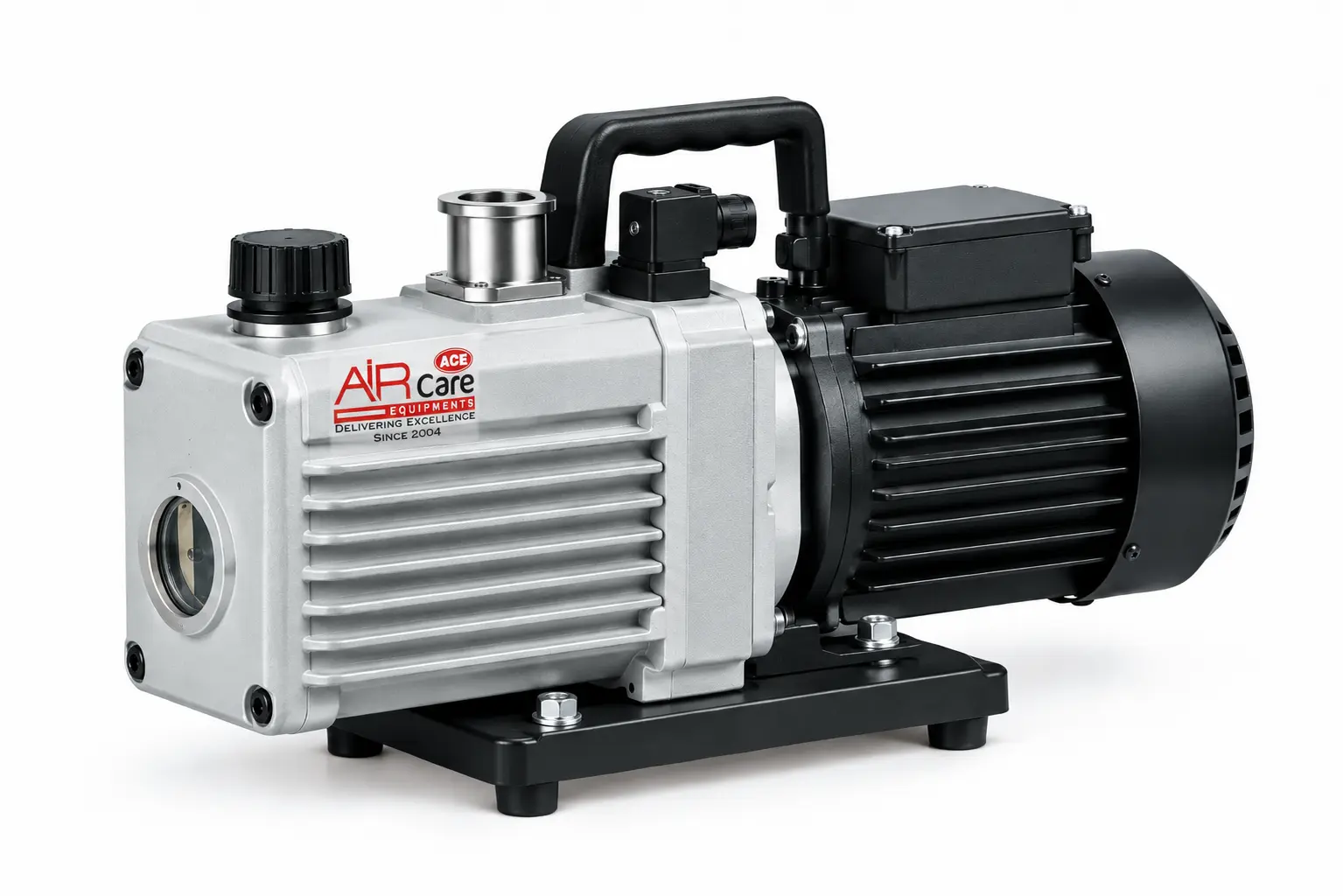
This distinction helps technicians interpret vacuum readings correctly. Related equipment includes industrial vacuum pumps.
What Factors Affect Pressure Measurements?
Several conditions can change pressure readings. Keep these factors in mind when checking industrial equipment.
-
Altitude: Atmospheric pressure generally decreases with altitude. This changes the relationship between PSIA and PSIG.
-
Weather: Local atmospheric pressure can vary with weather conditions.
-
Temperature: Temperature changes can affect the pressure of gas inside a closed vessel.
-
Instrument accuracy: A faulty or poorly calibrated gauge may show an incorrect reading.
-
Air leaks: Leaks can reduce pressure in a compressed air system.
-
Measurement location: Pressure may differ between the compressor outlet and a machine farther along the pipeline.
If a pressure reading looks unusual, check the instrument and measurement point before adjusting the equipment.
Read More: 4 Types of Air Compressors: How to Choose the Right One
How to Choose the Correct Pressure Measurement
The right unit depends on the job.
-
Use PSIG for routine checks of compressed air pressure when the gauge reference is appropriate.
-
Use PSIA for calculations that require absolute pressure, such as gas-law calculations and compression ratios.
-
Check the reference point when comparing equipment specifications.
-
Confirm both pressure and airflow before selecting a compressor.
-
Follow the manufacturer's operating limits and safety instructions.
For plants in India, these checks let you compare the details of imported compressors with what is needed for local use. Pressure units can differ across documents, so check the reference before doing any calculations or buying machines.
Air Care Equipment can be a useful starting point when exploring compressed air equipment and related system requirements. Always select equipment based on your actual operating conditions.
Common Mistakes to Avoid
Avoid these common pressure-measurement errors:
-
Assuming PSI always means PSIG: The reference may not be stated clearly.
-
Adding 14.7 PSI in every situation: This value applies approximately at standard sea-level pressure, not everywhere.
-
Using gauge pressure in absolute-pressure calculations: This can lead to incorrect results.
-
Ignoring equipment limits: Every system has a rated operating range.
-
Comparing different pressure references: Convert the readings first.
-
Ignoring airflow requirements: A compressor must meet both pressure and air demand.
A few simple checks can prevent calculation errors and help keep compressed air equipment operating safely.
Final Thoughts
Understanding PSI vs PSIA vs PSIG makes pressure readings easier to interpret. PSI stands for pounds per square inch. PSIA measures pressure from a perfect vacuum, while PSIG measures pressure relative to the surrounding atmosphere.
At standard sea-level conditions, PSIA is about 14.7 PSI higher than PSIG for the same pressure. The difference changes with local atmospheric pressure.
Before selecting a compressor or checking an industrial system, confirm the pressure reference, required airflow, and equipment rating. These steps help you compare specifications correctly and make informed decisions.
Frequently Asked Questions
1. What is PSI?
PSI stands for pounds per square inch. It measures pressure in tyres, hydraulic systems, air compressors, and industrial equipment.
2. What is the PSI full form?
The full form of PSI is pounds per square inch. It describes pressure as the force applied over one square inch.
3. What is the PSIA full form?
The full form of PSIA is pounds per square inch absolute. It measures pressure relative to a perfect vacuum.
4. What is the difference between PSIA and PSIG?
PSIA measures absolute pressure, including atmospheric pressure. PSIG measures pressure relative to the surrounding atmosphere.
5. Is 0 PSIG the same as 0 PSIA?
No. Zero PSIG means the system pressure equals local atmospheric pressure. Zero PSIA represents a perfect vacuum.
6. How do you convert 100 PSIG to PSIA?
At standard sea-level pressure, add approximately 14.7 PSI.
100 + 14.7 = 114.7 PSIA.
7. Which unit is commonly used for air compressors?
Air compressor pressure is commonly specified in PSIG or bar gauge. However, engineers use absolute pressure for certain calculations. Always check the specification.
8. Does altitude affect the conversion between PSIA and PSIG?
Yes. Atmospheric pressure decreases as altitude increases. Use the local atmospheric pressure for an accurate conversion.
Recent Posts