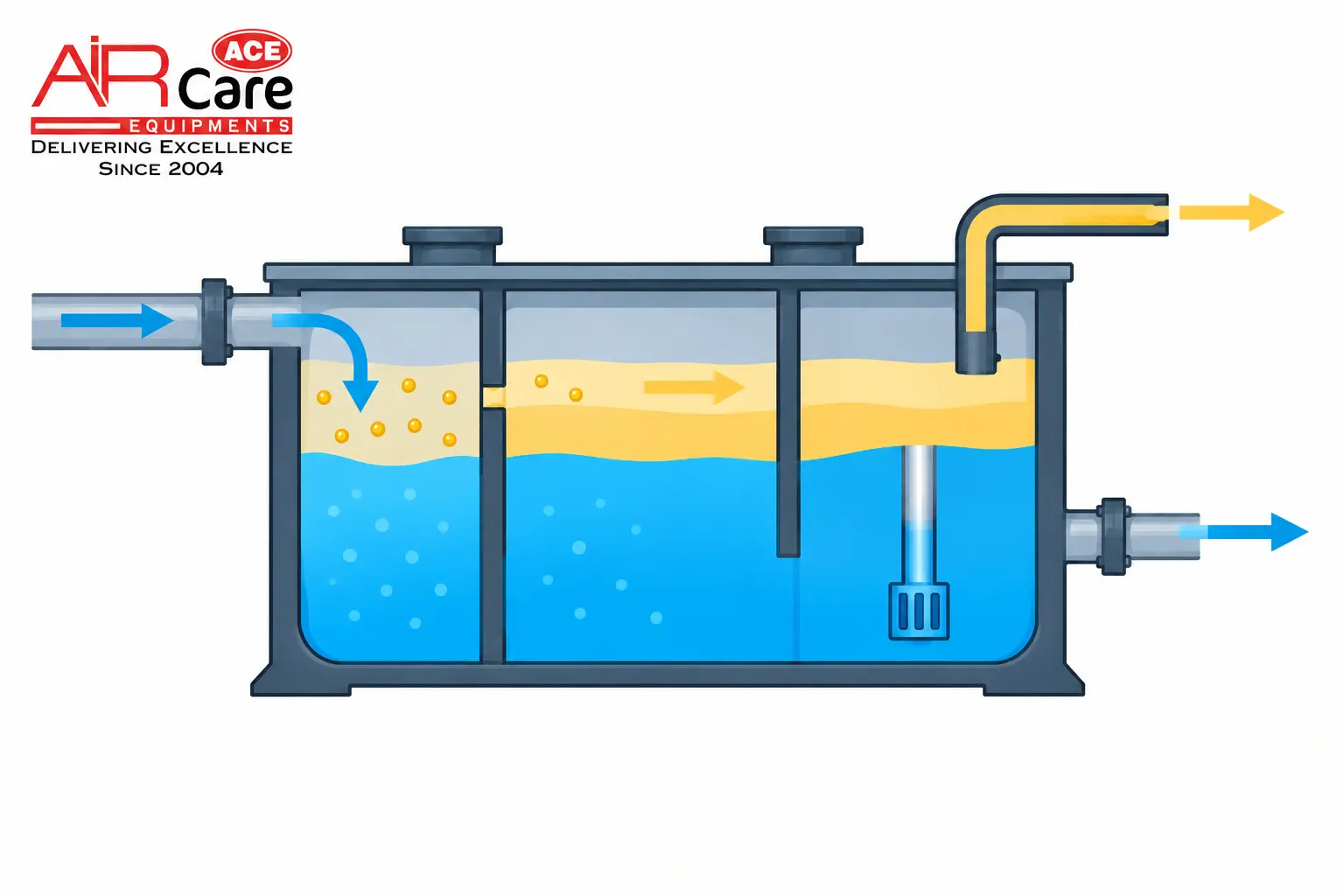
What Is an Oil-Water Separator? Purpose, Components, and Working Principle
Quick Answer
An oil-water separator is a treatment system that removes oil from contaminated water. In compressed air systems, it is commonly used to treat oily condensate produced by oil-lubricated compressors before disposal or further treatment.
The separator may use gravity, filtration, adsorption, or coalescing, depending on its design. Regular inspection and filter replacement help maintain effective operation.
Key Takeaways
-
An oil-water separator removes oil from contaminated water.
-
An oily water separator is used in many industrial settings.
-
An oil separator compressor system treats oily water from air compressors.
-
Filter media helps capture oil during treatment.
-
Regular checks and filter changes support good performance.
-
Treated water must meet local discharge rules.
What Is an Oil-Water Separator?
An oil-water separator is a machine that separates oil from water. Factories, workshops, and other industrial sites use it to treat oily water.
Oil and water do not mix easily. In many cases, oil floats on water because it is lighter. However, tiny oil droplets can remain in the water. These droplets can make separation harder.
An oil separator machine uses a suitable method to remove oil. Some machines use gravity. Others use special filters or combine treatment methods.
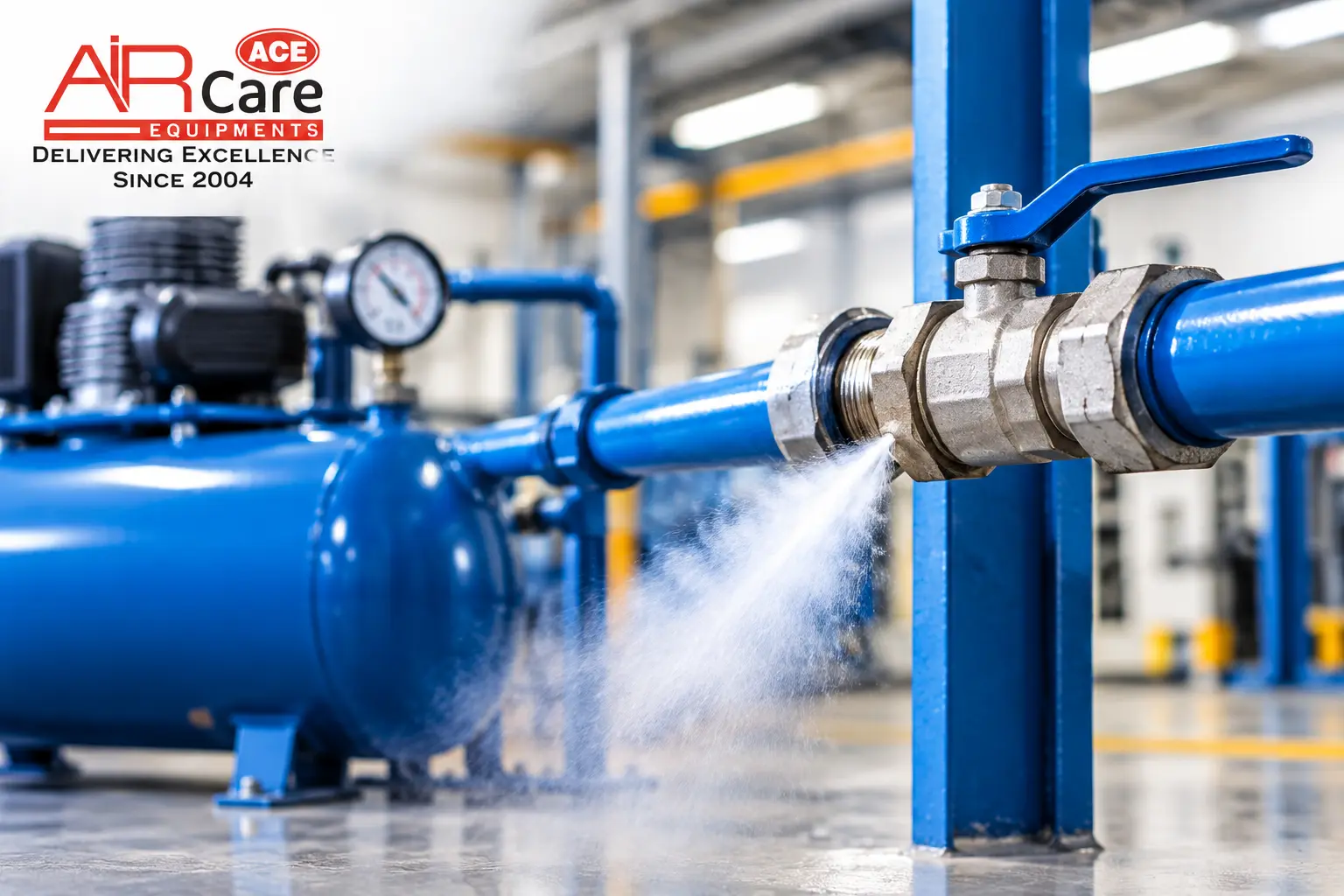
Oil-water separation is also important in compressed air systems. Industrial Air Compressors are widely used in factories, workshops, and manufacturing units. In oil-lubricated systems, compressed air can carry moisture and traces of oil. When the air cools, moisture condenses into liquid.
This liquid is called condensate. It may contain water, compressor oil, and other impurities. A suitable oil separator compressor system treats this condensate before disposal.
Oil-Water Separation in Compressed Air Systems
Oil-lubricated compressors can produce liquid condensate during normal operation. This condensate may contain water, compressor oil, and other impurities. A suitable condensate treatment system can separate much of the oil before disposal.
The treatment method depends on the separator design and the characteristics of the condensate.
Why Is an Oil-Water Separator Important?
An oil separator helps businesses manage oily water. It also helps reduce the risk of pollution.
1. Protects the Environment
Oil can harm plants and animals when it enters rivers, lakes, or soil. It can also affect water quality.
An oil-water separator removes much of the oil from contaminated water. This helps reduce the risk of pollution.
2. Helps With Safe Water Disposal
Many areas have rules for releasing wastewater. Businesses must follow the rules that apply to their site.
An oily water separator helps treat water before disposal. However, the equipment must suit the type of water being treated.
3. Treats Compressor Condensate
Oil-lubricated compressors produce condensate during normal operation. This liquid may contain traces of oil.
A suitable separator removes much of this oil before disposal. This helps businesses manage compressor waste more responsibly.
4. Makes Maintenance Easier
A dedicated separator gives operators a clear way to manage oily water. They can check the filters, inspect the unit, and record maintenance work.
These simple steps help keep the system in good condition.
Read More: What Is an FRL? Complete Guide to Filter Regulator Lubricator
What Are the Main Components of an Oil-Water Separator?
An oil-water separator has several parts. Each part supports the treatment process. The exact design depends on the machine and its purpose.
|
Component |
Main Function |
Why its Matter |
|
Intel |
Carries oily water into the unit |
Starts the treatment process |
|
Pressure Relief System |
Reduces pressure when needed |
Helps control the flow |
|
Pre-Filter |
Catches some oil droplets and impurities |
Reduces the load on later filters |
|
Filter media |
Captures oil from the water |
Helps separate oil and water |
|
Activated carbon filter |
Captures certain remaining contaminants |
Adds another treatment stage in some models |
|
Filter housing |
Holds the filter material |
Keeps the parts in place |
|
Water Outlet |
Carries treated water out of the unit |
Allows the water to be checked before disposal |
Not every machine has all these parts. Some models use fewer filter stages. Others use extra filters to improve treatment.
Before buying an oil separator machine, check its design and the manufacturer’s instructions.
How Does an Oil-Water Separator Work?
The oil-water separator works on a simple principle. The machine treats oily water and captures the oil. The exact steps depend on the separator type.
Step 1: Collect the Oily Water
The system collects water that contains oil. In a compressed air system, this water comes from the compressor and connected equipment.
The liquid enters the separator through the inlet.
Step 2: Reduce the Pressure
Some systems receive condensate under pressure. A pressure relief system reduces that pressure before filtration.
This helps control the flow inside the machine.
Step 3: Capture the Oil
The water passes through special filter materials. These materials attract and hold oil droplets.
Polypropylene fibres are used in some compressor condensate separators. The fibres capture oil while letting most of the water pass through.
Step 4: Remove Remaining Impurities
Some machines use another filter stage. This may include activated carbon.
The extra stage helps capture certain remaining contaminants. The number of stages depends on the machine’s design.
Step 5: Release the Treated Water
The treated water leaves through the outlet. It must meet the rules for the intended discharge point before disposal.
The captured oil stays in the filter material or collection area. Used filters must be handled and disposed of correctly.
Read More: Oil-Free Air Compressors for Pharmaceutical Industry
Which Oil-Water Separation Methods Are Common?
Different types of oily water need different treatment methods. The table below explains the main options.
|
Method |
How it Works |
Common Use |
|
Gravity Separation |
Allows free oil to rise above water |
Water containing separate oil layers |
|
Coalescing |
Combines small oil droplets into larger droplets |
Suitable for industrial wastewater |
|
Adsorption |
Uses Materials that attract and hold oil |
Some compressor condensate systems |
|
Activated carbon filtration |
Captures certain remaining contaminants |
Extra treatment in suitable machines |
|
Multi-stage filtration |
Passes Water through several filter stages |
Systems that need more than one treatment step |
Not every oil separator machine uses all these methods. The right method depends on the oil, the amount of contamination, and the required water quality.
Where Is an Oily Water Separator Used?
Oily water separators are used in several industries. Common applications include:
-
Compressed air systems: Treating condensate from oil-lubricated compressors. Learn more about screw-type air compressors.
-
Automotive workshops: Treating water mixed with oil and lubricants.
-
Manufacturing plants: Managing oily water from suitable production processes.
-
Maintenance facilities: Treating collected wash water that contains oil.
-
Wastewater treatment plants: Removing free oil before further treatment.
The same separator may not suit every application. For example, water containing strong detergents or stable oil mixtures may need a different treatment system.
Always check the contamination type before selecting equipment.
Read More: Compressed Air Unit Conversion: Formulas & Guide
How Do You Choose the Right Oil Separator Machine?
Choosing the right oil separator machine starts with understanding your needs. Consider these five points before buying.
1. Check the Capacity
Find out how much water the system produces. For a compressor, consider its size, working hours, and connected equipment. Review the specifications of the piston-type air compressor or other compressor used in your system.
2. Identify the Oil Type
Some water contains free oil. Other water contains tiny oil droplets that are harder to remove.
Check whether the separator can treat your type of oily water.
3. Check the Filter Material
Ask which filter materials the machine uses. Also, check how often the filters need replacement.
Make sure replacement filters are available and affordable.
4. Check Local Rules
Find out what rules apply to your wastewater. The treated water must meet the required limits before discharge.
Do not assume that every separator makes water safe for direct release.
5. Consider Maintenance
Choose a machine that is easy to inspect and service. Check the space needed for installation and filter replacement.
A clear maintenance plan can help prevent avoidable problems.
How Can You Maintain an Oil-Water Separator?
Regular care helps an oil separator work as intended. Follow these simple steps:
-
Check the machine for leaks.
-
Inspect the filters as the manufacturer recommends.
-
Replace filters when needed.
-
Check the inlet and outlet for blockages.
-
Keep a record of maintenance work.
-
Test the treated water when required.
Do not judge water quality by its appearance alone. Clear water may still contain too much oil for discharge.
Common Mistakes to Avoid
Avoid these mistakes when using an oil-water separator:
-
Choosing the wrong size: A small unit may not handle all the water.
-
Ignoring filter changes: Old filters may remove less oil.
-
Using the wrong machine: Some separators cannot treat every type of oily water.
-
Skipping water checks: Treated water must meet local discharge rules.
-
Ignoring maintenance: Regular checks help identify problems early.
These steps can help improve system performance and support better waste management.
Expert Selection Tip
Before selecting an oil-water separator for a compressed air system, review the compressor type, operating hours, condensate volume, oil characteristics, treatment requirements, and applicable discharge rules.
Do not select equipment based only on compressor horsepower. The actual condensate load and separator specifications should also be considered.
For additional information about compressed air equipment, visit Air Care Equipment.
Final Thoughts
An oil-water separator removes oil from water before discharge or further treatment. It is useful in factories, workshops, and compressed air systems.
The right machine depends on the water type, oil content, and required treatment. Regular maintenance also plays an important role.
Before choosing an oil separator compressor system or another oil separator machine, check its capacity, filter type, and maintenance needs. Also, confirm the local rules for water disposal.
These simple checks can help you choose the right machine and manage oily water responsibly.
Frequently Asked Questions
Q1. What is an oil-water separator used for?
An oil-water separator removes oil from contaminated water. It helps reduce pollution before the water is discharged or sent for further treatment.
Q2. How does an oil-water separator work?
It uses gravity, special filter materials, or other treatment methods to remove oil from water. The process depends on the machine’s design.
Q3. Why does a compressor need an oil-water separator?
An oil-lubricated compressor can produce oil-water mixtures. An oil-separator compressor system treats this liquid before disposal.
Q4. What are the main components of an oil-water separator?
Common parts include an inlet, filter media, a filter housing, and a water outlet. Some machines also have a pressure relief system and an activated carbon filter.
Q5. How often should the filter be changed?
The timing depends on the machine, oil volume, and operating conditions. Follow the manufacturer’s instructions.
Q6. Can treated water go directly into a drain?
Only if the water meets the rules for that discharge point; check local requirements before releasing it.
Q7. How do I choose the right oil separator machine?
Before buying, check the water source, flow rate, oil type, filter needs, maintenance costs, and discharge rules.
Recent Posts