Why Pharmaceutical Companies Need Oil-Free Air Compressors
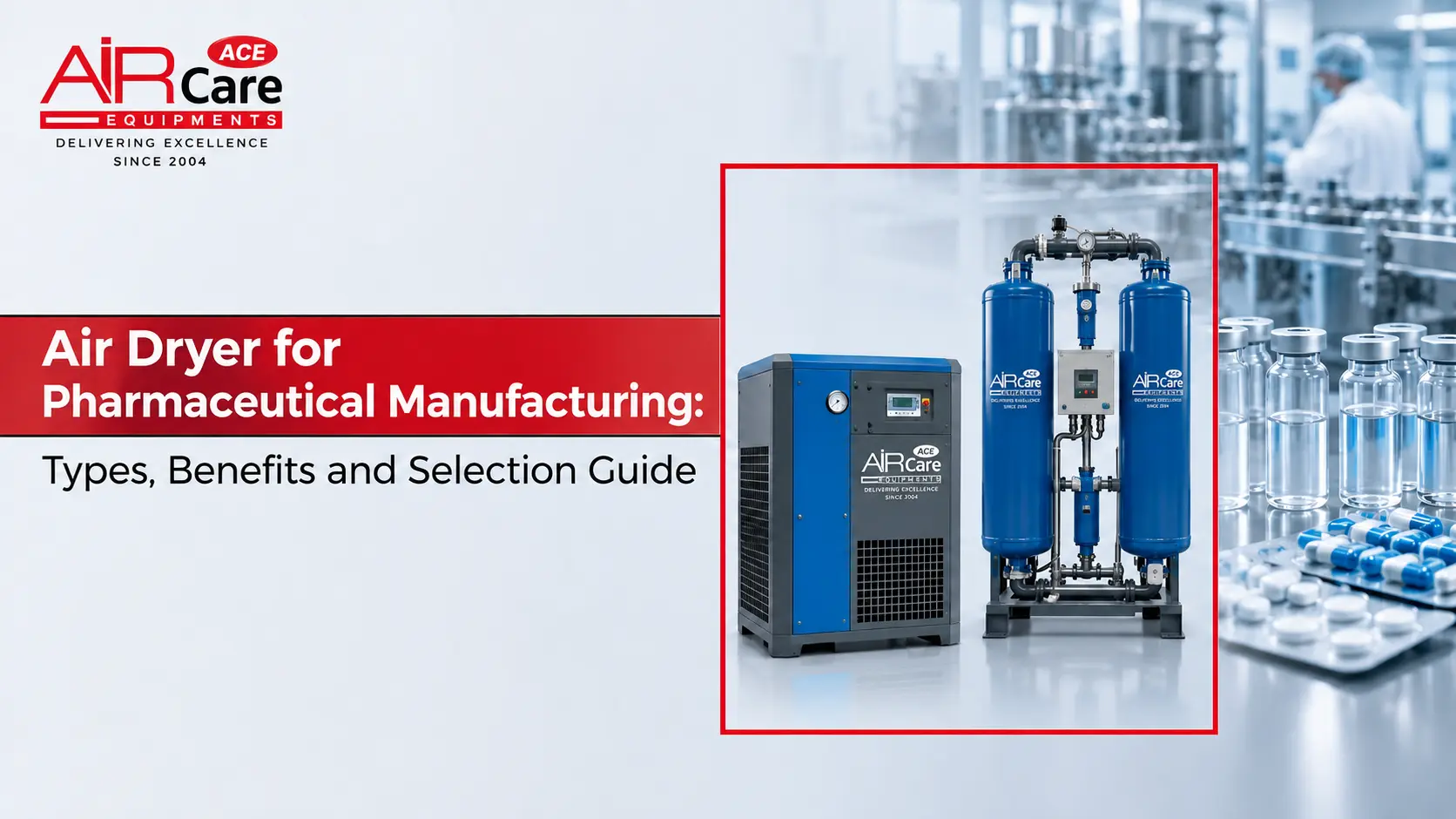
Pharmaceutical manufacturing depends on clean, reliable, and controlled production processes. Compressed air is an important utility used in applications such as tablet coating, packaging, material conveying, drying, instrumentation, cleaning, and process operations.
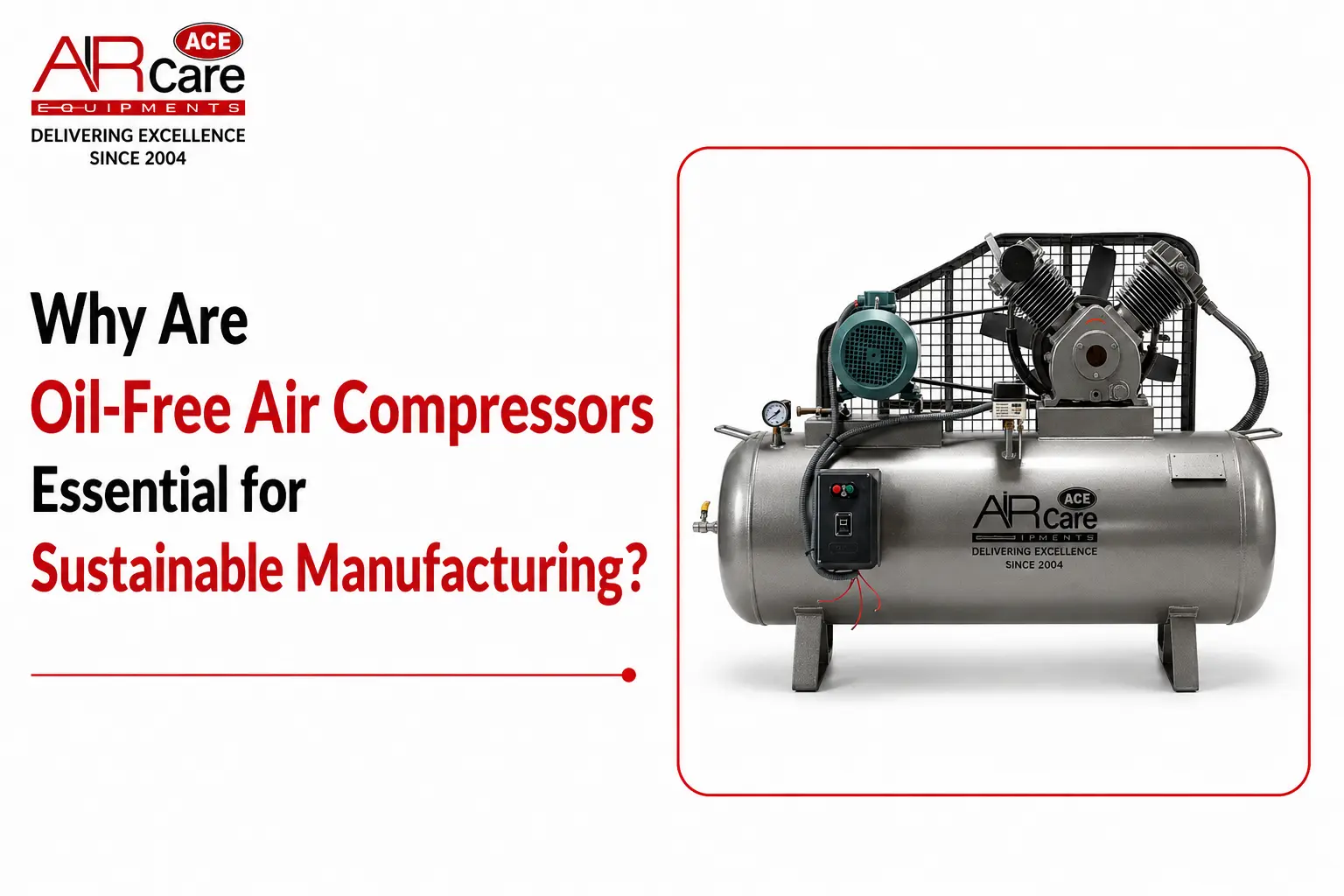
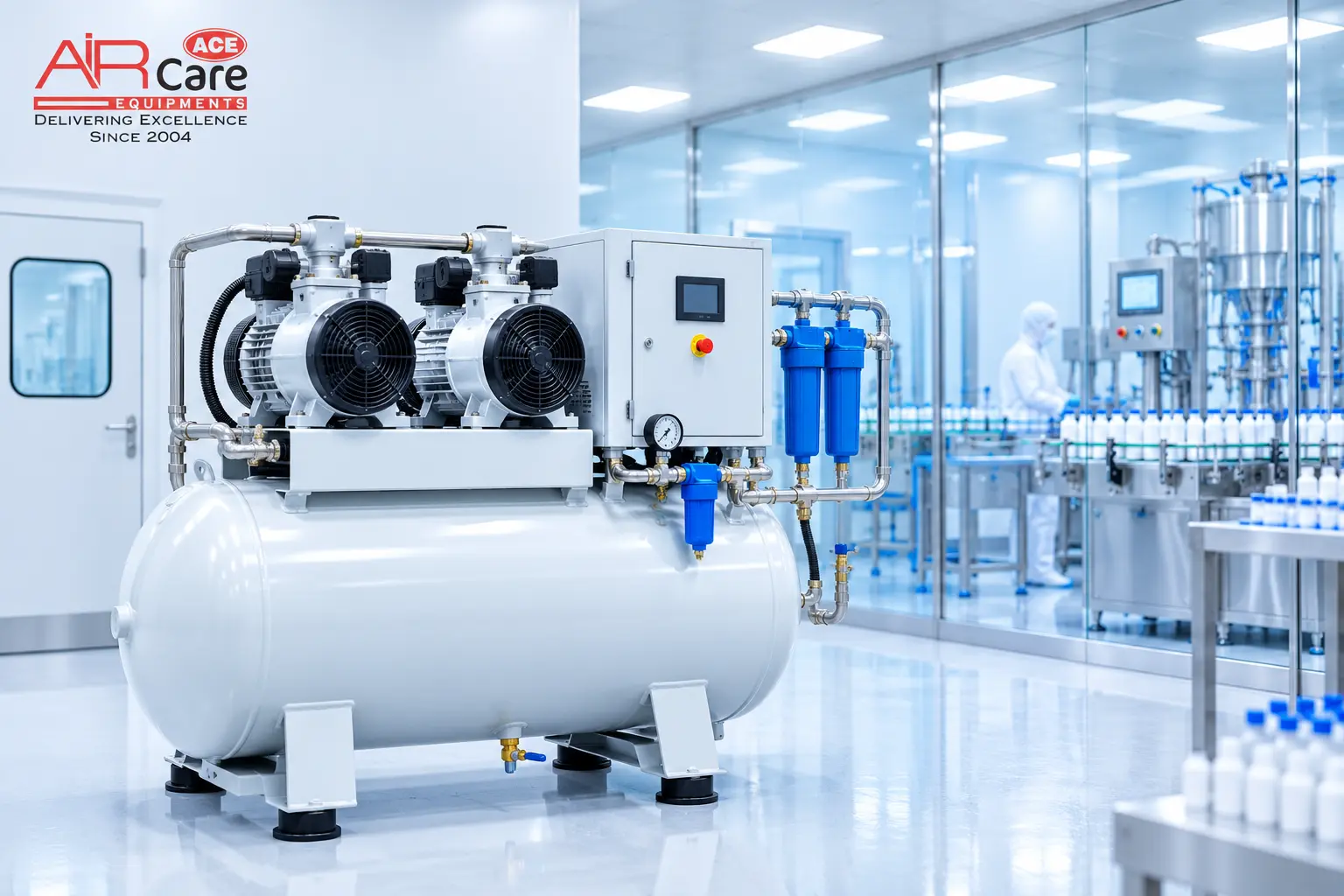
For applications where compressed air can come into direct or indirect contact with products, packaging, or critical processes, controlling contamination is especially important. An oil-free air compressor for the pharmaceutical industry can help reduce the risk of oil contamination in the compressed-air stream.
However, choosing an oil-free compressor is only one part of maintaining compressed-air quality. Filtration, drying, distribution, monitoring, testing, maintenance, and the specific requirements of the application must also be considered.
Quick Answer: Why Do Pharmaceutical Companies Use Oil-Free Air Compressors?
Pharmaceutical companies use oil-free air compressors primarily to reduce the risk of oil contamination in compressed air used for manufacturing, packaging, instrumentation, and other sensitive applications.
An oil-free compressor does not automatically produce sterile or contaminant-free air. Depending on the application, pharmaceutical facilities may also require suitable filtration, air drying, moisture separation, microbiological controls, testing, monitoring, and preventive maintenance.
Key Takeaways
-
Oil-free compressors reduce the risk of oil contamination in compressed air.
-
Pharmaceutical facilities use compressed air across manufacturing, packaging, instrumentation, and other processes.
-
ISO 8573-1 provides a framework for classifying compressed-air purity for particles, water, and oil.
-
ISO 8573-7 provides a test method for viable microbiological contamination.
-
Oil-free does not automatically mean sterile.
-
Dryers, filters, separators, piping, monitoring, and maintenance remain important.
-
Compressor capacity should be selected according to required air quality, flow, pressure, duty cycle, and operating conditions.
What Is an Oil-Free Air Compressor?
An oil-free air compressor is designed to compress air without using conventional lubrication oil in the compression chamber.
In an oil-lubricated compressor, oil is used for lubrication and other functions within the compression system. An oil-free design helps reduce the possibility of oil entering the compressed-air stream.
This can be particularly important for industries where compressed-air contamination needs to be carefully controlled.
Oil-free compressors are commonly considered for applications in:
-
Pharmaceutical manufacturing
-
Biotechnology
-
Food and beverage processing
-
Medical device production
-
Healthcare
-
Electronics manufacturing
-
Laboratories
For pharmaceutical manufacturing, the appropriate compressor should always be selected according to the actual application and required compressed-air quality.
Why Is Compressed Air Important in Pharmaceutical Manufacturing?
Compressed air is often an important plant utility in pharmaceutical facilities. It can power pneumatic equipment, operate valves and actuators, support packaging systems, and assist with several manufacturing processes.
Depending on the application, compressed air may be used for:
-
Tablet coating and spraying
-
Jet milling
-
Powder and material conveying
-
Drying processes
-
Packaging equipment
-
Labelling systems
-
Pneumatic valves and actuators
-
Instrumentation and control systems
-
Equipment cleaning
-
Fermentation and process-air applications
The required air quality can differ significantly between these applications.
For example, air used for instrumentation may have different requirements from air that comes into direct or indirect contact with a pharmaceutical product. Therefore, pharmaceutical manufacturers should define the required air quality based on the application and documented risk assessment.
Pharmaceutical Compressed-Air Applications
Different pharmaceutical processes require different compressed-air conditions.
|
Application |
Role of Compressed Air |
|
Tablet coating |
Supports controlled spraying and coating operations |
|
Jet milling |
Helps reduce the particle size of selected ingredients |
|
Packaging |
Operates pneumatic components in packaging systems |
|
Conveying |
Supports movement of suitable materials through pneumatic systems |
|
Drying |
Supports moisture-removal processes where applicable |
|
Instrumentation |
Powers pneumatic control and instrumentation equipment |
|
Cleaning |
May be used for suitable equipment and component cleaning |
|
Fermentation |
Can support specific process-air requirements |
This is why selecting a compressor simply by horsepower is not enough. Flow rate, operating pressure, air quality, duty cycle, drying, filtration, and downstream treatment should also be evaluated.
Why Is Oil Contamination a Concern?
Oil contamination can create problems when compressed air is required to meet strict quality specifications.
If oil enters a sensitive pharmaceutical process, it may contaminate equipment, packaging, or products and can increase cleaning and maintenance requirements.
Potential concerns include:
-
Product contamination
-
Changes to product quality
-
Filter loading
-
Contamination of downstream equipment
-
Increased maintenance requirements
-
Production interruptions
-
Additional cleaning requirements
The actual risk depends on the application and the complete compressed-air system. Pharmaceutical facilities should therefore establish suitable air-quality requirements and monitor the system accordingly.
Learn more about air compressor parts and their functions.
Why Are Oil-Free Air Compressors Important for Pharmaceutical Applications?
1. Reduced Risk of Oil Contamination
The primary benefit of oil-free compressor technology is that it avoids conventional lubrication oil in the compression chamber. This helps reduce the risk of oil entering the compressed-air stream.
2. Suitable for Contamination-Sensitive Applications
Oil-free compressors can be considered for pharmaceutical, food, electronics, medical, and other applications where compressed-air contamination needs to be carefully controlled.
3. Supports Compressed-Air Quality Management
An oil-free compressor can form part of a complete compressed-air system designed to achieve a specified air-quality level.
The compressor should therefore be considered together with dryers, filters, storage, piping, point-of-use treatment, testing, and monitoring.
4. Reduced Oil-Related Maintenance
Because the compression chamber does not depend on conventional oil lubrication, some oil-related maintenance activities associated with lubricated compressors may be reduced.
However, oil-free compressors still require regular maintenance. Filters, dryers, drains, valves, piping, and other system components need appropriate inspection and servicing.
5. Supports Cleaner Compressed-Air Systems
Reducing the potential for oil contamination can help pharmaceutical manufacturers manage compressed-air quality and protect sensitive downstream processes.
Does Oil-Free Compressed Air Mean Sterile Air?
No. Oil-free compressed air is not automatically sterile.
Oil-free compressor technology primarily addresses the risk of oil contamination. Compressed air can still contain other contaminants, including:
-
Particles
-
Moisture
-
Microorganisms
-
Other environmental contaminants
Depending on the application, a pharmaceutical compressed-air system may therefore require:
-
Air filtration
-
Air drying
-
Moisture separation
-
Point-of-use filtration
-
Air-quality testing
-
Suitable distribution-system controls
-
Preventive maintenance
-
Monitoring
The required treatment should be determined according to the application, air-quality specification, risk assessment, and applicable requirements.
Oil-Free Does Not Mean Moisture-Free
One common misconception is that an oil-free compressor automatically produces dry compressed air.
It does not.
Oil-free compression primarily addresses oil contamination. Moisture can still be present in compressed air and may condense as the air cools.
Depending on the application, a suitable compressed air dryer and moisture-management system may therefore be required.
Moisture control can help reduce problems such as:
-
Corrosion
-
Water accumulation
-
Contamination
-
Pneumatic equipment problems
-
Product or process quality issues
The required pressure dew point should be determined according to the application.
Standards and Quality Requirements for Pharmaceutical Compressed Air
Pharmaceutical manufacturers should establish compressed-air specifications according to their processes, risk assessments, and applicable regulatory requirements.
ISO 8573-1
ISO 8573-1 provides a classification framework for compressed-air purity relating to contaminants such as particles, water, and oil.
An important point is that Class 0 does not automatically mean sterile air. It relates to a stringent oil-purity classification and should not be interpreted as meaning that compressed air is completely free of every possible contaminant.
ISO 8573-7
ISO 8573-7 provides a test method for determining viable microbiological contamination in compressed air.
It should not be treated as a separate compressed-air purity class. Microbiological testing may be relevant where the pharmaceutical process requires appropriate control of microbial contamination.
GMP Requirements
Good Manufacturing Practice, or GMP, focuses on controlling manufacturing processes, facilities, equipment, and utilities to help protect product quality.
Compressed air can be an important utility when it has the potential to affect product quality. Pharmaceutical manufacturers should therefore establish suitable specifications, qualification procedures, monitoring practices, and maintenance procedures.
Regulatory Requirements
Pharmaceutical facilities may also need to comply with applicable national and international requirements depending on their products, markets, processes, and regulatory jurisdiction.
The exact requirements can differ between applications and facilities.
How to Choose an Oil-Free Air Compressor for Pharmaceutical Manufacturing
Selecting an oil-free air compressor for pharmaceutical applications requires more than checking motor horsepower.
Consider the complete compressed-air requirement.
1. Define Air Quality Requirements
First determine the required air purity for the application.
Consider requirements relating to:
-
Particles
-
Water
-
Oil
-
Microbiological contamination, where applicable
2. Calculate Required Flow Rate
Determine the normal and peak compressed-air demand.
The compressor should provide sufficient flow without unnecessary oversizing.
3. Determine Operating Pressure
Check the pressure required by production equipment, pneumatic systems, instruments, and other connected applications.
4. Select the Appropriate Dryer
Oil-free compression does not remove all moisture.
Depending on the required air quality and application, an appropriate dryer may be needed to control moisture and achieve the required pressure dew point.
5. Select Suitable Filtration
Filtration should be selected according to the required air quality and application.
Point-of-use filtration may also be necessary for critical applications.
6. Consider Duty Cycle
Pharmaceutical manufacturing may involve extended operating hours.
Select equipment that is suitable for the expected operating pattern, production demand, and installation conditions.
7. Evaluate Energy Efficiency
Energy consumption is an important part of compressor operating costs.
Where air demand varies, Variable Speed Drive (VSD) technology may help improve energy efficiency by matching compressor output more closely to demand.
8. Check Maintenance and Service Support
Before purchasing, consider:
-
Maintenance requirements
-
Spare-parts availability
-
Service support
-
Technician availability
-
Ease of inspection
-
Operating environment
9. Consider Documentation and Testing
For regulated applications, consider documentation, testing, qualification, and monitoring requirements associated with the complete compressed-air system.
Pharmaceutical Air Compressor Selection Checklist
Before selecting an oil-free compressor, pharmaceutical manufacturers should review:
|
Requirement |
What to Check |
|
Air quality |
Particle, water, oil, and applicable microbiological requirements |
|
Flow rate |
Normal and peak CFM |
|
Pressure |
Required operating pressure |
|
Dryer |
Required pressure dew point |
|
Filtration |
Suitable filter stages and point-of-use filtration |
|
Duty cycle |
Operating hours and production demand |
|
Energy |
Compressor efficiency and variable-demand operation |
|
Maintenance |
Service intervals and spare-parts availability |
|
Testing |
Air-quality testing and monitoring requirements |
|
Documentation |
Required technical and qualification records |
Common Mistakes When Selecting a Pharmaceutical Air Compressor
Choosing the compressor only by horsepower can result in an unsuitable system.
Common mistakes include:
-
Selecting equipment based only on HP.
-
Assuming oil-free air automatically means sterile air.
-
Ignoring pressure dew point requirements.
-
Failing to calculate peak CFM demand.
-
Selecting filters without defining the required air quality.
-
Ignoring point-of-use treatment.
-
Overlooking maintenance and testing requirements.
-
Choosing a compressor without considering the complete air-treatment system.
-
Ignoring service and spare-parts availability.
-
Oversizing equipment without evaluating actual demand.
A complete system approach can help manufacturers achieve more reliable compressed-air performance.
Oil-Free Compressor vs Oil-Lubricated Compressor
|
Feature |
Oil-Free Compressor |
Oil-Lubricated Compressor |
|
Compression chamber |
No conventional lubrication oil |
Uses oil for lubrication |
|
Oil contamination risk |
Reduced |
Requires oil separation and control |
|
Sensitive applications |
Suitable for many contamination-sensitive applications |
May require additional treatment |
|
Maintenance |
Still requires routine maintenance |
Includes oil-related maintenance |
|
Air treatment |
Dryers and filters may still be required |
Separation, filtration, and drying may be required |
|
Moisture control |
May require suitable dryer/treatment |
May require suitable dryer/treatment |
|
Sterility |
Not automatically sterile |
Not automatically sterile |
|
Pharmaceutical use |
Can be considered where air purity is important |
Application-dependent |
The right choice should be based on the required air quality, process conditions, operating cost, and complete system design.
How Can Pharmaceutical Companies Maintain Compressed-Air Quality?
Selecting an oil-free compressor is only one part of maintaining compressed-air quality.
A pharmaceutical facility should also consider:
-
Regular compressor maintenance
-
Filter inspection and replacement
-
Proper air-dryer operation
-
Condensate management
-
Leak detection
-
Periodic air-quality testing
-
Clean and suitable distribution piping
-
Point-of-use filtration where required
-
Monitoring of pressure and operating conditions
-
Documented maintenance and testing procedures
Regular monitoring helps identify changes in compressed-air performance before they become larger operational problems.
How Air Care Equipment Supports Pharmaceutical Applications
Air Care Equipment provides oil-free compressed-air solutions for industrial applications where controlling oil contamination is important.
For pharmaceutical applications, compressor selection should consider the complete compressed-air system rather than the compressor alone. Pressure, flow rate, air purity, filtration, drying, storage, piping, point-of-use treatment, monitoring, and preventive maintenance can all influence compressed-air quality.
Air Care Equipment can help businesses evaluate compressor requirements according to their application and operating conditions.
Frequently Asked Questions
Why do pharmaceutical companies use oil-free air compressors?
Pharmaceutical companies may use oil-free compressors to reduce the risk of oil contamination in compressed air, particularly for applications where air quality can affect product quality.
Is Class 0 compressed air sterile?
No. Class 0 relates to the stringent oil-purity classification under ISO 8573-1. It does not automatically mean that compressed air is sterile or free from all contaminants.
What does ISO 8573-1 cover?
ISO 8573-1 provides compressed-air purity classifications relating to particles, water, and oil.
What is ISO 8573-7?
ISO 8573-7 provides a test method for determining viable microbiological contamination in compressed air.
Does an oil-free compressor remove moisture?
No. Oil-free compression primarily addresses oil contamination. Moisture control generally requires suitable dryers, separators, and condensate-management systems.
Can oil-free compressors be used in pharmaceutical manufacturing?
Yes. Oil-free compressors can be considered for pharmaceutical applications where reduced oil-contamination risk is required, subject to the specific process and air-quality requirements.
What should I check before buying a pharmaceutical air compressor?
Check the required air purity, CFM, operating pressure, duty cycle, filtration, drying, energy consumption, maintenance requirements, testing, documentation, and service support.
Which industries use oil-free air compressors?
Oil-free compressors are used in pharmaceutical, food and beverage, biotechnology, medical, electronics, laboratory, and other applications where compressed-air contamination needs to be carefully controlled.
Conclusion
An oil-free air compressor for the pharmaceutical industry can help reduce the risk of oil contamination in compressed air and support applications where compressed-air quality is important.
However, oil-free compression alone does not guarantee sterile or contaminant-free air.
Pharmaceutical manufacturers should evaluate the complete compressed-air system, including the compressor, filters, dryer, storage, distribution network, point-of-use treatment, testing, monitoring, and maintenance.
The right compressor should be selected according to the application's required air quality, CFM, pressure, operating hours, duty cycle, and applicable requirements.
Need Help Selecting an Oil-Free Air Compressor?
Choosing the right compressor depends on the application, required air quality, flow rate, pressure, duty cycle, and downstream air treatment.
Contact Air Care Equipment to discuss your pharmaceutical compressed-air requirements and identify a suitable system configuration.
Recent Posts