Why Is ISO 8573-1 Class 0 Air Purity Critical in Pharmaceutical & Food Processing?
A single batch of contaminated tablets doesn't just cost a company its raw materials. It costs the production run, the retesting cycle, the regulatory paperwork that follows, and sometimes the client relationship attached to that batch. In pharmaceutical and food processing plants, compressed air is rarely treated as a critical input — until it causes a failure that traces back to it.
Here's the part most procurement teams miss: "low oil content" and "oil-free" are not interchangeable claims. A compressor that removes 99.9% of oil still leaves behind a contaminant that a cleanroom, a fermentation tank, or a tablet coating line cannot tolerate. The only standard that actually verifies zero oil risk is ISO 8573-1 Class 0, and for facilities operating under GMP, FDA, or FSSAI oversight, it's quickly becoming the baseline rather than the exception.
This piece breaks down what Class 0 actually certifies, what oil contamination costs a regulated facility in real terms, and where Air Care's Oil-Free Air Compressors fit into a compliant air system built for pharma and food-grade production.
What Is ISO 8573-1 Class 0, Really?
In short: ISO 8573-1 Class 0 is the strictest air purity classification in the ISO 8573-1 standard, certifying zero detectable oil content — solid, liquid, or vapor — in compressed air output, verified through independent third-party testing rather than manufacturer claims.
The ISO 8573-1 standard governs three contaminant categories in compressed air: solid particles, water content, and oil (including aerosols and vapor). Each category is graded across classes, with lower numbers indicating stricter purity. Most industrial compressors are rated Class 1 or Class 2 for oil content—acceptable for general manufacturing, but not for processes where air comes into direct or indirect contact with a product meant for human consumption or the body.
Class 0 vs Class 1: Why "99.9% Oil-Free" Isn't Good Enough
A Class 1 rating permits a small, defined oil concentration. It's a workable number for most factories. It is not workable for a facility filling injectable vials or packaging infant formula, where even trace oil vapor can compromise sterility, alter product chemistry, or trigger a failed quality check. Class 0 is the only classification that certifies total absence of oil—not a reduced amount, an absence.
Who Certifies Class 0
Class 0 status isn't self-declared. It requires testing by an accredited independent body — typically TÜV or an equivalent certification agency—under controlled conditions that simulate worst-case operating scenarios, including elevated intake air contamination. If a supplier can't produce third-party certification documentation, the "oil-free" claim on their spec sheet is just marketing language.
The Real Cost of Oil Contamination in Regulated Industries
|
Risk Area |
Business Impact |
|
Product contamination |
Batch rejection, product recall, destroyed inventory |
|
Production downtime |
Line shutdown for decontamination, air system requalification |
|
Regulatory audits |
Non-compliance citations from FDA, WHO-GMP, EU GMP, or FSSAI inspectors |
|
Documentation gaps |
Inability to prove air quality history during audit trail review |
|
Client contracts |
Loss of contract manufacturing agreements tied to compliance clauses |
|
Brand reputation |
Public recalls, negative press, loss of buyer confidence |
Ruined Batches Are Rarely a One-Time Loss
Oil contamination at the parts-per-million level is enough to compromise a sterile filling line or alter the shelf stability of a food product. The batch itself is the first casualty. What follows is a root-cause investigation, a requalification of the affected equipment, and in many cases, a temporary halt on releasing any product manufactured on that line until the source is confirmed and corrected.
Downtime Compounds Faster Than It Looks
A contamination event doesn't stop at the line where it was discovered. Auditors and internal QA teams typically require a full system check — every point where compressed air touches product or environment — before production resumes. For a mid-sized pharma plant, that can mean days of lost output, not hours.
Read More: Air Compressor Parts Explained: Names, Functions & Maintenance
Failed Audits Have a Longer Memory Than a Single Inspection
An FDA 483 observation or a WHO-GMP non-compliance note tied to compressed air quality doesn't disappear after the corrective action is filed. It becomes part of the facility's audit history, referenced in future inspections, and in some cases, a factor in due diligence for new contracts or export approvals.
Where Compressed Air Touches Your Product?
Compressed air contact isn't limited to obvious applications. In most facilities, it's woven into more processes than the maintenance team initially accounts for:
-
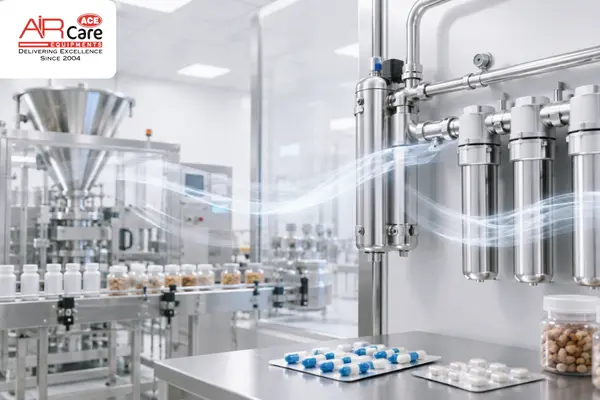
Direct product contact: tablet coating spray systems, capsule filling equipment, blow-off before packaging, carbonation and bottling lines
-
Indirect but critical contact: cleanroom pressurization and airlocks, pneumatic conveying of powders and granules, instrument air for control systems
-
Food and beverage parallels: dairy processing, packaging line blow-off, bottling and canning operations, ingredient conveying in bakery and confectionery production
Any point of contact — direct or indirect — is a point where oil contamination can enter the product stream or the controlled environment around it.
Oil-Free Air Compressors vs Oil-Lubricated Systems with Filtration
A common cost-cutting argument in procurement discussions: "We can filter oil out of a standard compressor's output and get the same result for less money." In practice, this approach carries risks that a true oil-free system eliminates at the source.
Filtration is a dependency, not a guarantee. Filters degrade, require scheduled replacement, and can fail silently between maintenance cycles. A missed filter change, a torn element, or a bypass valve left open during servicing—any of these reintroduces oil into the air stream without an immediate alarm. In a Class 0 environment, that's not a minor lapse; it's a compliance failure waiting to be discovered during the next audit.
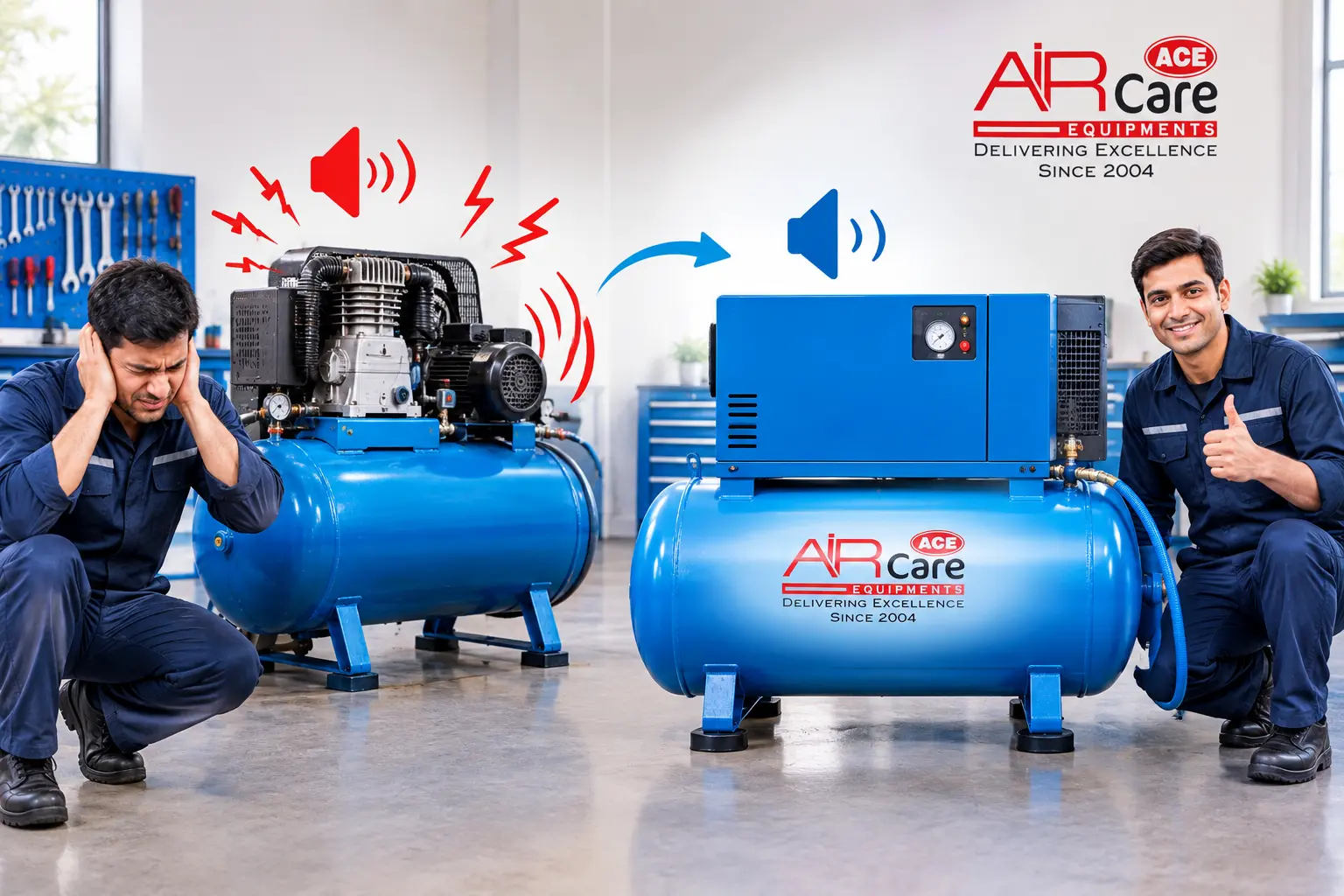
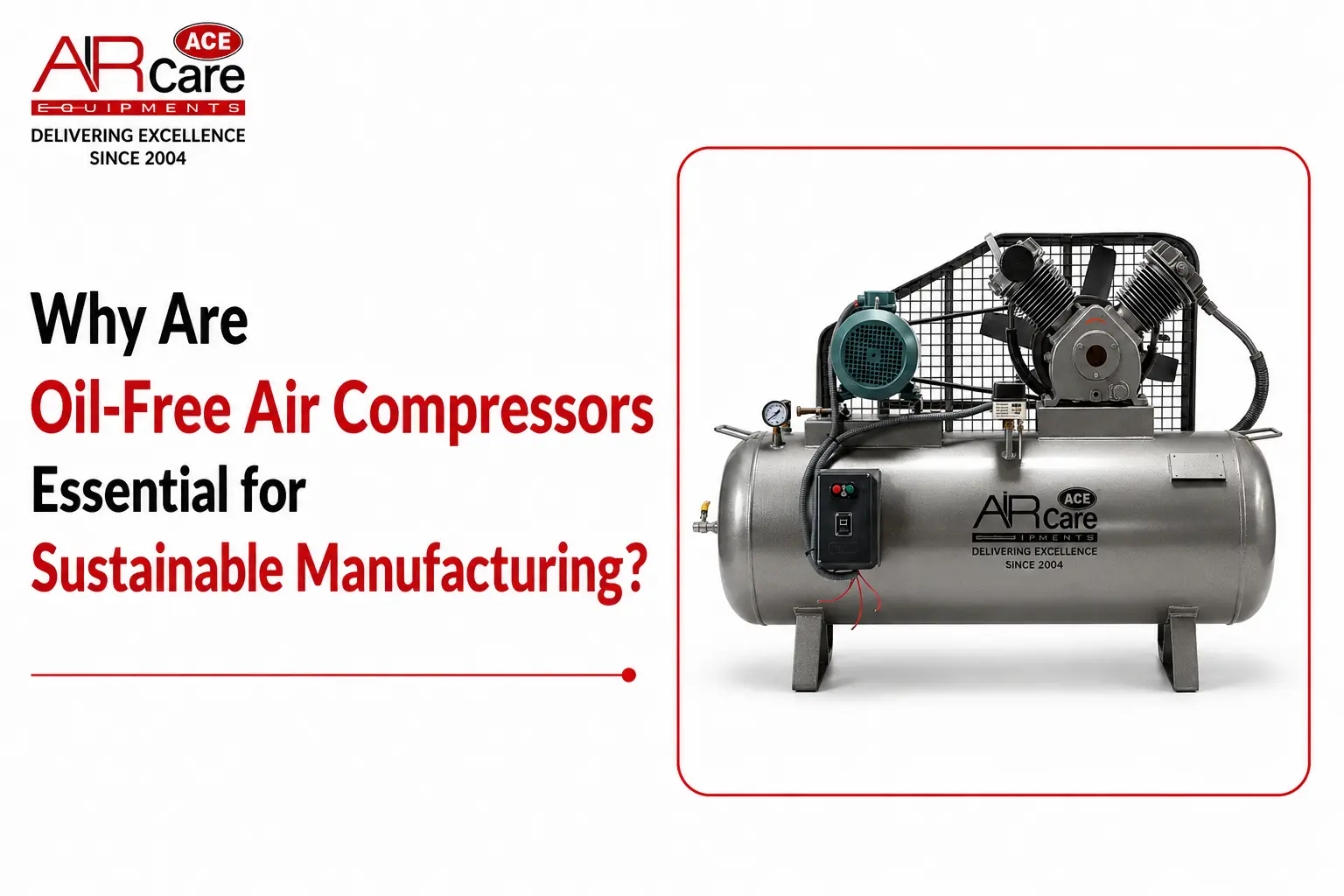
Oil-free compressor design removes the variable entirely. By using non-lubricated compression chambers—whether in a reciprocating air compressor or a rotary screw compressor configuration—there's no oil in the compression cycle to filter out in the first place. The purity isn't maintained by a downstream component; it's built into the machine.
The long-term cost comparison usually favors oil-free. Filtration systems for oil-lubricated compressors carry ongoing costs: replacement filters, more frequent service intervals, and the operational risk of a contamination event that filtration didn't catch in time. Factor in the cost of a single failed audit or rejected batch, and the higher upfront investment in genuine oil-free equipment tends to pay for itself well before the first major compliance review.
Read More: How to Size an Air Compressor for Your Tools & Applications
Building a Compliant Compressed Air System — Beyond the Compressor
A Class 0 compressor is the foundation, not the entire system. Facilities that treat compressed air purity as a whole-system requirement — not a single-machine spec — are the ones that pass audits without last-minute scrambling.
Compressed Air Dryers Prevent the Contaminant Oil-Free Systems Don't Address
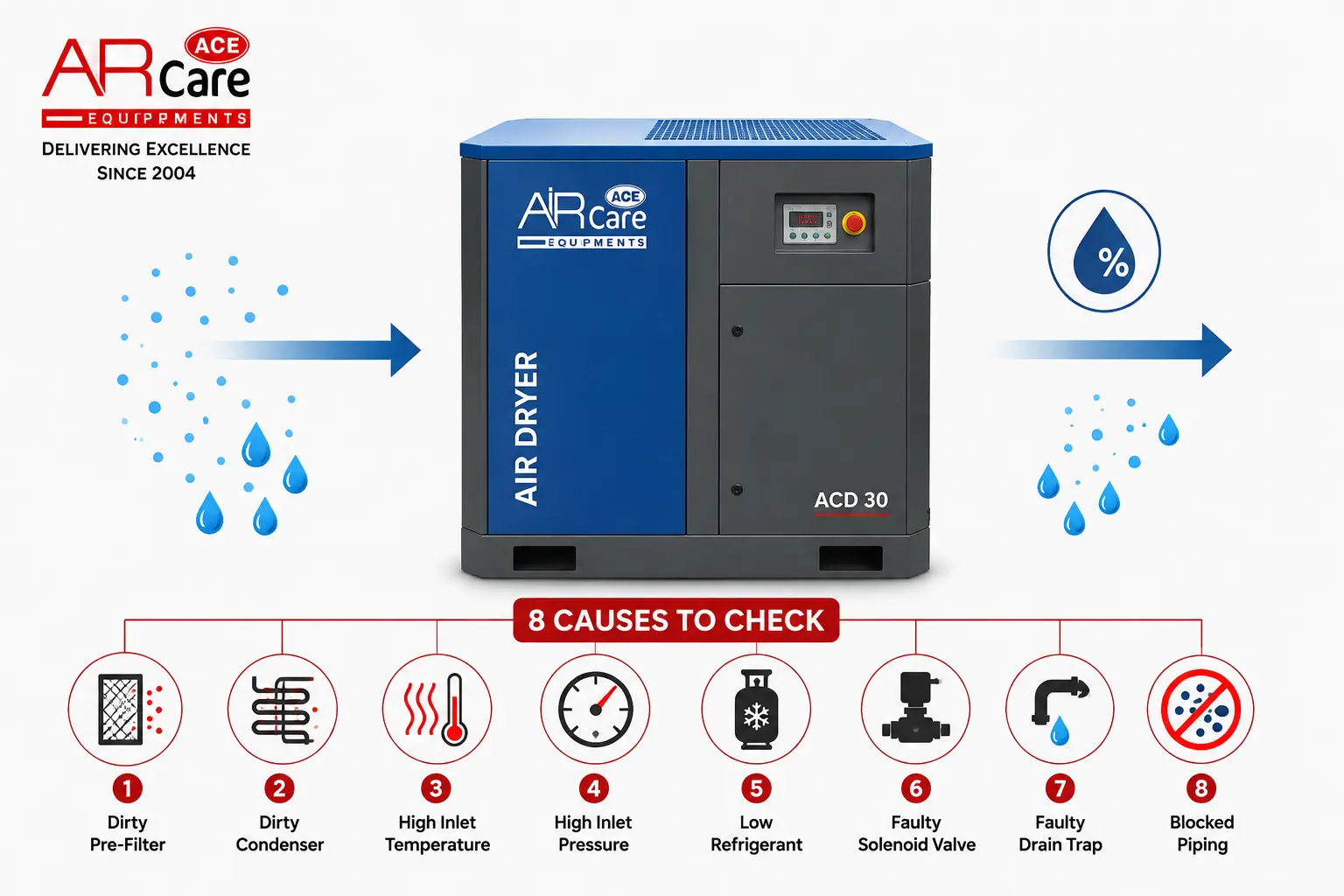
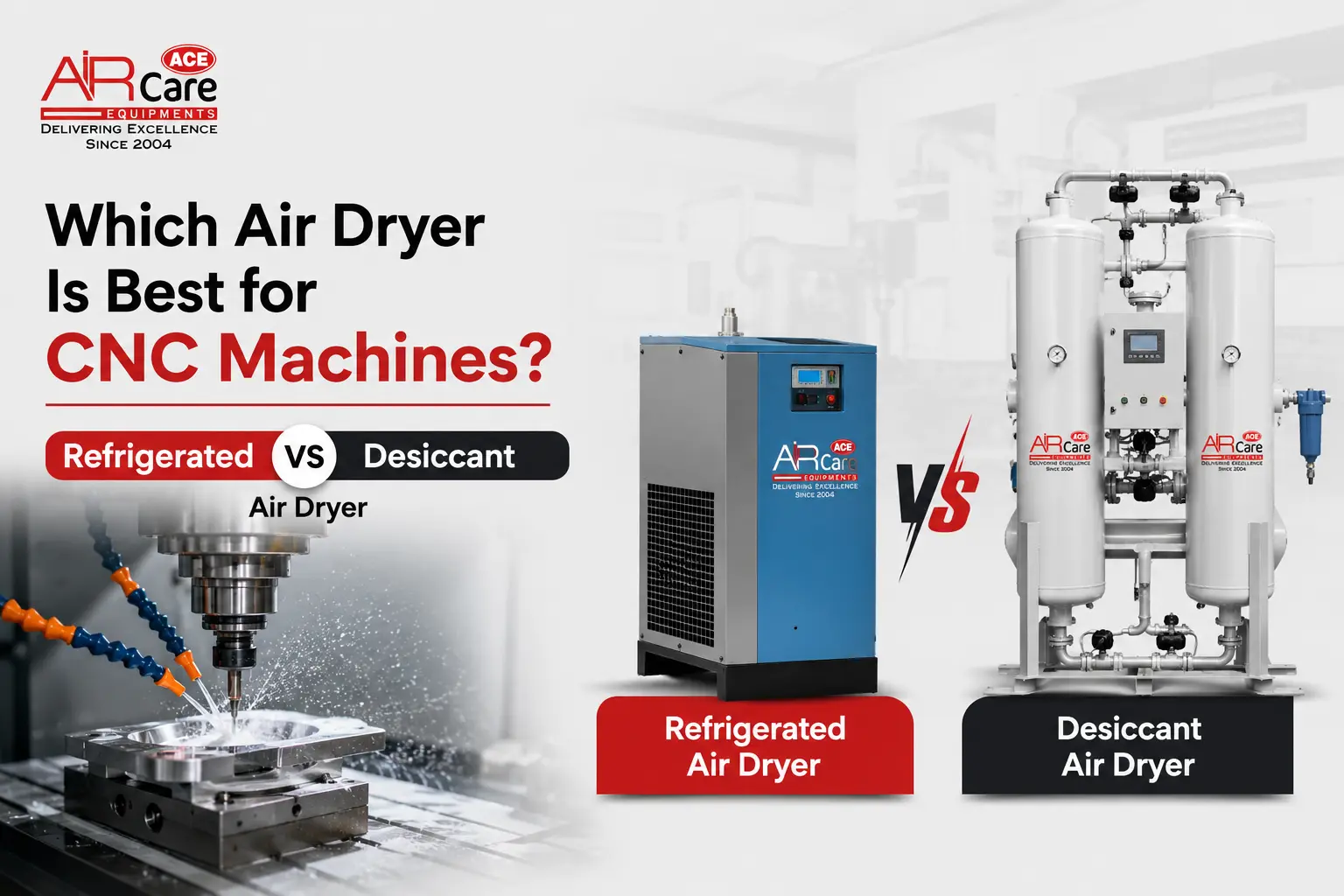
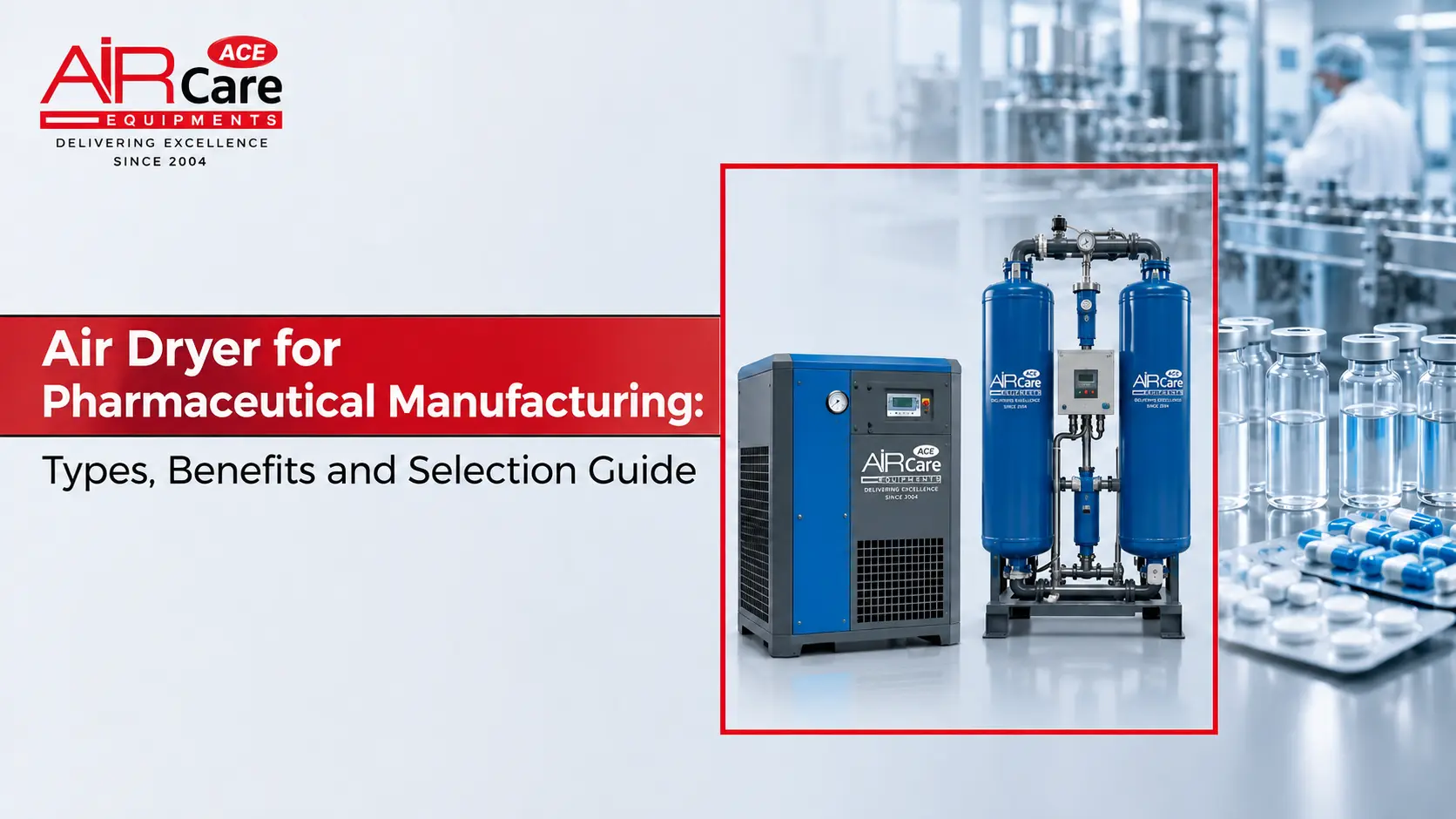
Removing oil solves one contaminant category. Moisture is the other major risk, particularly for powder handling and any process sensitive to microbial growth. A properly specified Compressed Air Dryer — particularly a Refrigerated Compressed Air Dryer for facilities in humid climates — is what keeps water content within the ISO 8573-1 limits your process actually requires.
Air Receiver Tanks Need Hygienic Design Consideration
An Air Receiver Tank sized incorrectly for demand creates pressure fluctuations that stress the entire system. For pharma and food-grade applications, tank interior finish and drainage design also matter — standing condensate in a receiver tank is a microbial risk regardless of how clean the air was when it left the compressor.
Choosing Between Reciprocating and Rotary Screw Configurations
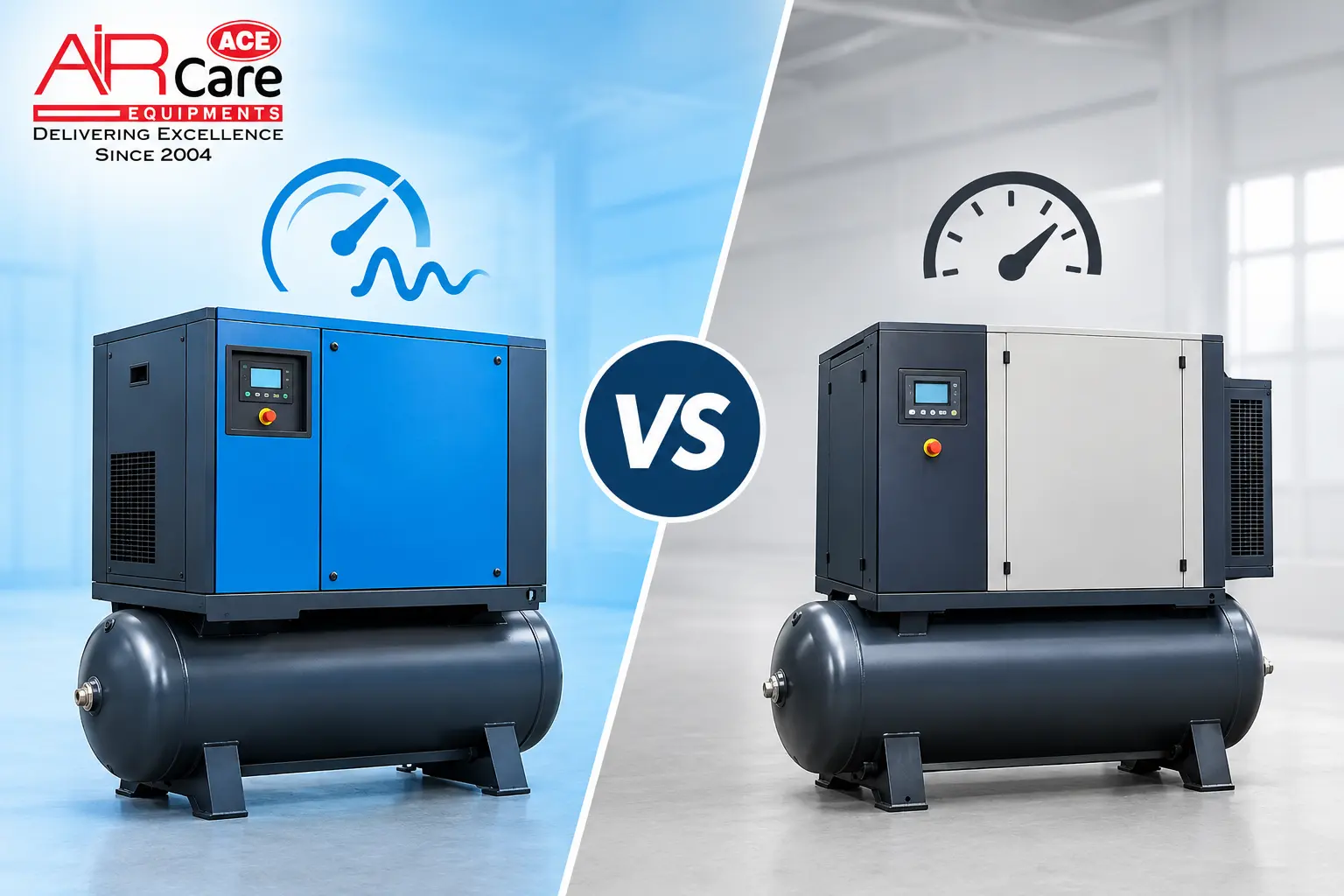
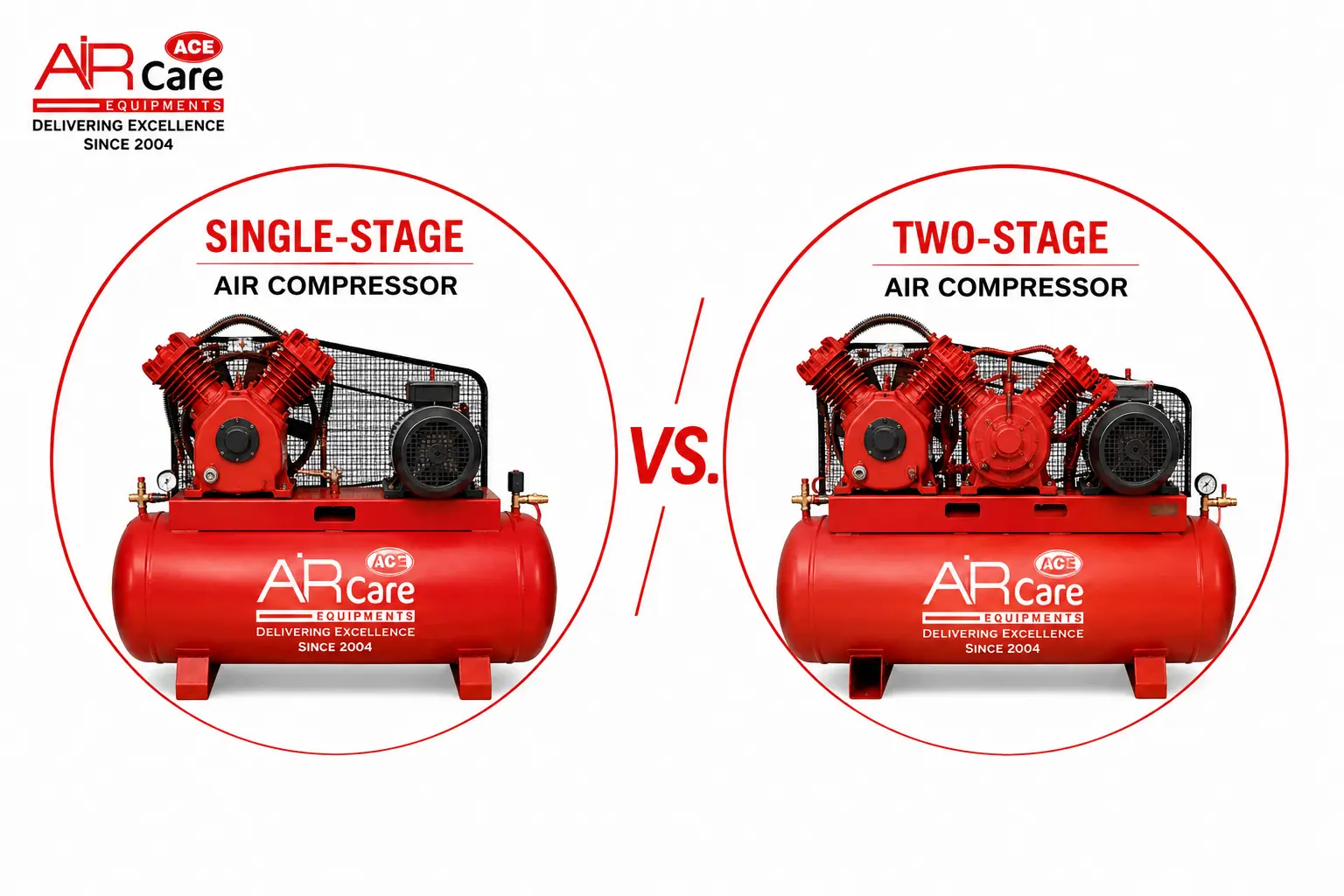
Oil-free Reciprocating Air Compressors tend to suit facilities with intermittent or lower-volume air demand — smaller pharma units, quality control labs, and food packaging lines with variable output needs. Oil-free are typically the better fit for continuous, higher-volume operations such as large-scale tablet manufacturing or bottling plants running multiple shifts. The right choice depends on duty cycle, flow rate, and how the facility's production schedule actually runs — not just on capacity numbers on a spec sheet.
High Pressure Applications Need Purpose-Built Equipment
Processes like PET bottle blow molding or certain packaging operations require High Pressure Air Compressors rated well above standard plant air pressure. These applications still need to meet the same Class 0 requirement when the compressed air has any product or packaging contact — pressure requirements don't override purity requirements.
Also Read: Air Compressor Maintenance Guide: Checklist & Schedule
Air Care's Oil-Free Range — Engineered for Class 0 Compliance
Air Care's Oil-Free Air Compressors are built specifically for facilities where "close to clean" isn't an acceptable standard. The range includes both oil-free reciprocating and oil-free screw configurations, sized for applications from quality control labs to full production floors.
Key aspects of the range:
-
Certified Class 0 performance — verified oil-free output, not a filtered approximation
-
Application-specific configurations for pharmaceutical cleanrooms, food and beverage processing lines, and Medical Air Compressor applications where breathing-grade air purity is required
-
Integration-ready design — built to pair with Compressed Air Dryers and Air Receiver Tanks for a complete compliant air system, rather than a standalone component
-
Documentation support — compliance paperwork and certification records available for audit preparation, so QA teams aren't scrambling to source proof during an inspection
Pharma and food processing clients working with Air Care typically start with an air quality audit of their existing setup, identify where contamination risk actually sits in their process, and specify equipment against their specific ISO 8573-1 class requirement — not a generic "industrial grade" assumption.
Choosing the Right Air Compressor Manufacturer for Regulated Industries
Not every
or Air Compressor Supplier is set up to serve regulated industries well. Before procurement, it's worth asking:
-
Can you provide third-party Class 0 certification documentation, not just a datasheet claim?
-
What does your after-sales Air Compressor Service and Air Compressor Repairing Service response time look like for a validated production environment?
-
Are spare parts stocked locally, or does a breakdown mean a multi-week wait?
-
Can you support system-level specification — compressor, dryer, and receiver tank sized together — or only the compressor itself?
Why Local Manufacturing and Service Support Matters
For facilities in North India, working with an Air Compressor Manufacturer in Delhi NCR shortens the distance between a breakdown and a resolution. In a validated pharma environment, downtime isn't just inconvenient — it can trigger requalification requirements before the line restarts. Proximity to manufacturing and service infrastructure is a compliance consideration as much as a logistical one.
Air Care also supports facilities as a Pressure Vessel Manufacturer and works alongside plant-wide utility needs — including Industrial Vacuum Pumps, servo voltage stabilizers, and water chiller systems — because a compliant facility depends on more than one piece of equipment running correctly.
Read More: Air Compressor Sizing Guide: Calculating CFM & PSI for Air Tools
Compliance Checklist: Is Your Facility Audit-Ready?
Before the next inspection, confirm the following:
-
Current ISO 8573-1 Class 0 certification is on file and accessible for audit review
-
Compressed air dryer specification matches your facility's actual moisture control requirement
-
Air receiver tank has documented hygienic design and regular drainage maintenance
-
A service contract is in place with defined response times for your compressor system
-
Air quality testing records are logged on a defined schedule, not just at installation
-
Maintenance and filter replacement logs (if applicable) are current and traceable
-
Staff responsible for compressed air systems know the facility's required ISO class and why it applies
Compliance Isn't Optional, and Neither Is Your Air System
Regulatory bodies don't grant exceptions for "mostly oil-free" air. For pharmaceutical and food processing facilities, ISO 8573-1 Class 0 is the only standard that removes ambiguity from compressed air purity—and the only one that holds up under audit scrutiny.
Air Care's Oil-Free Air Compressor range is built for exactly this requirement, backed by certification, engineered for integration with the dryers and receiver tanks your system needs, and supported by local service infrastructure that keeps validated production lines running.
Talk to Air Care's engineering team about specifying a Class 0 compliant compressed air system for your facility.
Frequently Asked Questions
Q1: What does ISO 8573-1 Class 0 mean for air compressors?
It means the compressor's output has been independently certified to contain zero detectable oil — as particles, liquid, or vapor — under the ISO 8573-1 standard's strictest classification.
Q2: Is Class 0 legally required for pharmaceutical manufacturing?
Regulatory bodies like the FDA and WHO-GMP don't always mandate Class 0 by name, but their broader air quality and contamination control requirements make it the practical standard for any process with product contact. Many facilities adopt it proactively to avoid audit risk.
Q3: Can an oil-lubricated compressor with filters achieve Class 0?
Filtration can reduce oil content significantly, but it introduces a point of failure — filter degradation or maintenance lapses can allow contamination without warning. True Class 0 certification typically applies to compressors that are oil-free by design, not filtered after the fact.
Q4: What's the difference between oil-free screw and oil-free piston compressors for pharma use? Oil-free reciprocating (piston) compressors generally suit lower-volume, intermittent demand, while oil-free rotary screw compressors handle continuous, higher-volume operations more efficiently. The right fit depends on your facility's duty cycle and flow requirements.
Q5: How often should compressed air quality be tested in a GMP facility?
Testing frequency should align with your facility's validated maintenance schedule and any regulatory guidance specific to your product category — typically at installation, after any system modification, and at defined periodic intervals as part of ongoing quality assurance.
Q6: Does Air Care provide Class 0 certified compressors in Delhi NCR?
Yes. Air Care manufactures and services its Oil-Free Air Compressor range from Delhi NCR, supporting pharmaceutical and food processing facilities across the region with certified equipment and local service support.
Recent Posts