Understanding Air Receiver Tanks: Functions, Sizing, and Key Benefits
Every industrial compressed air system has a compressor at its heart, but the air receiver is what gives that system its real-world reliability. Whether you run a textile unit in Ludhiana, an auto-component plant in Gurgaon, or a packaging line in Bhiwadi, an air receiver tank is not optional. It is a core component that directly affects how efficiently and safely your compressed air system performs.
This guide explains exactly what an air receiver is, what functions it performs, how to size one correctly, and why pairing it with the right compressor makes all the difference.
What Is an Air Receiver?
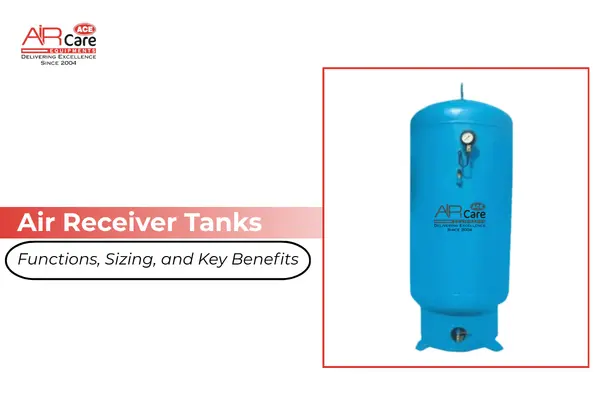
An air receiver, also called an air reservoir tank, air compressor receiver tank, or simply a receiver tank, is a pressure vessel that stores compressed air between the compressor outlet and the downstream distribution system.
Think of it as a buffer. Your air compressor supplies compressed air in continuous or intermittent cycles, but your tools, machines, and pneumatic processes consume air in irregular bursts. The receiver tank bridges that gap. It absorbs the compressed air when demand is low and releases it when demand spikes, so your system pressure stays stable regardless of what is happening on the production floor.
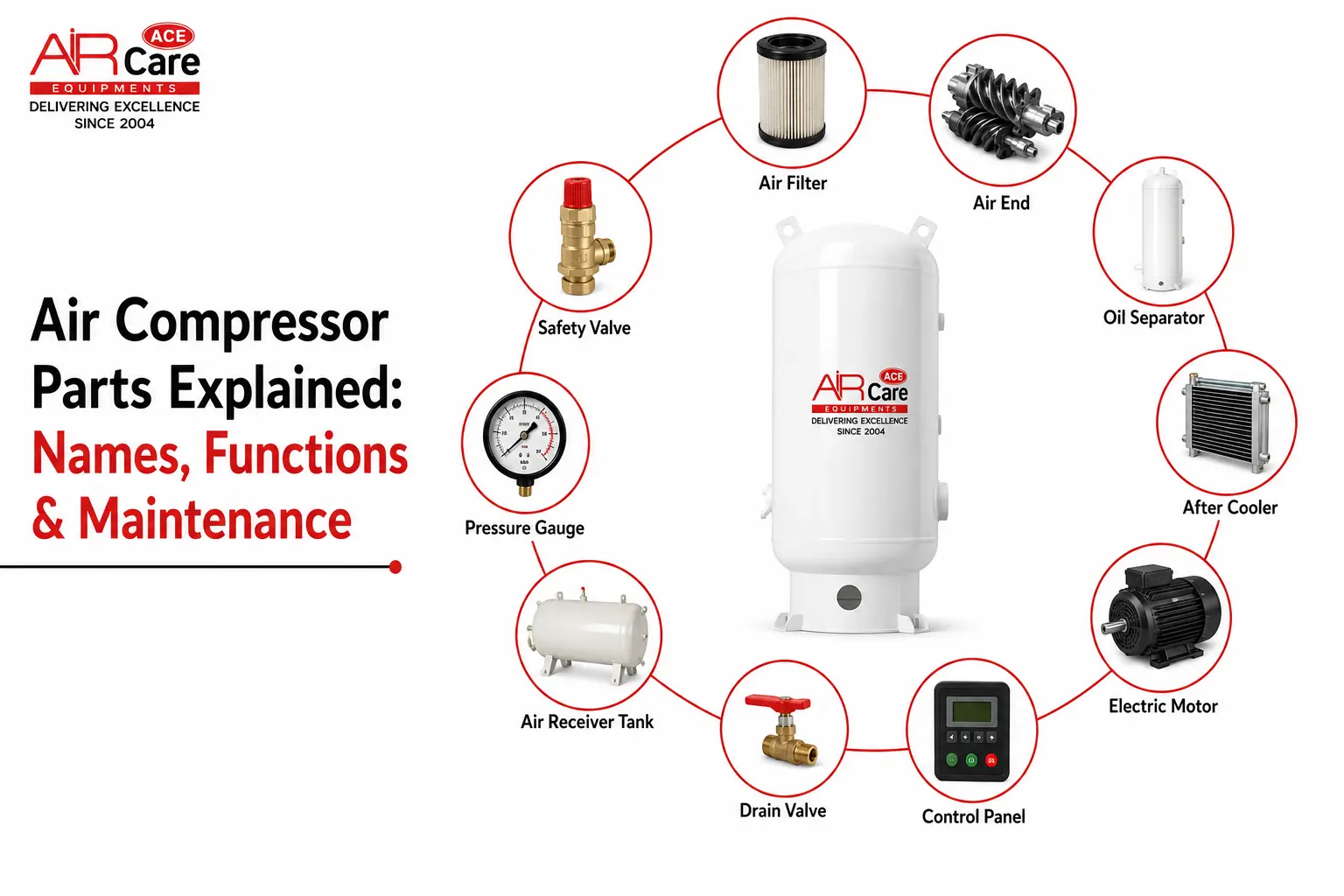
In technical terms, an air receiver is a cylindrical pressure vessel fitted with an inlet valve, outlet valve, pressure gauge, safety relief valve, drain valve, and, in most Indian industrial setups, an inspection port for compliance with IBR or PESO regulations.
What Is the Function of an Air Receiver? The 6 Core Roles
Understanding what is the function of an air receiver? is essential before selecting or sizing one. A receiver tank does far more than simply store air.
1. Acts as a Compressed Air Buffer During Peak Demand
The primary function of any air compressor receiver tank is to meet demand spikes that your compressor cannot satisfy in real time. When multiple tools or pneumatic actuators fire simultaneously, the receiver tank releases stored air instantly, without waiting for the compressor to ramp up output.
Without a receiver tank, even a well-sized compressor will struggle during peak demand, causing pressure drops that damage tools, interrupt processes, and reduce product quality.
2. Prevents Compressor Short-Cycling
Short-cycling, where a compressor starts, loads, unloads, and stops in rapid succession, is one of the most damaging operating patterns for any motor or pump. Every start cycle draws a high inrush current, generates heat, and adds wear to bearings, valves, and piston rings.
A properly sized air receiver extends the time between loading and unloading cycles by providing a pressure cushion. This keeps the compressor running in longer, more efficient cycles, reducing energy consumption and significantly extending equipment life. At Air Care Equipment, we always factor receiver sizing into our system recommendations, for both screw-type and piston-type compressors, to maximise motor longevity.
Read More: CFM vs PSI Explained: Choose the Right Air Compressor for Industrial Efficiency
3. Stabilises System Pressure
Pressure fluctuations are the silent enemy of precision manufacturing. CNC machining, laser cutting, spray painting, and pharmaceutical-grade pneumatic processes all require consistent pressure to maintain output quality.
The air reservoir tank acts as a pressure stabiliser. As compressed air flows in and out of the tank, the large volume of stored air dampens pressure waves and delivers a smooth, consistent supply to your distribution network.
4. Separates Moisture and Oil Contaminants
As compressed air cools in the receiver tank, moisture carried in by the hot air from the compressor condenses and settles to the bottom of the vessel. This makes the air compressor receiver tank your system's first line of defence against moisture damage, before the air even reaches your dryer.
This function is especially important in India's climate. High ambient humidity across coastal regions and the intense monsoon season across the Indo-Gangetic plain, from Delhi to Kolkata, mean compressed air systems are constantly dealing with moisture-saturated intake air. Positioning a wet receiver before the air dryer helps protect downstream equipment, pipelines, and tools from corrosion and water damage.
5. Reduces Pulsation from Reciprocating Compressors
Piston-type reciprocating compressors, widely used across small and medium industries in India, generate pulsating airflow. Each compression stroke pushes a burst of high-pressure air into the system, followed by a momentary drop as the piston retracts.
The receiver tank absorbs these pressure pulses and smooths them into a steady, consistent airflow before the air enters your pipelines. This protects instrumentation, control valves, and sensitive downstream equipment from pressure shock and vibration damage.
6. Provides an Emergency Air Reserve
In the event of a compressor trip, power interruption, or brief maintenance window, the stored compressed air in the air receiver provides your facility with a short operational window, enough time to safely stop processes, prevent product loss, or complete a critical cycle.
For continuous-process industries, food and beverage, pharmaceuticals, auto assembly, this emergency reserve is not just convenient. It can prevent significant financial loss.
Wet Receiver vs. Dry Receiver: Which Do You Need?
The placement of your receiver tank in the system determines which type you need.
A wet receiver is installed between the compressor and the air dryer. It handles hot, moisture-laden air directly from the compressor, allowing condensation to drop out before the air reaches the dryer. This reduces the dryer's load and improves its efficiency.
A dry receiver is installed after the air dryer. It stores clean, dry, treated air and acts as the primary peak-demand buffer for your distribution system. Dry receivers are critical in applications where air quality must be maintained, such as pharmaceutical manufacturing, food processing, and electronics assembly.
Many well-designed industrial systems use both: a wet receiver to reduce moisture load on the dryer, and a dry receiver to serve as the clean-air buffer for production.
Also Read: Industrial Compressor Motor Maintenance Guide | Air Care Equipment
How to Size an Air Receiver Tank
Correct sizing of your air receiver is as important as choosing the right compressor. An undersized receiver leads to pressure drops and short-cycling. An oversized one increases capital cost and can create stagnant-air condensation problems.
A widely used rule of thumb for industrial systems is:
Tank Volume (litres) = (T × Qc × Pa) / (P1 − P2)
Where:
-
T = time available for the receiver to supply demand (minutes)
-
Qc = compressor output (litres per minute)
-
Pa = atmospheric pressure (approximately 1 bar)
-
P1 = maximum system pressure (bar)
-
P2 = minimum acceptable system pressure (bar)
For most general industrial applications, a starting guideline is 6 to 10 litres of receiver capacity per CFM of compressor output. However, systems with high intermittent demand, long piping runs, or strict pressure tolerance requirements will need larger receivers.
At Air Care Equipment, our engineering team evaluates your exact load profile, compressor type, and facility layout before recommending receiver sizing, so you never have to guess.
Installation and Maintenance: Key Points
Placement: Install the receiver tank in a well-ventilated area away from direct heat sources. Vertical tanks are preferred for most industrial setups as they facilitate better condensate drainage.
Drain valves: Always fit an automatic drain valve. Manual drains are frequently neglected on busy production floors; automatic draining prevents condensate buildup that leads to internal corrosion.
Safety compliance: In India, receiver tanks above a certain capacity and pressure rating fall under IBR (Indian Boiler Regulations) or PESO guidelines. Always ensure your vessel carries the required inspection certification.
Maintenance schedule:
-
Daily: Drain condensate (if using a manual valve)
-
Monthly: Inspect pressure gauge readings and check the safety relief valve
-
Annually: Internal inspection for corrosion, hydrostatic testing where mandated
Neglecting maintenance on an air reservoir tank is a safety risk, not just a performance issue. Corrosion from trapped condensate can compromise the structural integrity of the vessel over time.
Industries That Rely on Air Receiver Tanks
Every industry that uses compressed air benefits from a properly sized receiver tank. In the Indian industrial context, the most critical users include:
-
Automotive and auto components: consistent pressure for pneumatic assembly tools and paint booths
-
Textile and garment manufacturing: stable air supply for looms, jet dyeing machines, and air-jet weaving
-
Pharmaceutical and food processing: clean dry-air reserves for packaging lines and pneumatic conveyors
-
Metal fabrication and foundries: peak-demand buffering for plasma cutters and blast systems
-
Printing and packaging: smooth, pulsation-free air for precision printing presses
Build the Right System with Air Care Equipment
An air receiver is not simply a tank bolted onto your compressor system. It is a precision component that determines how reliably and efficiently your entire compressed air system performs — from pressure stability and energy efficiency to equipment life and process safety.
At Air Care Equipment, we manufacture and supply pressure vessels and complete compressed air systems from our facility in Gurgaon, serving industries across India since 2004. From selecting the right receiver tank size to full system installation and Annual Maintenance Contracts, our team ensures your compressed air infrastructure is built to perform and built to last.
Frequently Asked Questions
Q1: What is the function of an air receiver in a compressed air system?
An air receiver stores compressed air to meet peak demand, stabilises system pressure, reduces compressor short-cycling, separates moisture, dampens pulsation, and provides an emergency air reserve.
Q2: Do I need a receiver tank with a screw compressor?
Yes. Even variable-speed screw compressors benefit from a receiver tank. It reduces load cycling, stabilises pressure, and provides emergency reserve capacity.
Q3: What happens if my air receiver is too small?
Pressure drops during peak demand, compressor short-cycling increases, energy consumption rises, and compressor lifespan shortens.
Q4: How long does an air receiver tank last?
A well-maintained air receiver tank typically lasts 15 to 25 years. Regular draining, corrosion inspection, and compliance with pressure testing schedules are the key factors.
Recent Posts