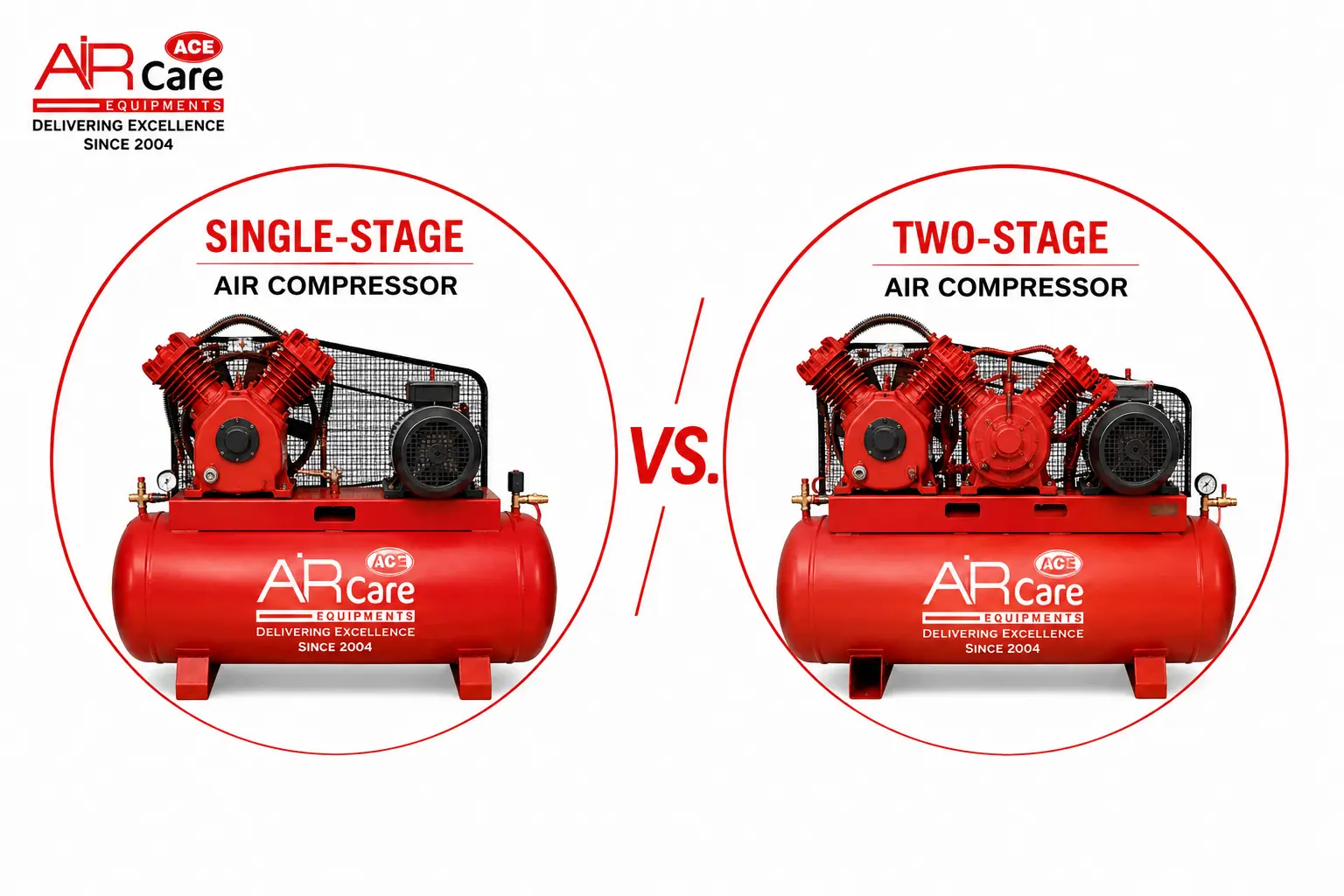
Single-Stage vs. Two-Stage Air Compressors: Which One Do You Need?
Quick Answer
A single-stage air compressor is best for homeowners, small garages, and occasional use because it delivers up to 150 PSI at a lower cost. A two-stage air compressor is better for workshops and industries requiring continuous operation, higher pressure (175 PSI+), and improved energy efficiency.
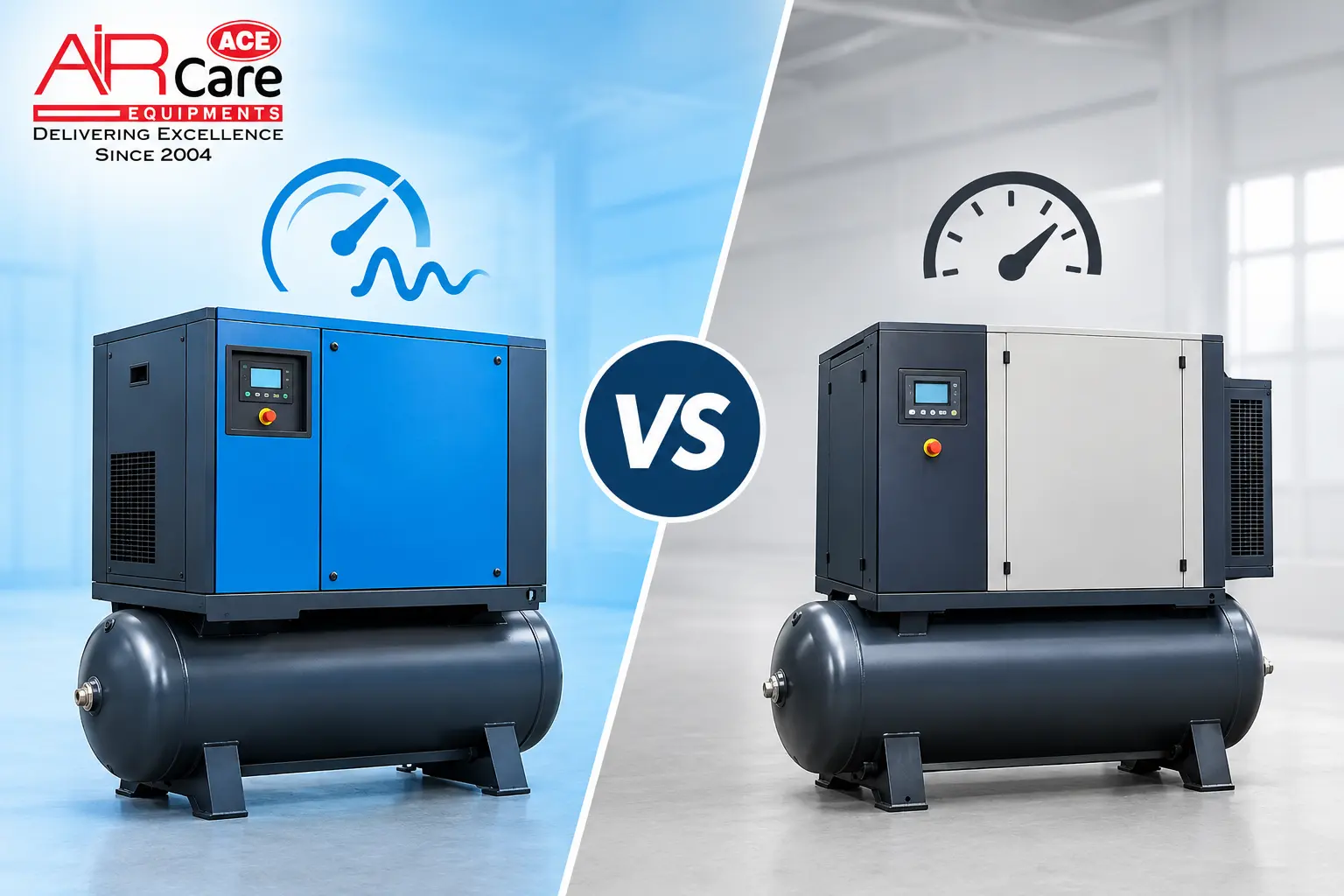
Choosing between a single-stage vs. two-stage air compressor depends on your air pressure (PSI) requirements, duty cycle, and application. A single-stage compressor is ideal for home garages, DIY projects, and light pneumatic tools, while a two-stage compressor is designed for industrial applications, continuous operation, and higher pressure requirements. This guide explains the differences, advantages, costs, and ideal use cases to help you make the right choice.
At Air Care Equipment, we get asked this almost every week by garage owners, fabrication shops, and even hobbyists setting up a home workshop. So we put together this guide to break down the real differences between a single-stage and a two-stage air compressor, without the jargon overload.
By the end, you'll know exactly which one suits your work, your budget, and how often you actually run the machine.
What is a single-stage air compressor?
A single-stage air compressor does exactly what the name suggests: it compresses air in one single stroke of the piston, straight from atmospheric pressure to the final output pressure. There's no cooling step in between, no second round of compression. Air goes in, gets squeezed once, and comes out ready to use.
Most single-stage units top out around 135 to 150 PSI, which is more than enough for light jobs, inflating tyres, running a nail gun, spray painting a fence, or powering small pneumatic tools now and then. They're compact, easier on the pocket, and don't need much maintenance.
The catch? They're built for intermittent use. Run one for hours at a stretch, and it'll heat up fast, and performance drops as a result.
What is a two-stage air compressor?
A two-stage air compressor takes a slightly different route. Air is compressed once in the first cylinder, cooled in an intercooler to lower the temperature, and then compressed a second time in a smaller cylinder to reach much higher pressure, often 175 PSI or more.
That cooling step in the middle is what makes the real difference. It reduces the heat buildup that single-stage machines struggle with, which means the compressor can run longer without losing efficiency.
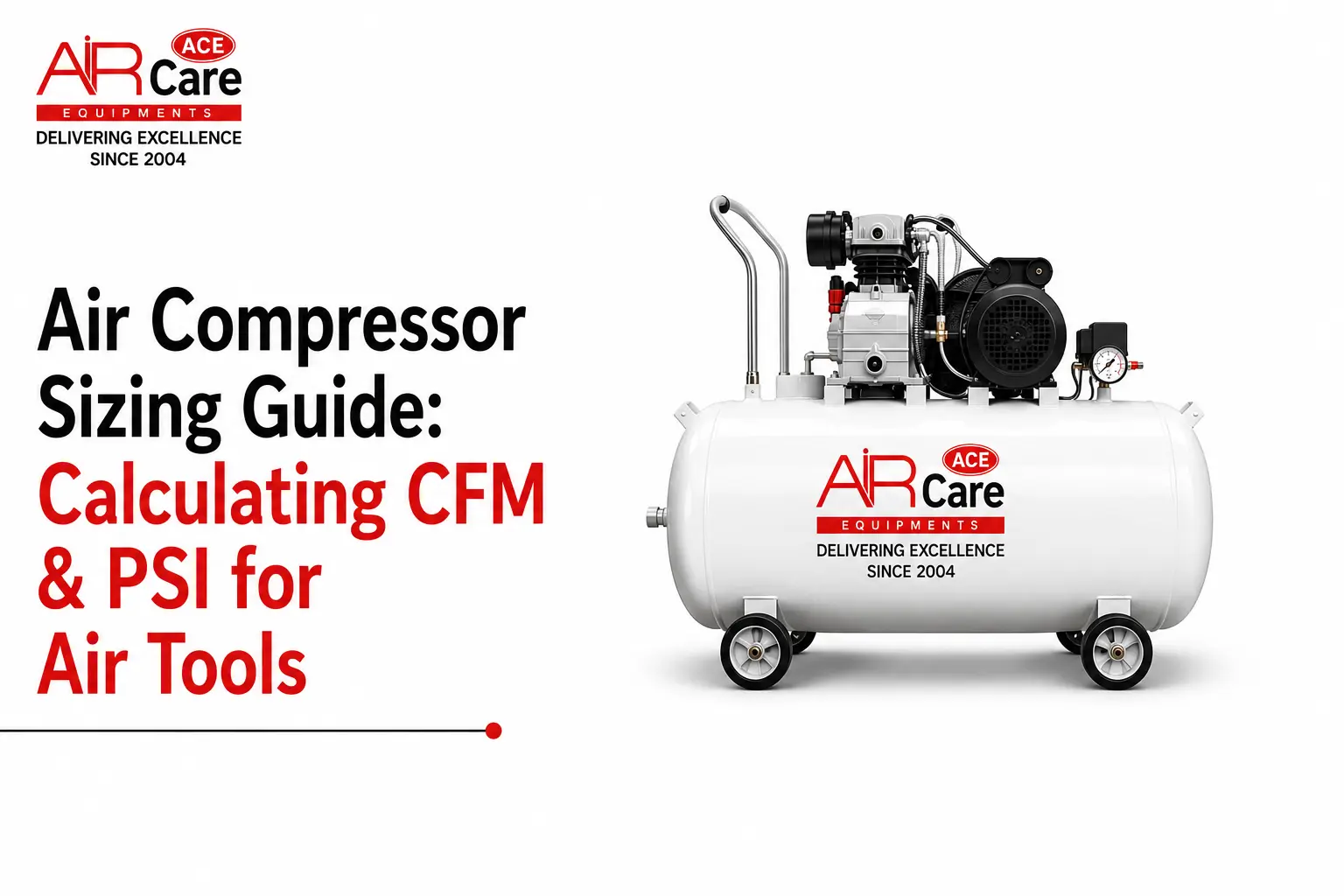
Read More: Air Compressor Sizing Guide: Calculating CFM & PSI for Air Tools
Why Do Industrial Workshops Use Two Stage Compressors Instead of single-stage compressors?
This is why the benefits of a two-stage air compressor show up most clearly in industrial and commercial settings, auto workshops, sandblasting operations, manufacturing lines, and anywhere the compressor needs to work for hours without a break.
What Is the Difference Between a single-stage and a two-stage air compressor?
1. How Much PSI does a two-stage air compressor produce compared to a single-stage?
This is the core mechanical difference. Single-stage compressors do it in one pass; two-stage compressors do it in two, with cooling in between. That extra step lets two-stage models reach and sustain higher pressure without straining the motor. If your work needs consistent high PSI, think spray painting large surfaces or running heavy pneumatic tools, a single-stage unit will hit its ceiling fast.
2. Is a Two Stage Air Compressor More Energy Efficient Than a Single-Stage One?
Here's something a lot of buyers don't think about until the electricity bill arrives. Because single-stage compressors generate more heat during compression, some of that energy gets wasted rather than turned into usable air pressure. Two-stage compressors, with their intercooling process, waste less energy and deliver more compressed air per unit of power used.
For occasional use, this barely matters. But if your compressor runs for hours each day, that efficiency gap adds up over the year, sometimes enough to offset the higher upfront cost of the two-stage unit.
Also Read: Air Compressor Maintenance Guide | Checklist & Service Tips 2026
3. Can a Single-Stage Compressor Handle Continuous or Industrial Use?
Duty cycle is where these two really part ways. Single-stage compressors are designed for short bursts — run, cool down, run again. Two-stage compressors are built for continuous or near-continuous operation, which is exactly why you'll find them in workshops that can't afford downtime.
If your daily routine involves stopping and starting the compressor every few minutes, a single stage works fine. If you need steady airflow for hours, like during a full day of spray finishing or air-tool-heavy fabrication, a two-stage machine won't leave you waiting for it to catch its breath.
4. Is It Worth Paying More for a Two Stage Air Compressor?
Single-stage compressors cost less upfront, no question. They're the go-to choice for home use, small garages, and anyone just starting out with pneumatic tools.
Two-stage compressors ask for a bigger investment initially. But over time, the story shifts — better energy efficiency, less wear from constant strain, and fewer repair callouts because the machine isn't being pushed past what it's designed for. Businesses running compressors daily usually recover that extra cost within a year or two through lower running expenses.
Think of it less as "cheaper vs pricier" and more as "pay now vs pay less over time."
5. Which Is Better — Single Stage or Two Stage — for Your Type of Work?
|
Use Case |
Single Stage |
Two Stage |
|
Home garage, DIY projects |
Ideal |
Overkill |
|
Tyre inflation, nail guns |
Ideal |
Not necessary |
|
Auto body & paint shops |
Limited |
Ideal |
|
Sandblasting |
Not suitable |
Ideal |
|
Manufacturing / industrial lines |
Not suitable |
Ideal |
|
Occasional weekend use |
Ideal |
Overkill |
|
All-day continuous operation |
Not suitable |
Ideal |
If you can see your usage pattern clearly in this table, the decision pretty much makes itself.
Do I Need a Single-Stage or Two Stage Compressor for My Garage?
A rough way to think about it:
Go single stage if you're using the compressor a few times a week, mostly for light tasks, and you're working with a tighter budget.
Go two-stage if the compressor is going to be a daily workhorse, you need consistently high pressure, or you're running tools that draw a lot of air for extended periods.
There's no universally "better" option here, just the one that matches how hard and how often you'll actually use it.
Read More: 7 Most Common Uses of Industrial Air Compressors in Manufacturing & Industry
Why Choose Air Care Equipment?
We stock both single-stage and two-stage air compressors, sourced for durability and backed by proper after-sales support, because a compressor is only as good as the service behind it when something needs attention. Our team can walk you through your specific requirement, whether that's a small unit for your home garage or a heavy-duty two-stage system for round-the-clock industrial use.
Not sure which one fits your setup? Get in touch with us, and we'll help you figure it out based on your actual usage, not just the spec sheet.
Final Thoughts
Choosing between a single-stage vs 2-stage air compressor really comes down to how much you're going to use it and what kind of pressure your tools demand. Single-stage machines are affordable, simple, and perfectly fine for light, occasional work. Two-stage machines cost more upfront but pay off through efficiency and reliability when the workload is heavier and constant.
Look at your daily usage honestly, match it against these five differences, and you'll land on the right compressor without any guesswork.
FAQs
Q1: What is the main difference between a single-stage and a two-stage air compressor?
A single-stage compressor compresses air once and delivers up to about 150 PSI, while a two-stage compressor compresses air twice with cooling in between, reaching 175 PSI or higher. The extra stage makes two-stage compressors better suited for continuous, high-demand use.
Q2: Which is better, a single-stage or two-stage air compressor?
Neither is universally better; it depends on usage. Single-stage compressors suit light, occasional tasks like inflating tyres or running a nail gun, while two-stage compressors are better for daily, heavy-duty, or industrial work.
Q3: Is a two-stage air compressor worth the extra money?
Yes, if you use it for several hours a day or need pressure above 150 PSI. The higher upfront cost is usually offset within a year or two through better energy efficiency and fewer repairs.
Q4: Can a single-stage compressor handle industrial or continuous use?
No, not reliably. Single-stage compressors are built for intermittent use and tend to overheat and lose efficiency under continuous industrial demand.
Q5: How much PSI do I actually need for pneumatic tools?
Check the PSI rating listed for your specific tool and choose a compressor that comfortably exceeds it. Most household tools run at 90–120 PSI, while industrial tools often require 150 PSI or more.
Q6: Do two-stage compressors use more electricity than single-stage compressors?
Per hour of runtime, two-stage compressors are generally more energy-efficient because intercooling reduces wasted heat, so more of the electricity goes into producing usable compressed air.
Recent Posts