Medical Air Compressors: Types, Uses & Oil-Free Systems in Healthcare
A Medical Air Compressor is a specialized oil-free compressed air system designed to supply clean, dry, and contaminant-free air for hospitals, dental clinics, laboratories, and healthcare facilities. It powers ventilators, surgical instruments, anesthesia machines, and medical gas pipeline systems while ensuring patient safety through high air purity standards.
In modern hospitals, compressed air is as essential as electricity and oxygen. Although it often operates behind the scenes, a medical air compressor plays a vital role in supporting life-saving equipment and ensuring uninterrupted healthcare operations.
The Non-Negotiable Standard: Why an Oil-Free Compressor is Essential
Medical compressed air must meet strict purity requirements because it comes into direct contact with patients during respiratory therapy, anesthesia, and surgical procedures. Unlike industrial air compressors, medical air systems use oil-free compression technology, advanced filtration, and moisture removal systems to ensure contaminant-free air that complies with international healthcare standards such as ISO 8573-1 Class 0.
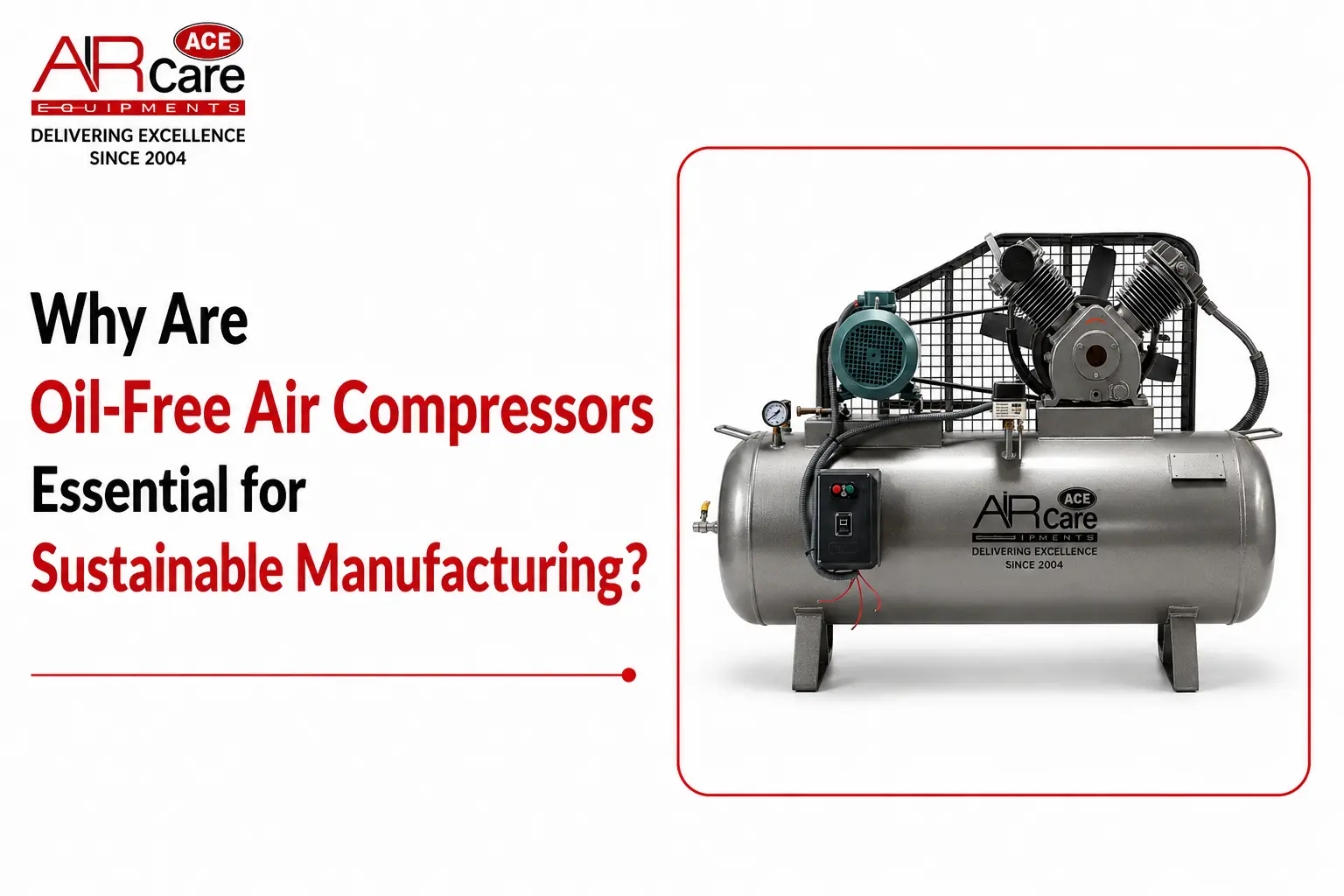
An Oil-free compressor is the gold standard for healthcare for several reasons:
- Patient Safety: If oil contaminants enter a breathing circuit, they can cause respiratory irritation or long-term lung damage.
- Equipment Longevity: Sophisticated medical tools and analysers are incredibly sensitive. Even a tiny film of oil can clog delicate valves or skew the results of a blood gas analyser.
- Bacterial Control: Oil and moisture are breeding grounds for microorganisms. By utilising oil-free technology, hospitals eliminate one of the primary vectors for hospital-acquired infections within their pneumatic systems.
Types of Medical Air Compressors
Selecting the right Air Compressor Machine depends entirely on the scale of the facility and the specific medical application. Not all air needs are created equal; a large multi-speciality hospital in a city like Delhi has very different requirements than a small private dental practice.
1. Reciprocating (Piston) Compressors
The reciprocating air compressor is perhaps the most traditional form of air compression. It works much like a car engine in reverse, using pistons to draw in air and compress it within a cylinder.
- Best Use Case: These are typically found in smaller clinics or specialised laboratories where the demand for air isn't constant.
- The Compact Advantage: For mobile clinics or very specific bedside equipment, a Mini air compressor based on piston technology is often the most practical choice. It provides the necessary pressure without taking up the footprint of a massive industrial unit.
2. Rotary Scroll Compressors
f you’ve ever walked through a quiet wing of a clinic and heard a gentle, steady hum rather than a loud clatter, you were likely near rotary scroll compressors. These use two spiral-shaped 'scrolls', one stationary and one orbiting, to compress air.
- Why Doctors Love Them: They are incredibly quiet and produce very little vibration. This is essential in patient-facing areas where a loud machine would be a major disruption to a healing environment.
- Maintenance: Because they have fewer moving parts than a piston-driven Air Compressor Machine, they tend to have a longer lifespan and require less frequent servicing, which is a massive plus for busy medical staff.
3. Rotary Screw Compressors
For large-scale operations, think 500-bed hospitals with multiple operating theatres and a massive ICU, the rotary screw Compressor is the undisputed champion.
- Continuous Power: Unlike piston models that often need "rest" periods to cool down, a rotary screw Medical Air Compressor is designed for 100% duty cycles. It can run 24/7 without a hiccup, ensuring that the central pipeline never loses pressure.
- Efficiency: While the initial investment is higher, the sheer volume of high-quality air they produce makes them the most cost-effective solution for large institutions.
Specialised Applications: Where This Air Actually Goes
It’s easy to talk about the "machine," but it’s more interesting to look at how it actually serves the patient. The compressed air generated by a high-end Air Compressor is a versatile tool in the hands of medical professionals.
- Ventilation and Life Support: In the ICU, the air provided by a Medical Air Compressor is blended with pure oxygen to provide a breathable mixture for patients who cannot breathe on their own. Any failure here is simply not an option.
- Surgical Power Tools: Many of the drills and saws used in orthopaedic surgery aren't electric; they are pneumatic. They require a steady, high-pressure stream of air to operate with the precision needed to repair a bone or joint.
- The Dental Office: Your dentist relies heavily on a specialized Air Compressor Machine. From the high-speed drill to the air-water syringe used to clean a cavity, the entire practice would grind to a halt without reliable compressed air. In these settings, a quiet Oil-free compressor is essential so the patient doesn't feel like they are in a construction zone.
Choosing Reliability: Why Quality Engineering Defines Patient Safety
In the world of medical procurement, there is a temptation to look at the bottom line first. However, with an Air Compressor, the cheapest option often becomes the most expensive over time. When we talk about "Quality Engineering," we are talking about the difference between a machine that just works and a machine that protects.
A medical-grade system must include integrated dryers and multi-stage filtration. Moisture is the enemy of medical air; it causes corrosion in pipes and allows bacteria to thrive. A high-quality Medical Air Compressor will have a redundant cooling and drying system, ensuring that the "dew point" is kept at a level where no liquid water can ever form in the lines. This level of detail is what separates a generic machine from a true medical-grade asset.
Why Air Care Equipments is the Trusted Partner for Medical Grade Air
Navigating the technical specifications of air systems can be overwhelming for healthcare administrators. This is where the expertise of Air Care Equipments becomes a game-changer. We don't just sell machines; we provide the peace of mind that comes with knowing your facility's air supply is handled by specialists.
Precision-Engineered Solutions: At Air Care Equipments, we understand that a laboratory in a research centre has different needs than a surgical suite. We specialise in tailoring the right Air Compressor Machine to your specific volume and pressure requirements, ensuring you aren't underpowered or overspending on energy.
Uncompromising Purity: Our commitment to patient safety is reflected in our selection of Oil-free compressor technology. We ensure that every system we install meets or exceeds the stringent international standards for medical air purity. By focusing on moisture removal and high-efficiency filtration, we protect both your patients and your expensive diagnostic machinery.
Reliability and Local Support: A hospital never sleeps, and neither does the need for air. Air Care Equipments is dedicated to providing robust technical support and maintenance. Whether you need a large-scale rotary screw system or a specialised mini air compressor for a specific wing, our team is there to ensure your operations remain uninterrupted.
Conclusion
A Medical Air Compressor is an essential part of every modern healthcare facility, supplying clean, dry, oil-free compressed air for critical medical applications. Whether supporting ventilators, surgical tools, dental equipment, or laboratory systems, selecting the right compressor directly impacts patient safety, equipment performance, and operational reliability. By investing in high-quality oil-free technology, advanced filtration, and regular maintenance, healthcare facilities can ensure consistent air quality and uninterrupted medical services. Air Care Equipment offers reliable medical air compressor solutions tailored to meet the unique requirements of hospitals, clinics, and laboratories across India.
Frequently Asked Questions
Q1: What is the number one distinction between a medical and an industrial air compressor?
Medical compressors must supply a 100% oil-free, dry, and contaminant-free air to ensure patient safety and save you from harm to touchy scientific equipment.
Q2: Why is an oil-free compressor preferred in hospitals?
It completely removes the threat of oil vapours coming into the affected person’s lungs or contaminating sterile surgical environments.
Q3: Can a mini air compressor strengthen a complete dental sanatorium?
While a mini air compressor is first-rate for a unmarried chair or portable use, a multi-chair medical institution normally calls for a bigger, critical rotary scroll or screw device.
Q5: How frequently do scientific air compressor filters get replaced?
To hold maximum purity and prevent bacterial buildup, filters ought to be inspected and typically changed every three to six months.
Q6: What noise stage is appropriate for a medical air compressor gadget?
For patient comfort, those units ought to ideally perform between 60–70 decibels, that's kind of the extent of an ordinary conversation.
Recent Posts