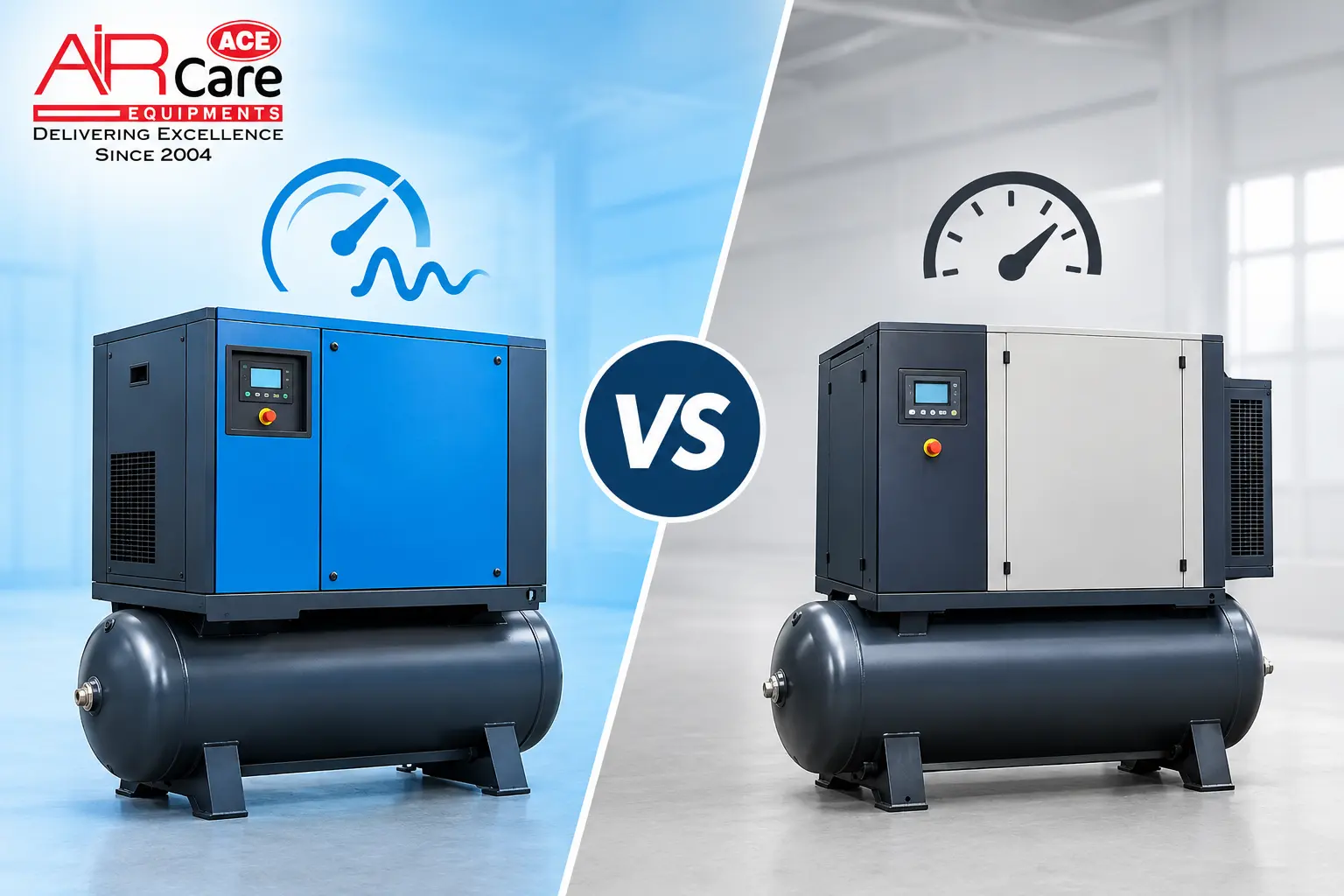
Why Is Air Compressor So Loud? Piston vs Screw Compressor
Walk into most small factories or fabrication units in India, and you'll hear it before you see it, the sharp, rhythmic clatter of an air compressor working overtime. If your team is shouting over the noise or reaching for earplugs every shift, it's worth asking: is this level of noise actually necessary?
The short answer is no. A lot of workshop noise comes down to one simple factor, the type of compressor technology you're using. Understanding this can help you make a smarter buying decision, protect your workers, and even improve productivity.
Quick Answer: Why Is My Air Compressor So Loud?
Reciprocating piston compressors can be noisy because their pistons, valves and connecting mechanisms create reciprocating motion, pressure pulsations and vibration. Noise can also increase because of loose components, worn parts, poor mounting or vibration transmitted through pipework. Acoustic isolation, maintenance and appropriate installation can reduce noise, while enclosed rotary screw compressors may be a better option for some continuous-duty applications.
Why Are Some Air Compressors So Loud?
Compressor noise isn't random. It's built into the mechanics of how the machine generates compressed air. Reciprocating Piston Compressors: Noise by Design
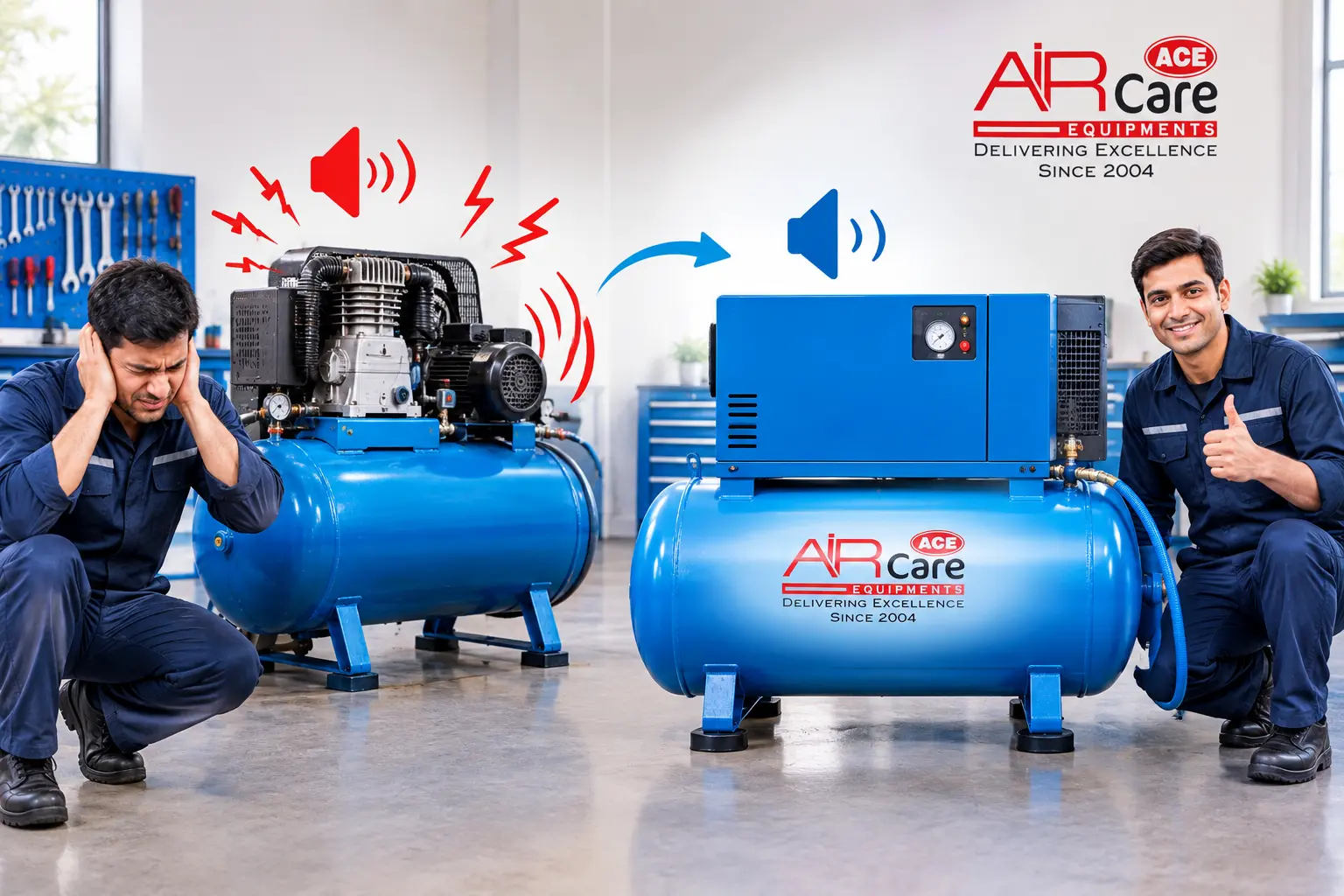
A Reciprocating Piston Compressor works using a piston moving up and down inside a cylinder, much like an engine. Every stroke compresses air in a burst, and every burst creates a pressure pulse. This is why a Piston Air Compressor or Reciprocating Air Compressor produces that familiar chugging, thumping sound — it's mechanically unavoidable with this design.
Most piston units are also open-frame, meaning the moving parts, valves, and motor are exposed rather than housed in sound-dampening enclosures. Add in vibration transmitted through the base and connected pipework, and noise levels in a workshop running a Piston Air Compressor can easily cross 85–95 dB — loud enough to cause hearing damage with prolonged exposure. Rotary Screw Compressors: Built for Quiet Operation
A Screw Type Air Compressor works very differently. Instead of pistons pulsing air in bursts, two precision-matched helical rotors mesh together and compress air in a continuous, smooth flow. There are no sudden pressure spikes, no reciprocating parts slamming back and forth, and far less vibration.
On top of this smoother mechanical action, Rotary Screw Compressors are almost always built with fully enclosed, acoustic cabinets. These enclosures are lined with sound-dampening material and often include vibration-isolating mounts, bringing noise levels down to as low as 65–75 dB — quiet enough to hold a normal conversation right next to a running unit.
The Real Cost of a Noisy Compressor
Noise isn't just an annoyance. In an industrial setting, it's a safety and compliance issue:
-
Hearing damage—Continuous exposure above 85 dB (a typical output for many piston units) can cause permanent hearing loss over time, as per OSHA and Indian factory safety guidelines.
-
Communication breakdown—Workers struggle to hear instructions or warnings near loud machinery, increasing accident risk.
-
Fatigue and lower productivity—Constant noise raises stress levels and reduces concentration over an 8–10 hour shift.
-
Compliance risk—Many industrial noise regulations require hearing protection zones and noise monitoring once levels cross safe thresholds, adding administrative overhead.
Workplace Safety Tips for Noisy Compressor Setups
If you're currently running an open-frame Reciprocating Air Compressor and a full upgrade isn't immediate, these steps can help reduce risk in the meantime:
-
Isolate the compressor room – Locate the unit away from workstations, ideally in a separate enclosed room or partitioned area.
-
Use anti-vibration pads – Place the compressor on rubber or spring isolators to stop vibration from transferring through the floor and walls.
-
Install acoustic barriers – Sound-absorbing panels or a simple enclosure box around the unit can meaningfully cut noise reaching the shop floor.
-
Maintain regularly – Worn valves, loose bolts, and low lubrication all increase noise and vibration. Routine Air Compressor Service keeps units running closer to their rated (lower) noise levels.
-
Mandate hearing protection – In any zone where noise exceeds 85 dB, ear protection should be non-negotiable for staff.
-
Route pipework carefully – Rigid pipe runs can carry vibration and noise across a building; flexible couplings near the compressor help dampen this.
When It's Time to Switch to a Rotary Screw Compressor
If noise, vibration, and worker complaints are recurring issues, retrofitting an old Reciprocating Piston Compressor setup with sound insulation only goes so far. A purpose-built Rotary Screw Compressor with a silent acoustic enclosure solves the problem at the source rather than masking it.
Beyond the noise reduction, screw compressors typically offer:
-
Continuous air delivery with less pressure fluctuation
-
Lower vibration and mechanical wear over time
-
Better suitability for continuous-duty industrial applications
-
A smaller footprint per CFM delivered compared to older piston setups
For small factories, printing units, packaging lines, and workshops where people work close to the compressor all day, this shift alone can transform the working environment.
Choosing the Right Compressor Partner
Not every "quiet" compressor on the market delivers on that promise once it's installed and running under real load. Working with an experienced Air Compressor Manufacturer or air compressor supplier matters—they can help you size the right enclosure, motor rating, and CFM output for your actual floor noise and production requirements, rather than just selling a spec sheet.
At Air Care Equipment, we manufacture and supply a full range of Industrial Air Compressors, including silent Rotary Screw Compressors engineered specifically for noise-sensitive environments. As an established Air Compressor Dealer and Air Compressor Manufacturer in Delhi NCR, we also provide Air Compressor Repairing Service and ongoing maintenance support to keep your existing equipment running as quietly and efficiently as possible.
Final Thoughts
A loud compressor isn't just background noise — it's a signal that your equipment may be working harder (and less efficiently) than it needs to. Whether you're troubleshooting an existing Reciprocating Air Compressor or planning your next equipment upgrade, understanding the mechanical difference between piston and screw technology puts you in a much stronger position to protect your workers and your bottom line.
Looking for a quieter compressor solution for your factory or workshop? Get in touch with Air Care Equipment to discuss the right Rotary Screw Compressor setup for your floor.
Frequently Asked Questiones
1. Why is my reciprocating air compressor so noisy compared to newer models?
A Reciprocating Piston Compressor generates air in pulses as the piston strokes up and down, creating vibration and pressure pulses with every cycle. Most units are also open-frame, so there's nothing to absorb the sound — which is why older Piston Air Compressors often run at 85–95 dB.
2. How much quieter is a rotary screw compressor really?
Rotary Screw Compressors use continuous rotor motion instead of pulsing pistons, and they come in fully enclosed, sound-insulated cabinets. This combination typically brings noise down to 65–75 dB — quiet enough to talk normally right beside the unit.
3. Is compressor noise actually a safety hazard, or just an annoyance?
It's a genuine safety issue. Continuous exposure above 85 dB — common with many Reciprocating Air Compressors — can cause permanent hearing damage over time and makes it harder for workers to hear warnings or instructions on the floor.
4. Can I reduce noise on my existing piston compressor without replacing it?
Yes, to an extent. Anti-vibration pads, acoustic enclosures, flexible pipe couplings, and regular Air Compressor Service all help reduce noise and vibration. However, these are workarounds — a Screw Type Air Compressor addresses the noise at its mechanical source.
5. Which is better for a small factory — piston or screw compressor?
For continuous, all-day operation in a workshop with people nearby, a Rotary Screw Compressor is usually the better fit due to lower noise, less vibration, and steadier air delivery. Piston compressors can still work well for lighter, intermittent use where noise is less of a concern.
Recent Posts