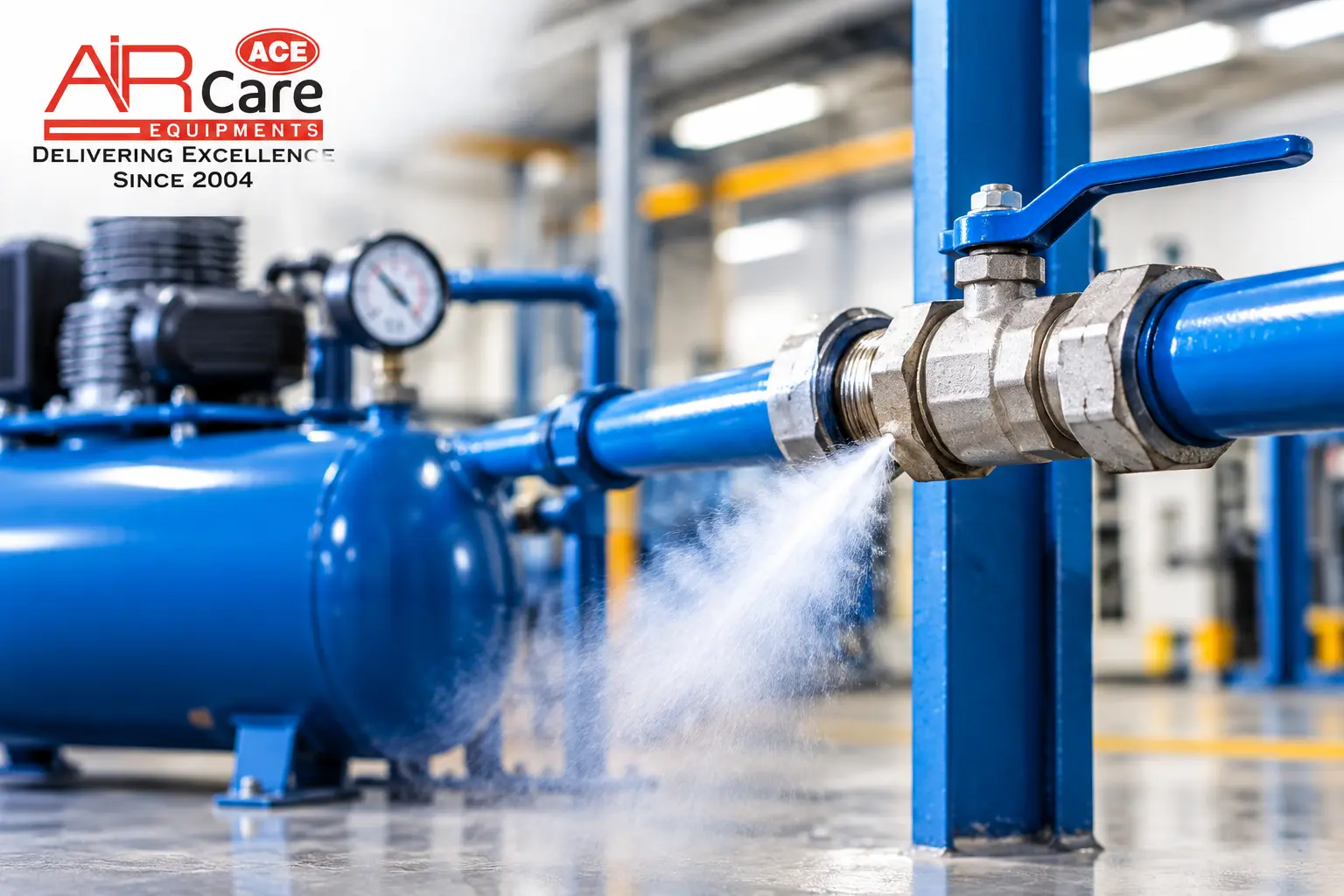
How Compressed Air Leaks Silently Drain Your Plant’s Budget
Walk into any manufacturing unit and you'll hear it: the steady hum of compressors, the occasional hiss near a joint or fitting that nobody pays attention to. That hiss is money leaving your plant, minute by minute, day after day.
Compressed air is often called the fourth utility, right alongside electricity, water, and gas. Yet it's the one utility most plant managers stop thinking about once the system is installed. A well-running industrial air compressor can quietly lose 20-30% of its output to leaks, and because compressed air doesn't show up on a meter the way electricity does, nobody notices until the bills start climbing.
This piece breaks down exactly how much these leaks cost, where they usually show up, and why a proper air compressor service schedule is the only real long-term fix — not a one-time patch job.
How Much Do Compressed Air Leaks Actually Cost a Plant Per Year?
Here's a number that surprises most plant owners the first time they hear it: a single leak from a 3mm hole in a compressed air line, running at 7 bar pressure, can waste air worth well over ₹40,000-₹50,000 a year, depending on your electricity tariff and run hours. Now multiply that by the dozen or so leak points sitting in an average mid-sized plant, and you're looking at losses that easily cross a few lakhs annually.
Compressed air is one of the most expensive forms of energy used in industry. Only about 10-15% of the electrical energy fed into a compressor actually converts into usable compressed air energy — the rest is lost as heat during compression. So every cubic foot of air that escapes through a leak isn't just wasted air, it's wasted electricity that was already inefficient to begin with.
|
Leak Hole Size |
Estimated Air Loss |
Estimated Annual Cost* |
|
1mm |
~0.5 CFM |
₹8,000 - ₹10,000 |
|
3mm |
~4-5 CFM |
₹45,000 - ₹55,000 |
|
6mm |
~15-18 CFM |
₹1,50,000+ |
Costs vary based on operating pressure, run hours, and local electricity tariffs — figures above are indicative estimates for a typical 8 bar system running two shifts.
Industry surveys, including studies by the US Department of Energy, consistently put unmanaged compressed air leak losses at 20-30% of total system output. In an Indian industrial setup running an industrial air compressor around the clock, that percentage translates into a recurring monthly expense that most finance teams never trace back to its real source.
Where Do Compressed Air Leaks Usually Occur in an Industrial Plant?
Leaks don't announce themselves. They build up gradually across dozens of small connection points that seem too minor to matter individually.
The usual suspects include:
-
Pipe joints and threaded fittings — the most common failure point, especially where thread sealant has degraded over time
-
Hoses and quick-connect couplings — wear out from repeated flexing and vibration
-
The air receiver tank and its associated valves — often overlooked because the tank itself rarely fails, but the fittings around it do
-
Condensate drains — automatic drains that stick open or fail to seal properly
-
FRL units and old solenoid valves — particularly in systems that haven't seen maintenance in years
Compressor-end connections around rotary screw compressors are another frequent culprit, since these units run under higher duty cycles and the vibration from continuous operation loosens fittings faster than in intermittent-use systems.
The bigger issue is that most of these leaks are inaudible once the plant floor is running. Machinery noise, exhaust fans, and general shop-floor activity mask the hissing sound completely. A leak that would be obvious during a quiet Sunday shutdown disappears into the background the moment production starts.
What Are the Warning Signs of a Compressed Air Leak?
You don't need a leak detector to get a first indication that something's wrong. A few patterns tend to show up well before anyone actually goes looking for leaks:
-
The compressor cycles on more often than production output would suggest
-
Pressure readings drop noticeably at machines furthest from the compressor room
-
Electricity bills creep upward month over month without a matching rise in production
-
The compressor seems to be under load almost continuously, even during low-demand periods
None of these signs alone confirms a leak. But when two or three show up together, it's usually a sign that air is escaping somewhere in the line rather than being used productively.
How Can You Detect Compressed Air Leaks Accurately?
There are two practical approaches, and most well-run plants use both.
The soap-water test is the simplest method — spray a soap solution on suspected joints and fittings, and watch for bubbles. It works, but it's slow, and it only catches leaks you already suspect exist.
Ultrasonic leak detection is the method most maintenance teams rely on for a full plant audit. These devices pick up the high-frequency sound of escaping air even in a noisy factory environment, which makes them far more reliable than trying to listen for a hiss over running machinery. A technician can walk an entire pipeline network and flag leak points in a fraction of the time a manual check would take.
The best practice, regardless of method, is timing. Running a leak audit during a shutdown window or off-peak hours—when ambient noise drops—makes even a basic check far more accurate. And this shouldn't be a once-a-year exercise. Quarterly or half-yearly audits catch new leaks before they compound into significant losses.
Why Is Regular Air Compressor Service the Real Fix (Not Just a One-Time Repair)?
Here's the part most plants get wrong: they find leaks, fix them, and consider the job done. Six months later, the same problem resurfaces at different points along the line.
That's because leaks aren't a one-time defect—they're the natural result of ongoing vibration, pressure cycling, and mechanical wear. Fittings loosen again. New joints develop small gaps as pipes expand and contract with temperature. Without a structured maintenance cycle, you're just chasing the same problem in a new location every few months.
A proper air compressor service plan, delivered through a structured Annual Maintenance Contract, typically covers:
-
Scheduled leak detection audits using ultrasonic equipment
-
Inspection and replacement of worn fittings, couplings, and seals
-
Full compressor servicing—filters, oil, drains, and load checks
-
Documentation of air receiver tank condition and pressure integrity
-
Follow-up checks to confirm earlier repairs are holding
When a leak is identified during one of these visits, a qualified air compressor repairing service handles the fix on the spot rather than leaving it on a to-do list that never gets actioned. This is the shift that actually matters—moving a plant from reactive, break-fix maintenance to a proactive schedule where problems get caught before they show up on the electricity bill.
At Air Care Equipment, this is exactly the gap our AMC and servicing plans are built to close—regular, documented visits that keep leak losses from creeping back in.
How Much Can a Plant Save With Proper Maintenance?
Consider a mid-sized plant running two compressors, with an estimated 15 active leak points scattered across its pipeline—a fairly typical scenario for a facility that hasn't had a leak audit in over a year. Left unaddressed, that could mean anywhere from ₹3-5 lakhs in wasted compressed air annually.
After a structured leak audit and a switch to scheduled air compressor service, plants in this situation typically see leak-related losses drop by 60-75% within the first service cycle, simply because the major leak points get identified and closed, and new ones get caught before they grow. The exact figures will vary by plant size, system age, and operating hours, but the pattern holds consistently: most of the loss is preventable, and most of it comes from neglect rather than equipment failure.
Quick Checklist: How to Prevent Compressed Air Leaks in Your Plant
-
Schedule a professional leak audit rather than relying on ad-hoc checks
-
Track compressor run-hours against actual production hours to spot mismatches early
-
Inspect the air receiver tank and surrounding fittings on a fixed schedule
-
Replace worn joints and couplings as soon as they're flagged, not when convenient
-
Sign up for an AMC or air compressor service plan instead of calling for repairs only when something breaks
-
Train floor staff to report any hissing sounds they notice, even if it seems minor
Stop Losing Money to Invisible Leaks
Compressed air leaks don't announce themselves with a warning light or an alarm. They just sit there, quietly adding a percentage point or two to your energy bill every month until someone finally notices the pattern. By then, the cumulative loss is often far higher than anyone expected.
Partnering with a reliable provider for air compressor service ensures your industrial air compressor keeps running efficiently instead of bleeding money through fittings nobody's checked in months. The fix isn't complicated—it just requires treating maintenance as a schedule, not an afterthought.
Get in touch with Air Care Equipment for a professional leak audit or AMC consultation, and find out exactly how much your plant could be saving. Visit aircareequipment.co.in to get started.
FAQs
How much money can a compressed air leak cost per year?
It depends on the leak size and your operating hours, but even a single 3mm leak can cost ₹45,000-₹55,000 annually in wasted energy. Multiple leaks across a plant can easily add up to several lakhs a year.
How do I know if my plant has a compressed air leak?
Watch for a compressor that runs more than production demands, pressure drops at equipment far from the compressor room, and electricity bills rising without a corresponding increase in output.
What is the most accurate way to detect air leaks in an industrial plant?
Ultrasonic leak detection is the most reliable method for a noisy factory floor, since it picks up the sound of escaping air even when machinery noise would mask a manual check.
How often should I schedule air compressor service to prevent leaks?
Quarterly or half-yearly is the standard recommendation for most industrial setups. Older systems or plants running high duty cycles may benefit from more frequent checks.
Can a leaking air receiver tank affect the whole compressed air system?
Yes. A leak at the receiver tank or its fittings causes a pressure drop that affects every machine downstream, forcing the compressor to work harder to compensate.
What's included in an industrial air compressor AMC or service contract?
A typical contract covers scheduled leak audits, fitting and seal replacement, compressor servicing (filters, oil, drains), and documented follow-up checks to confirm repairs are holding.
Is DIY leak fixing enough, or do I need a professional air compressor repairing service?
DIY fixes with soap-water tests can catch obvious leaks, but they miss the ones hidden in noisy areas or hard-to-reach fittings. A professional service catches these systematically and prevents recurrence.
How can Air Care Equipment help reduce compressed air leaks in my plant?
Air Care Equipment offers leak detection audits, AMC plans, and servicing for rotary screw compressors and reciprocating systems, built around catching leaks before they show up as a cost.
Recent Posts