Reciprocating vs. Rotary Screw Compressors: A Guide to Choosing the Right Air Compressor
Navigating the world of industrial equipment may be complex, and concerning air compressors, the choice between a reciprocating and rotary compressor model is an essential one. Both are crucial equipment for a wide range of applications, however, their inner workings, overall performance characteristics, and best use instances are hugely distinct. Understanding these distinctions is critical for all and sundry trying to put money into a brand new compressor, from a small workshop owner to a big-scale production plant supervisor. Our blog will help you break down the core variations, helping you make a knowledgeable decision.
What Is a Reciprocating Air Compressor?
A reciprocating air compressor is a positive displacement machine that uses a piston moving back and forth inside a cylinder to compress the air. The process begins with a piston descending blow, which attracts the air into the cylinder through an intake valve. In the subsequent course, the piston compresses the arrested air, forcing it to come out through a discharge valve in a storage tank. This cyclical and piston-oriented action is why these compressors are also known as piston compressors. They are a classic and reliable design, usually found in applications that require high pressure and intermittent use, such as feeding small pneumatic tools in a garage or workshop at home.
What is a Rotary Screw Compressor?
The rotating screw compressor is another type of positive displacement compressor, but the mechanism is completely different. It uses two accurately processed spiral rotors or screws, which are rotated in the opposite direction. When they rotate, they bend the intermediate screw between them. When the wind rotates with the rotor and compresses it slowly, the amount of space decreases between the screws. This continuous, rotating movement provides a constant flow of compressed air, making them ideal for industrial applications, such as a continuous air supply, a product plant, or a large-scale production plant.
Reciprocating and Rotary Compressors: What's the Difference?
The fundamental difference between a reciprocating compressor and a rotating compressor is a very different compression method, but this single design variation creates a wave effect in all aspects of their performance and fitness.
- Design:
Reciprocating: This design is based on a piston-and-cylinder mechanism. It is a proven, simple technology with a low starting cost. However, they create many moving parts, including stamps, rings, valves, and a crankshaft, which results in more friction and wear.
Rotation screw: This design uses two spiral-shaped screws. It is a more complex and precise engineering solution, resulting in fewer moving parts and a minimal metal-on-metal connector due to oil lubrication. This leads to less wear and a longer life.
- Efficiency:
Reciprocating: Return compressors are most effective for intermittent use. When they do not compress air, they are turned off and use no energy. However, the energy can spike from starting and stopping, and the inherent losses from friction can make them less effective for continuous operation.
Rotation screw: The key to the rotary screw efficiency is its ability to run continuously. They are designed for a 100% duty cycle. This means that they can run all day without needing a cooling period. This continuous operation eliminates energy waste from constant cycling, making them far more energy efficient for demanding high-volume applications.
- Noise Level:
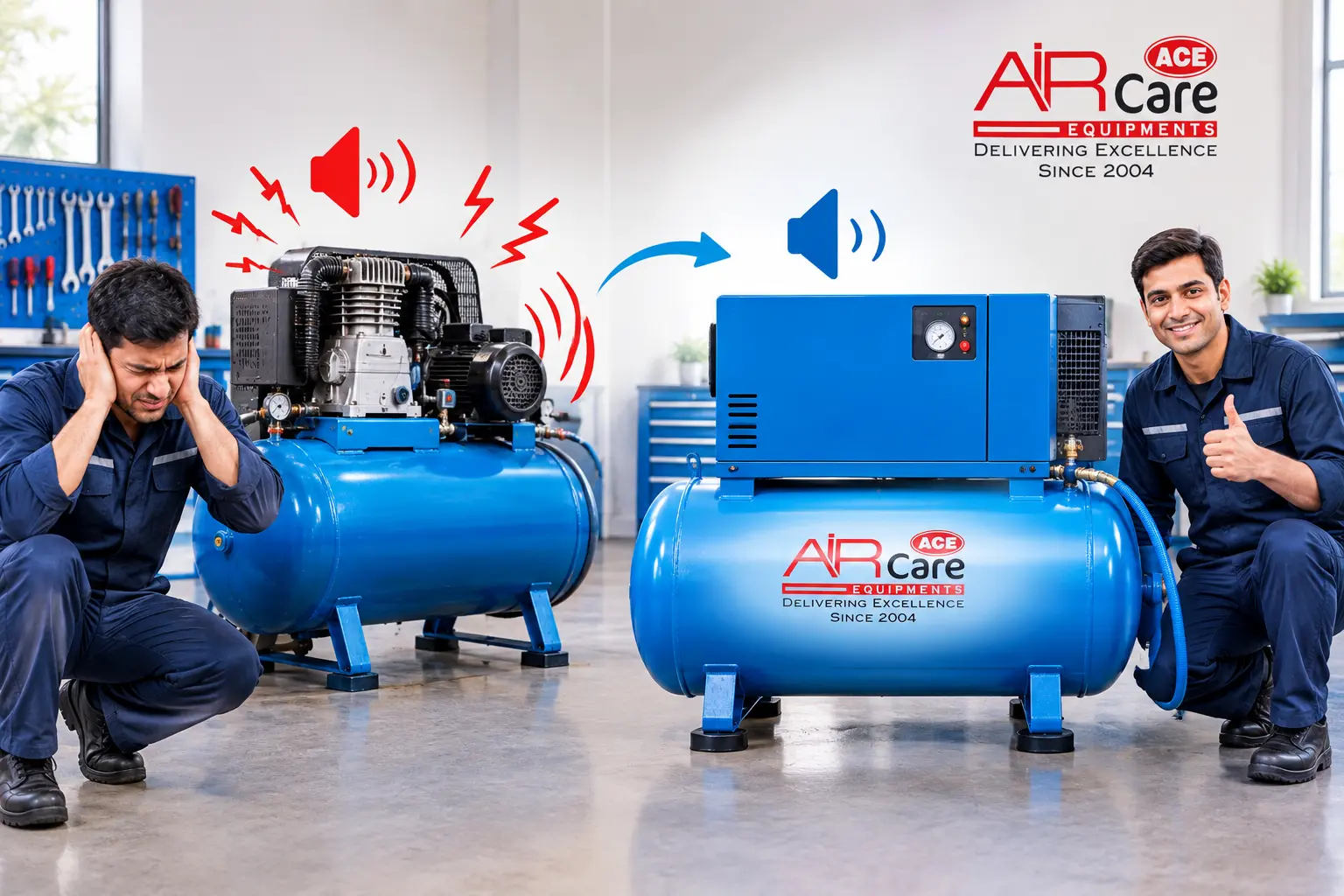
Reciprocating: The powerful motion of the piston creates significant noise and vibration during the start and closure of the back and front motion and valve. This makes them inappropriate for a calm function atmosphere without widespread sound insulation.
Rotation screw: Simple, continuous rotation of the screw results in very quiet operation. They are often made with silent cabinets, which make them a more desirable choice for installation where noise pollution is worrisome.
- Maintenance:
Reciprocating: These compressors usually require more frequent maintenance. Constant wear on piston rings and valves requires regular checks and substitutions. Oil changes are also a common maintenance task due to high operational temperatures.
Rotary screw: With fewer parts in use and the use of lubrication and cooling oil, rotary screw compressors usually have longer service intervals. Maintenance is less frequent, usually limited to regular oil and filter changes, leading to lower long-term maintenance costs.
- Airflow:
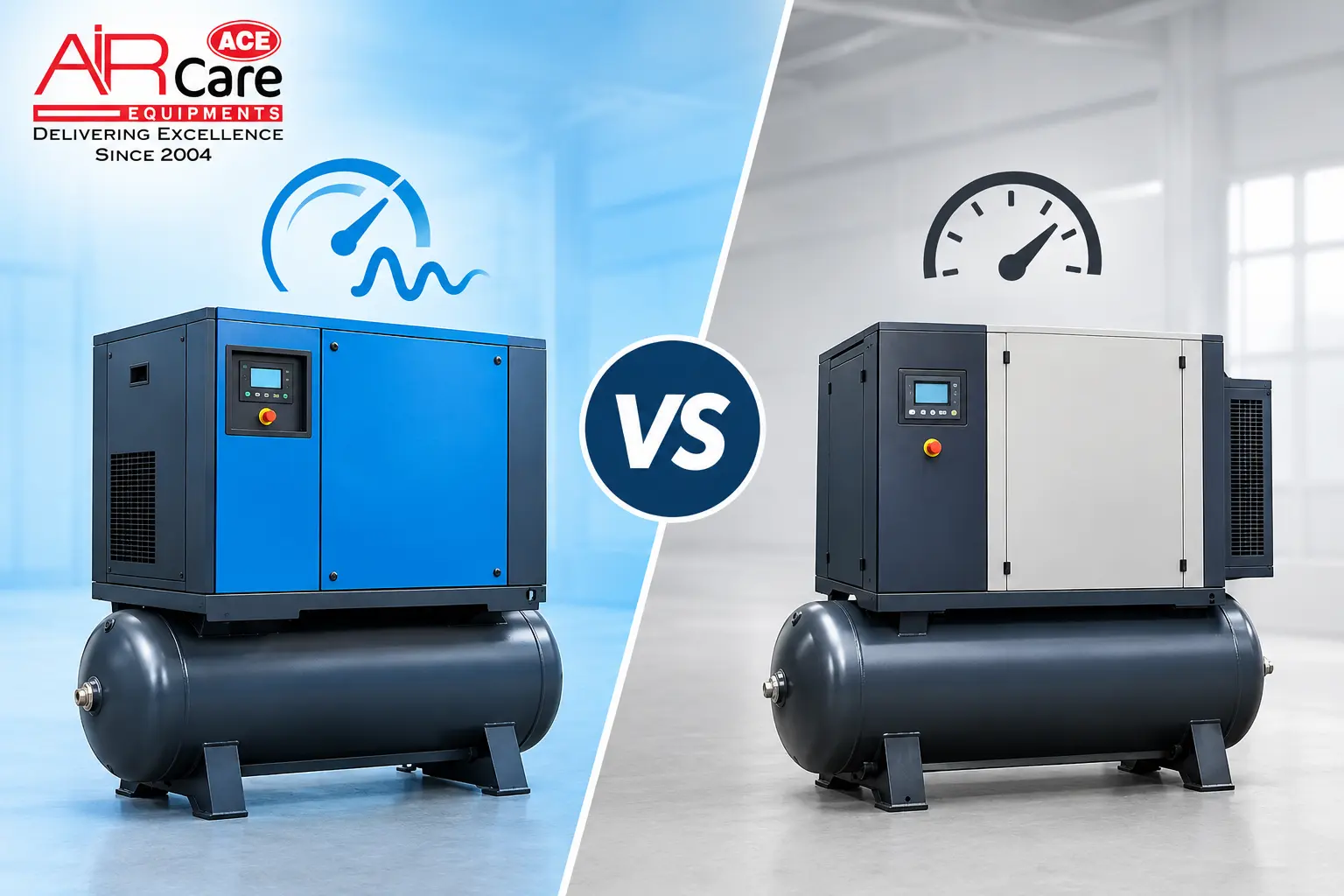
Reciprocating: Air is delivered in outbreaks or pulses, corresponding to the piston's upward stroke. This vibrant stream can be a disadvantage for sensitive tools and processes, and often requires an air receiver manifold to smooth out the airflow.
Rotation screw: The continuous rotation of the screws provides a smooth and constant air flow, which is ideal for operating automated machines, robot systems, and other equipment that requires a uniform supply.
- Air Pressure:
Reciprocating: These compressors are excellent for generating high pressure, and often more than 200 PSIs. This makes them suitable for specific tasks such as sandblasting, high-pressure cleaning, and specialized heavy aerated equipment.
Rotation screw: When they can produce good pressure (usually up to 150 PSI), they are mainly designed for constant high-volume air delivery rather than heavy pressure. They maintain a simple pressure product, which is crucial for most industrial dysfunction programs.
- Size:
Reciprocating: Available in a wide range of sizes, from small, portable home use units to large, stationary industrial machines. Their compact design makes them suitable for spaces with limited floor space.
Rotation screw: Generally larger and heavier, they require more space for installation. They are almost always stationary and are designed to be part of a fixed industrial layout.
Air Care Equipments: A Trusted Name in Air Compressors
When considering the right compressor for your needs, it is necessary to partner with a reputable manufacturer. The Indian company, established in 2005, cemented Air Care Equipments as a trusted brand in the industry. Known for our high-quality products, we specialize in both high-pressure reciprocating air compressors and efficient rotary screw compressors.
With a modern production facility in Gurgaon, Air Care Equipments is committed to using advanced technology and best design techniques. We focus on the product of the product that does not meet national and international standards for production, durability, and efficiency. Our dedication to customer satisfaction is the driving force behind our mission. By focusing on quality and active product development, we aim to create long-lasting relationships with our customers, ensuring that they provide a complete remedy for every compressed air requirement.
Reciprocating and Rotary Compressor: Which One Should I Choose?
The decision depends on its specific application and operational needs. To decide between a reciprocating and rotating compressor, ask yourself these questions:
- What is the work cycle? If you need air for short gusts and the compressor will be idle for long periods (for example, a car workshop or a small unit of manufacture), a reciprocating compressor is the most economical and practical choice.
- What is air demand? If you need a high continuous air volume to feed an assembly line or a large manufacturing process, the efficiency and continuous operation of a rotary screw compressor are not negotiable.
- Is noise a concern? If the compressor is located in or near a busy work area, the most silent operation of a rotary screw model is a significant advantage.
- What is your budget? Although reciprocating compressors have a lower initial purchase price, a rotary screw compressor can provide a better return on investment over time, through energy saving and lower maintenance costs, especially for high-demand operations.
Conclusion
In the world of compressed air, both reciprocating and rotating compressor types have their distinct space. The reciprocating compressor is a durable workhorse with high pressure for intermittent jobs, ideal for smaller companies and workshops. The rotary screw compressor, with its continuous, effective, and quiet operation, is the go-to solution for large-scale industrial applications. By evaluating the difference between a retaliating compressor and rotating compressor carefully, you can choose the right technology to optimize operations and achieve long-term efficiency and reliability.
FAQs
Q1 Can I use a reciprocating compressor for continuous operation?
This is not recommended. Compressors are designed for an intermittent duty cycle (usually 50% or less). Running them continuously can cause overheating, premature wear, and a short lifetime.
Q2 Are oil-free rotary screw compressors available?
Yes, oil-free rotary screw compressors exist and are required for industries such as food and drinks, pharmaceuticals, and electronics manufacturing, where slight oil contamination is also unacceptable.
Q3 What is the main benefit of a rotary screw compressor's continuous airflow?
Continuous airflow is crucial for processes that do not tolerate pneumatic automation, spray painting, and pressure fluctuations, such as some cooling or drying applications.
Q4 What is the typical lifespan of a reciprocating vs. a rotary screw compressor?
A well-maintained rotary screw compressor generally has a longer service life, and often exceeds 40,000 hours of operation, due to the continuous, low wear and tear, while a retaliation compressor typically lasts between 10,000 and 20,000 hours before larger overhauls are needed.
Recent Posts