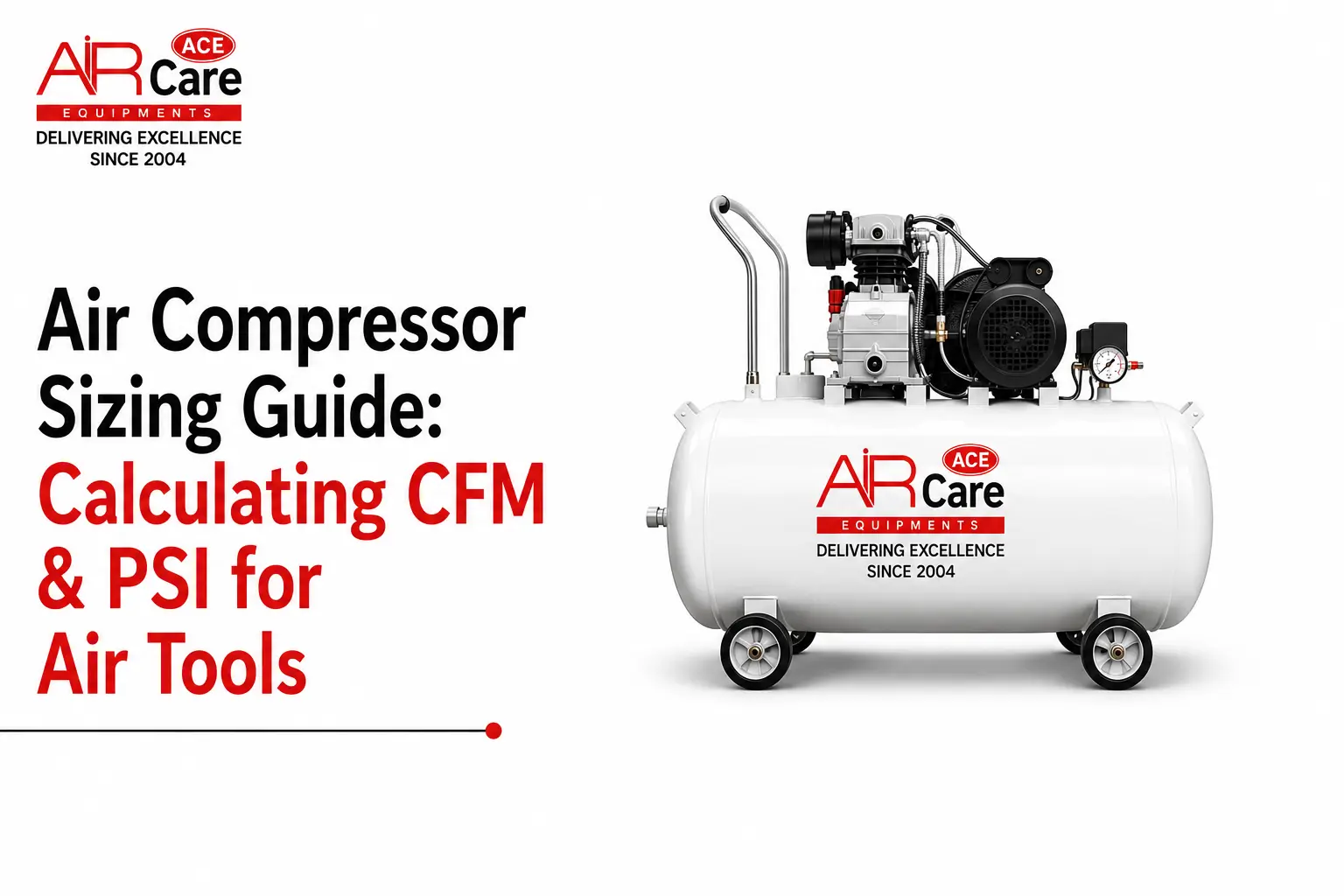
Top 5 Factors to Consider When Choosing a Compressor Manufacturer
Choosing the right compressor manufacturer is an important decision for any business that depends on compressed air. The right manufacturer can provide reliable equipment, technical support, spare parts, and long-term service. A poor choice, however, may lead to frequent breakdowns, higher electricity costs, maintenance problems, and production downtime.
An air compressor takes atmospheric air and compresses it to increase its pressure. The compressed air can then be stored in an air receiver tank or supplied directly to pneumatic tools, machinery, and industrial equipment.
Industries such as manufacturing, automotive, pharmaceuticals, food processing, packaging, construction, and engineering use different types of compressors depending on their pressure, airflow, and application requirements.
Air Care Equipment provides air compression solutions for different industrial and commercial requirements.
In this guide, we explain the top 5 factors to consider when choosing a compressor manufacturer.
What Should You Consider When Choosing a Compressor Manufacturer?
The five main factors are product quality, compressor variety, after-sales service, industry experience, and overall value. You should also compare energy efficiency, warranty coverage, spare parts availability, technical support, and the manufacturer's ability to understand your application.
Let's look at each factor in detail.
1. Innovation and Product Quality
Product quality should be the first factor you evaluate when selecting a compressor manufacturer. An air compressor may operate for many hours every day, so reliable construction and proper engineering are important for long-term performance.
Ask the manufacturer about the technology used in the compressor, materials, operating efficiency, safety features, maintenance requirements, and expected service life.
Depending on your application, you may need an oil-free air compressor, reciprocating compressor, screw air compressor, or high-pressure air compressor. Each type is designed for different operating conditions.
You should also check:
-
Compressor capacity and airflow
-
Working pressure
-
Power consumption
-
Cooling system
-
Control system
-
Noise and vibration levels
-
Maintenance requirements
-
Product warranty
-
Quality testing procedures
An energy-efficient compressor can also help reduce electricity consumption during long-term operation. Therefore, don't judge a compressor only by its purchase price. Consider its performance and operating cost as well.
Also Read: Air Compressor Maintenance Guide
2. Variety of Compressor Models
Every industry has different compressed air requirements. A small workshop may need a compact reciprocating compressor, while a manufacturing plant may require a high-capacity screw compressor for continuous operation.
A reliable compressor manufacturer should offer a range of products to meet different applications.
Depending on your requirements, you may consider:
-
Reciprocating air compressors
-
Screw air compressors
-
Oil-free air compressors
-
High-pressure air compressors
-
Industrial air compressors
-
Customized compressed air solutions
Before purchasing, explain your application clearly to the manufacturer. Provide information such as required CFM, working pressure, operating hours, number of machines, and available installation space.
A knowledgeable manufacturer can then recommend a suitable compressor instead of simply offering the biggest or cheapest model.
3. Customer Support and Maintenance Services
Buying an air compressor is only the beginning. Regular maintenance and technical support are important for keeping the equipment operating efficiently.
Before choosing a compressor manufacturer, ask about installation, commissioning, preventive maintenance, troubleshooting, warranty support, and spare parts availability.
Good after-sales service can help reduce unexpected downtime. It can also help identify small problems before they develop into expensive equipment failures.
Important service factors include:
-
Installation support
-
Technical consultation
-
Preventive maintenance
-
Repair services
-
Spare parts availability
-
Warranty support
-
Troubleshooting assistance
-
Service response time
For industrial users, these services can be especially important because unexpected compressor failure may interrupt production.
A manufacturer that provides both quality equipment and dependable technical support can offer better long-term value.
Also Read: Top 10 Air Compressor Manufacturers in India (2026 Buyer's Guide)
4. Experience and Reputation
Industry experience is another important factor when choosing a compressor manufacturer. An experienced manufacturer is more likely to understand different industrial applications and the challenges associated with compressed air systems.
Before making a purchase, research the company's background and reputation.
You can check:
-
Years of industry experience
-
Product range
-
Manufacturing capabilities
-
Customer reviews
-
Industries served
-
Technical expertise
-
Service coverage
-
Warranty policies
-
Quality and testing practices
You should also look for information about the manufacturer's previous work and customer experience.
However, don't choose a company only because it has been in the market for a long time. Compare its current technology, product quality, service capabilities, and ability to meet your specific requirements.
5. Price, Energy Efficiency and Overall Value
Price is important, but it should not be the only deciding factor.
A low-cost compressor may appear attractive initially, but higher electricity consumption, frequent maintenance, expensive spare parts, or shorter service life can increase the total cost over time.
Instead of comparing only the purchase price, consider the Total Cost of Ownership (TCO).
This may include:
-
Initial purchase price
-
Electricity consumption
-
Installation costs
-
Maintenance expenses
-
Spare parts
-
Service costs
-
Expected operating life
For example, an energy-efficient compressor with a higher initial price may provide better long-term value if it uses less electricity and requires less maintenance.
Ask the manufacturer for technical specifications and operating information so you can make an informed comparison.
Read More: Air Compressor Parts Explained: Names, Functions & Maintenance
How to Choose the Right Compressor Manufacturer
Before placing an order, use the following checklist:
|
Factor |
What to Check |
|
Product Quality |
Materials, engineering, testing and reliability |
|
Compressor Range |
Screw, reciprocating, oil-free and high-pressure options |
|
Airflow |
Required CFM or air delivery |
|
Pressure |
Required working pressure |
|
Energy Efficiency |
Power consumption and operating efficiency |
|
Service |
Installation, maintenance and technical support |
|
Spare Parts |
Availability and service support |
|
Warranty |
Warranty coverage and terms |
|
Experience |
Industry background and customer feedback |
|
Overall Value |
Purchase price plus lifetime operating cost |
This checklist can help you compare different manufacturers before making your final decision.
Why Is the Right Compressor Manufacturer Important?
The manufacturer you select can influence the performance, efficiency, reliability, and maintenance requirements of your compressed air system.
A suitable manufacturer should understand your application and recommend equipment according to your actual requirements. The right solution can help provide consistent compressed air while reducing unnecessary energy use and maintenance problems.
This is especially important for industries where compressors operate for long hours or support critical production equipment.
Why Choose Air Care Equipment?
Air Care Equipment offers compressed air equipment for different industrial and commercial applications. Its product range includes different types of air compressors and related compressed air equipment.
When selecting a supplier or manufacturer, customers should compare product specifications, application suitability, technical support, service requirements, and long-term operating value.
The goal should always be to select a compressor solution that matches the actual requirements of the application rather than choosing equipment based only on price or capacity.
Frequently Asked Questions
1. What are the main factors to consider when choosing a compressor manufacturer?
The main factors are product quality, compressor variety, after-sales service, industry experience, energy efficiency, warranty, spare parts availability, and overall operating cost.
2. How do I select the right air compressor?
Start by identifying your required airflow, working pressure, operating hours, application, air quality, and installation conditions. A qualified compressor manufacturer can then recommend a suitable model.
3. Is the cheapest compressor always the best option?
No. Purchase price is only one part of the total cost. Electricity consumption, maintenance, spare parts, service, and expected operating life should also be considered.
4. Why is after-sales service important for compressors?
Regular maintenance and technical support help maintain compressor performance, reduce unexpected breakdowns, and minimize production downtime.
5. Which compressor is best for industrial applications?
There is no single compressor that is best for every industry. Screw, reciprocating, oil-free, and high-pressure compressors are suitable for different applications. The right choice depends on airflow, pressure, duty cycle, and air-quality requirements.
6. What information should I provide to a compressor manufacturer?
Provide your required CFM, working pressure, operating hours, application, number of machines, air quality requirements, and installation conditions. This information helps the manufacturer recommend the appropriate compressor.
Final Thoughts
Choosing the right compressor manufacturer requires more than comparing prices. Product quality, compressor selection, technical expertise, after-sales service, energy efficiency, warranty, and long-term operating costs should all be considered.
Take time to compare manufacturers and ask the right technical questions before purchasing. A manufacturer that understands your application and provides reliable equipment and support can help improve compressed air system performance, reduce downtime, and deliver better long-term value.
For businesses looking for a suitable compressed air solution, Air Care Equipment can be considered among the manufacturers to evaluate based on product requirements, application, and service needs.
Recent Posts