9 Powerful Advantages of Rotary Screw Compressors for Industrial Manufacturing in 2026
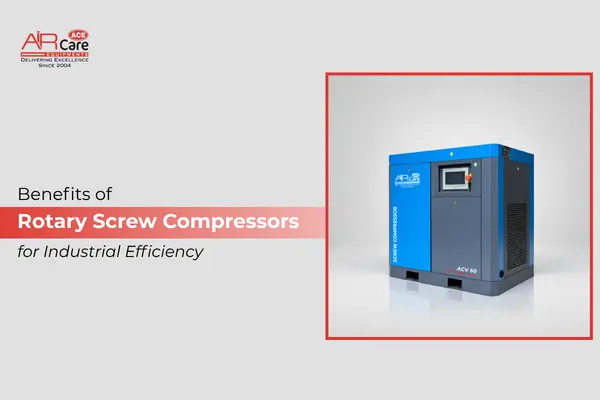
If you walk into any high-output manufacturing unit today, the rhythmic, heavy thumping of old-school piston compressors is becoming a thing of the past. In its place is a consistent, low-frequency hum, the sound of a Rotary Screw Compressor at work. For business owners and plant managers, choosing the right air system isn't just about "blowing air"; it’s about bottom-line efficiency, uptime, and long-term survival in a competitive market. At Air Care Equipments, we’ve seen firsthand how the shift toward rotary technology has redefined productivity for our clients.
Choosing an Industrial Air Compressor is one of the most significant capital investments a facility will make. You need a machine that doesn’t just meet your current CFM (Cubic Feet per Minute) requirements but thrives under the pressure of expanding production lines. Whether you are running a textile mill, an automotive assembly plant, or a food processing unit, the rotary screw design offers a level of reliability that older technologies simply cannot match.
9 Core Advantages of Integrating a Rotary Air System
1. Resilience in the Face of Extreme Weather
One of the biggest challenges for manufacturing units, especially when dealing with Air Compressor Manufacturers In Delhi NCR, is the sheer volatility of the climate. We deal with blistering summer highs that can push machinery to its breaking point.
A Rotary Screw Compressor is engineered with sophisticated internal cooling systems. Unlike reciprocating models, which struggle with heat dissipation and often require frequent "cool-down" periods, rotary units utilise high-grade oil or coolant that circulates through a dedicated aftercooler. This ensures that even when the factory's ambient temperature reaches 45°C, the internal components remain within safe operating limits. This thermal stability prevents the dreaded "thermal shutdown" that can halt an entire production line during a peak shift.
2. Quiet Operation: Better for Your Team
Industrial environments are naturally loud, but the "machine gun" noise of a piston compressor adds a level of acoustic stress that can lead to worker fatigue and safety issues. Rotary screw technology operates on a completely different principle.
Instead of pistons slamming back and forth, two helical rotors mesh together to compress air smoothly. This creates a much lower decibel output. For many of our customers at Air Care Equipments, this means they can install the compressor closer to the point of use or even on the factory floor itself, rather than sequestering it in a dedicated, sound-proofed "compressor room." This saves on expensive piping and reduces pressure drops across long distances.
Raed More:10 Essentials for Choosing the Right Oil-Free Compressor
3. The Gold Standard of Energy Efficiency
In the world of Industrial Air Compressor usage, energy is the largest component of Total Cost of Ownership (TCO), often accounting for over 70% of the lifetime cost. Rotary screw machines are designed for high efficiency.
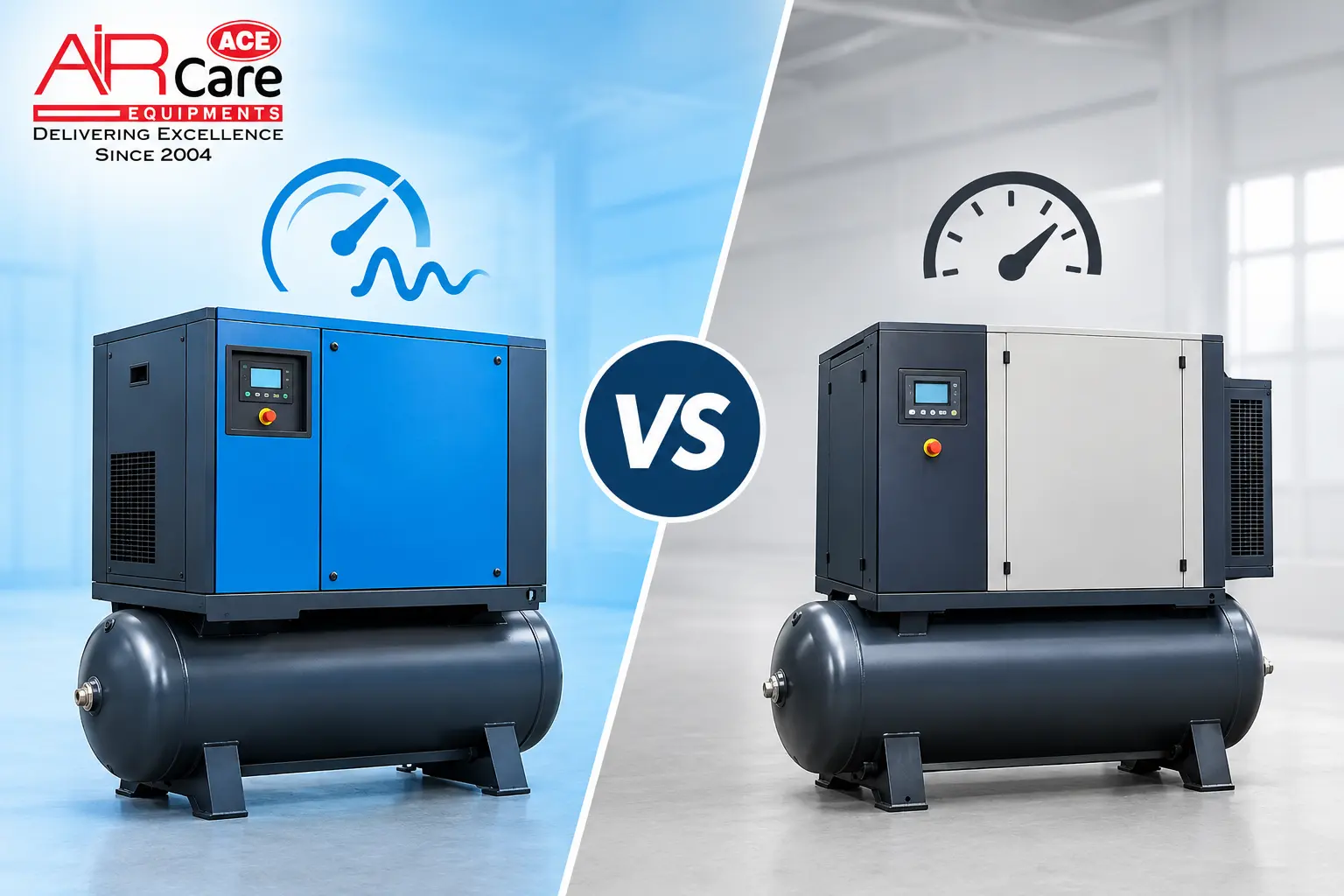
Because they don’t have the friction-heavy valves and rings found in reciprocating units, they lose far less energy to heat and mechanical resistance. Furthermore, modern rotary units often come equipped with Variable Frequency Drives (VFD). A VFD allows the compressor to speed up or slow down based on your actual air demand. If your tools only need 50% air capacity at 3 PM, the machine draws 50% power. It’s a precision-tuned approach that stops you from burning money on electricity you aren't using.
4. Unrivalled Durability and Lifespan
When you invest in a Rotary Screw Compressor, you are buying a machine built for the long haul. The design is elegantly simple: two rotors that never actually touch, separated by a thin film of lubricant.
With fewer moving parts subject to wear and tear, these machines easily outlast their piston-driven counterparts. While a reciprocating pump might need a major overhaul every few years, a well-maintained rotary screw can run for 10 to 15 years, or more, with basic care. This longevity is why Air Care Equipments remains a trusted name among Air Compressor Manufacturers In Delhi NCR; we prioritise builds that don't just work today but continue to perform a decade from now.
5. Simplified Maintenance for Maximum Uptime
There is a common myth that rotary compressors are "too complex" to fix. In reality, the maintenance is actually more streamlined. Most modern units feature "spin-on" filters, much like an automobile, and easy-access panels for oil changes.
Because the system is monitored by an onboard microprocessor, the machine tells you exactly when it needs a filter change or an oil top-up. You aren't guessing based on the calendar; you are acting based on real-time data. This proactive approach prevents small issues from turning into catastrophic failures, ensuring your facility stays operational around the clock.
Also Read: Why Choose a Reciprocating Air Compressor for Your Business
6. Engineered for 100% Duty Cycle
This is perhaps the single most important advantage for a growing business. A piston compressor usually has a duty cycle of 50-60%, meaning it needs to rest for 20-30 minutes for every hour it runs to avoid overheating.
A Rotary Screw Compressor is designed for a 100% duty cycle. It is built to run 24 hours a day, 7 days a week, 365 days a year. If your manufacturing process requires a steady, uninterrupted stream of compressed air for three continuous shifts, there is no viable alternative. It is the workhorse of the modern industrial world, never needing a break until the scheduled service interval.
7. Handling High-Demand Fluctuations
In many industries, air demand isn't a flat line; it’s a series of peaks and valleys. One moment you're running a single pneumatic tool, and the next, an entire automated packaging line kicks in.
Rotary screw units are excellent at managing these surges. Because they produce a continuous flow of air (rather than the "pulses" of a piston), the pressure remains incredibly stable. This stability is crucial for precision work, such as CNC machining or sensitive electronic assembly, where even a 5 PSI drop can result in a defective product.
Also Read: The Ultimate Guide to Piston Air Compressors: Types, Benefits, and Expert Tips
8. Cleaner, Higher-Quality Air Output
Contamination is the enemy of pneumatic tools. Oil carry-over in older compressors can ruin paint finishes, clog delicate valves, and contaminate food-grade environments.
Rotary screw systems utilise highly efficient oil separation stages. By the time the air leaves the unit, it has undergone multiple stages of filtration and separation, resulting in extremely low oil carry-over (often less than 3 ppm). When paired with the right dryers and inline filters from Air Care Equipments, you get "instrument-quality" air that protects your downstream equipment and improves the quality of your final product.
9. Compact Footprint and Versatility
Floor space is expensive. Most manufacturers are looking to maximise every square inch of their facility for production, not utility storage.
Modern Industrial Air Compressor designs are remarkably compact. A 50HP rotary screw unit often takes up less space than a much less powerful piston setup. Their "all-in-one" cabinet design (often including the dryer and tank in a "Total System" configuration) means you can tuck them into corners or along walls where other machines simply wouldn't fit. This versatility allows for better factory layouts and more efficient workflow.
Understanding the Local Advantage
Securing the right equipment is only half the process; installation and long-term support are equally important. Many facilities make the mistake of buying off-the-shelf equipment without properly calculating the pressure drop or flow rate. At Air Care Equipments, we take a different approach. Being recognised among the top Air Compressor Manufacturers In Delhi NCR, we conduct comprehensive site audits before making a recommendation. We measure your exact CFM usage, analyse your pipework, and supply an Industrial Air Compressor tailored specifically to your shift patterns. Local support means our technicians are readily available for immediate troubleshooting, ensuring your plant never suffers from extended downtime.
Read More: Top 2026 Industrial Air Compressor Manufacturer: Efficiency, IoT, and Smart Power
Conclusion: Making the Right Move for Your Facility
Investing in a Rotary Screw Compressor is a strategic decision that pays dividends in the form of lower energy bills, reduced downtime, and a quieter, more productive workspace. While the upfront cost might seem higher, the "cost per cubic foot of air" over the machine's life is significantly lower than any other technology.
At Air Care Equipments, we pride ourselves on being more than just Air Compressor Manufacturers In Delhi NCR. We are solution providers. We help you audit your current air usage, identify leaks, and select the exact machine that matches your growth trajectory. If you are ready to stop worrying about your air supply and start focusing on your production output, it is time to make the switch.
Experience the difference that precision engineering and local expertise can make. Your factory deserves a heart that never skips a beat, choose a rotary screw system today.
Frequently Asked Questions (FAQs)
Q1: What is the main advantage of a rotary screw compressor?
The primary benefit is a 100% duty cycle, allowing the machine to provide a continuous, pulse-free air supply 24/7 without needing cooling breaks.
Q2: What are the disadvantages of rotary compressors?
They involve a higher upfront capital investment and require a strict, professional maintenance schedule to maintain their high-efficiency ratings over time.
Q3: Which of the following is an advantage of a rotary screw compressor?
Key advantages include significantly quieter operation, superior energy efficiency enabled by VFD technology, and a much smaller physical footprint than piston units.
Q4: What is a rotary air compressor?
It is a positive displacement machine that uses two interlocking helical rotors to continuously trap and compress air with minimal internal friction.
Q5: What are the applications of rotary air compressors?
They are the standard choice for high-demand industries like automotive assembly, food and beverage packaging, pharmaceutical labs, and large-scale textile manufacturing.
Recent Posts