The Ultimate Guide to Piston Air Compressors: Types, Benefits, and Expert Tips
In the modern industrial landscape, the air compressor is often referred to as the "fourth utility." Just as essential as electricity, water, and gas, compressed air powers the tools and machinery that drive our economy. However, not all compressors are built the same. If you are searching for a Piston Air Compressor, you are looking at a technology that has stood the test of time due to its simplicity, durability, and high-pressure capabilities.
At Air Care Equipments, we have established ourselves as leading Air Compressor Manufacturers in Delhi NCR, and we know that the difference between a productive day and a costly shutdown often comes down to the machine sitting in your utility room. Choosing a Reciprocating Piston Compressor requires more than just looking at the price tag; it requires a deep dive into your operational flow, your pressure needs, and your long-term maintenance strategy.
What is a Piston Air Compressor?
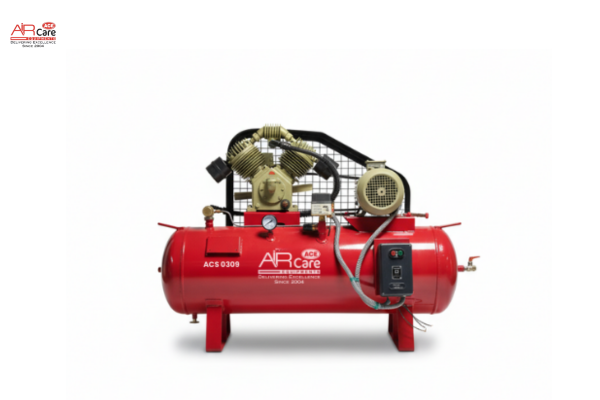
Before we dive into the types, it is important to understand the core mechanism. A Piston Air Compressor (also known as a reciprocating compressor) works much like an internal combustion engine. A crankshaft drives a piston inside a cylinder. As the piston moves down, it creates a vacuum, drawing air in through an intake valve. As the piston moves back up, it compresses the air and forces it through a discharge valve into a storage tank.
Because of this "start-stop" mechanical action, these machines are exceptionally good at generating high pressures. While screw compressors are great for continuous, low-pressure flow, the Reciprocating Piston Compressor remains the king of high-pressure industrial applications and intermittent workshop tasks.
The 6 Essential Types of Piston Air Compressors
1. Single-Stage Piston Air Compressor
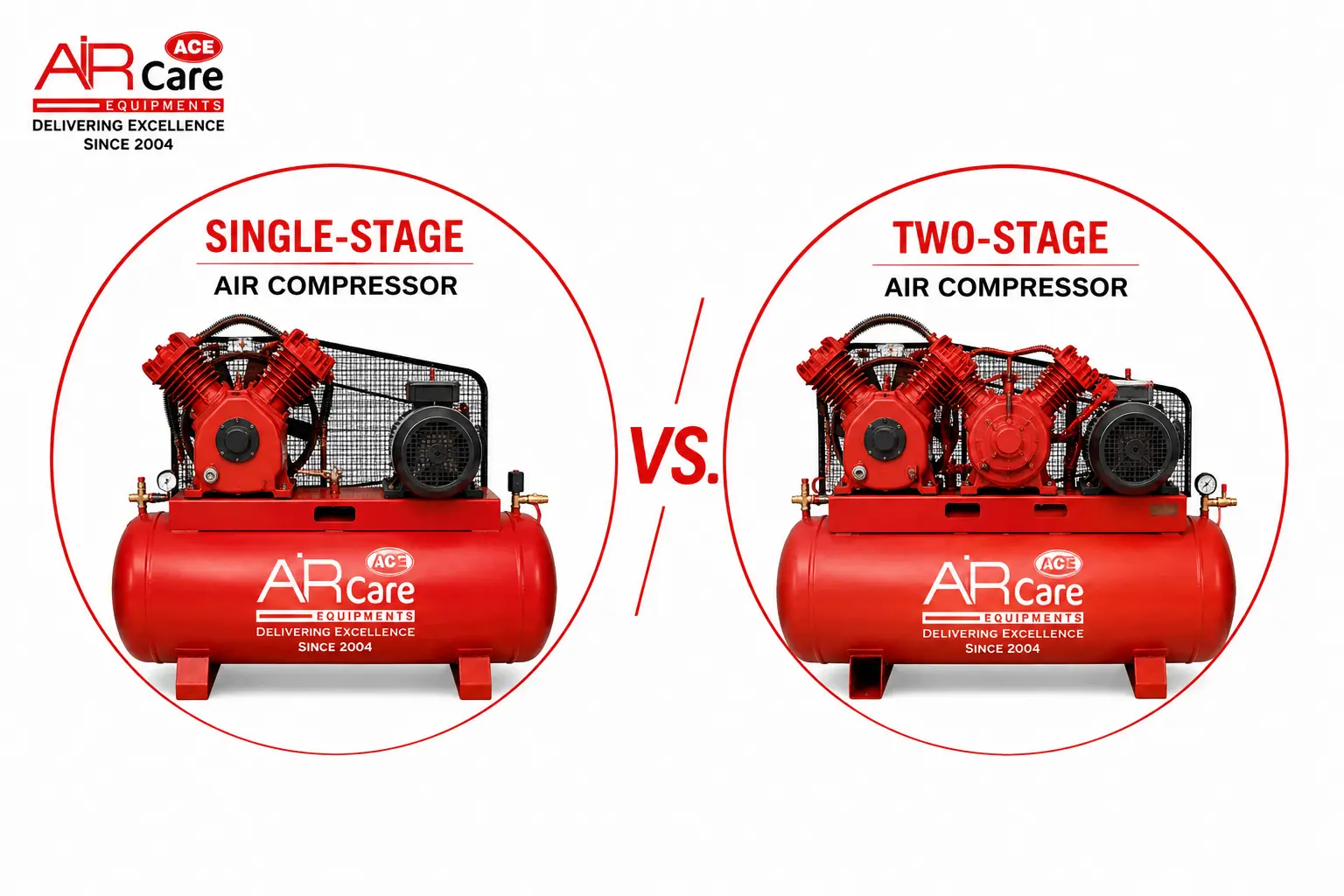
The single-stage compressor is the most common entry-level industrial machine. In this setup, the air is sucked into the cylinder and compressed to its final pressure in one single stroke.
- Best For: Small-scale operations, automotive repair shops, and woodworking.
- Pressure Range: Usually caps out at around 120 PSI.
- Pros: Lower initial cost, simpler maintenance, and smaller footprint.
2. Two-Stage Reciprocating Piston Compressor
When your tools require more "punch," the two-stage Reciprocating Piston Compressor is the logical upgrade. Instead of compressing air once, it does it in two steps. The first piston compresses the air to an intermediate pressure, then sends it through a cooling tube (intercooler) to a second, smaller piston that brings it to the final high pressure.
- Best For: Heavy-duty manufacturing, metal fabrication, and large-scale industrial plants.
- Pressure Range: Up to 175 PSI or higher.
- Pros: Better heat management and higher efficiency for heavy workloads.
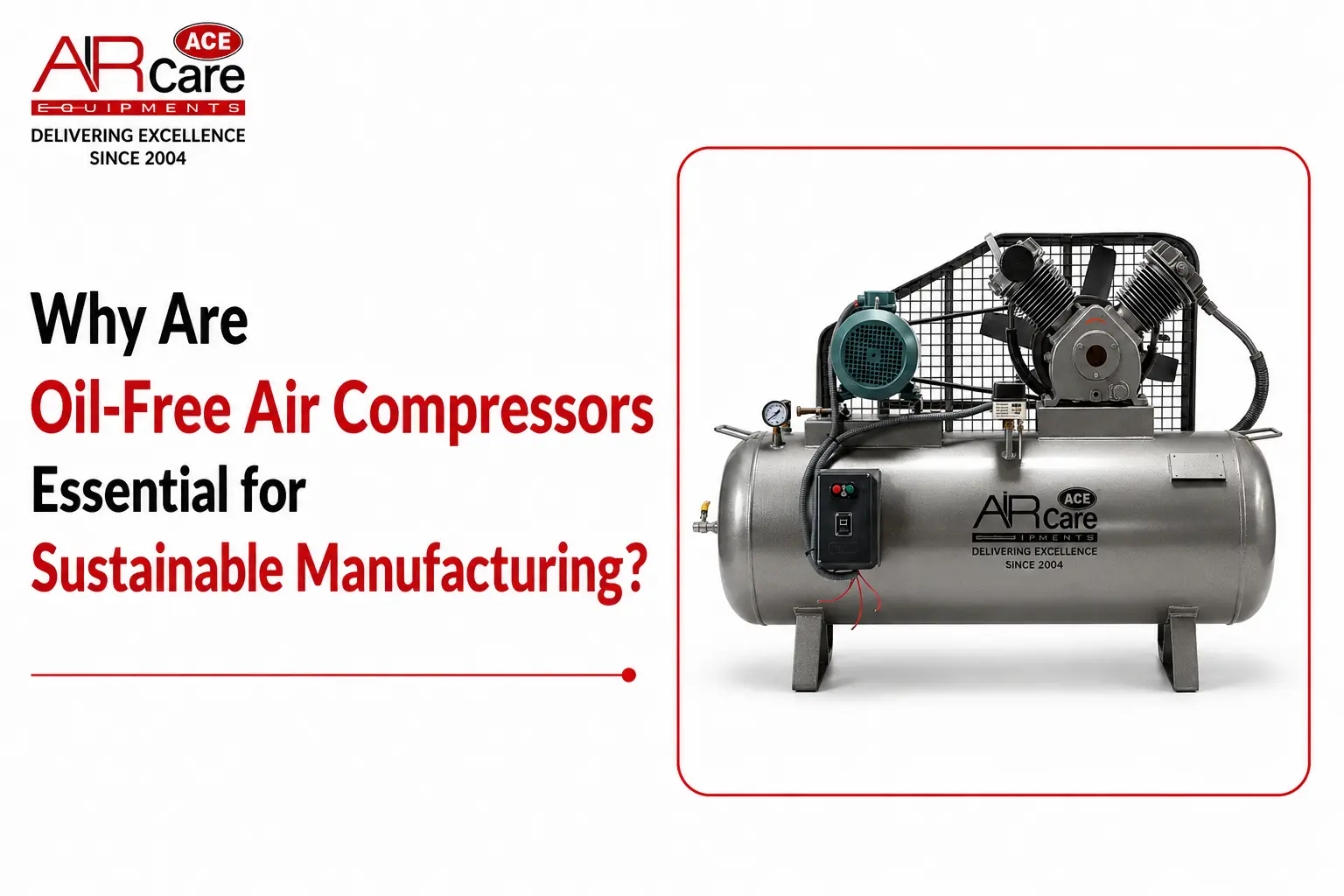
3. Oil-Free Piston Compressors
In traditional compressors, oil is used to lubricate the cylinder walls and dissipate heat. However, in an oil-free model, the piston rings are made of materials like Teflon or carbon that provide their own lubrication.
- Best For: Food and beverage packaging, dental clinics, and laboratories.
- Pros: Eliminates the risk of oil contamination in the end product. As a premier Air Compressor Supplier, we often recommend these for "clean room" environments.
4. High-Pressure Piston Compressors
Some industrial processes, such as PET bottle blowing or breathing air refills for divers and firefighters, require pressures that would shatter a standard tank. High-pressure units are specialised machines, often featuring three or four stages of compression.
As specialised Air Compressor Manufacturers in Delhi NCR, Air Care Equipments designs these units with reinforced components to handle the extreme thermal and mechanical stress associated with high-density air compression.
5. Duplex Piston Compressors
A Duplex system is essentially two compressors in one. It features two motors and two pumps mounted on a single large air receiver. The beauty of this system is the "lead-lag" control. If you only need a little air, only one pump runs. If demand spikes, the second one kicks in.
- Why it’s vital: It provides built-in redundancy. If one pump requires an Air Compressor Repairing Service, your business doesn't have to stop. One pump can keep the line moving while the other is serviced.
6. Vacuum Pumps (Piston-Type)
While we usually think of compressors as blowing air, the piston-style vacuum pump does the opposite. It removes air molecules from a sealed volume to create a vacuum. These are used extensively in vacuum packaging, glass handling, and medical laboratories.
Factors to Consider Before Buying
Choosing the right machine isn't just about the type; it's about the specifications.
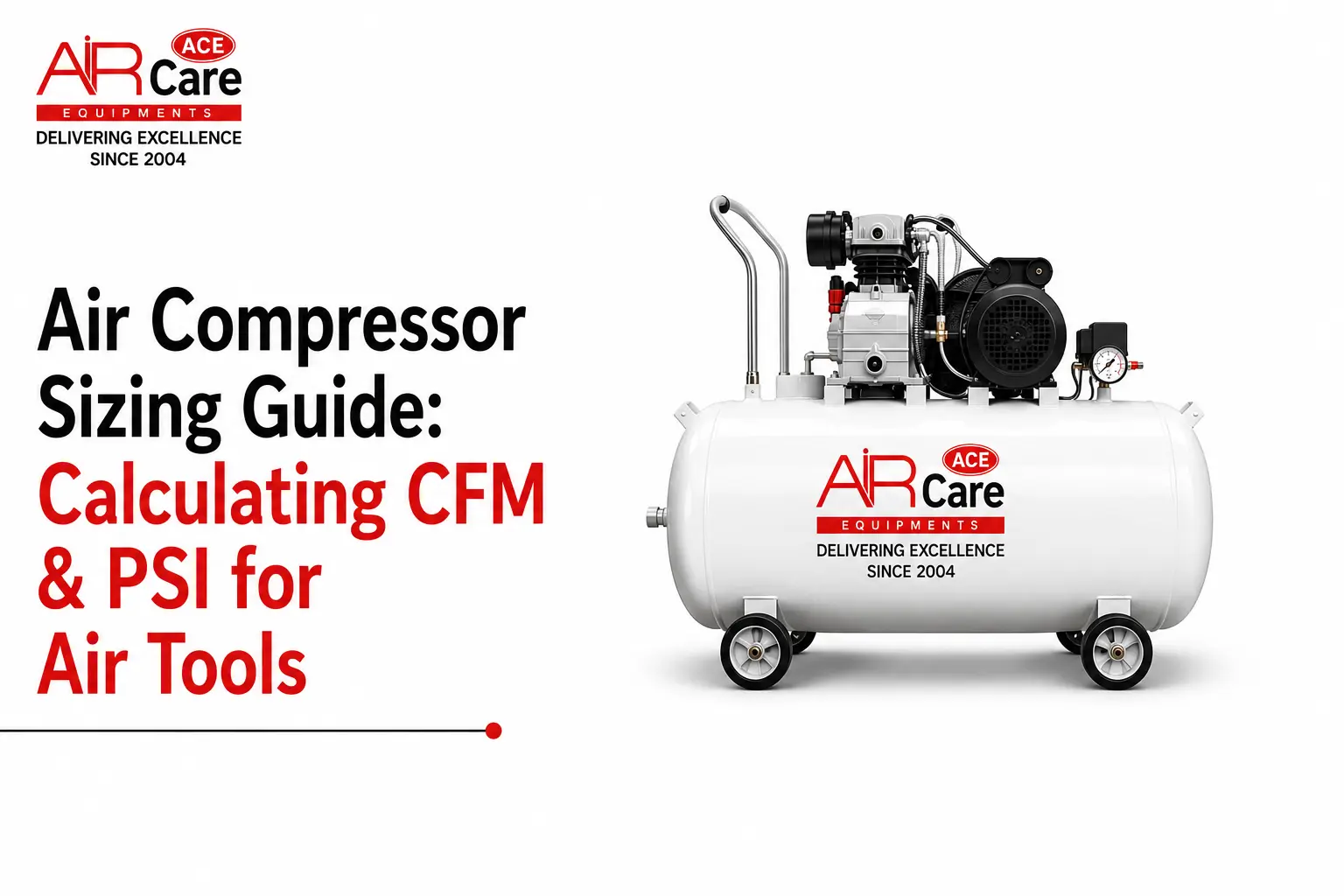
CFM vs. PSI
- PSI (Pounds per Square Inch): This is the "force" or pressure.
- CFM (Cubic Feet per Minute): This is the "volume" of air. A common mistake is buying a compressor with high PSI but low CFM. If your tool needs 10 CFM and your compressor only provides 5, the tool won't work, no matter how high the pressure is.
The Importance of the Duty Cycle
Most Piston Air Compressors are not designed to run 100% of the time. They need "rest" periods to cool down. A 50% duty cycle means that for every 10 minutes of running, it needs 10 minutes of rest. If you need air 24/7 without a break, you might need to look at a Duplex system or a different technology altogether.
Tank Size
The tank is your "battery" for air. A larger tank allows the motor to stay off longer, reducing wear and tear. If you have high-surge tools (like a sandblaster), a larger tank is non-negotiable.
Why Local Expertise Matters: Air Compressor Manufacturers in Delhi NCR
Operating in an environment like North India presents unique challenges. High ambient temperatures and dust can wreak havoc on air systems. This is why working with local Air Compressor Manufacturers in Delhi NCR, like Air Care Equipments, is a strategic advantage.
We build machines that are engineered for the local climate, using heavy-duty cast iron cylinders rather than cheaper aluminium alternatives. This ensures that your Piston Air Compressor can dissipate heat effectively even during the peak of summer.
Maintenance: Extending the Life of Your Investment
Even the best-built machine will fail without proper care. Regular maintenance is the difference between a 20-year lifespan and a 5-year failure.
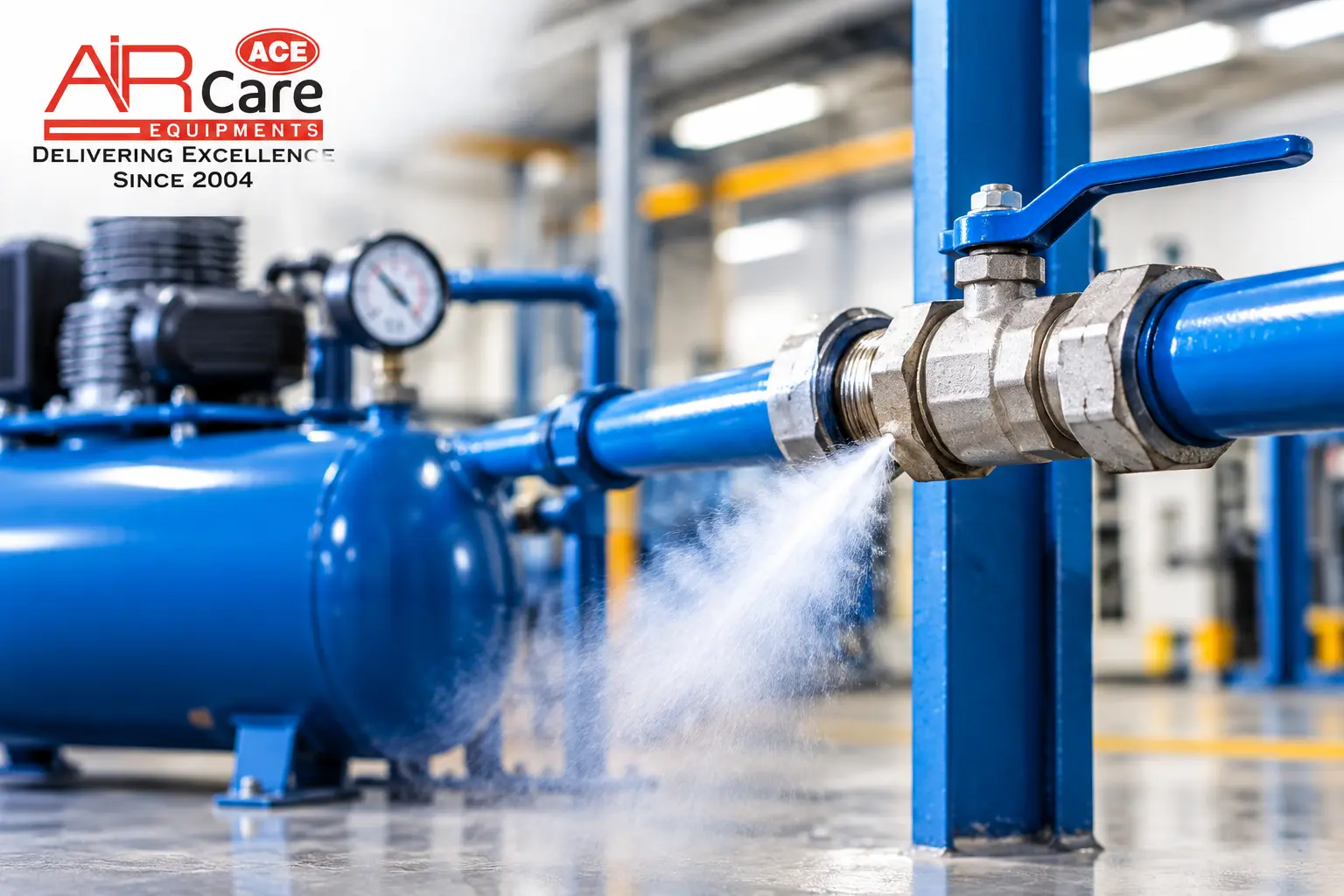
- Drain the Tank: Water condenses in the tank every day. If not drained, it causes internal rust.
- Check the Oil: For lubricated models, clean oil is the lifeblood of the machine.
- Filter Replacement: Dust is the enemy of the piston. Clean filters ensure the air entering the cylinder doesn't cause abrasions.
- Professional Audits: Occasionally, you need a professional Air Compressor Repairing Service to check valve plates and gaskets to ensure you aren't losing money through air leaks.
Conclusion
The journey to finding the perfect piston air compressor begins with a clear understanding of your own needs. From the simplicity of a single-stage unit to the high-output capabilities of a two-stage reciprocating piston compressor, the right choice will enhance your productivity and protect your bottom line.
As your trusted air compressor supplier and partner, Air Care Equipments is dedicated to providing robust, reliable, and energy-efficient solutions. Whether you are looking for a new installation from the top Air Compressor Manufacturers in Delhi NCR or you require a specialized air compressor repair service to get an old unit back in shape, we are here to help.
Don't let air pressure be the bottleneck in your business. Contact us today for a site audit or a custom quote, and let’s find the air solution that grows with you.
FAQs (Frequently Asked Questions)
Q1: How often should I change the oil in my Reciprocating Piston Compressor?
Generally, we recommend an oil change every 3 months or after 500 hours of use, whichever comes first. However, in dusty environments, you may need to do this more frequently.
Q2: Can I use a single-stage compressor for spray painting?
Yes, but check the CFM requirement of your spray gun. High-volume, low-pressure (HVLP) guns require a lot of air volume, so ensure your piston air compressor has a large enough tank to keep up.
Q3: Why is my compressor getting excessively hot?
This is usually due to a dirty air filter, low oil levels, or a restricted discharge line. If the heat continues, it’s time to call an air compressor repairing service before the piston seizes.
Q4: Is an oil-free compressor quieter than an oil-lubricated one?
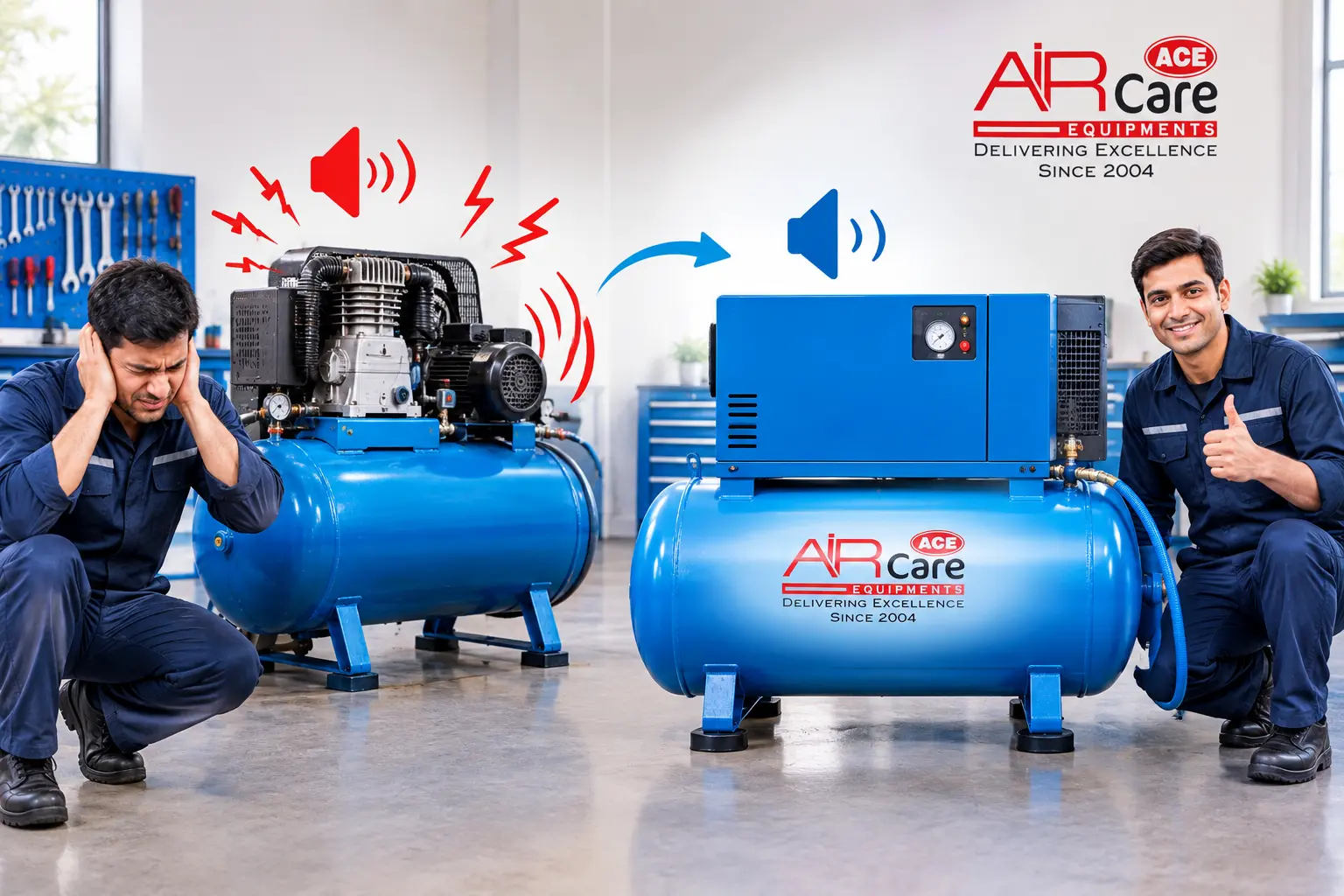
Oil-lubricated compressors are often quieter because the oil provides a damping effect and the components are built with heavier materials. Oil-free models tend to run at higher speeds and can be noisier.
Q5: Why should I choose Air Care Equipments over a generic air compressor supplier?
A generic supplier just moves boxes. As manufacturers, we provide customized engineering, genuine spare parts, and deep technical knowledge that ensures your compressor is perfectly sized for your specific task.
Recent Posts