How to Prepare Your Air Compressor for Summer: Maintenance Guide
Summer in India isn’t just a season; it’s a gruelling endurance test for both people and machinery. As the mercury climbs toward 45°C, your factory floor becomes a furnace, and at the heart of that heat sits your Air Compressor. This machine is the lungs of your operation, providing the vital power needed for everything from assembly lines to packaging. However, when the ambient temperature spikes, even the most robust system can begin to struggle. Without the right preparation, the heat can lead to unexpected shutdowns, fried components, and a massive spike in your energy bills.
Preparing your Air Compressor for the summer months isn't just about avoiding a breakdown; it’s about maintaining the efficiency that keeps your business profitable. When a compressor runs hot, it loses its ability to squeeze air effectively, meaning you pay more for less output. By taking a proactive approach to maintenance now, you ensure that your production remains steady while your competitors are left dealing with emergency repairs.
Quick Answer: How Do You Prepare an Air Compressor for Summer?
To prepare an air compressor for summer, clean the intake filters and cooling surfaces, check lubricant levels and condition, inspect compressor-room ventilation, maintain the air dryer and condensate drains, and monitor operating temperatures. Always follow the compressor manufacturer's recommended maintenance schedule and operating limits, especially during periods of high ambient temperature.
Understanding the Impact of Heat on Air Compressors
To protect your equipment, you first need to understand what heat actually does to a mechanical system. A compressor naturally generates heat as it compresses air, but when the surrounding air is already scorching, the system loses its ability to dissipate that extra energy.
The Problem of Overheating
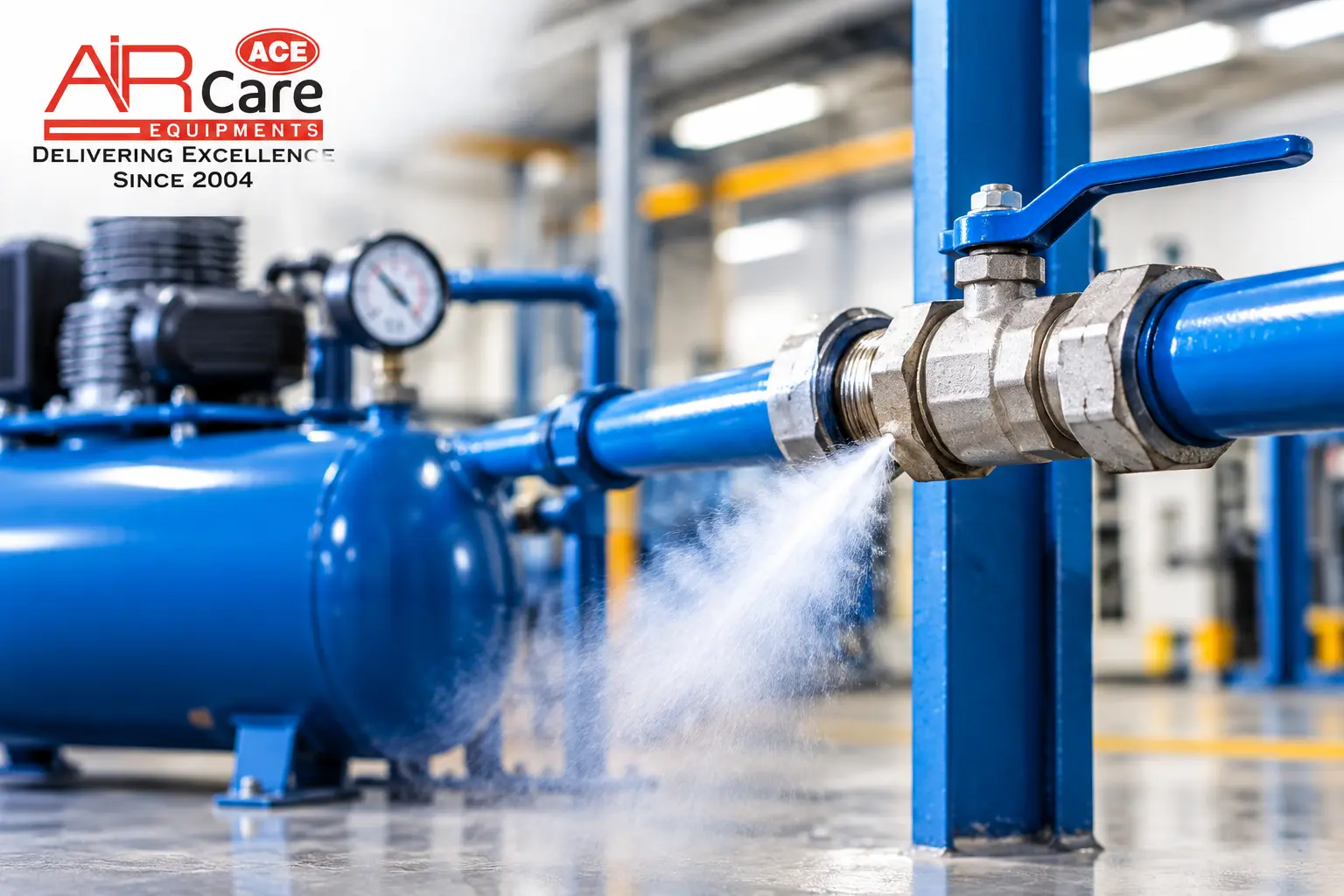
The most immediate threat is a thermal shutdown. Most modern systems have safety sensors that trip once the internal temperature hits a certain threshold. While this prevents the machine from catching fire or melting, it also brings your entire production line to a grinding halt. If your Air Compressor is frequently cutting out on hot afternoons, it’s a clear signal that the cooling system is overwhelmed.
Also Read: Top 2026 Industrial Air Compressor Manufacturer: Efficiency, IoT, and Smart Power
Lubricant Breakdown and Component Stress
Oil is the lifeblood of your machine. In the summer, heat causes oil to thin out, losing its viscosity. When the oil becomes too thin, it can’t provide the necessary protective film between moving metal parts. This leads to increased friction, faster wear and tear, and eventually, a costly mechanical failure. Furthermore, the heat puts immense stress on seals, gaskets, and hoses, making them brittle and prone to leaks.
Condensation and Moisture Issues
Hot air is a sponge for moisture. In the humid summer months, the intake air carries a significant amount of water vapour. As this air is compressed and then cooled, that vapour turns into liquid water. If your system isn't equipped with a high-functioning Air Dryer, this moisture travels into your downstream pipes, causing rust, damaging pneumatic tools, and ruining the quality of your final products.
Your Summertime Maintenance Compressor Checklist
Staying ahead of the heat requires a systematic approach. You don’t need to be a specialised engineer to perform the basic checks, but you do need to be consistent. Here is a practical checklist to get your facility ready.
Also Read: The Silent Heart: A Guide to Choosing the Right Air Compressor Tank Size
Essential Cleaning and Inspection Tasks
Dust and grime are the silent killers of industrial equipment. During the dry summer months, dust levels in the air increase, clogging up your intake filters and coating the cooling fins of your aftercooler.
- Filter Check: Inspect your air intake filters weekly. If they look grey or clogged, replace them immediately. A dirty filter forces the motor to work harder, which generates even more heat.
- Clean the Coolers: Use a soft brush or compressed air to blow out the dirt from the cooling fins. If the heat exchanger is caked in grease or dust, it can’t release heat into the atmosphere.
- Cabinet Ventilation: If your compressor is housed inside a cabinet, ensure the ventilation fans are working and that the vents aren't blocked by spare parts or storage boxes.
Optimizing Lubrication and Fluid Levels
Check the compressor's oil level and condition according to the manufacturer's recommended schedule. High ambient temperatures can increase thermal stress on lubricated components, so unusual oil consumption, discoloration, overheating, or frequent top-ups should be investigated.
Always use the lubricant grade and specification recommended by the compressor manufacturer. Do not change oil viscosity simply because summer has arrived. If the compressor operates in unusually high ambient temperatures, consult the manufacturer or a qualified service technician before changing the lubricant.
Regular oil and filter maintenance helps the compressor operate reliably and reduces the risk of excessive wear caused by poor lubrication.
Monitoring System Performance
Don't wait for a warning light to tell you something is wrong. Keep a daily log of the operating temperature. If you notice a steady climb in the average temperature over a week, it’s time to call for a professional Air Compressor Service. Catching a small rise in temperature now can prevent a total system seizure later in the month.
Why Is Air Dryer Maintenance Important in Summer?
Hot and humid conditions can increase the amount of moisture entering a compressed-air system. When compressed air cools after compression, water vapour can condense and enter downstream equipment if moisture is not properly removed.
This makes air dryer maintenance particularly important during summer.
-
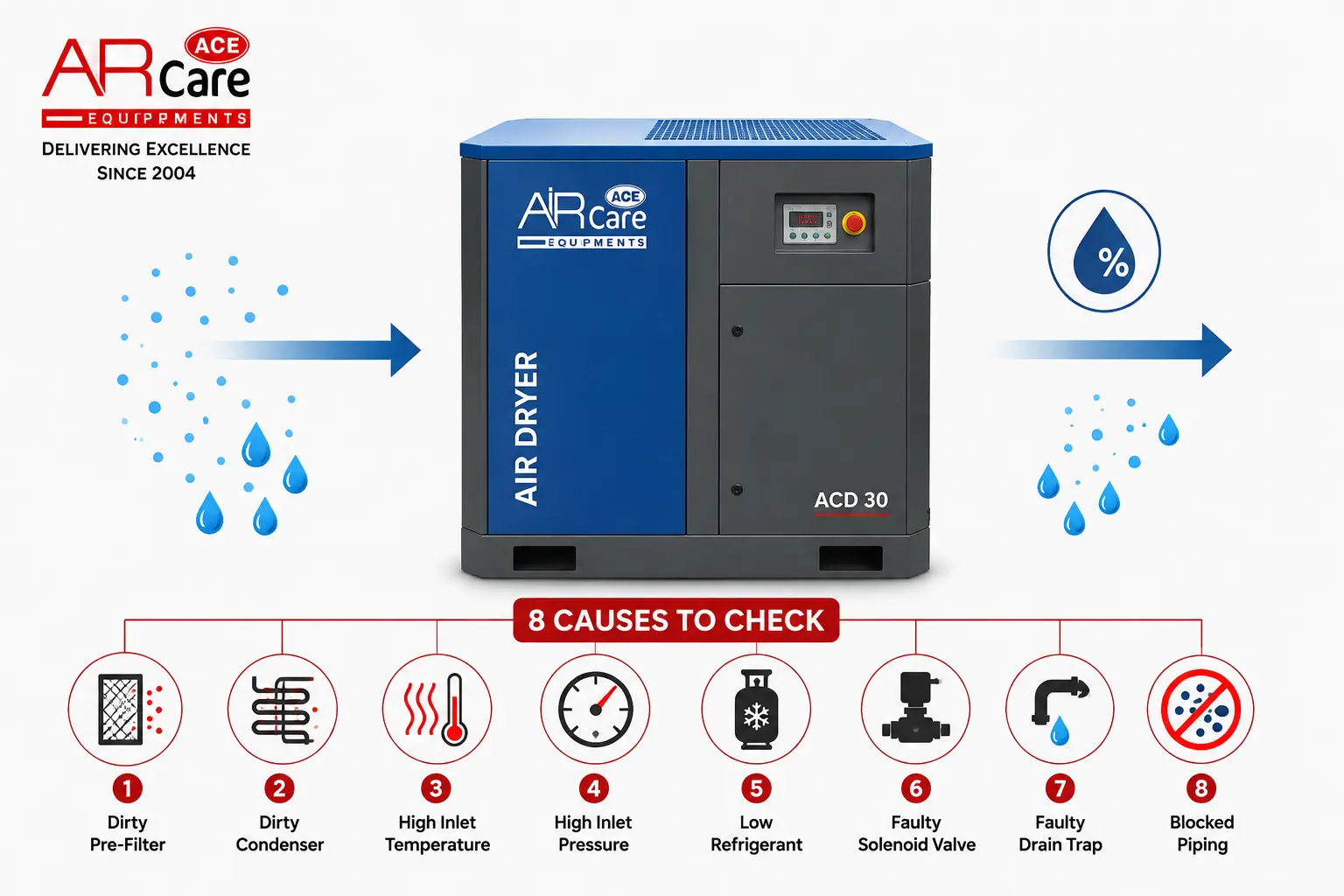
Check the Drains: Make sure automatic drains on receivers, separators and dryers are operating correctly. A blocked or faulty drain can allow condensate to accumulate.
-
Clean the Condenser: For refrigerated dryers, keep the condenser and surrounding airflow paths clean so the unit can reject heat effectively.
-
Check Dryer Performance: Monitor the dryer according to the manufacturer's operating specifications and check for unexpected moisture downstream.
-
Check Operating Conditions: If water appears in the compressed-air system, check inlet temperature, airflow, ambient conditions, pressure and dryer performance before assuming that the dryer is undersized.
-
Maintain the Correct Dew Point: Use the dew-point specification required by your application rather than changing settings simply because the season has changed.
Also Read: Top 10 Air Compressor Manufacturers in India: 2026 Buyer’s Guide
Why Choose Air Care Equipment?
When the heat is on, the quality of your equipment and the support behind it make all the difference. Air Care Equipment has built a reputation as one of the most reliable Air Compressor Manufacturers in India, specifically designing systems that can withstand our local climate.
Unlike generic brands that are built for cooler European or American climates, the products at Air Care Equipment are engineered for durability in high-ambient-temperature environments. They understand that for an Indian business, downtime isn't just an inconvenience, it’s a loss of hard-earned revenue.
Based in Gurgaon and serving the wider Delhi NCR region, they offer localised expertise. Their range of products, from energy-efficient screw compressors to heavy-duty industrial dryers, ensures that your facility has a matched system where every component works in harmony. When you partner with a brand that understands the local challenges of heat and humidity, you get solutions that actually work in the real world.
Preparing Your Facility for Summer
Beyond the machine itself, look at the room where it lives. A compressor room that feels like a sauna is a recipe for disaster.
- Ventilation: Make sure the compressor room has adequate ventilation and that hot exhaust air is not recirculated back into the compressor intake.
- Ambient Temperature: Keep the compressor room within the ambient-temperature and ventilation limits specified by the compressor manufacturer. If temperatures regularly approach or exceed the equipment's rated operating range, have the cooling and ventilation system inspected.
- Airflow: Keep cooling-air pathways, vents and exhaust ducts clear of dust, storage materials and other obstructions.
- Shade: If the compressor or its cooling intake is exposed to direct sunlight, reduce unnecessary solar heat gain where practical.
Conclusion
Summer can place additional demands on industrial air compressors because of high ambient temperatures, dust and humidity. Simple preventive measures such as cleaning filters and coolers, maintaining proper ventilation, checking lubrication, monitoring operating temperatures and maintaining the air dryer can help reduce avoidable operating problems.
The most important step is to follow the compressor manufacturer's maintenance schedule and operating limits. If your compressor shows abnormal temperature, frequent shutdowns, unusual oil consumption or reduced performance, arrange a professional inspection rather than waiting for a major failure.
Air Care Equipment provides industrial air compressor, air dryer and maintenance support for businesses looking to maintain reliable compressed-air systems. Regular servicing can help identify potential problems early and keep production equipment operating efficiently.
FAQs
Q1: How does high humidity specifically affect my compressed air?
In the summer, the air is thick with water vapour. When the Air Compressor pulls this air in and squeezes it, the temperature rises significantly. When that air eventually cools down in the pipes, the water vapour condenses into liquid. This water can wash away the grease inside your tools, cause valves to stick, and lead to "fish-eyes" in paint jobs.
Q2: Is it okay to leave the compressor room doors open for ventilation?
While it might seem like a good idea to open the doors, it can sometimes backfire. If the compressor is designed to pull air through a specific path for cooling, opening doors can disrupt that airflow. A better solution is to install an exhaust fan high up on the wall to pull the hot air out while allowing fresh air to enter from a lower vent.
Q3: Why is my compressor's oil turning into a thick sludge?
This is often caused by "varnishing," which happens when oil is exposed to extreme heat for too long. The chemical bonds in the oil break down, leaving a sticky residue. If you see this, you need an immediate Air Compressor Service to flush the system and replace the oil before it clogs the internal galleries.
Q4: How do I know if my Air Dryer is struggling during summer?
Water appearing in the compressed-air system during summer does not automatically mean that the dryer is undersized. First check the dryer inlet temperature, airflow, pressure, ambient conditions, condensate drains and overall dryer operation. If the system is operating beyond the dryer's rated capacity or conditions, a correctly sized dryer or additional moisture-control equipment may be required.
Q5: How often should an air compressor be serviced in summer?
The service interval depends on the compressor model, operating hours, environment and manufacturer's recommendations. Plants operating in dusty or high-temperature conditions may need more frequent inspection of filters, coolers, ventilation, lubrication and condensate-management components. Follow the manufacturer's service schedule and arrange an inspection sooner if the compressor shows abnormal temperature, noise, oil consumption or performance changes.
Recent Posts