The Silent Heart: A Guide to Choosing the Right Air Compressor Tank Size
When you walk into a humming manufacturing unit or a busy automobile workshop, the loudest sound is often the rhythmic cycle of the compressor. But look closely, and the real hero of that setup isn't just the motor, it’s the large, sturdy cylinder sitting beside it. Choosing an air compressor tank is one of those technical decisions that seems straightforward until you’re staring at a pressure gauge that won't stay steady or a motor that’s burning out because it’s cycling every thirty seconds.
At Air Care Equipments, we’ve seen how a mismatched air compressor tank can cripple a high-performance system. It’s not just about "storing air"; it’s about creating a buffer that allows your machinery to breathe. If your tank is too small, your compressor works double-time to keep up. If it's too large, you’re wasting floor space and initial capital. Finding that "Goldilocks" zone, the air compressor tank size that perfectly balances your CFM output with your tool demand, is the secret to a long-lasting, energy-efficient system.
Why the Receiver Tank is the "Silent Heart" of Your System
Most people focus entirely on the horsepower of the motor, but the compressor tank (also known as a receiver tank) performs three critical roles that a motor alone cannot handle.
1. Dampening Pressure Pulsations
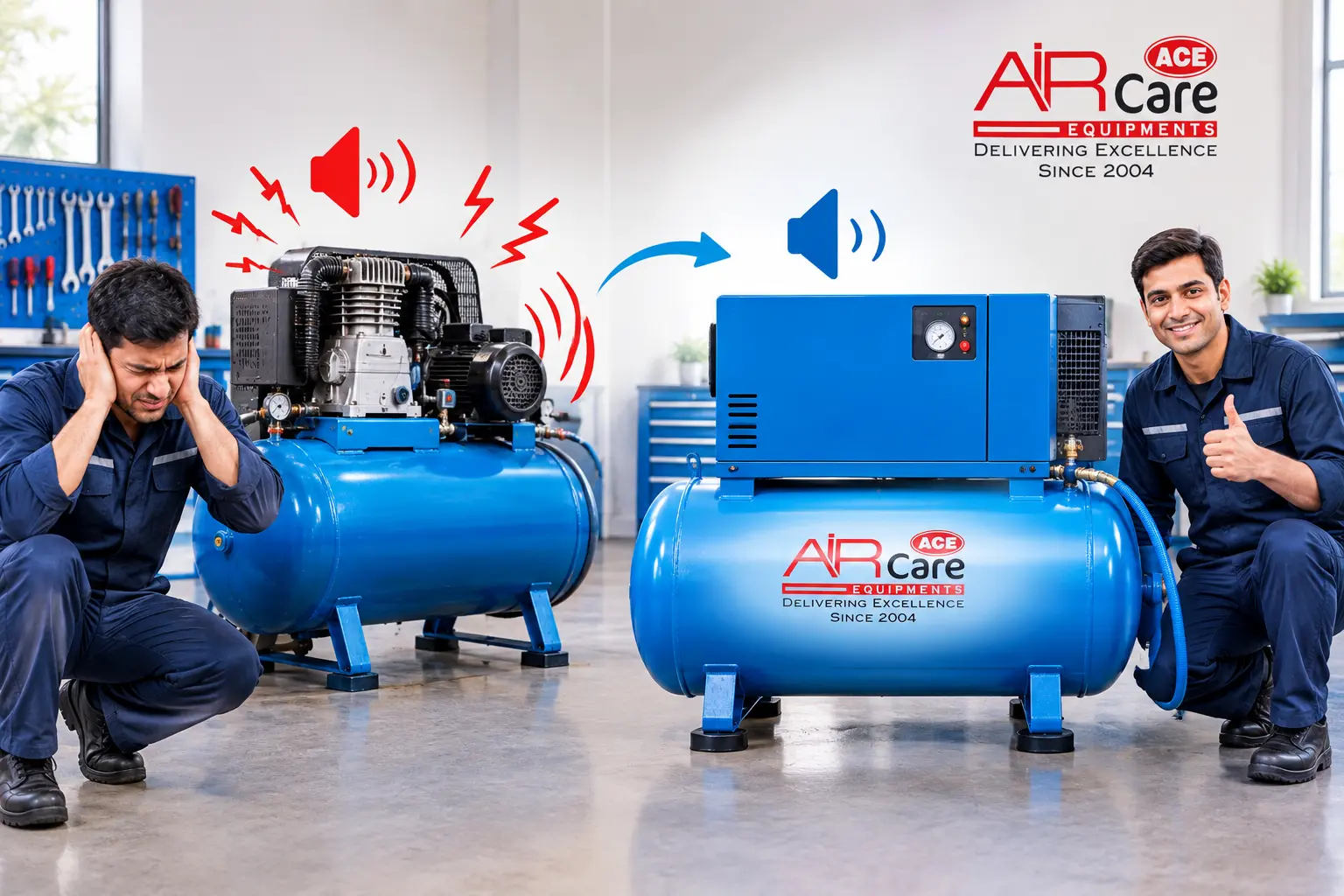
Think of a reciprocating compressor like a single-cylinder engine; it pushes air out in "puffs" or pulses. If you connected a tool directly to that, the tool would vibrate and lose torque with every stroke. The tank acts as a shock absorber, smoothing out those pulses into a steady, reliable stream of power.
2. The Cooling and Moisture Strategy
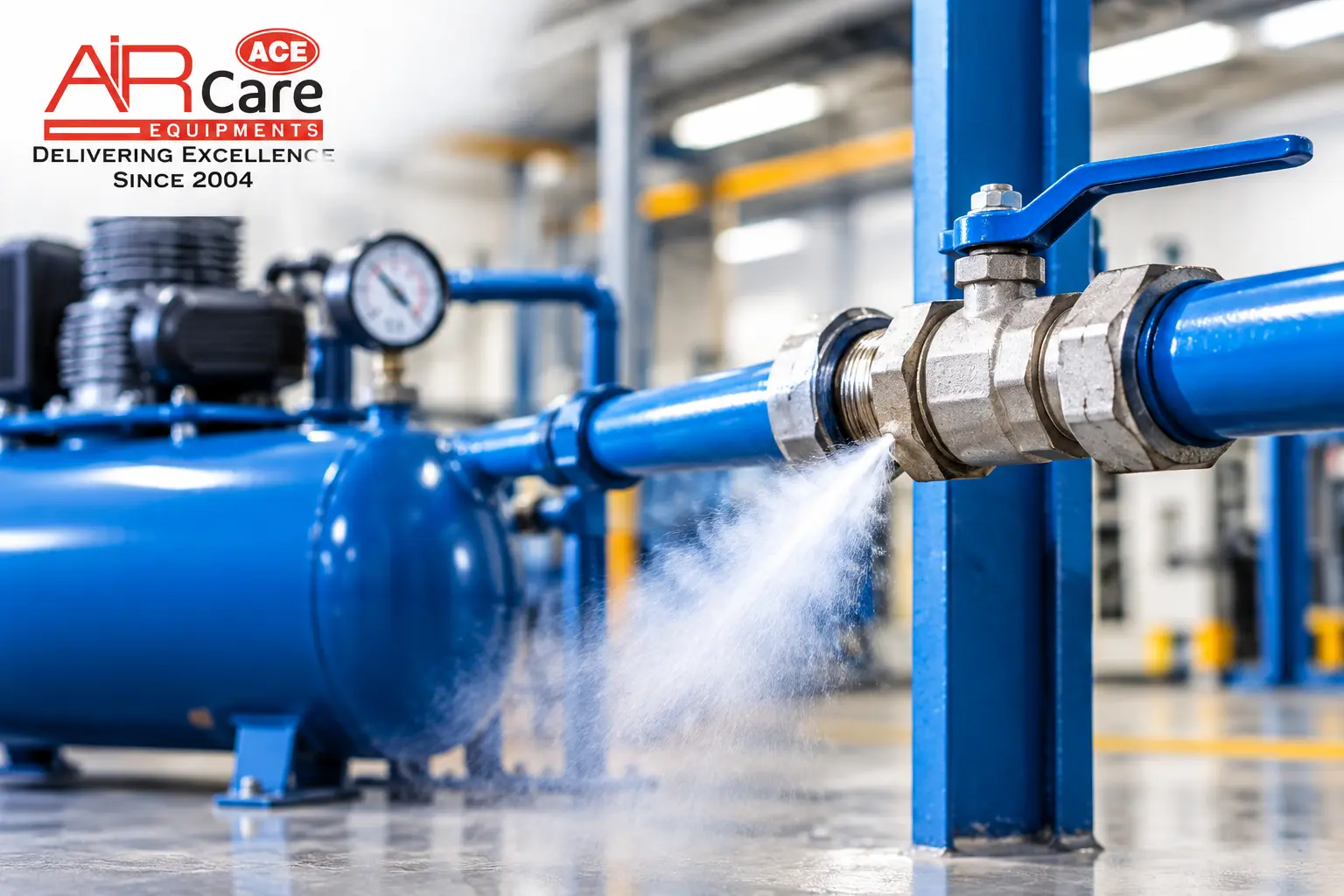
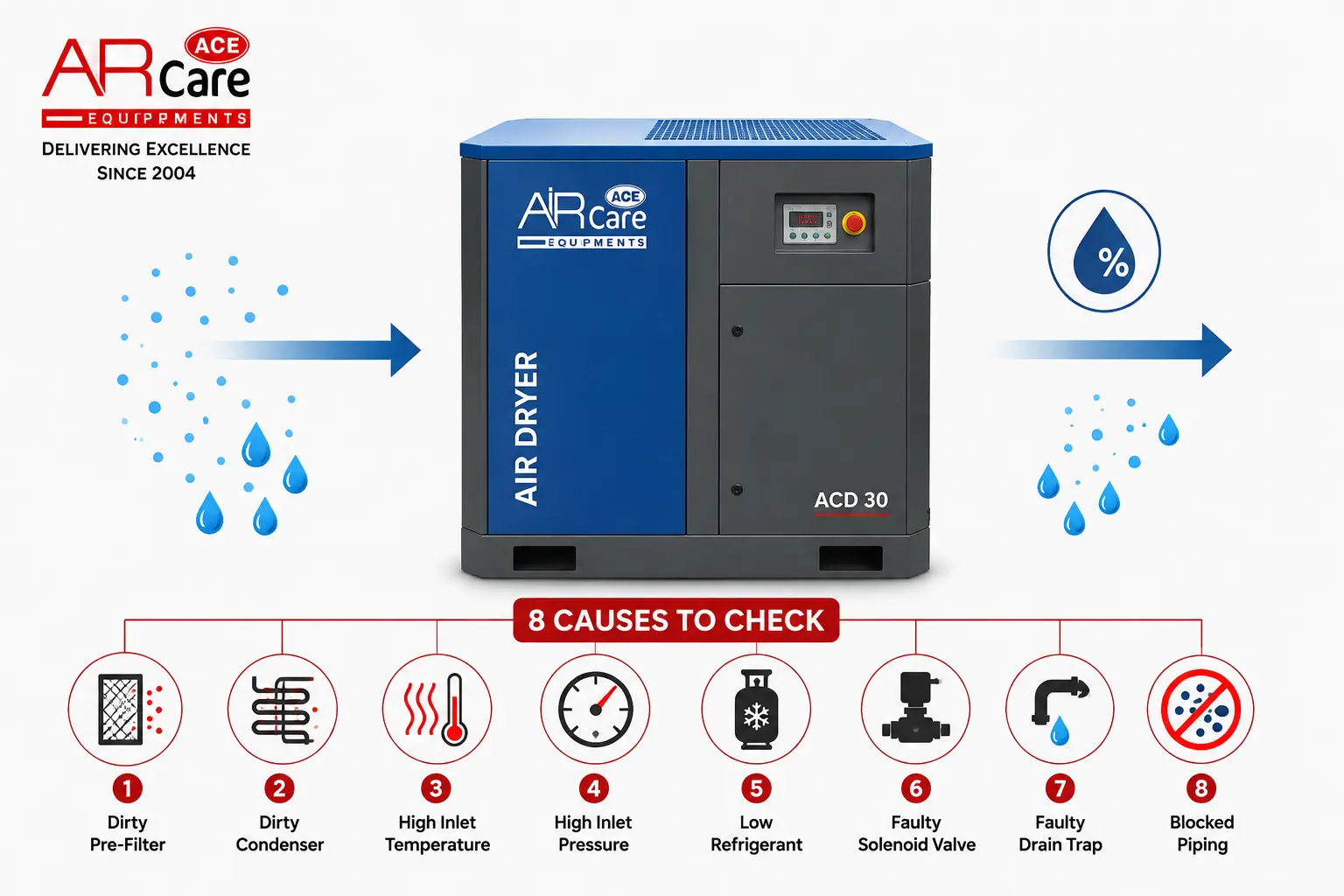
Compressed air is hot and carries a lot of water vapour. As air enters the larger volume of the tank, it slows down and cools. This temperature drop causes moisture to condense into liquid water, which settles at the bottom. Without a properly sized compressor tank, that water stays in the air line, rusting your pipes and ruining your pneumatic tools.
Read More: 10 Essentials for Choosing the Right Oil-Free Compressor
3. Energy Conservation and Motor Protection
Every time a compressor starts, it pulls a massive amount of "inrush current", often 6 to 8 times its running electricity. If you have a tiny air compressor tank size, the pressure drops instantly when you pull a trigger, forcing the motor to restart. This "short-cycling" is the number one killer of industrial motors. A bigger tank lets the motor rest while the stored air does the work.
Strategic Sizing: How to Determine the Best Air Compressor Tank Size
Determining the size compressor storage you need isn't just guesswork; it’s a calculation of time versus demand. You need to know your compressor’s output (measured in CFM, Cubic Feet per Minute) and your tools' consumption.
The Standard Industry Formula
For those who want precision, the math looks like this:
V = tx(C - Q)x Pa/P1 - P2
- V = Volume of the tank (in cubic feet)
- t = Time the tank can provide air (in minutes)
- C = Air demand of the tool (CFM)
- Q = Compressor output (CFM)
- Pa = Atmospheric pressure
- P1 - P2 = The allowable pressure drop (Maximum PSI minus Minimum PSI needed for the tool)
However, if you aren't a fan of calculus at 9:00 AM, there are practical "rules of thumb" that we at Air Care Equipments recommend for most Indian industrial environments.
Read More: Portable Air Compressors: Uses, Benefits & Buying Guide | Air Care Equipments
Sizing for Reciprocating (Piston) Compressors
Piston compressors are designed to run on a duty cycle, usually 60/40. They aren't meant to run 24/7.
- The Rule: Aim for 2 to 3 gallons of storage for every 1 CFM of compressor output.
- Example: If you have a 10 CFM compressor, a 20 or 30-gallon tank is your baseline. This ensures the piston has enough "down-time" to cool off.
Sizing for Rotary Screw Compressors
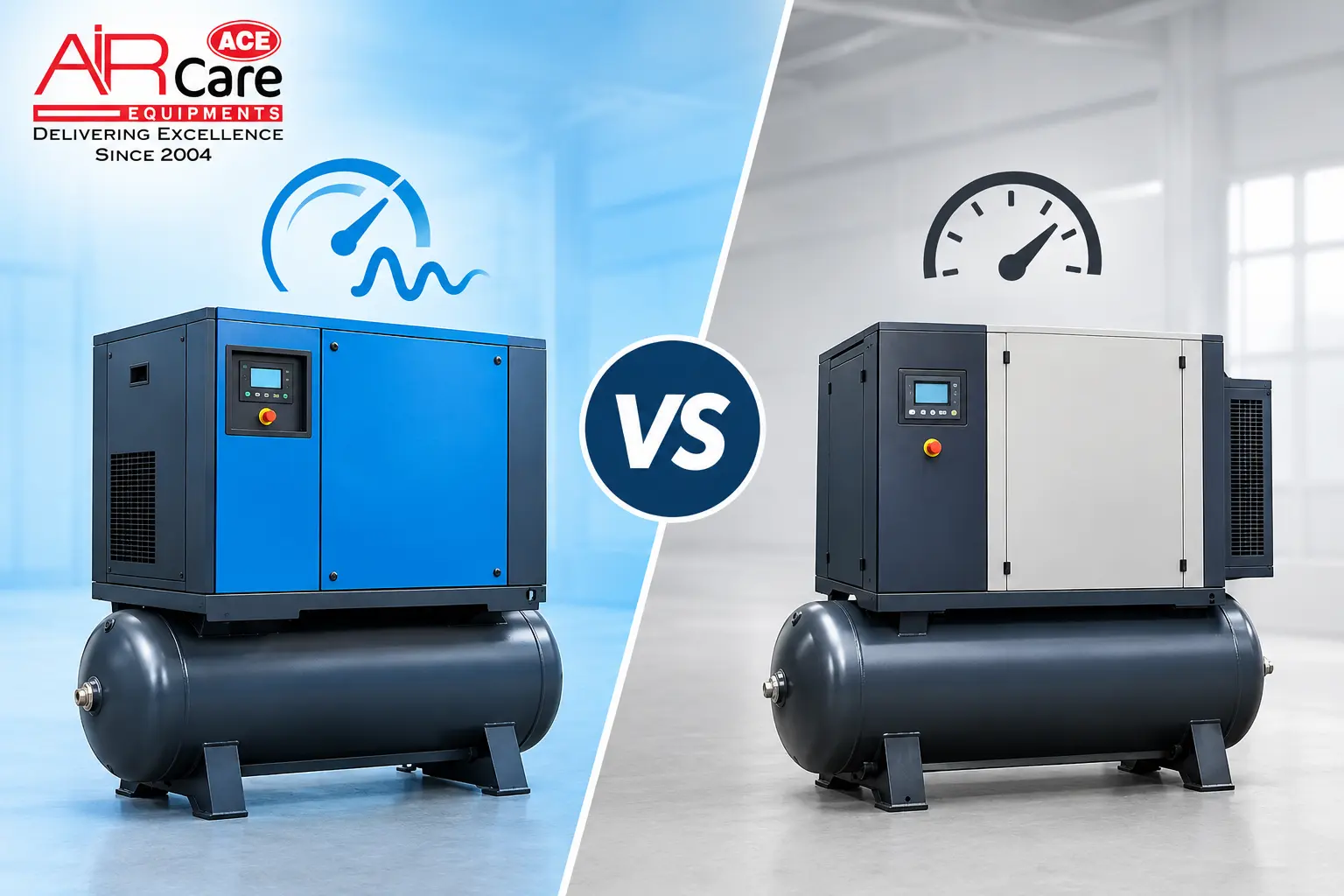
Rotary screws are workhorses that love to run continuously. However, they operate on "load/unload" cycles.
- The Rule: We recommend 4 to 5 gallons per CFM.
- Why? A larger compressor size in storage prevents the screw from switching between load and unload modes too rapidly, which saves significantly on your electricity bill and prevents oil carryover issues.
Also Read: Why Choose a Reciprocating Air Compressor for Your Business | Air Care Equipments
Identifying Your Demand: Constant vs. Intermittent Flow
The biggest mistake is assuming that a small compressor size can be fixed by just getting a massive motor. If you are sandblasting, you need a constant, high-volume flow. If you are using an impact wrench for ten seconds every five minutes, you have "intermittent" demand.
- High-Intensity Bursts: If your tools use more CFM than your compressor produces (like a 20 CFM sandblaster on a 15 CFM compressor), your air compressor tank is your only saviour. It stores up energy during the "quiet" times so you can blast at full power when you need to.
- Steady Production Lines: In a factory with automated arms, the demand is flat and consistent. Here, the tank acts more as a stabiliser than a battery.
Vertical vs. Horizontal: Making Use of Your Floor Space
At our Gurgaon facility, we often get asked: "Does the shape matter?" Technically, air doesn't care if it's sitting vertically or horizontally. But your facility does.
- Vertical Tanks: These are the "space-savers." If you have a crowded shop floor, a vertical air compressor tank utilises overhead space. They are also slightly better for moisture drainage because the water settles directly over the drain valve at the bottom.
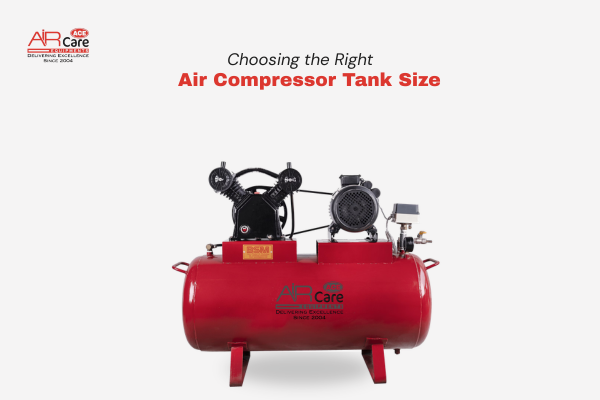
- Horizontal Tanks: These are typically used for "tank-mounted" systems where the motor and pump sit right on top of the tank. They offer a lower centre of gravity and are easier to move if your setup is portable.
Also Read: Top 2026 Industrial Air Compressor Manufacturer: Efficiency, IoT, and Smart Power
Maintenance: Protecting Your Investment
You’ve picked the right compressor tank, but the job isn't over. A pressure vessel is a powerful thing, and it needs respect.
- The Drain Habit: Water is the enemy. It creates internal corrosion that thins the steel walls over the years. Whether you use a manual petcock or an automatic timer drain, ensure your tank is purged of water daily.
- ASME Certification: Never settle for a "locally made" uncertified tank. At Air Care Equipments, we emphasise ASME (American Society of Mechanical Engineers) standards or equivalent safety certifications. These tanks are tested to withstand pressures far beyond their rating.
- Vibration Checks: Ensure the tank is mounted on vibration pads. Constant shaking can lead to stress cracks in the weld joints over time.
Also Read: Discover the benefits of Air Receiver Tank in industrial processes
Conclusion: Finding the Balance for Your Business
Choosing the right air compressor tank isn't about buying the biggest one on the shelf; it's about understanding the pulse of your specific business. Whether you're running a delicate laboratory setup or a heavy-duty forging unit, the storage capacity you choose will dictate your energy costs for the next decade.
At Air Care Equipments, we don't just sell hardware; we provide the technical expertise to ensure your compressor size and storage capacity work in perfect harmony. By investing in the correct air compressor tank size today, you are protecting your motor, ensuring the quality of your finish, and keeping your operational costs under control.
Don't let a "guess" dictate your productivity. If you're ready to optimise your compressed air setup with a high-performance air compressor tank, our team is ready to run the numbers for you.
FAQs
Q1: Can an air compressor tank be too large?
Technically, no. A larger tank just means the compressor takes longer to fill it initially. Once full, it provides a much more stable environment. The only downsides are the cost of the tank and the physical space it occupies.
Q2: Does a bigger tank mean more power?
This is a common myth. A bigger air compressor tank size does not give you more PSI or more CFM. It only gives you more time before the pressure drops. Think of it like a bucket of water; a bigger bucket doesn't make the tap flow faster; it just holds more water for when the tap is turned off.
Q3: How often should I inspect my tank for safety?
You should do a visual inspection monthly for any signs of external rust or "weeping" at the welds. Every few years, an ultrasonic thickness test is a good idea for ageing industrial tanks to ensure the metal hasn't thinned out from internal rust.
Q4: What is a "Secondary" Receiver?
If you have one tool that is very far away from the main compressor (at the other end of the factory), you might experience a "pressure drop" in the pipes. Placing a small secondary compressor tank right next to that tool provides a local buffer, ensuring the tool gets the full PSI it needs.
Recent Posts