Air Compressor Buying Guide: Types, Size & How They Work
What Is an Air Compressor and How Does It Work?
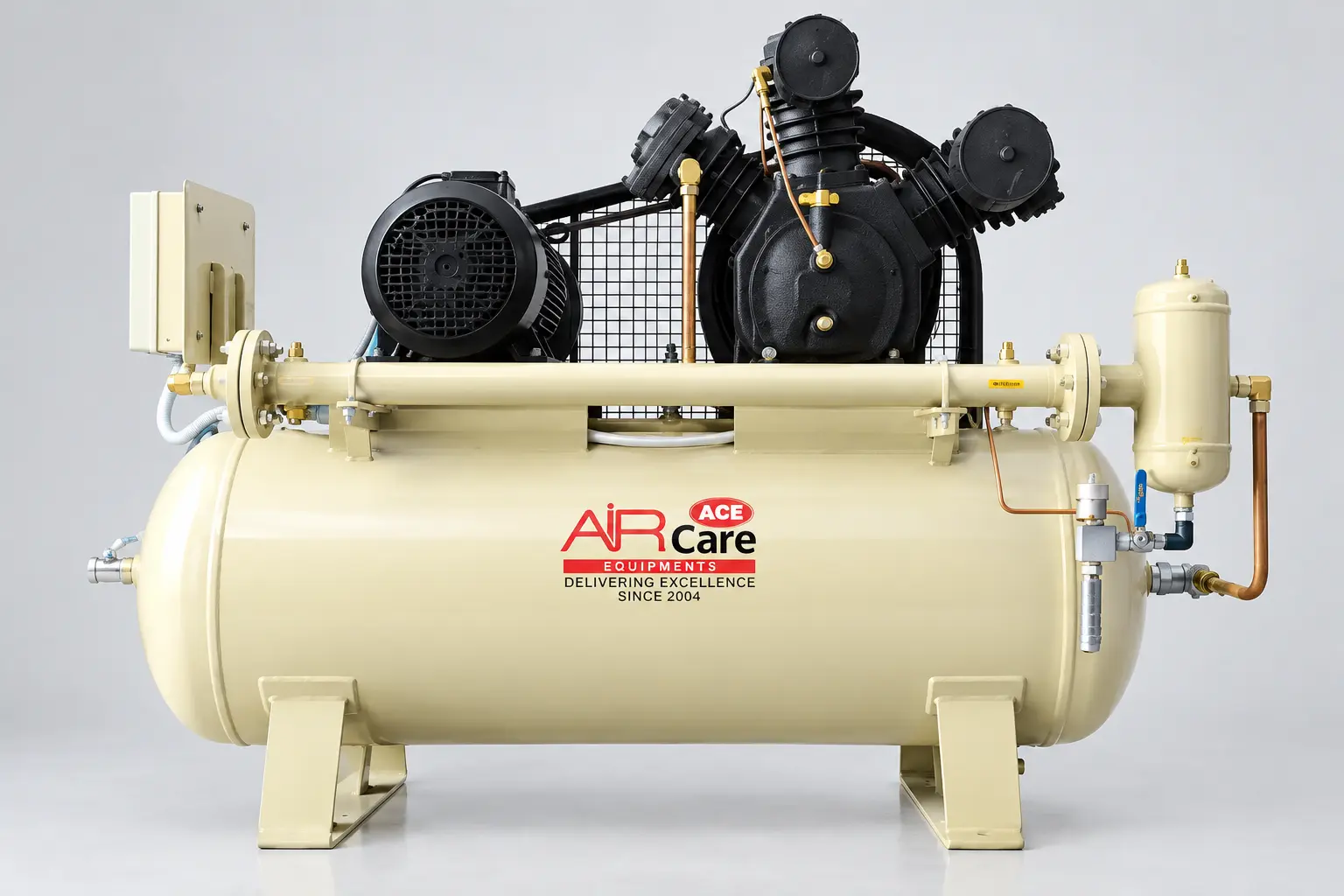
An air compressor is a machine that uses mechanical energy to compress atmospheric air and increase its pressure. The compressed air can then be stored in an air receiver or supplied directly to pneumatic tools, machinery, automation systems, and industrial processes.
The basic working principle is simple: the compressor draws in atmospheric air, compresses it into a smaller volume, and delivers it at a higher pressure. Different compressor designs use different methods to achieve this.
The two common categories are reciprocating piston compressors and rotary screw compressors. Reciprocating compressors use pistons and cylinders to compress air, while rotary screw compressors use rotating screw elements.
The right compressor depends on factors such as required airflow, operating pressure, duty cycle, application, air quality, installation conditions, and expected operating hours.
Why Choosing the Right Air Compressor Matters
Choosing the right air compressor affects equipment performance, operating costs, reliability, and compressed-air quality. A compressor that is too small may struggle to meet demand, while an unnecessarily large compressor can increase purchase and operating costs.
Before buying, consider the airflow requirement, working pressure, compressor type, duty cycle, tank size, air quality, installation space, power supply, maintenance requirements, and expected operating hours.
It is also important to compare the compressor's total cost of ownership rather than looking only at the initial purchase price. Energy consumption, servicing, spare parts, maintenance, and downtime can all affect the long-term cost of a compressed-air system.
Step-by-Step Buying Process: Find the Perfect Fit
Step 1: What Size Air Compressor Do I Need?
One of the first questions buyers ask is, “What size air compressor do I need?” Start by listing the tools or machines that will use compressed air and check the manufacturer's specified airflow and pressure requirements.
For multiple tools operating at the same time, consider their combined demand and allow an appropriate operating margin. The actual requirement depends on whether the tools operate continuously or intermittently.
Also consider future expansion. If your compressed-air demand is likely to increase, selecting a compressor with suitable capacity for the expected operating requirement can help avoid replacing an undersized unit later.
For industrial applications, sizing should consider actual plant demand, operating pressure, load profile, compressor control method, receiver capacity, air treatment, and distribution losses.
Step 2: Understanding Air Compressor Types and Their Features
The most suitable compressor type depends on airflow demand, pressure, operating hours, air-quality requirements, and application.
-
Reciprocating (Piston) Compressors: Often suitable for intermittent or variable-demand applications. They are commonly used in workshops, service applications, and smaller industrial systems. Maintenance requirements depend on operating conditions and compressor design.
-
Rotary Screw Compressors: Suitable for applications requiring a relatively continuous supply of compressed air. They are widely used in manufacturing and industrial environments where steady airflow is required.
-
Oil-Free Compressors: Designed to supply compressed air without oil being used in the compression chamber. They can be suitable for applications where specific air-quality requirements must be met, depending on the compressor design and applicable air-quality standard.
-
Oil-Lubricated Compressors: Use oil for lubrication and cooling within the compression system where applicable. They can be suitable for many industrial applications, but require appropriate oil management and scheduled maintenance.
The correct choice should be based on the application's airflow, pressure, operating pattern, air-quality requirements, and manufacturer's specifications.
Step 3: Selecting Based on Power: CFM, PSI, and Horsepower Explained
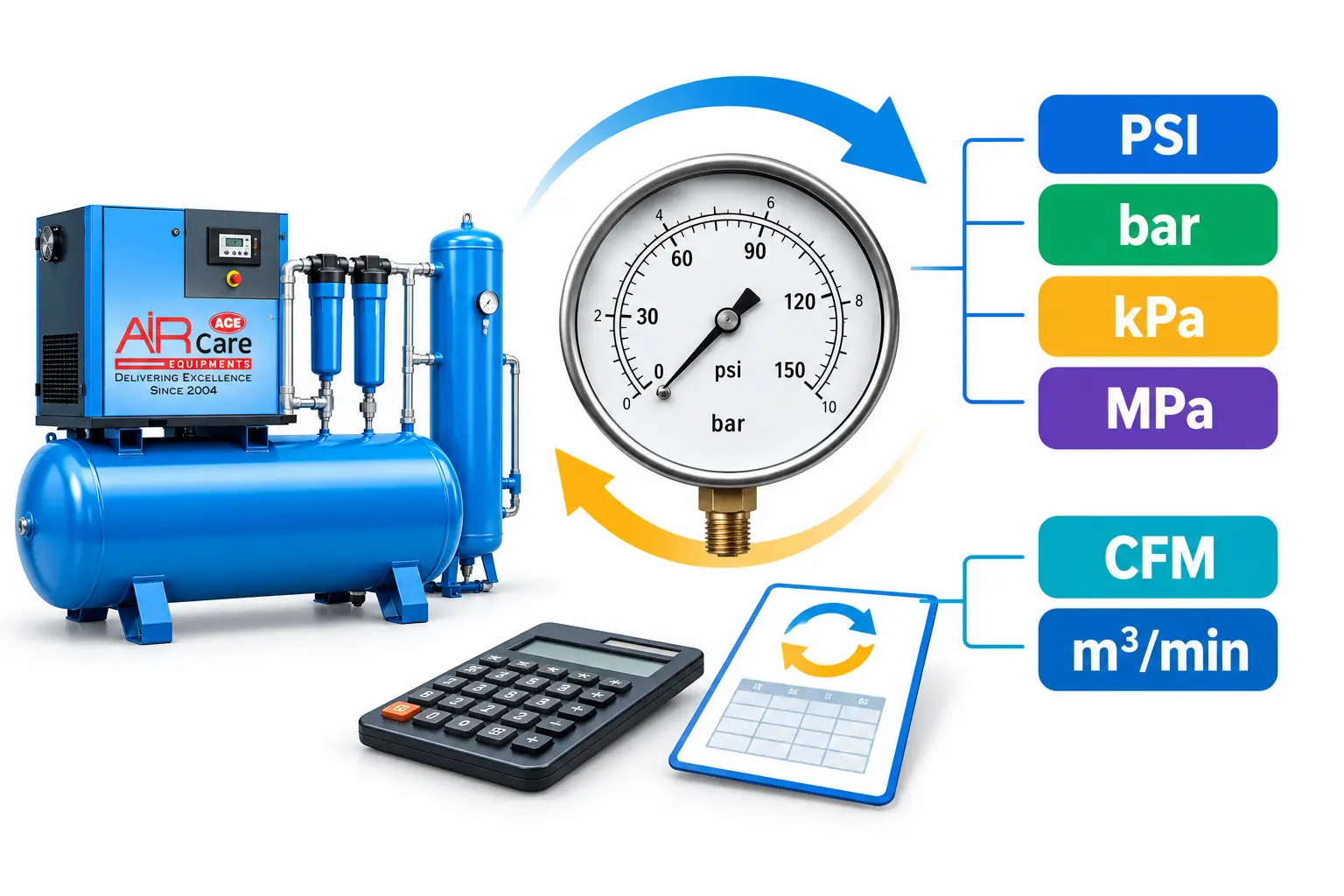
CFM, PSI, and horsepower are important specifications when comparing air compressors.
-
CFM: Indicates airflow capacity.
-
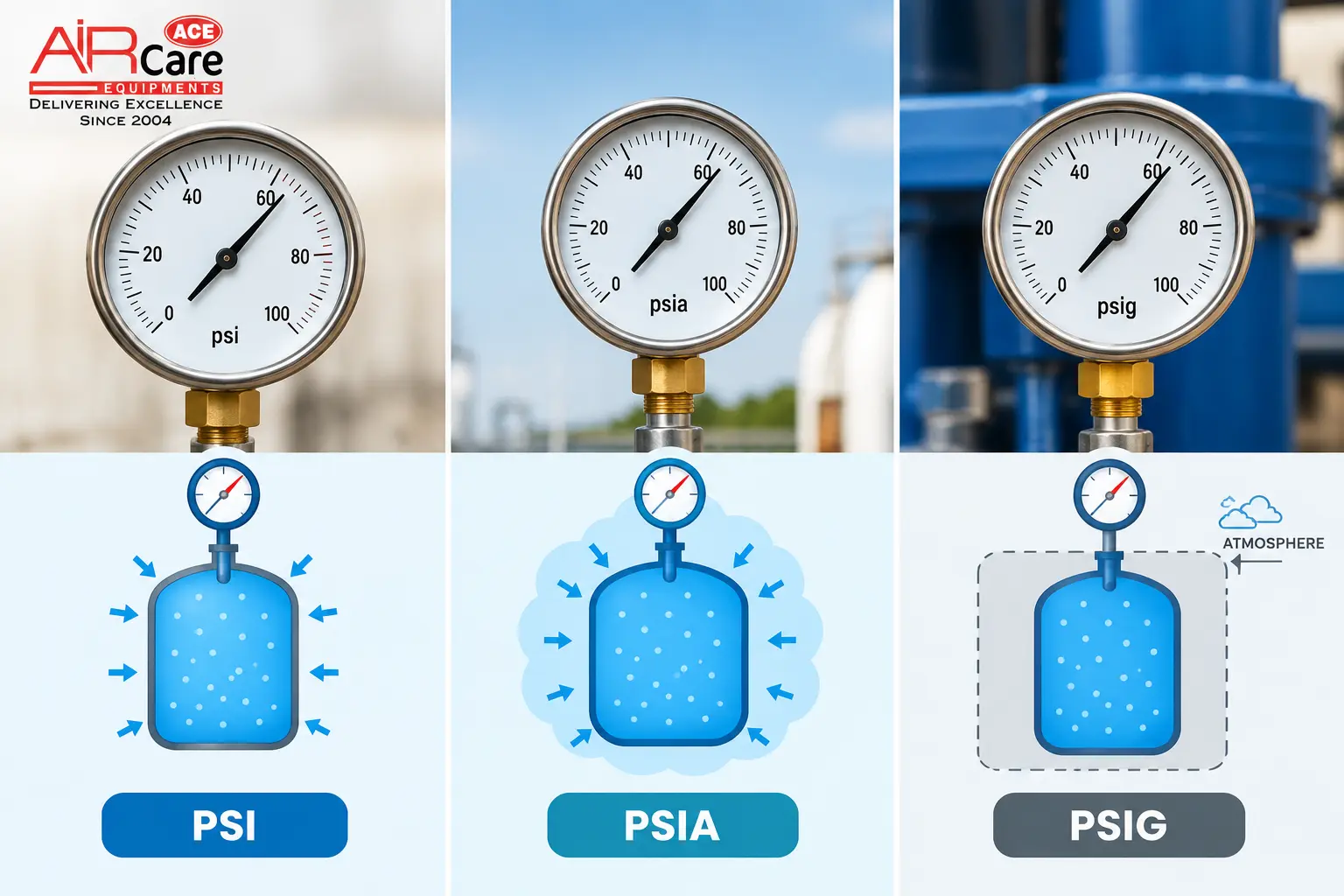
PSI: Indicates the pressure at which the compressed air is supplied.
-
Horsepower (HP): Indicates the motor's rated power and is one factor affecting compressor capacity.
When selecting a compressor, focus on the airflow it can deliver at the required working pressure. Do not select a compressor based only on horsepower or maximum pressure.
For example, if a pneumatic machine requires a specific CFM at 90 PSI, the compressor should be capable of delivering the required airflow at that pressure under the expected operating conditions.
Step 4: Choosing the Right Tank Size, Duty Cycle, and Portability
An air receiver tank stores compressed air and helps manage short-term variations between supply and demand. Receiver capacity should be selected according to the compressor, control method, demand pattern, pressure range, and system requirements.
Duty cycle describes how much operating time a compressor is designed to handle within a given period. The appropriate duty cycle depends on the compressor design and application. Always follow the manufacturer's specifications rather than assuming that a particular percentage is suitable for every compressor.
Portability is another important consideration. Portable compressors are useful when equipment needs to be moved between work areas, while stationary compressors are generally more suitable for fixed workshops and industrial installations.
Step 5: Choose the Right Air Treatment and Moisture Control
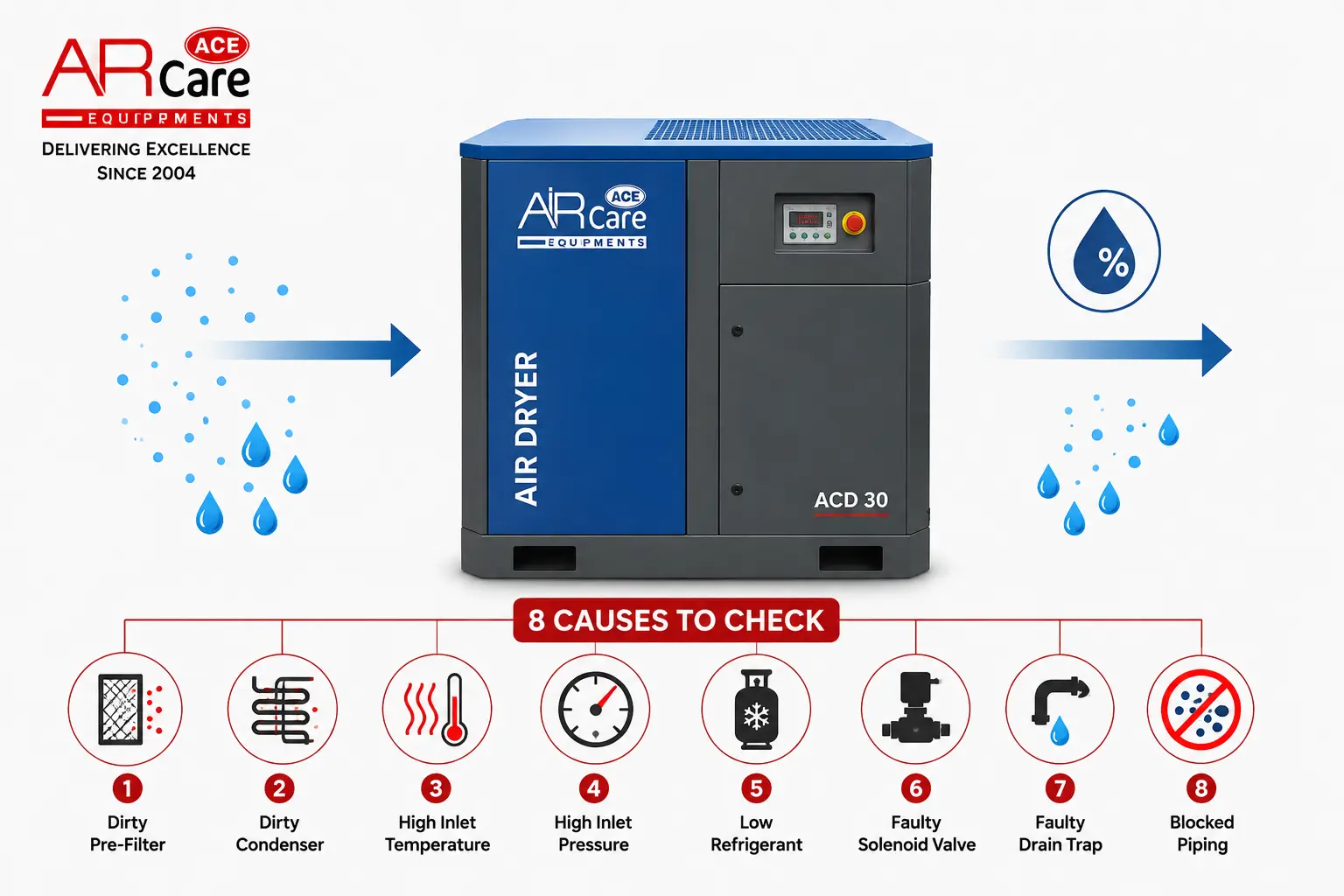
Compressed air can contain water vapour, oil aerosols, particles, and other contaminants. When moisture condenses in the system, it can contribute to corrosion, equipment problems, and poor process performance.
The appropriate air treatment depends on the required air quality and application. Depending on the system, equipment may include:
-
Moisture separators
-
Compressed air filters
-
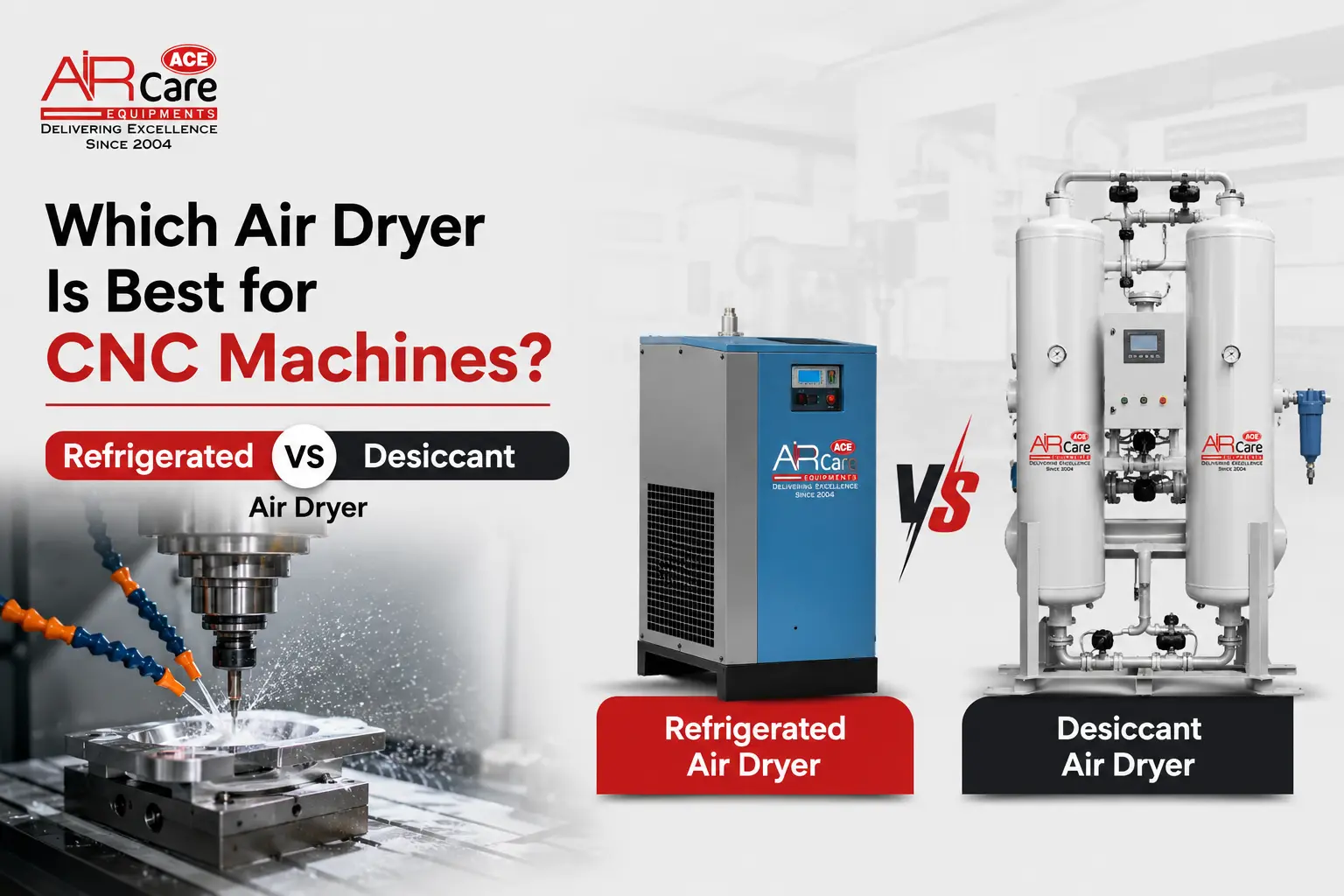
Refrigerated air dryers
-
Desiccant air dryers
-
Automatic drains
-
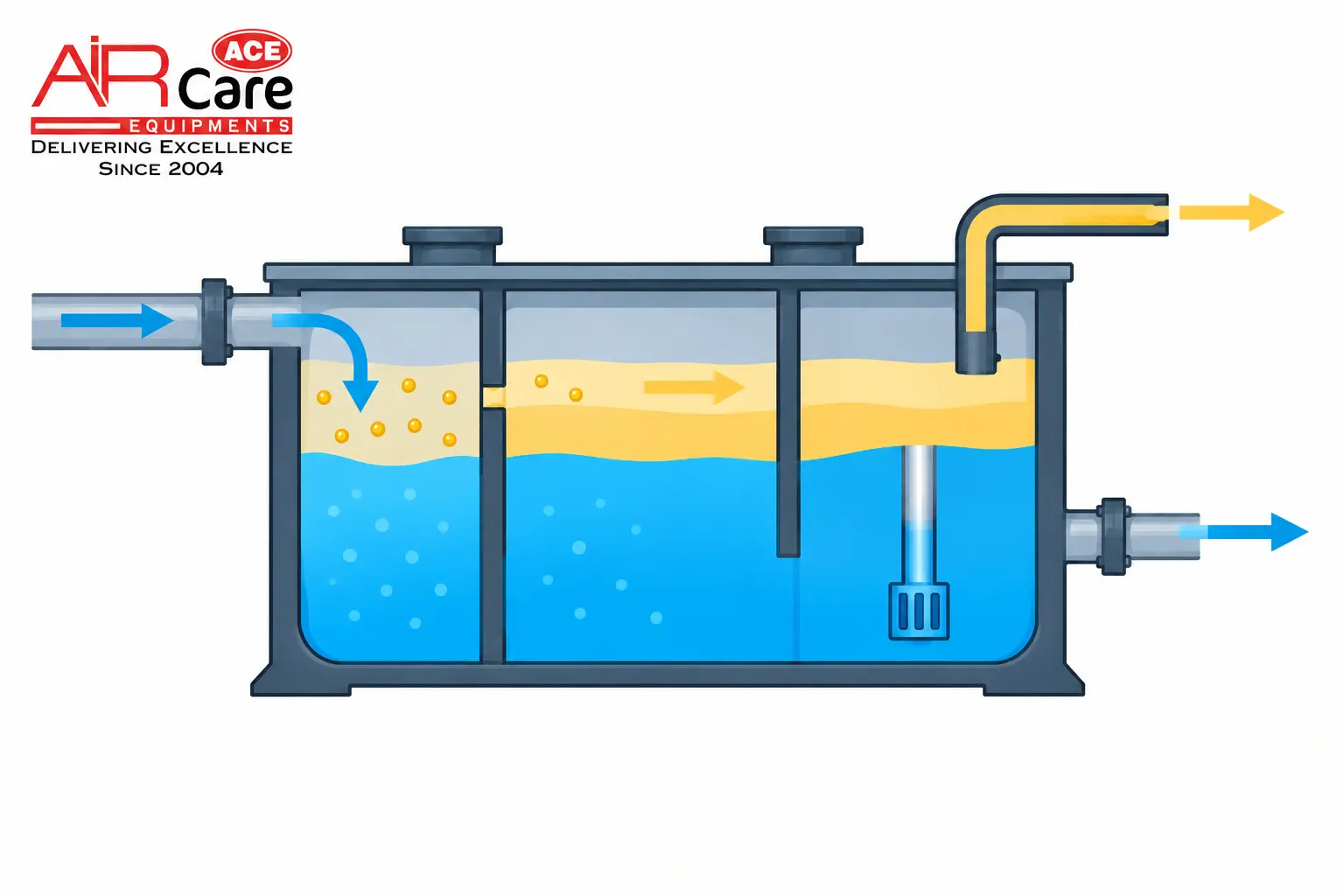
Oil-water separators
For applications such as instrumentation, painting, food processing, pharmaceuticals, or other sensitive processes, the required air quality should be determined from the application requirements and applicable specifications.
Step 6: Comparing Air Compressor Brands and Models
When comparing air compressor brands, buyers should look beyond the brand name and evaluate specifications, application suitability, service support, spare-parts availability, warranty terms, maintenance requirements, and total cost of ownership.
Air Care Equipment offers air compressor solutions including screw, reciprocating, high-pressure, and oil-free compressor categories. Buyers should select the appropriate model based on required airflow, working pressure, operating hours, air-quality requirements, and installation conditions.
Before purchasing, ask the supplier for the compressor's technical specifications, recommended operating conditions, service requirements, warranty details, and applicable documentation.
Step 7: Maintenance and Total Cost of Ownership
The purchase price is only one part of the total cost of owning an air compressor. Buyers should also consider electricity consumption, maintenance, spare parts, air treatment, installation, and potential downtime.
Routine maintenance may include inspection of filters, lubrication systems where applicable, cooling components, drains, electrical connections, belts or couplings, and other service components according to the manufacturer's recommendations.
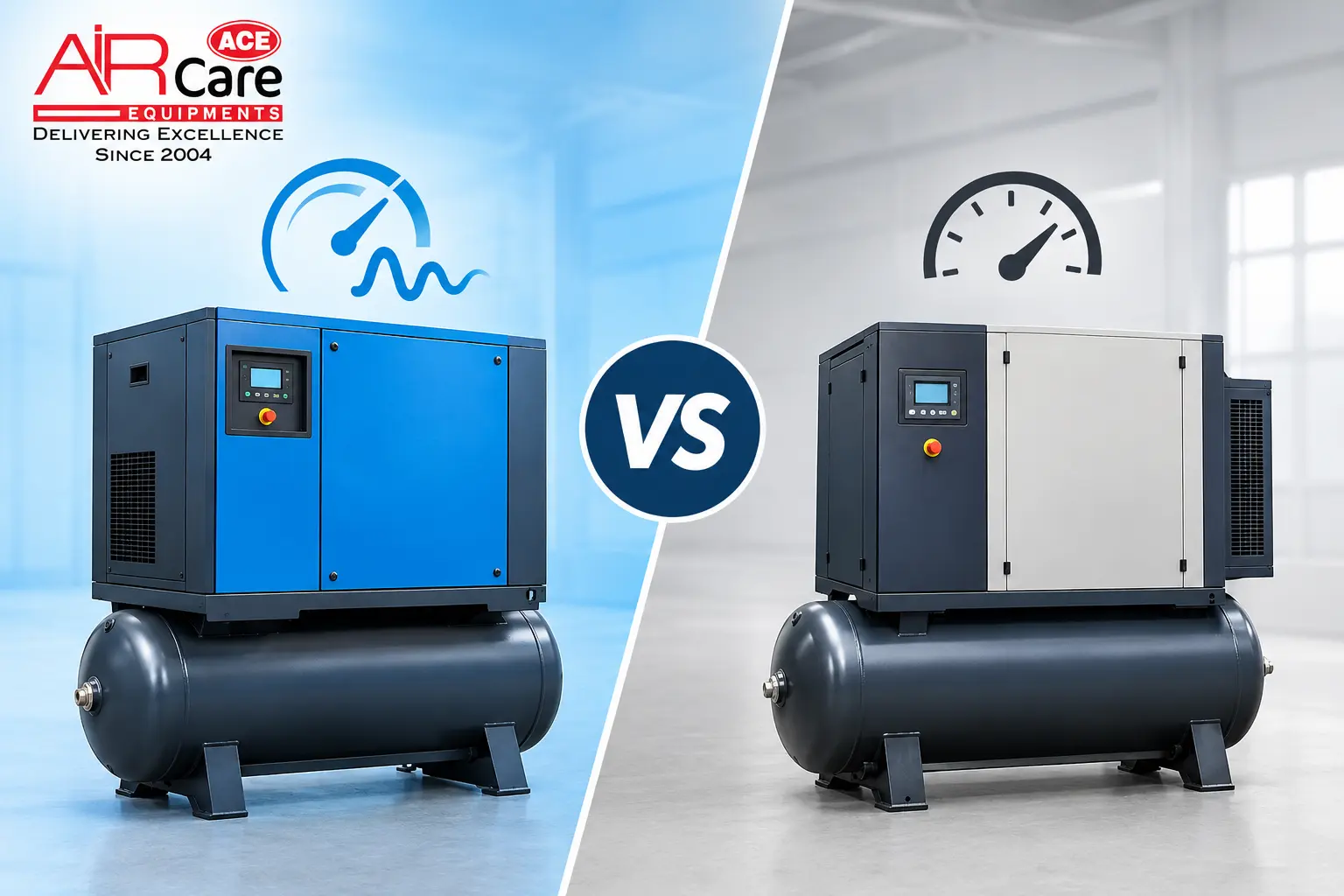
For systems with variable and changing air demand, a variable-speed compressor may help improve energy efficiency by adjusting compressor output to demand. The actual benefit depends on the load profile, operating conditions, compressor control strategy, and system design.
An annual maintenance contract (AMC) can also be considered when scheduled servicing and professional support are required.
Comparison of Popular Compressor Types
|
Compressor Type |
Best Suited For |
Pros |
Cons |
|
Reciprocating |
Small workshops, intermittent |
Affordable, reliable |
Noisy, less efficient |
|
Rotary Screw |
Continuous industrial use |
Quiet, efficient, durable |
Higher price point |
|
Oil-Free |
Food, medical industries |
Clean air, minimal contamination |
More frequent maintenance |
|
Oil-Lubricated |
Heavy-duty manufacturing |
Robust, long service life |
Needs oil management |
Common Air Compressor Mistakes to Avoid
-
Many buyers under-size their compressor, neglect moisture control, or skip proper maintenance.
-
Beware of choosing models based purely on price without considering power needs and the long-term cost of ownership.
-
Avoiding these frequent mistakes ensures dependable performance and protects your investment.
Trending Innovations and Smart Features in 2025
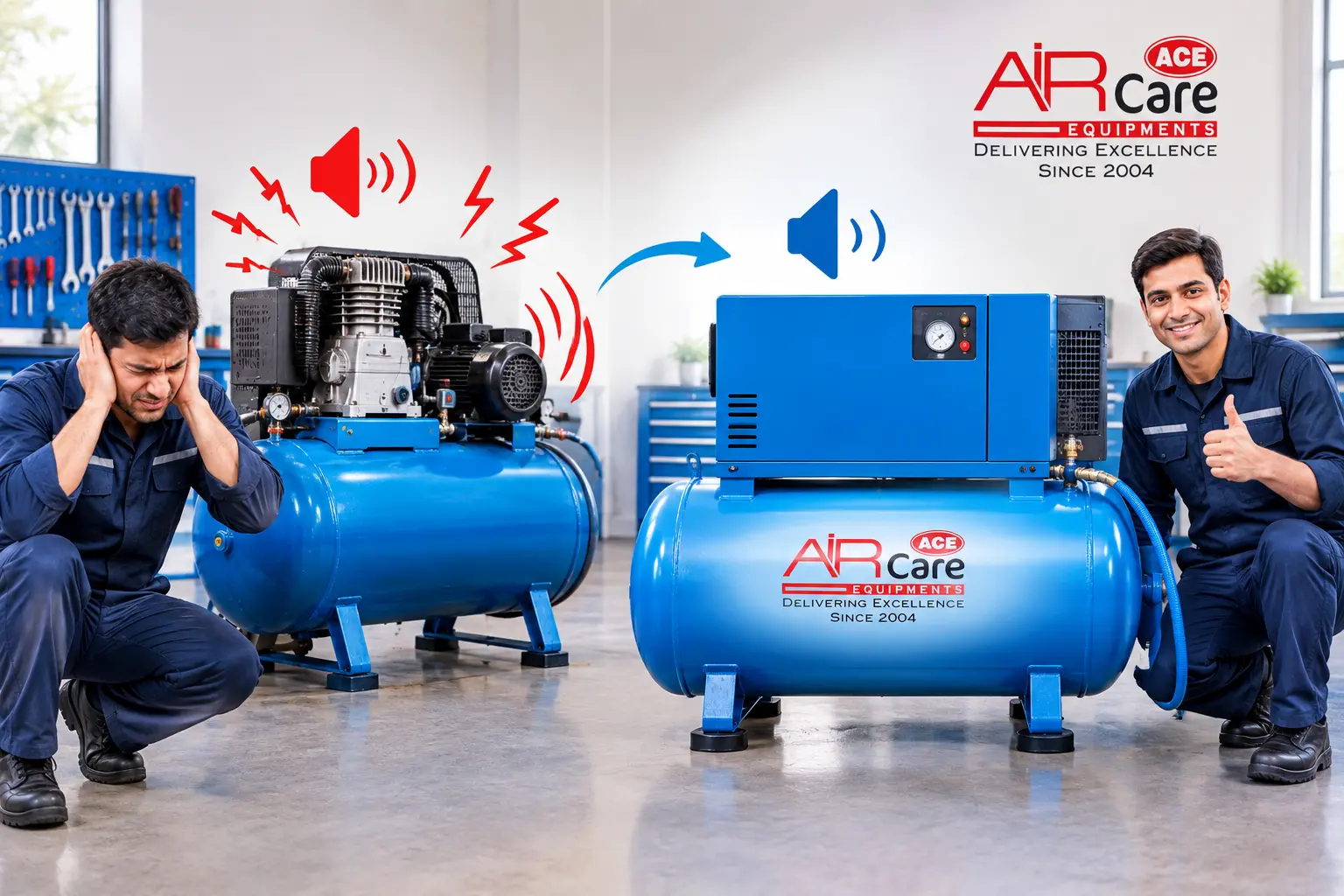
Smart compressors integrating IoT technology allow remote monitoring, predictive maintenance, and alerts on performance drops. Variable speed drives optimize energy use, and noise reduction technology creates quieter working environments, features increasingly searched by buyers aiming for future-ready compressors.
Conclusion: How to Choose the Right Air Compressor
Choosing the right air compressor starts with understanding the application's airflow and pressure requirements. Buyers should also consider compressor type, operating hours, duty cycle, air quality, receiver capacity, installation conditions, maintenance requirements, and total cost of ownership.
The best compressor is not necessarily the largest or most powerful model. It is the one that can reliably meet the required demand under the expected operating conditions.
Air Care Equipment can help buyers evaluate suitable compressor options based on their application requirements. Contact the team to discuss your airflow, pressure, operating hours, and installation needs before selecting a compressor.
FAQs
Q1. What size air compressor do I need for my home workshop?
The required compressor size depends on the tools you plan to use. Check each tool's CFM and PSI requirements and select a compressor capable of delivering the required airflow at the required pressure. Intermittent tools generally require less continuous airflow than tools such as spray equipment that consume air continuously.
Q2. How do I calculate the air compressor size needed for multiple air tools?
Start by identifying which tools will operate simultaneously and add their expected airflow requirements. Then consider an appropriate operating margin and future demand. For industrial systems, compressor sizing should also consider the demand profile, pressure range, receiver capacity, control method, and distribution losses.
Q3. What is the difference between oil-free and oil-lubricated air compressors?
Oil-free compressors are designed so that oil is not used in the compression chamber, making them suitable for applications with specific compressed-air purity requirements. Oil-lubricated compressors use oil within the compression system for functions such as lubrication and cooling, depending on the design. Both types require appropriate maintenance.
Q4. Why is moisture control important in compressed air systems?
Moisture can contribute to corrosion, damage pneumatic equipment, and affect certain production processes. The appropriate moisture-control equipment depends on the required air quality and application and may include separators, drains, filters, refrigerated dryers, or desiccant dryers.
Q5. Can I use a portable air compressor for industrial applications?
Yes, but suitability depends on the application's airflow, pressure, operating hours, and duty requirements. A portable compressor may be suitable for mobile or intermittent applications, while fixed industrial systems with high or continuous demand may require a stationary compressor with appropriate capacity.
Q6. What is the difference between CFM and PSI?
CFM measures the volume of air delivered, while PSI measures air pressure. A compressor must provide sufficient airflow at the required working pressure for the connected equipment.
Q7. Is a bigger air compressor always better?
No. An oversized compressor can increase purchase and operating costs. Compressor capacity should be matched to actual and expected demand.
Q8. How much horsepower do I need for an air compressor?
Horsepower alone should not determine compressor selection. Compare the compressor's actual airflow at the required working pressure along with operating conditions and duty requirements.
Q9. Do I need an air dryer with my compressor?
It depends on the required compressed-air quality and application. Air dryers are commonly used when moisture must be controlled to protect equipment or maintain process quality.
Recent Posts