Why Your Air Compressor Needs a Moisture Separator: The Hidden Dangers of Water
Have you ever thought why your pneumatic tools are failing prematurely or why your paint job is less than perfect? The answer is to be an unknown threat that goes unnoticed in the compressed air system, that is, moisture. At Air Care Equipments, we have seen many people face this issue. It is one of the most common problems that can be prevented by following the right solution. Using a high-quality moisture separator for your air compressor can prevent it entirely.
The Hidden Dangers of Moisture: Why Your Air Compressor Needs a Moisture Separator
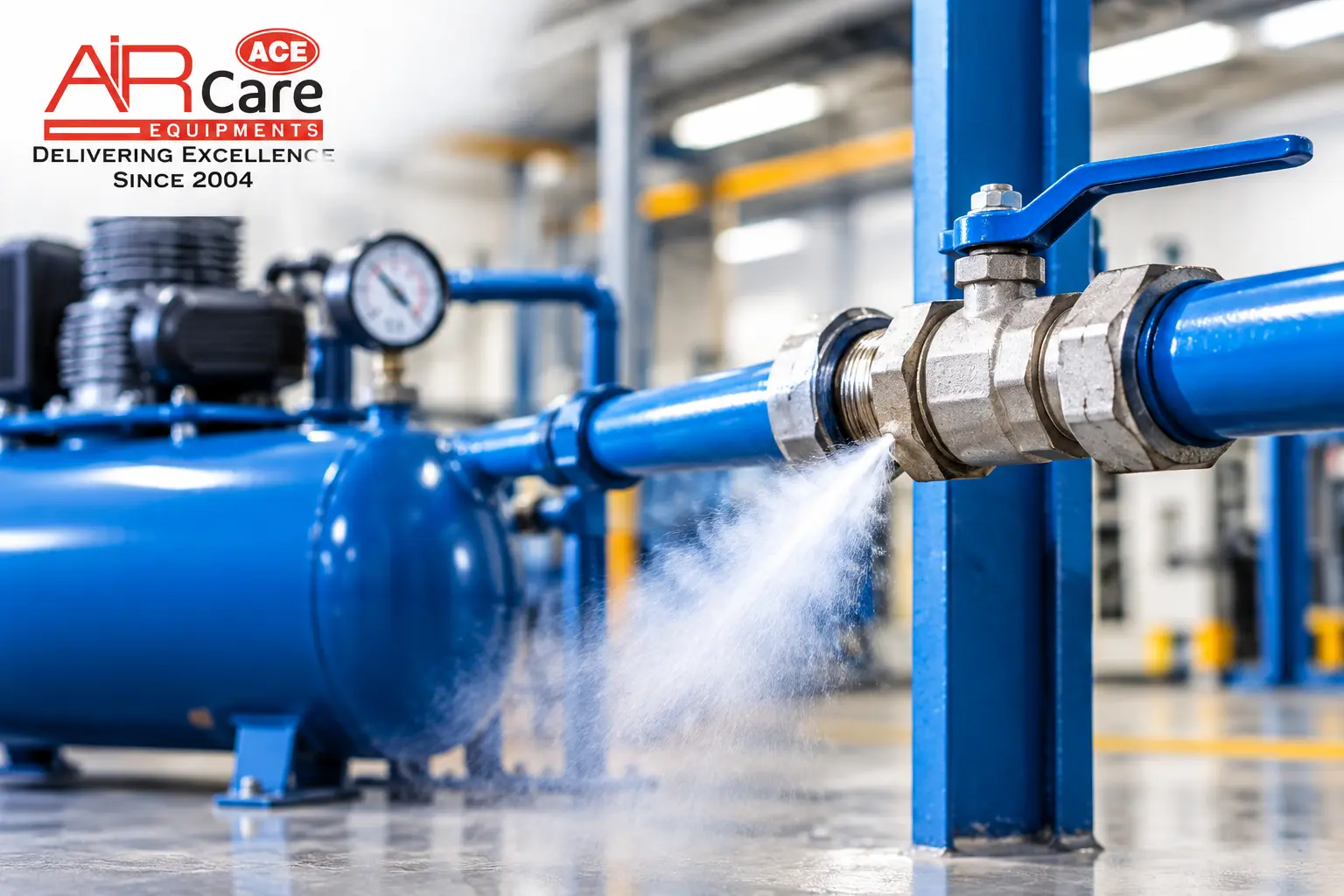
You must have noticed on any humid day that a simple task can also feel a lot heavier. Now, think about what moisture would do to an air compressor. At first, some tiny droplets might not look like trouble, but there is a high chance that in the future they can become a silent troublemaker. Moisture in the compressed air can corrode metal parts, damage pneumatic tools, reduce efficiency, and even compromise product quality in industries that demand precision.
This is where a moisture separator for air compressor systems steps up as the unsung hero. Without one, it’s like letting dampness creep into your mechanical lungs, slowly wearing them down. With one, you get clean, dry, and reliable compressed air that works as hard as you need it to.
How Moisture Separators Work: Keeping Compressed Air Dry and Reliable
Compressed air isn’t as clean as you think. As any air compressor draws in ambient air, it also pulls in a significant amount of water vapor. When the air compression process starts, water vapour also condenses, forming liquid water. Then this condensed water travels through the air lines and into the tools and equipments, leading to problems that are quite expensive.
This moisture causes rust and corrosion in the internal components of the air tools, leading to a shortening of their lifespans and necessitating expensive repairs. With this, it can also clog the intricate machine in pneumatic cylinders and valves, which will hence decrease the efficiency and cause inconsistency in the performance. For projects such as painting or sandblasting, moisture can compromise the final product, leading to defects like fish eyes in paint or clumping in abrasives. At Air Care Equipments, we know that protecting your equipment from this threat isn't just a good idea, it's a necessity. A quality moisture separator is your first line of defense.
Five Proven Techniques Using Moisture Separators for Air Compressors
Over the years, engineers have developed different ways to keep air dry. Each technique has its unique edge, depending on how much dryness and precision a setup requires.
1. Cooling plus separation
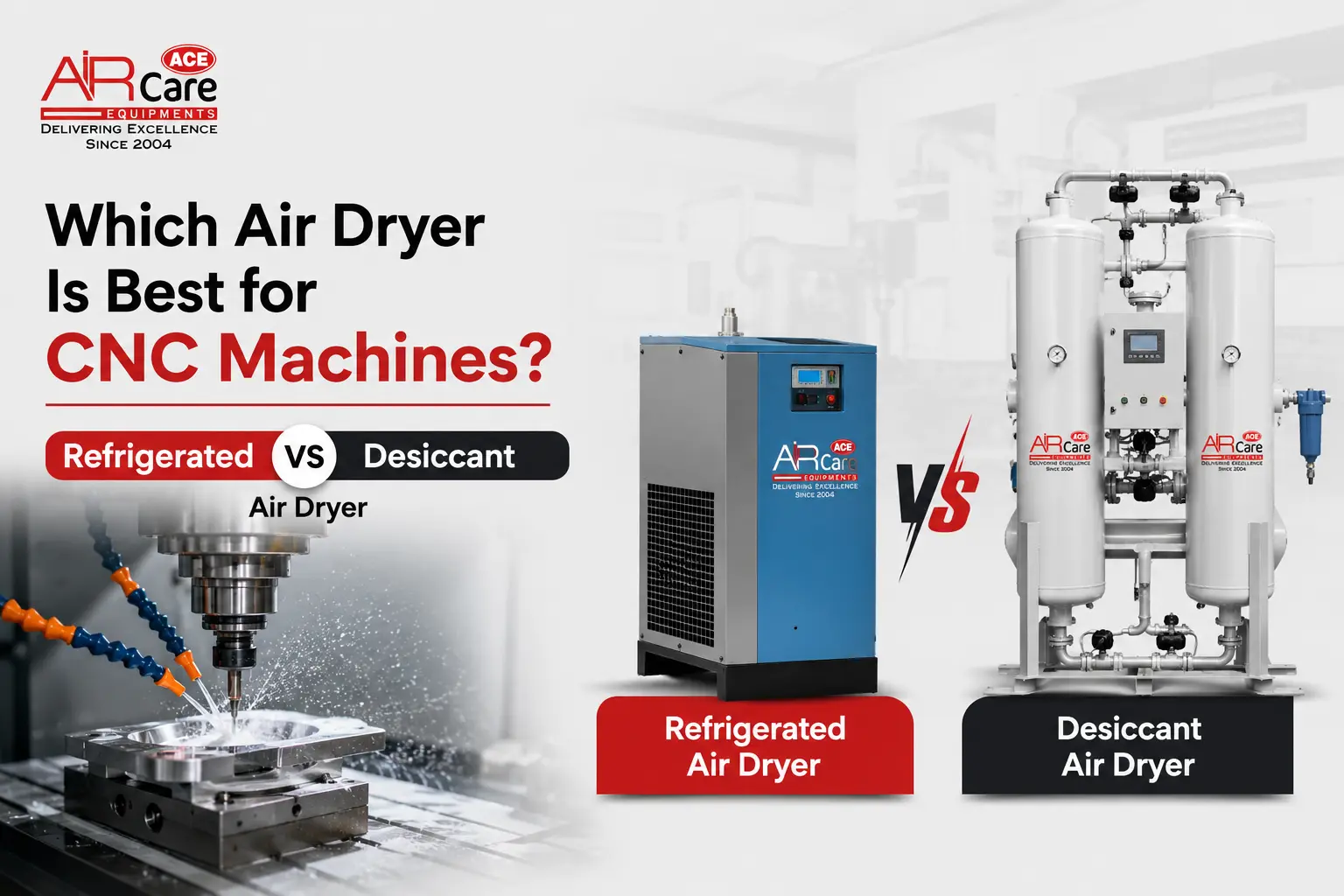
This is one of the most common and effective methods. It involves using a refrigerated air dryer to cool the compressed air down to a very low temperature. As the air cools, almost all of the water vapor condenses into liquid, which can then be easily removed by a standard moisture separator at the end of the cooling process.
2. Over-compression
This technique involves compressing the air to a much higher pressure than required for the application. As the pressure increases, the dew point rises, causing moisture to condense. The air is then cooled, and the condensed water is separated before the air is expanded back to the desired pressure. This expansion further reduces the dew point, resulting in very dry air.
3. Membrane drying
This is a great option for point-of-use applications that require a small, quiet, and reliable solution. The membrane dryer uses special bundles of hollow fibers. As the compressed air starts flowing through its fibers, all the water vapors, being much smaller molecules, diffuse through the membrane walls and are then vented into the atmosphere. On the other hand, dry air continues to the outlet.
4. Absorption drying
Also known as deliquescent drying, this method uses a chemical desiccant material that absorbs water vapor from the air. The desiccant, usually in the form of tablets or pellets, liquefies as it absorbs the moisture. This liquid is then drained away. The primary drawback is that the desiccant is consumed during the process and must be replaced regularly.
5. Adsorption drying
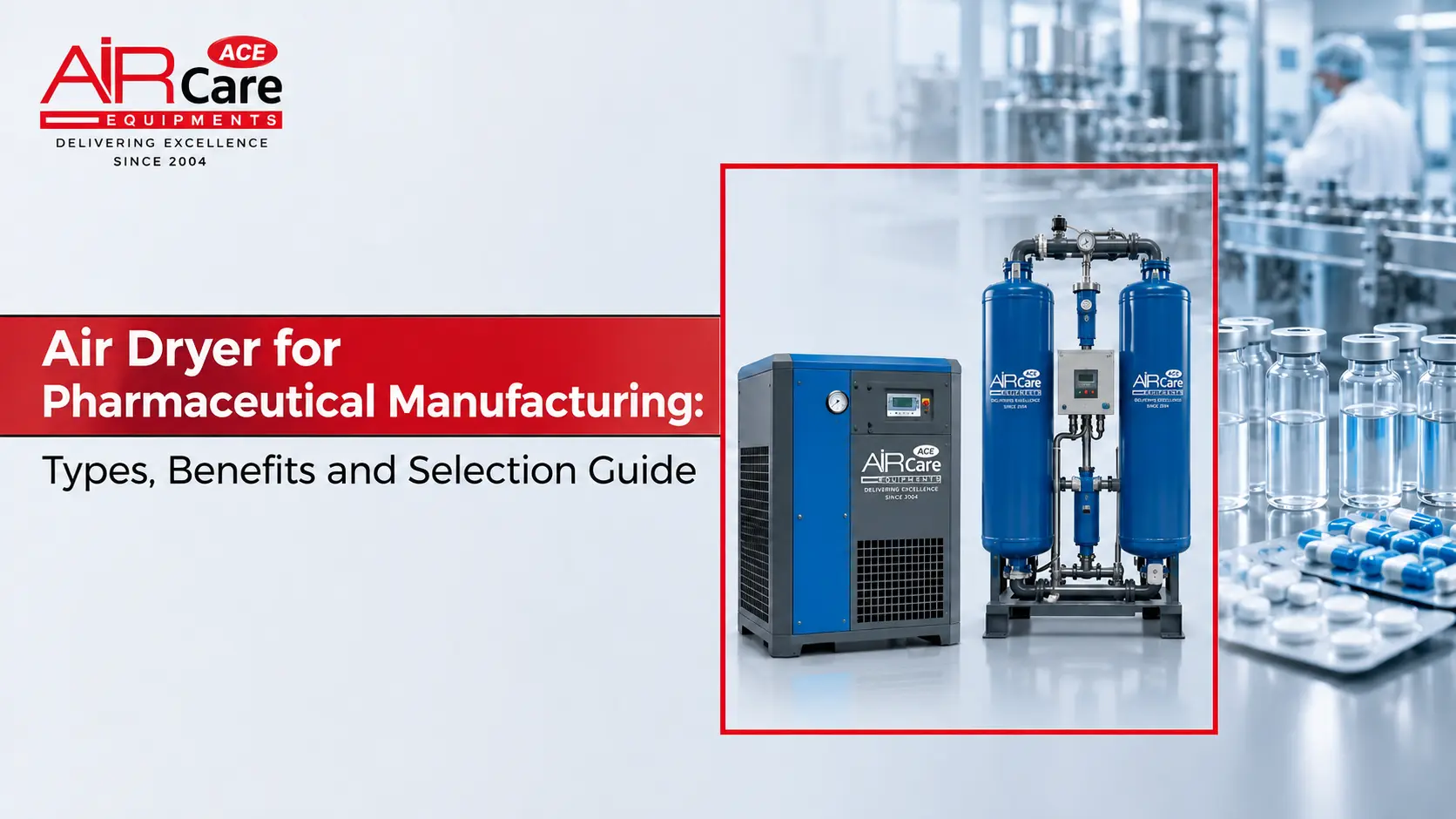
This is the gold standard for achieving extremely low dew points. Adsorption dryers, also known as desiccant dryers, utilize materials such as silica gel and activated alumina that are highly attracted to water molecules. Whenever air passes through a vessel filled with this desiccant, the moisture molecules adhere to its surface. The system typically consists of two vessels: one for drying the air and the other for regenerating the desiccant by purging it with dry air. This ensures a continuous supply of ultra-dry air.
Air Care Equipments: Pioneering Moisture Separator Solutions for Air Compressors
At Air Care Equipments, we have been at the forefront of this technology for years, offering a wide range of solutions from simple in-line moisture separator for air compressor units to sophisticated refrigerated and desiccant dryers. We understand that every air compressor is unique, so we are committed to providing solutions that are both elective and customized according to your specific needs. According to it, selecting the moisture separator that best suits your equipment is one of the most crucial steps in maintaining a healthy and well-maintained compressed air system.
Conclusion
With these 5 techniques, you can prevent the moisturiser from being a silent killer in your workshop. By analysing the problem and finding a solution with Air Care Equipments, you can improve the life of your equipments, the quality of your work, and overall peace of mind. We are not just the supplier, we can be your partner in ensuring the longevity and efficiency of your compressed air compressor. Reach out to us today and find the best moisture separator solutions according to your needs.
FAQs
Q1 Why is a moisture separator important for air compressors?
The moisture separator prevents water formation in the compressed air line, ensuring smooth performance and protecting your equipment from rust or damage.
Q2 How often should I check my moisture separator?
Conducting regular inspections once or twice a month can help keep the equipment running smoothly.
Q3 Can one separator handle all types of air compressors?
Different compressors and applications may need different types of moisture removal techniques. Always match the separator to your system.
Q4 Does a moisture separator also remove oil and dust?
No, it’s specifically designed to trap moisture. For oil and dust, you’d need other specialized filters.
Q5 What is the difference between a filter and a moisture separator?
A filter removes solid particles from the air. A moisture separator, on the other hand, is designed to remove liquids such as water and oil. Some devices perform both tasks simultaneously.
Recent Posts