Compressed Air Dryer Guide: Choosing the Right Technology for Your Industrial Needs
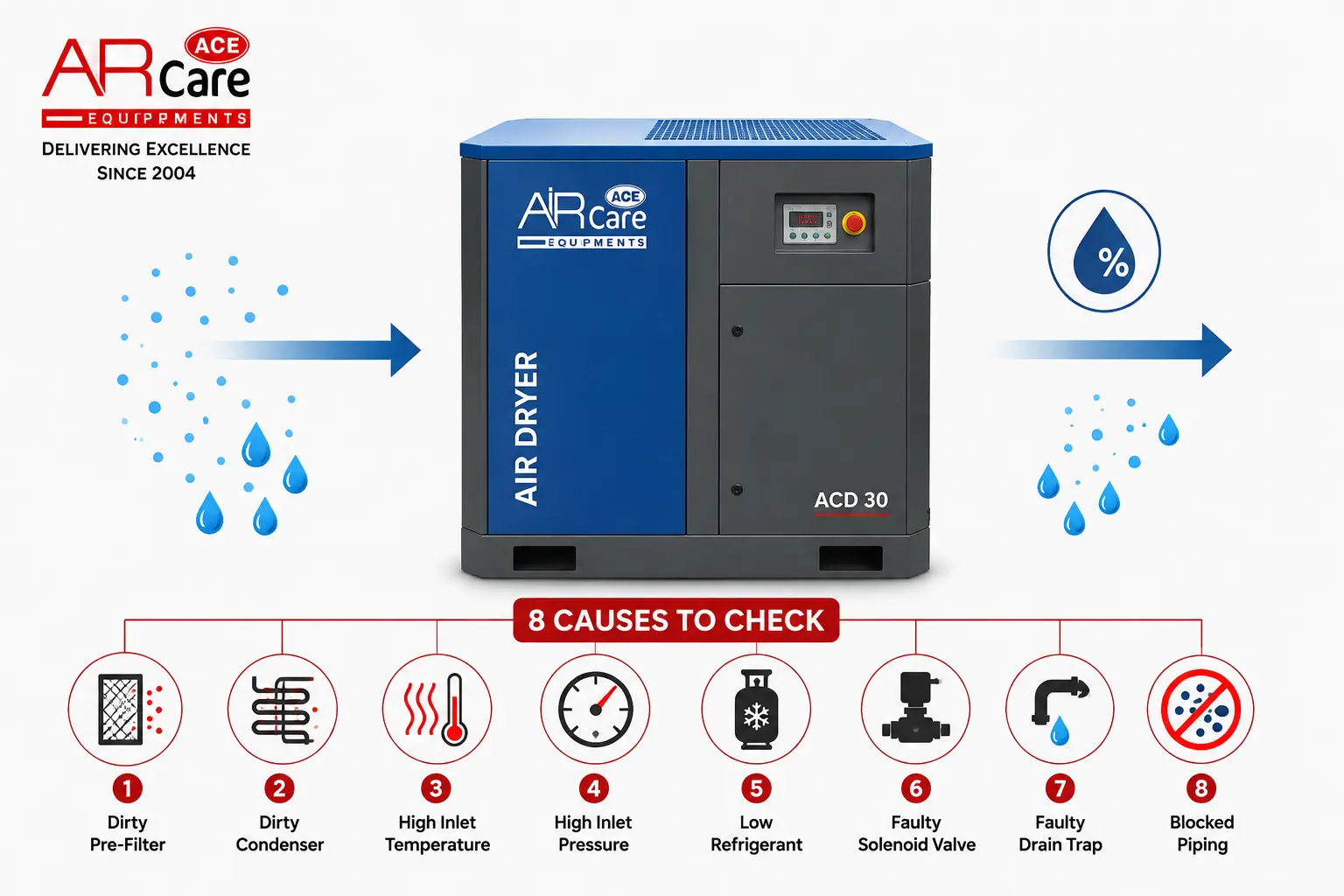
Compressed air is often called the "fourth utility" in manufacturing, yet if it's not properly treated, it quickly becomes a major liability. Moisture entering your system from Air Compressors is inevitable. When this moisture condenses, it causes rust in piping, premature failure of pneumatic tools, and costly contamination in sensitive processes like painting and food production. The resulting maintenance fees and scrap product can skyrocket operating costs. The solution lies inside the compressed air dryer, the important aspect for making sure dry, dependable, and splendid air. This complete guide will break down the main dryer technologies and provide the vital steps you need to select the proper one for your particular application.
Understanding Air Dryness: The Dew Point
The single maximum vital metric in air treatment is the Pressure Dew Point (PDP). The PDP is defined as the temperature at which water vapour in the compressed air condenses into liquid water. If the compressed air temperature drops to or under the PDP, condensation will arise within the pipes, main to water for your device. Therefore, the required PDP dictates the vital kind of dryer. A decrease in PDP signifies drier air, required for extra crucial programs.
Industry-particular requirements are standardised by using ISO 8573-1 air exceptional instructions for moisture. For example, a refrigerated dryer would possibly acquire a Class 4 suitable for widespread use, even as ultra-touchy packages require Class 1, manageable only through superior desiccant technology.
The Three Main Types of Compressed Air Dryers
Choosing the right technology is the first step in ensuring air quality.
A. Refrigerated Air Dryers (The Workhorse)
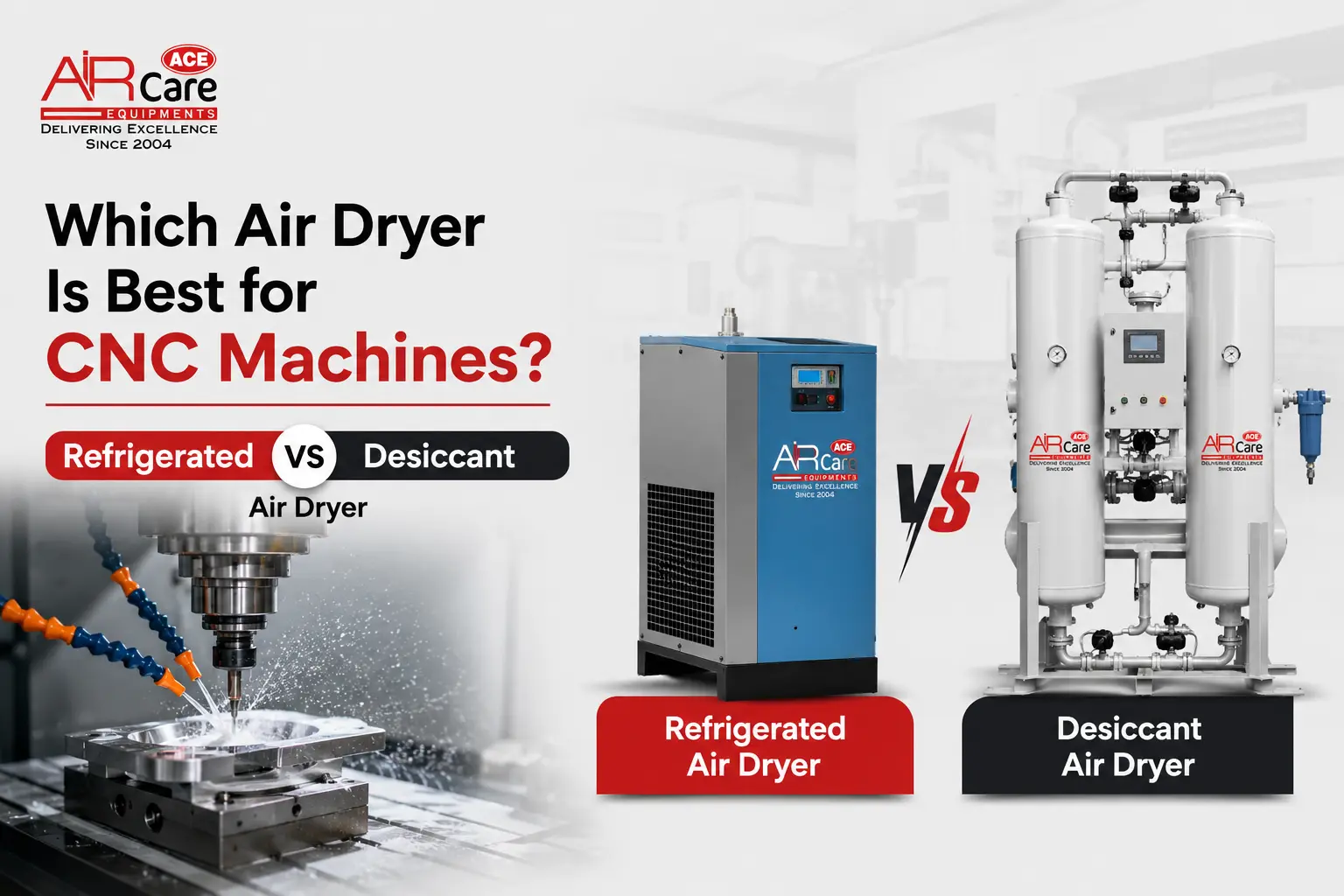
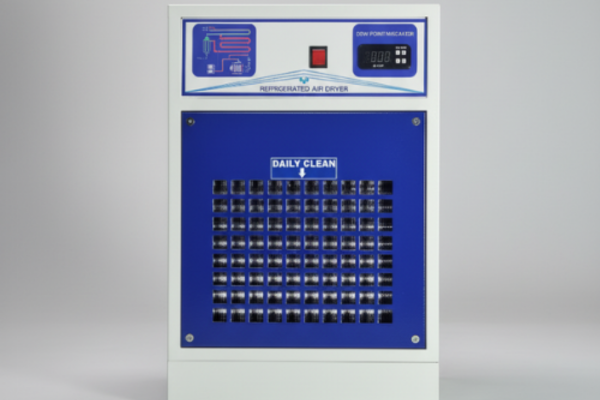
Refrigerated dryers perform on a simple principle: they cool the incoming air to approximately 3°C to 10°C. This cooling forces the water vapour to condense into liquid, which is then drained away. They are the most commonplace and lowest-fee alternative, satisfactory for standard plant air, manufacturing, and car stores where air strains aren't exposed to freezing temperatures. Their key features encompass low initial value, simple operation, and occasional preservation. However, they're constrained by physics and can not achieve dew points below freezing, with 3°C being the standard minimum PDP.
B. Desiccant (Adsorption) Air Dryers (The High-Purity Solution)
Desiccant dryers use substances like activated alumina or silica gel to adsorb moisture, achieving a great deal lower PDPs. They typically feature a twin-tower design: while one tower dries the incoming air, the alternative is regenerated (dried out) for continuous operation.
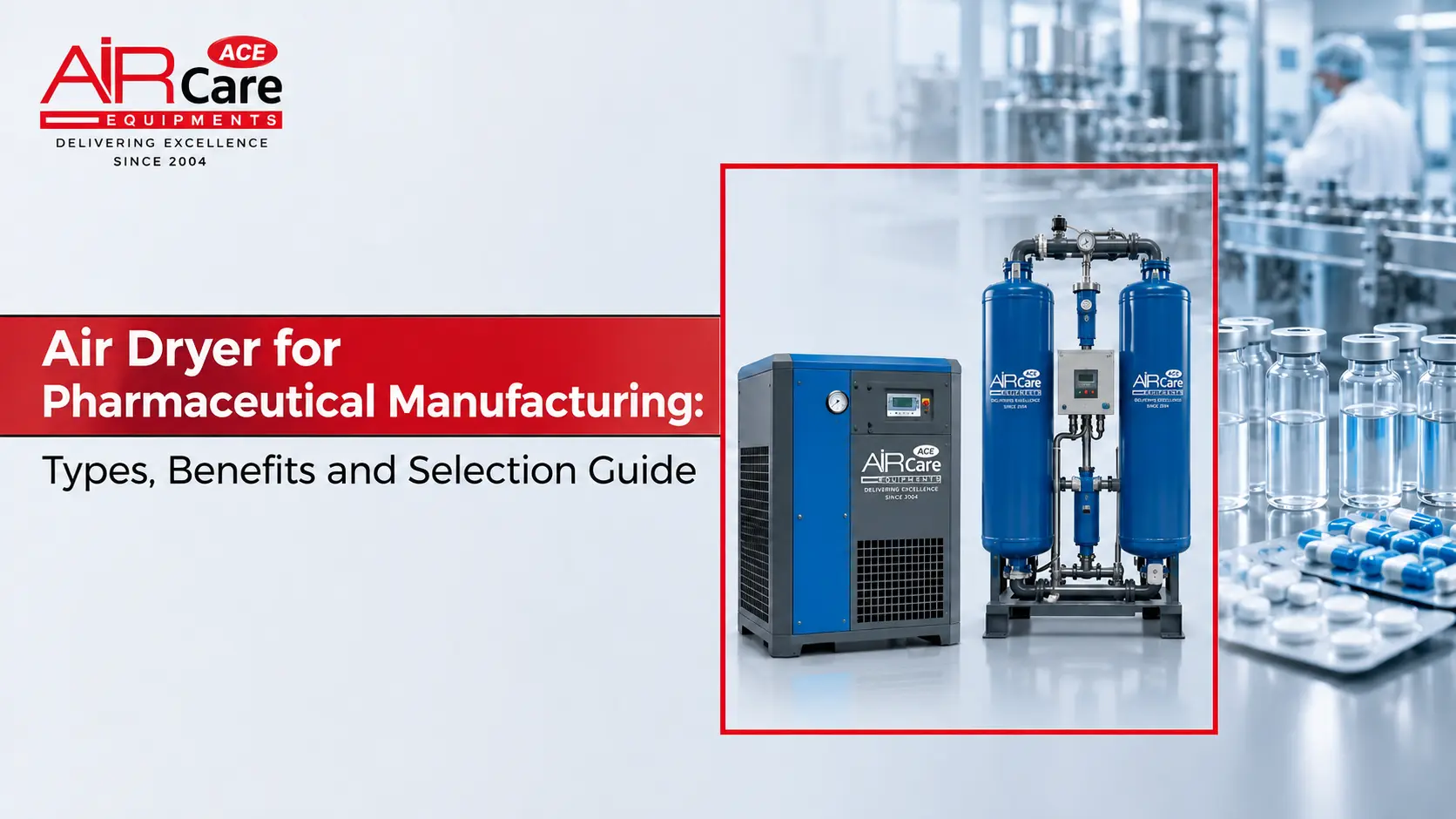
This technology is mandatory for essential applications like electronics production, food & beverage, pharmaceuticals, and outdoor environments wherein air lines are exposed to temperatures below freezing. They are able to accomplish ultra-low dew points. Sub-sorts include Heatless, Heated (Blower Purge), and Heat of Compression, each offering varying ranges of power performance.
C. Membrane Air Dryers (The Point-of-Use Option)
Membrane dryers rely on semi-permeable membranes that allow water vapour to diffuse out of the compressed air stream. They are regularly used for low-float, highly localised programs, remote locations, or dangerous regions where zero energy is preferred. They are compact, quiet, and don't have any shifting elements. While they produce cleaner air, they're normally less energy-efficient than refrigerated or desiccant dryers for huge-scale operations.
Critical Factors for Dryer Selection
Selecting the appropriate dryer involves more than simply choosing an era; it requires a detailed evaluation of your operational environment.
- Required Pressure Dew Point (PDP): This is the most crucial factor. Match the PDP to the end-use application (e.g., precision portray requires a far decrease PDP than walking a general air device).
- Air Flow Rate (CFM/Nm⊃3;/min): Ensure the dryer's capability is correctly matched to the maximum output of your Air Compressors and peak call for. In industrial settings, undersizing the dryer relative to the ability of the commercial air compressor is not unusual and a luxurious mistake, main to continuous machine screw ups.
- Inlet Air Temperature and Ambient Temperature: High inlet temperatures (not unusual with older Air Compressors without efficient aftercoolers) or intense ambient temperatures substantially lessen dryer performance. The dryer ought to be sized for the worst-case operating conditions.
- Inlet Pressure (PSIG/Bar): Higher working strain usually improves the efficiency of air drying. The unit should be rated for the system's most working pressure to ensure safety and performance.
- Energy Efficiency & Operating Costs: Consider the long-term period for walk prices. Advanced fashions like biking, refrigerated dryers and blower-purge desiccant dryers offer high energy savings over traditional, continuously walking types.
- Maintenance Requirements and Space Constraints: Factor within the fee and time related to filter replacement, desiccant regeneration schedules, and the physical footprint of the unit, particularly in crowded plant environments.
Air Care Equipments – Solutions for Every Dew Point
The final step in optimising your system is partnering with a reliable vendor. We introduce Air Care Equipments (ACE) as a trusted provider of industrial air treatment solutions. ACE offers a comprehensive range of dryers explicitly designed to meet varied industrial needs. Our refrigerated dryers, available in cycling and non-cycling models, focus on energy-efficient designs perfect for general industry applications powered by your Air Compressors. For processes demanding the highest purity, our desiccant dryers (Heatless/Heated) are engineered to achieve very low dew points (down to -40°C or lower) for critical and sensitive processes. ACE is differentiated by its reputation for robust construction, reliable performance, and the ability to customise solutions to integrate seamlessly with any industrial air compressor setup.
Conclusion
Proper dryer selection is not merely a purchase is a critical investment in the longevity of your equipment, the quality of your product, and the energy efficiency of your overall system. By carefully considering dew point requirements and operating factors, you protect your production line. Consult with an air remedy specialist (like Air Care Equipments) to carry out a complete system audit earlier than buying to guarantee the proper choice
FAQs
Q1 How do I know what Pressure Dew Point (PDP) I need?
The required PDP is set by the most sensitive process and the lowest temperature your air lines reach.
- General indoor use needs a 3°C to 10°C PDP (refrigerated dryer).
- Critical processes (like painting or medical) and outdoor lines require a desiccant dryer capable of -40°C PDP or lower.
Q2: What takes place if I use an undersized air dryer?
Undersizing the dryer can't eliminate enough moisture, resulting in the PDP being too high. This outcomes in liquid water condensing in your pipes, main to broken equipment and infected products. Always size the dryer based on the most common flow fee of your business air compressor, plus a buffer for decent ambient situations.
Q3 Can refrigerated dryers be utilised in a freezing environment?
No, refrigerated dryers are wrong for freezing situations as they normally reach a minimal PDP of 3°C. If the ambient piping temperature drops below this, the air will condense and freeze the water inside the strains, causing blockages and damage. A desiccant dryer is obligatory for outside or freezing installations.
Q4 How do I minimise the electricity intake of my air dryer?
Choose superior models tailored for efficiency. For refrigerated dryers, choose cycling or Variable Speed Drive (VSD) devices that run while essential. For desiccant dryers, choose Heated Blower Purge or Heat of Compression designs, which use less compressed air for regeneration than heatless kinds.
Recent Posts