How Oil-Free Air Compressors Provide Better Air Quality
Compressed air plays an important role in modern industries. It powers pneumatic tools, supports manufacturing processes, and helps operate equipment in pharmaceutical plants, food processing units, laboratories, and electronics manufacturing facilities. However, the quality of compressed air directly affects product quality, equipment performance, and operational safety.
An oil-free air compressor is designed to compress air without injecting oil into the compression chamber. This reduces the risk of oil contamination and makes these compressors suitable for applications where clean compressed air is essential. With the right filtration, drying, and maintenance practices, businesses can maintain the air quality required for their operations.
In this guide, we will explain how oil-free air compressors work, their main components, their benefits, and how to choose the right system for your industry.
What Is an Oil-Free Air Compressor?
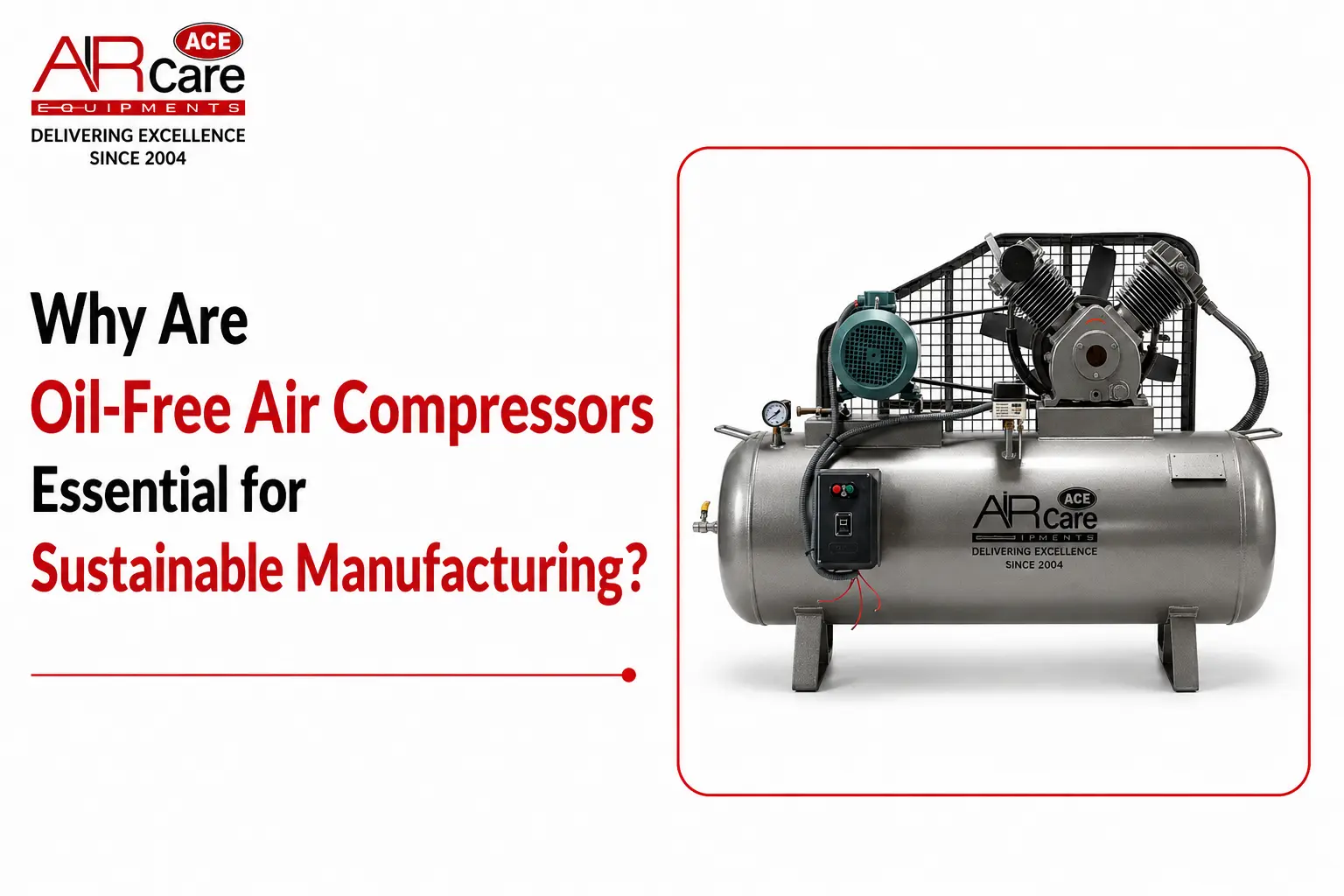
An oil-free air compressor is a machine that compresses air without using oil for lubrication inside the compression chamber. Unlike conventional oil-injected compressors, it is designed to prevent lubricating oil from entering the air during the compression process.
These compressors are useful in industries where oil contamination must be carefully controlled. Examples include pharmaceutical manufacturing, food and beverage processing, medical applications, electronics production, and laboratories.
However, oil-free compression does not automatically remove every contaminant from the air. Dust, moisture, and other airborne particles may still enter through the air intake. Depending on the application, additional air filters and compressed air dryers may be needed to achieve the required air quality.
Businesses can explore oil-free air compressors from Air Care Equipment to understand available options for different industrial requirements.
How Does an Oil-Free Air Compressor Work?
An oil-free air compressor draws atmospheric air into the machine and compresses it without injecting oil into the compression chamber. The compressed air is then cooled, treated when necessary, and supplied to the connected equipment.
The basic working process includes the following stages:
1. Air Intake
The compressor draws air from the surrounding environment through an intake filter. This filter helps prevent dust and larger airborne particles from entering the compression system.
2. Air Compression
A piston or screw mechanism compresses the incoming air. Specially designed components and materials help the compression mechanism operate without oil being injected into the compression chamber.
3. Heat Removal
Compression generates heat. An air-cooled or water-cooled system removes excess heat, depending on the compressor design. Cooling can also help manage the temperature of the compressed air.
4. Moisture Separation
As compressed air cools, water vapour may condense into liquid water. Appropriate moisture separators and drains help remove this condensate.
5. Air Treatment and Distribution
Depending on the application, compressed air may pass through additional filters and an air dryer before reaching the production equipment. This treatment helps control moisture, particles, and other contaminants.
The treatment system should be selected according to the required air quality, operating pressure, airflow, and end-use application.
Main Components of an Oil-Free Air Compressor
The exact construction of an oil-free air compressor depends on whether it uses a piston, screw, or another compression mechanism. Common components include:
1. Compression Chamber
The compression chamber is where incoming air is compressed to the required pressure. Its design helps control the compression process and supports reliable operation.
2. Piston or Screw Mechanism
Piston compressors use a piston moving inside a cylinder to compress air. Screw compressors use rotating screw elements to reduce the volume of the trapped air. Oil-free designs use components and clearances suited to compression without oil injection into the compression chamber.
3. Crankshaft and Connecting Rod
In a reciprocating piston compressor, the crankshaft converts the motor's rotational movement into the reciprocating motion required to move the piston. The connecting rod transfers this movement to the piston.
4. Bearings and Gears
Bearings support rotating or moving components and help reduce friction and wear. Depending on the design, bearings and gears may be lubricated separately from the compression chamber. Therefore, an oil-free compressor does not necessarily mean every component in the machine operates without oil.
5. Cooling System
The cooling system removes heat generated during compression. Proper cooling helps maintain operating temperatures and supports the compressor's performance.
6. Air Filters and Treatment Equipment
Intake filters help remove airborne particles before compression. Additional downstream filters, moisture separators, and compressed air dryers can improve the quality of air delivered to the application.
How Do Oil-Free Air Compressors Improve Air Quality?
Oil-free air compressors help control oil contamination at the compression stage. Their main air-quality benefits include the following.
1. Reduced Risk of Oil Contamination
In an oil-injected compressor, oil can enter the compressed air and may require downstream separation and treatment. An oil-free compressor is designed to avoid injecting oil into the compression chamber, reducing this source of contamination.
This is particularly important when compressed air comes into contact with sensitive products, equipment, or production processes.
2. Support for Sensitive Manufacturing Processes
Some manufacturing processes require carefully controlled compressed air. Oil contamination can affect product quality, create cleaning requirements, or interfere with sensitive equipment.
Oil-free compressors can help meet these requirements when the complete compressed air system is properly designed and maintained.
3. Reduced Oil-Related Treatment Requirements
Oil-injected systems may need oil separation equipment, oil-removal filters, and condensate management. Oil-free compression can reduce some of these oil-related treatment requirements.
However, businesses may still need filters, dryers, and other equipment to control moisture and particles. The complete system should be evaluated before estimating savings.
4. Better Control of Compressed Air Quality
Oil-free compression is one part of an air-quality strategy. Proper intake filtration, downstream treatment, condensate drainage, and regular servicing help maintain consistent air quality throughout the distribution system.
5. Support for Clean Production Environments
Industries that handle sensitive materials may benefit from reducing the risk of oil entering compressed air. The required treatment level depends on the application and applicable industry standards.
For pharmaceutical applications, read our guide on why pharmaceutical companies need oil-free air compressors.
Industries That Use Oil-Free Air Compressors
Oil-free compressors are used across several industries where oil contamination must be controlled.
Pharmaceutical Industry
Pharmaceutical manufacturing may use compressed air for equipment operation, packaging, and other production processes. Where air contacts products or critical surfaces, the compressed air system must meet the applicable quality requirements.
Food and Beverage Industry
Compressed air may be used for packaging, conveying, filling, and operating pneumatic equipment. Oil-free compression can reduce the risk of oil contamination, while appropriate filtration and moisture control help protect the process.
Electronics Manufacturing
Dust, moisture, and oil contamination can affect sensitive manufacturing processes. Oil-free compressors, combined with suitable air treatment, can help maintain the required compressed air quality.
Medical and Laboratory Applications
Medical and laboratory equipment may require compressed air that meets specific purity, pressure, and reliability requirements. The compressor and air treatment system should be selected according to the intended use and applicable regulations.
Automotive and General Manufacturing
Oil-free compressors may also be suitable for selected assembly, testing, pneumatic tool, and manufacturing applications where reducing oil contamination is beneficial.
Oil-Free vs. Oil-Injected Air Compressors
Both types of compressors serve industrial applications, but they differ in how oil is used during compression.
|
Feature |
Oil-Free Compressor |
Oil-Injected Compressor |
|
Compression chamber |
Designed without oil injection |
Oil is injected during compression |
|
Oil contamination risk |
Lower risk from the compression process |
Requires suitable oil separation and treatment |
|
Air treatment |
Filtration and drying may still be necessary |
Oil separation, filtration, and drying may be needed |
|
Suitable applications |
Processes with strict oil-contamination controls |
Many general industrial applications |
|
Maintenance |
Depends on compressor design and operating conditions |
Includes oil-related service tasks and other routine maintenance |
|
Operating cost |
Depends on efficiency, treatment, and maintenance needs |
Depends on efficiency, oil management, and treatment needs |
The right choice depends on air-quality requirements, airflow, working pressure, operating hours, energy consumption, and the total cost of ownership. An oil-free model is not automatically the most economical option for every application.
How to Choose the Right Oil-Free Air Compressor
Before purchasing an oil-free air compressor, consider the following factors.
1. Required Airflow: Calculate the total compressed air demand of your machines and tools. Check the required flow rate, often expressed in CFM or litres per minute.
2. Working Pressure: Select a compressor that can provide the pressure required by the application. Avoid choosing a model based on motor horsepower alone.
3. Required Air Quality: Identify the limits for oil, particles, and moisture. Pharmaceutical, food, medical, and electronics applications may have different requirements.
4. Compressor Type: Compare piston and screw compressors based on duty cycle, capacity, operating hours, and maintenance needs.
5. Air Treatment Equipment: Determine whether the system needs additional filters, a refrigerated or desiccant air dryer, moisture separators, or other treatment equipment.
6. Energy Efficiency: Compare actual performance, operating conditions, and energy consumption rather than relying only on the compressor's rated power.
7. Maintenance and Service: Check the recommended service intervals, availability of spare parts, and access to technical support.
For further guidance, read the air compressor sizing guide before selecting equipment for your facility.
How to Maintain Compressed Air Quality
Even an oil-free compressor requires regular maintenance to deliver dependable performance. A practical maintenance routine should include:
-
Inspecting and replacing intake filters when required.
-
Checking the cooling system and operating temperature.
-
Draining moisture from receivers and separators.
-
Servicing downstream filters and air dryers according to manufacturer recommendations.
-
Checking pipes, fittings, and connections for leaks.
-
Following the manufacturer's inspection and servicing schedule.
-
Monitoring air quality where the application requires documented verification.
For more maintenance guidance, visit the Air Care Equipment air compressor maintenance guide.
Frequently Asked Questions
1. Does an oil-free air compressor produce completely pure air?
No. An oil-free compressor prevents oil from being injected into the compression chamber, but incoming air can still contain dust, moisture, and other contaminants. Additional air treatment may be required to meet the application's quality standards.
2. Are oil-free air compressors suitable for pharmaceutical applications?
They can be suitable when the compressor and complete air treatment system meet the pharmaceutical process's requirements. The necessary air quality should be assessed based on the point of use and applicable standards.
3. Do oil-free air compressors need air dryers?
Not every application has the same drying requirements, but many industrial systems need air dryers to control moisture. The correct dryer depends on the required pressure dew point, operating conditions, and application.
4. What is the difference between oil-free and oil-injected compression?
Oil-free compressors are designed without injecting oil into the compression chamber. Oil-injected compressors use oil during compression for functions such as lubrication and cooling. The two types have different air-treatment and maintenance requirements.
5. Are oil-free air compressors expensive to maintain?
Maintenance costs depend on the compressor design, operating hours, spare parts, and service requirements. Oil-free models may reduce oil-related tasks, but routine inspection and maintenance remain essential.
Conclusion
Oil-free air compressors help improve compressed air quality by reducing the risk of oil contamination during compression. They are useful in pharmaceutical manufacturing, food processing, electronics, laboratories, and other applications where air purity must be carefully controlled.
However, choosing the right compressor is only the first step. Proper filtration, moisture removal, correct sizing, and regular maintenance are also important for maintaining the required air quality.
Looking for an oil-free air compressor for your industrial application? Explore the oil-free air compressor range from Air Care Equipment and contact the team to discuss your airflow, pressure, and air-quality requirements.
Recent Posts