7 Reasons Why Oil-Free Air Compressors Are the Industry Standard
Compressed air is an important utility in many industries. It is used to operate pneumatic tools, automation equipment, production machines, medical equipment, packaging systems, and many other applications. However, not every application can use compressed air containing oil contamination.
An oil-free air compressor is designed without lubricating oil in the compression chamber. This makes oil-free technology useful for industries where compressed-air cleanliness is an important requirement. Pharmaceuticals, food and beverage, electronics, healthcare, laboratories, and precision manufacturing are some examples.
Choosing the right compressor is not only about horsepower. Air quality, pressure, airflow, operating hours, energy consumption, maintenance, and the complete air-treatment system should also be considered.
In this guide, we explain seven important reasons why oil-free air compressors are increasingly used in modern industrial applications.
What Is an Oil-Free Air Compressor?
An oil-free air compressor is a compressor designed to produce compressed air without using lubricating oil in the compression chamber. Different oil-free compressor technologies use different methods for cooling, sealing, and reducing friction.
Oil-free does not mean that the entire compressed-air system is automatically free from every contaminant. Air quality can also depend on the compressor intake, piping, filters, dryers, drains, operating environment, and maintenance practices.
For applications with strict air-quality requirements, the required ISO 8573-1 class should be identified before selecting the compressor.
Quick Answer: Why Choose an Oil-Free Air Compressor?
Oil-free air compressors are selected mainly when compressed-air cleanliness is important. They reduce the risk of oil contamination from the compression process and can be suitable for sensitive applications such as pharmaceuticals, food processing, electronics, healthcare, and laboratories.
However, the right compressor should be selected according to airflow, pressure, duty cycle, air-quality requirements, energy consumption, maintenance needs, and total cost of ownership.
7 Key Benefits of Oil-Free Air Compressors
1. Reduced Risk of Oil Contamination
One of the main reasons industries choose an oil-free air compressor is to reduce the risk of oil entering the compressed-air stream from the compression process.
Oil contamination can create problems in applications where compressed air comes into contact with products, packaging, instruments, or sensitive components. In industries with strict cleanliness requirements, controlling contamination is especially important.
Oil-free compressor technology can therefore be useful where maintaining cleaner compressed air is a major part of the production process.
When selecting a compressor, businesses should identify the required compressed-air quality and check the manufacturer's certification and operating conditions.
Read more: Class Zero Oil-Free Air Compressors: The Ultimate Guide to Purity
2. Better Air Quality for Sensitive Applications
Clean compressed air is important in many industries. Pharmaceutical production, food and beverage processing, electronics manufacturing, medical applications, laboratories, and precision manufacturing may have strict requirements for air purity.
An oil-free air compressor can help reduce oil-related contamination from the compression process. However, the compressor is only one part of the complete compressed-air system.
Air dryers, filters, moisture separators, automatic drains, and correctly designed piping may also be required to achieve the desired air quality at the point of use.
For this reason, businesses should evaluate the entire compressed-air system instead of selecting a compressor based only on horsepower.
3. Lower Oil-Related Maintenance Requirements
Oil-free compressors do not require the same routine compressor-oil management as many oil-injected systems.
Depending on the compressor technology, this can reduce maintenance activities associated with compressor oil, oil filters, and oil separation. It can also reduce the need to manage used compressor oil.
However, an oil-free compressor is not maintenance-free.
Filters, cooling systems, valves, bearings, drains, electrical components, and other parts still require inspection and servicing. Following the manufacturer's recommended maintenance schedule is important for reliable operation.
Regular maintenance can also help identify problems before they result in unexpected production downtime.
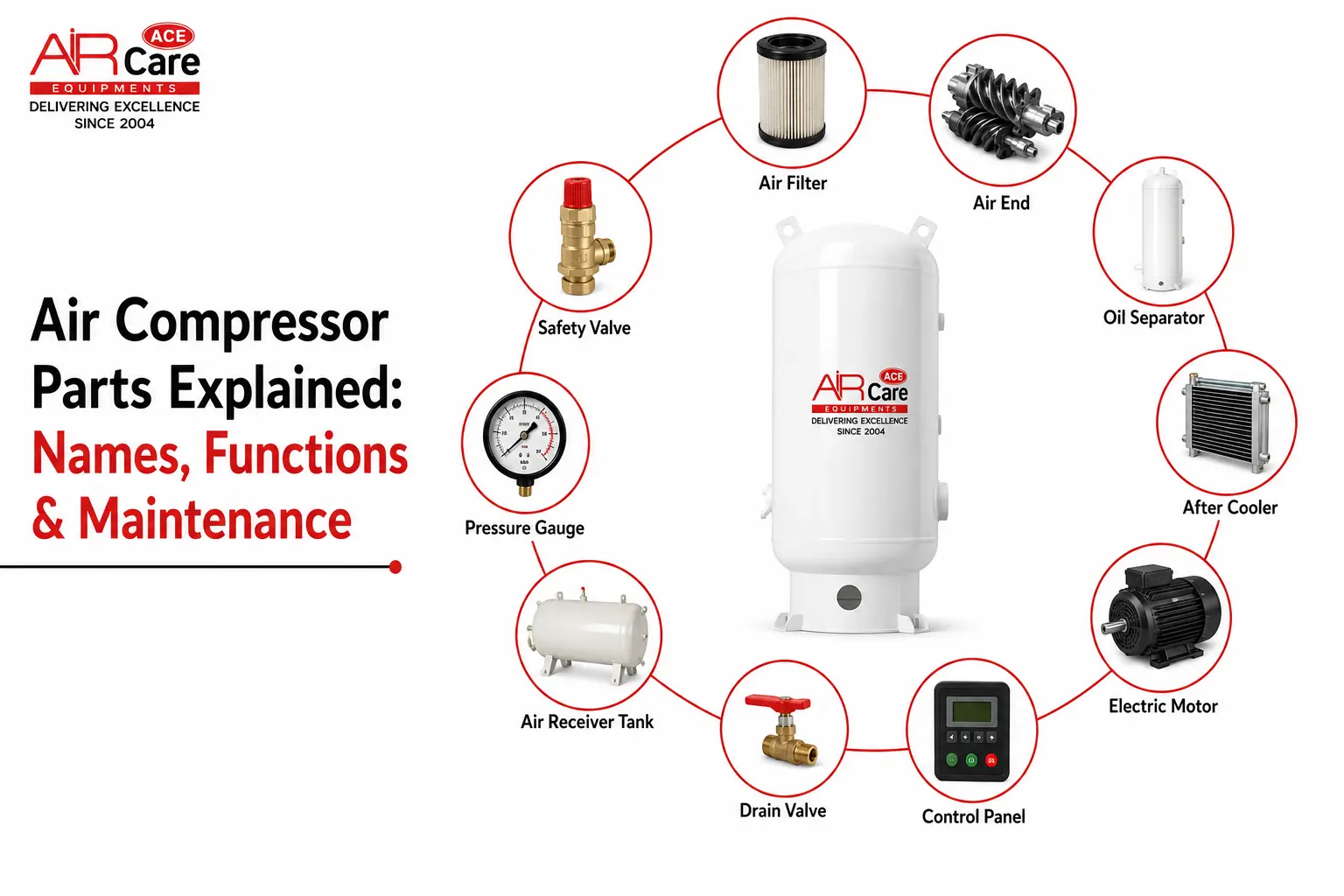
Also Read: Air Compressor Parts Explained: Names, Functions & Maintenance
4. Improved Protection for Downstream Equipment
Contamination in compressed air can affect downstream equipment and production processes. Oil, moisture, and particles may enter air lines and reach pneumatic tools, instruments, valves, cylinders, and other components.
Using an appropriate oil-free compressor together with suitable air treatment can help maintain cleaner compressed air throughout the system.
A properly designed system should consider:
-
Compressor technology
-
Air filters
-
Air dryers
-
Moisture separation
-
Condensate drainage
-
Piping design
-
Pressure drop
-
Point-of-use air quality
Keeping these components properly maintained can support consistent equipment performance and help reduce contamination-related issues.
5. Energy-Efficient Compressor Technologies
Electricity can represent a significant part of the operating cost of a compressed-air system. This makes energy efficiency an important consideration when selecting an industrial air compressor.
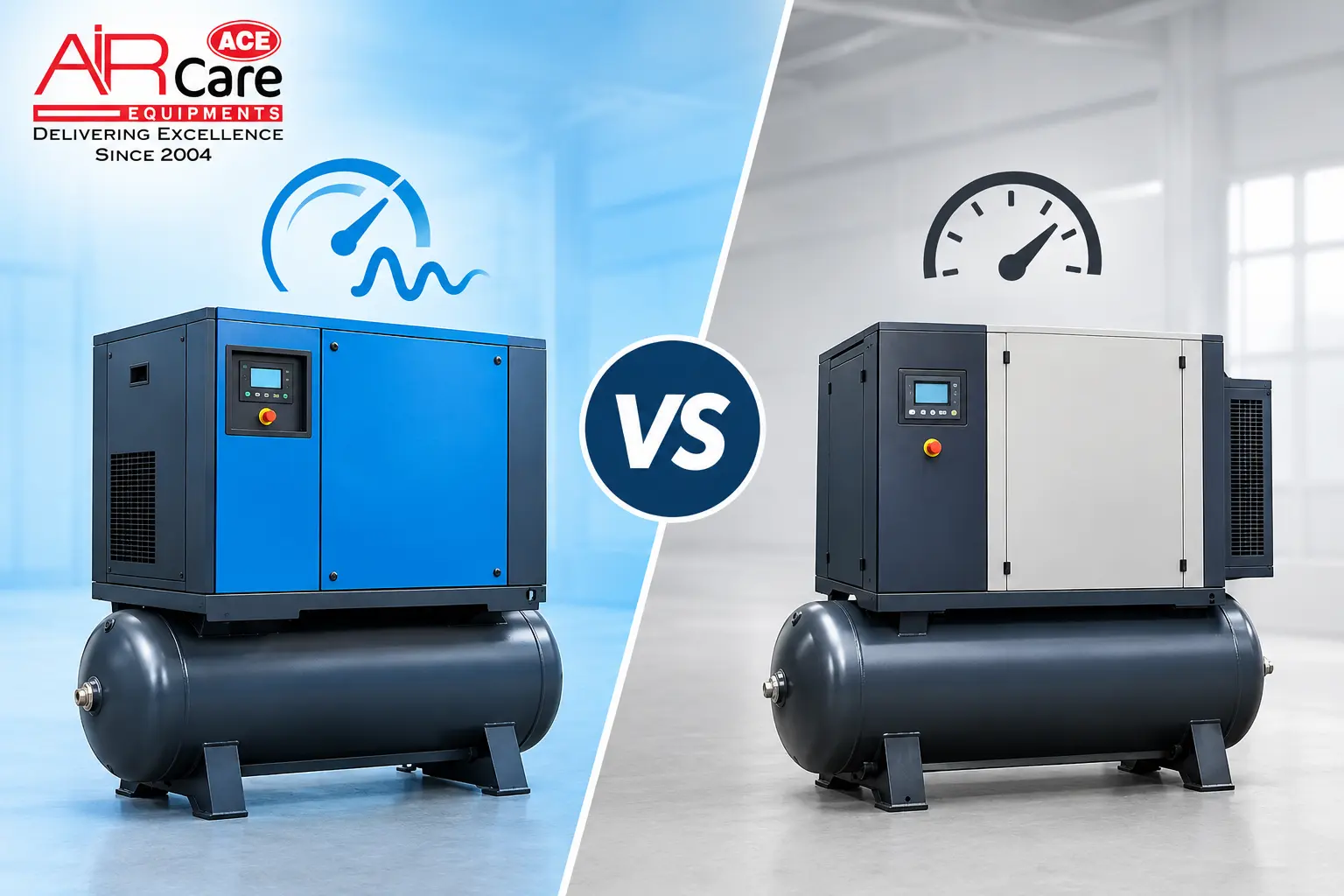
Some modern oil-free compressors are available with Variable Speed Drive (VSD) technology. A VSD compressor can adjust its output according to changes in compressed-air demand.
When correctly sized and controlled, this can reduce unnecessary energy consumption during periods of lower demand.
However, energy performance depends on several factors, including:
-
Compressor size
-
Air demand
-
Working pressure
-
Operating hours
-
Load profile
-
System leakage
-
Control strategy
-
Air-treatment equipment
Therefore, selecting an energy-efficient compressor should start with understanding the facility's actual air demand.
Read More: Air Compressor Maintenance Guide | Checklist & Service Tips 2026
6. Environmental and Workplace Benefits
Oil-free compressor systems can reduce the need to manage compressor oil and oil-contaminated condensate associated with oil-injected systems.
This can simplify certain maintenance and waste-management activities.
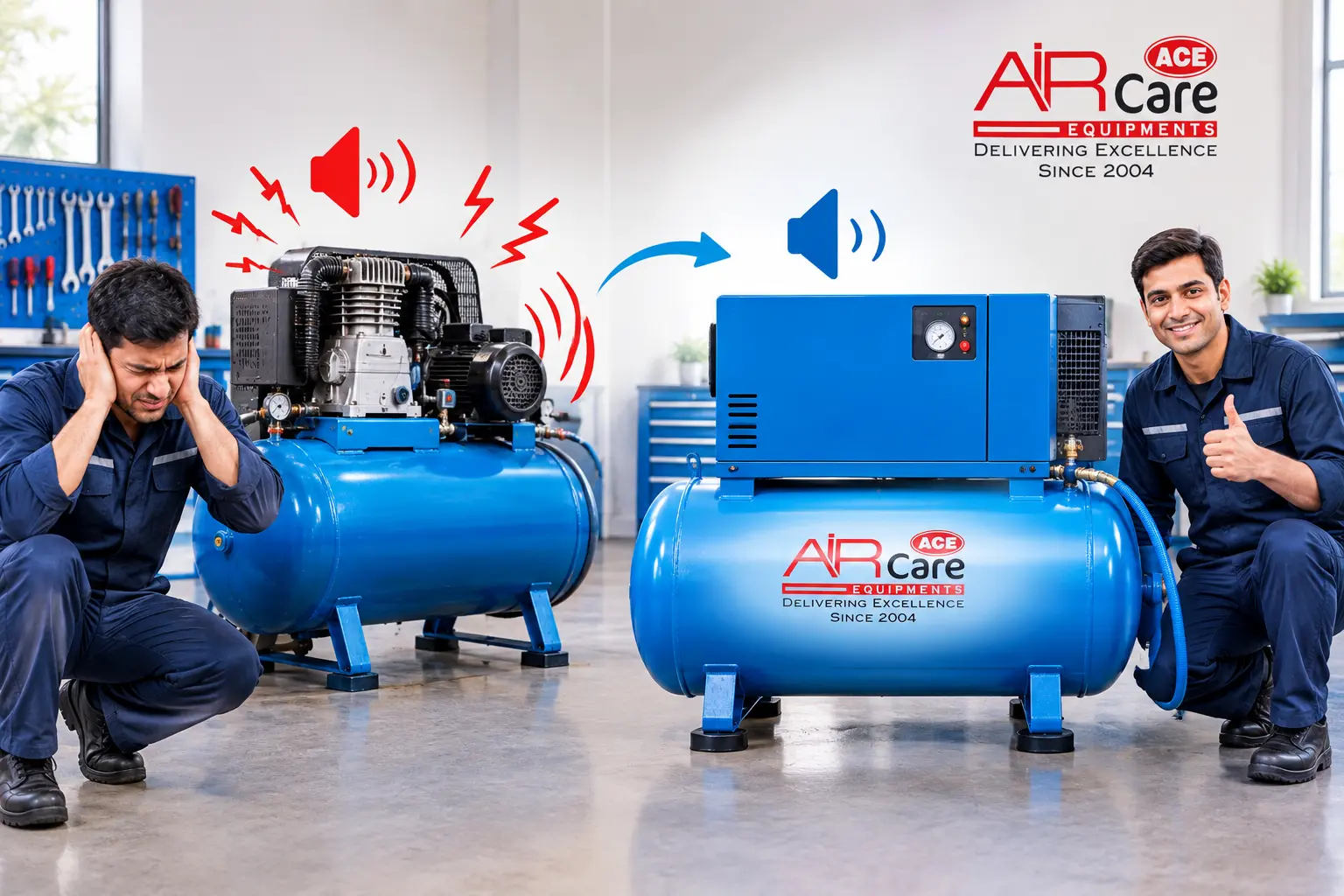
Some oil-free compressor technologies can also provide low-noise operation. However, noise levels vary according to the compressor design, model, enclosure, installation, and operating conditions.
Businesses should always check the manufacturer's published noise specifications when workplace noise is an important consideration.
Environmental performance should also be considered as part of the complete compressed-air system, including electricity consumption, maintenance, equipment life, and disposal requirements.
Also Read: Why Are Oil-Free Air Compressors Essential for Sustainable Manufacturing?
7. Suitable for a Wide Range of Industrial Applications
Oil-free air compressors are used in many applications where compressed-air cleanliness is important.
Common applications include:
-
Pharmaceutical manufacturing
-
Food and beverage processing
-
Electronics manufacturing
-
Medical and dental facilities
-
Laboratories
-
Packaging
-
Precision manufacturing
-
Automotive applications
-
Pneumatic automation
-
Clean production environments
The appropriate compressor technology depends on the required airflow, pressure, duty cycle, installation environment, and air-quality requirements.
Oil-Free vs Oil-Injected Air Compressors
Both oil-free and oil-injected compressors have important industrial applications. The correct choice depends on the requirements of the facility.
|
Factor |
Oil-Free Air Compressor |
Oil-Injected Air Compressor |
|
Compression chamber |
No lubricating oil used in the compression chamber |
Oil is used in many designs |
|
Oil contamination control |
Reduces oil contamination risk from the compression process |
Requires oil separation and filtration |
|
Oil management |
No routine compression-chamber oil change |
Requires regular oil management in many systems |
|
Sensitive applications |
Suitable for applications requiring clean compressed air |
Suitable where oil contamination can be appropriately controlled |
|
Maintenance |
Requires regular component maintenance |
Requires oil, filter, separator and component maintenance |
|
Energy consumption |
Depends on technology and operating conditions |
Depends on technology and operating conditions |
|
Selection factors |
Air quality, airflow, pressure, duty cycle and TCO |
Airflow, pressure, duty cycle, maintenance and TCO |
The comparison does not mean that one compressor type is suitable for every industry. Application requirements should always determine the final selection.
How to Choose the Right Oil-Free Air Compressor
Selecting the correct oil-free compressor requires more than simply choosing a horsepower rating.
1. Identify the Required Air Quality
First, determine the air-quality requirements of your application. If the process has strict contamination limits, identify the applicable ISO 8573-1 air-quality class.
2. Calculate Airflow Requirements
Determine the required airflow in CFM or m⊃3;/min.
Consider both normal and peak demand. If the compressor is too small, it may struggle to maintain pressure. If it is significantly oversized, it may operate inefficiently.
3. Determine Working Pressure
Identify the pressure required by your equipment.
Also consider pressure losses through:
-
Filters
-
Dryers
-
Piping
-
Valves
-
Regulators
-
Point-of-use equipment
The compressor should be selected to provide the required pressure at the actual point of use.
4. Check Operating Hours and Duty Cycle
A compressor operating for several hours every day has different requirements from one used occasionally.
Consider:
-
Daily operating hours
-
Peak demand
-
Continuous or intermittent operation
-
Production schedule
-
Ambient conditions
This information can help determine the appropriate compressor technology.
5. Select the Right Compressor Technology
Different oil-free technologies are available for different applications.
Oil-Free Reciprocating Compressors
These can be suitable for applications requiring relatively lower airflow and intermittent or specific-duty compressed-air requirements.
Scroll Compressors
Scroll compressors are commonly used in applications requiring clean and relatively low-to-medium compressed-air flow, including certain medical, dental, laboratory, and industrial applications.
Oil-Free Screw Compressors
Oil-free screw technology can be used for higher-volume industrial applications where continuous compressed-air supply is required.
The correct choice depends on the required flow, pressure, duty cycle, air quality, and operating environment.
6. Consider Air Treatment Equipment
An oil-free compressor does not eliminate moisture and particulate contamination from the complete air system.
Depending on the application, the system may require:
-
Compressed air dryers
-
Air filters
-
Moisture separators
-
Automatic drains
-
Air receivers
-
Regulators
-
Properly designed piping
Selecting the compressor and air-treatment equipment together can provide better system performance.
7. Compare Total Cost of Ownership
Purchase price is only one part of the overall investment.
Before selecting a compressor, consider:
-
Initial equipment cost
-
Electricity consumption
-
Maintenance
-
Spare parts
-
Installation
-
Service requirements
-
Operating hours
-
Expected equipment life
A total-cost-of-ownership approach can help businesses make a more informed purchasing decision.
Oil-Free Air Compressor Applications in Delhi NCR
Delhi NCR has a wide range of manufacturing, pharmaceutical, food processing, packaging, automotive, electronics, healthcare, and engineering businesses that use compressed-air systems.
When selecting an oil-free air compressor in Delhi NCR, businesses should consider the required airflow, working pressure, air quality, operating hours, installation conditions, and availability of technical support.
Air Care Equipment provides industrial compressed-air solutions and support for businesses looking for suitable compressor and air-treatment equipment.
For businesses searching for Air Compressor Manufacturers in Delhi NCR, it is important to compare not only product specifications but also installation guidance, service support, spare-parts availability, and long-term operating requirements.
Why Proper Compressor Sizing Matters
Incorrect compressor sizing can affect both performance and operating cost.
An undersized compressor may struggle to meet peak demand, causing pressure fluctuations and reduced equipment performance.
An oversized compressor may operate inefficiently when the actual air demand is significantly lower than its rated capacity.
A proper sizing assessment should consider:
-
Total connected air demand
-
Peak airflow
-
Average airflow
-
Required pressure
-
Leakage
-
Future production requirements
-
Operating hours
-
Air-quality requirements
A professional air audit can provide useful information for selecting the appropriate compressor capacity.
Maintenance Tips for Oil-Free Air Compressors
Regular maintenance is essential for reliable compressor operation.
Follow these basic practices:
-
Check and clean or replace air filters according to the manufacturer's schedule.
-
Inspect cooling systems regularly.
-
Check for unusual vibration or noise.
-
Inspect electrical connections and control systems.
-
Check drains and moisture-management equipment.
-
Monitor operating pressure and temperature.
-
Follow recommended service intervals.
-
Keep the compressor installation area clean and properly ventilated.
Preventive maintenance can help identify potential problems early and support consistent compressor performance.
Conclusion
Oil-free air compressors are an important option for industries where compressed-air cleanliness is a key requirement. They can reduce the risk of oil contamination from the compression process and are used in applications such as pharmaceuticals, food and beverage, electronics, healthcare, laboratories, and precision manufacturing.
However, choosing the right compressor requires more than looking at the term “oil-free.” Airflow, pressure, duty cycle, air-quality requirements, energy consumption, air treatment, maintenance, and total cost of ownership should all be considered.
Air Care Equipment supports businesses looking for compressed-air solutions and compressor selection assistance. Companies searching for Air Compressor Manufacturers in Delhi NCR should evaluate equipment specifications as well as installation, service, and long-term support.
The right combination of compressor technology and air treatment can help create a reliable compressed-air system that matches the requirements of your application.
Frequently Asked Questions
1. What is an oil-free air compressor?
An oil-free air compressor is designed to produce compressed air without lubricating oil in the compression chamber. It is commonly used in applications where compressed-air cleanliness is important.
2. What industries use oil-free air compressors?
Oil-free compressors are used in pharmaceuticals, food and beverage, electronics, healthcare, laboratories, medical and dental applications, packaging, and precision manufacturing.
3. Is an oil-free air compressor maintenance-free?
No. Oil-free compressors still require regular maintenance of filters, cooling systems, valves, bearings, drains, electrical components, and other parts.
4. Does oil-free mean ISO 8573-1 Class 0?
Not automatically. “Oil-free” describes the compressor design, while ISO 8573-1 defines compressed-air purity classes. Class 0 is the most stringent oil-contamination class, but the applicable classification depends on the equipment, operating conditions, and certification.
5. How do I choose an oil-free air compressor?
Consider airflow in CFM or m⊃3;/min, working pressure, required air quality, operating hours, duty cycle, installation conditions, energy consumption, maintenance requirements, and total cost of ownership.
6. Can an oil-free compressor be used continuously?
Some oil-free compressor models are designed for continuous-duty applications. Suitability depends on the specific compressor model, operating conditions, cooling system, and manufacturer's rated duty cycle.
7. Does an oil-free compressor remove moisture from compressed air?
No. Oil-free technology addresses oil contamination from the compression process. Moisture management normally requires suitable dryers, separators, drains, and other air-treatment equipment.
8. Are oil-free compressors suitable for pharmaceutical and food industries?
They can be suitable for applications where clean compressed air is required. The final compressor and air-treatment system should be selected according to the application's air-quality requirements and applicable standards.
Recent Posts